Filters

95 filtered results

Clear all filters
Favorites
With answer key
Interactive

95 filtered results

Difficulty Level

Grade


Check out this FREE Trial Lesson on Adding Up to 5 for age 4-6!

L

Favorites
With answer key
Interactive
  • 4-6
  • Cognitive Development
  • Adding Up to 5
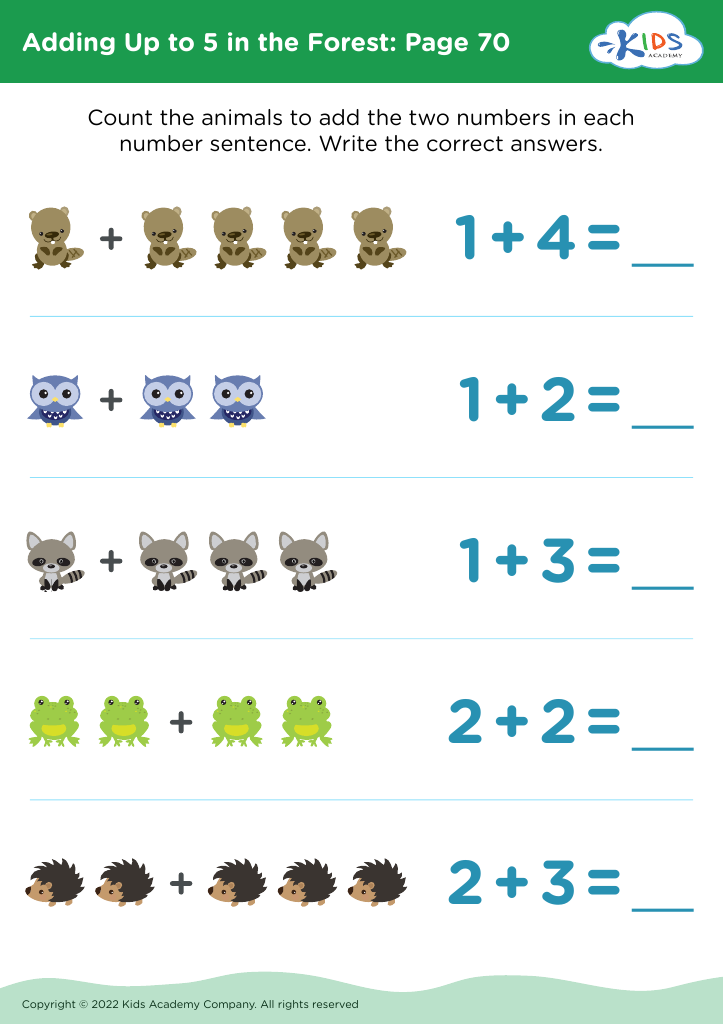
Adding Up to 5 in the Forest: Page 70
Worksheet
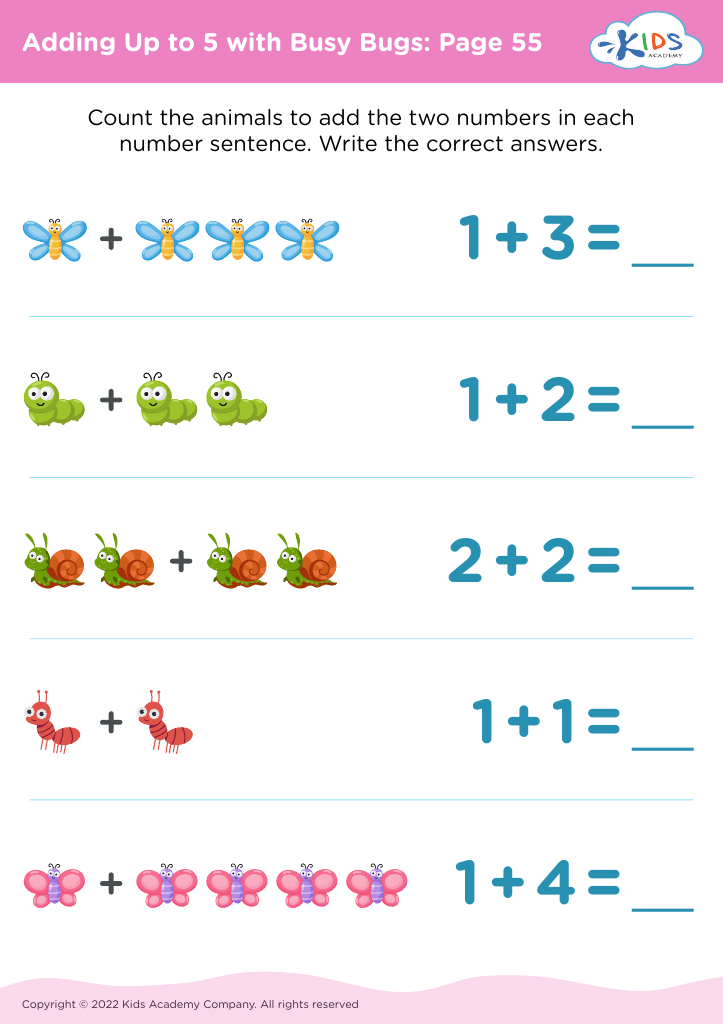
Adding Up to 5 with Busy Bugs: Page 55
Worksheet
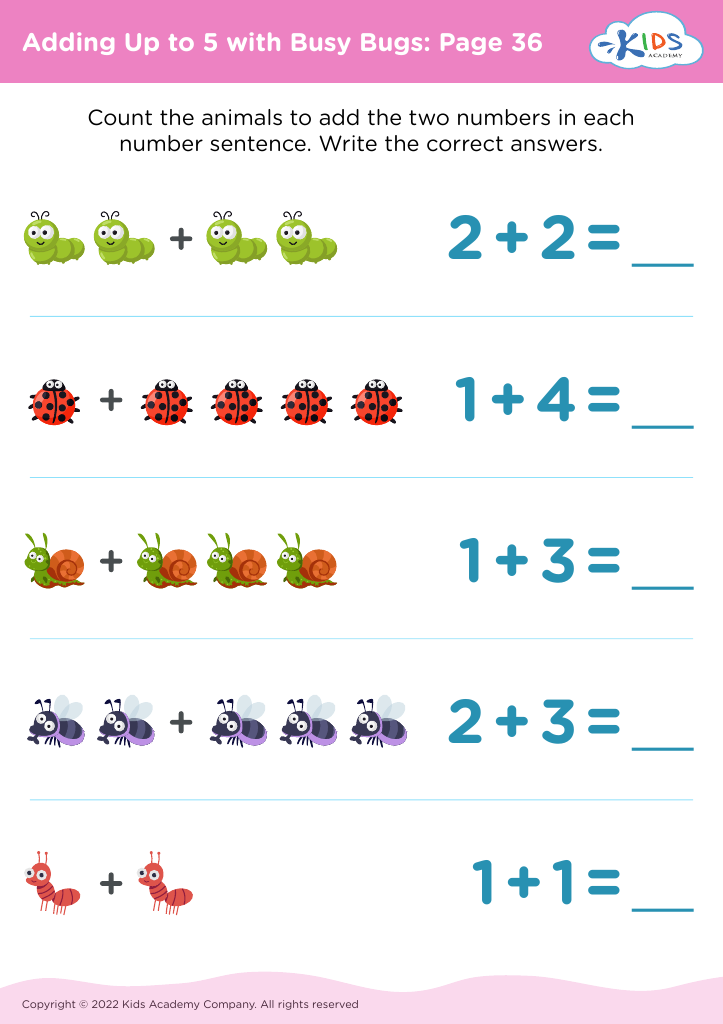
Adding Up to 5 with Busy Bugs: Page 36
Worksheet
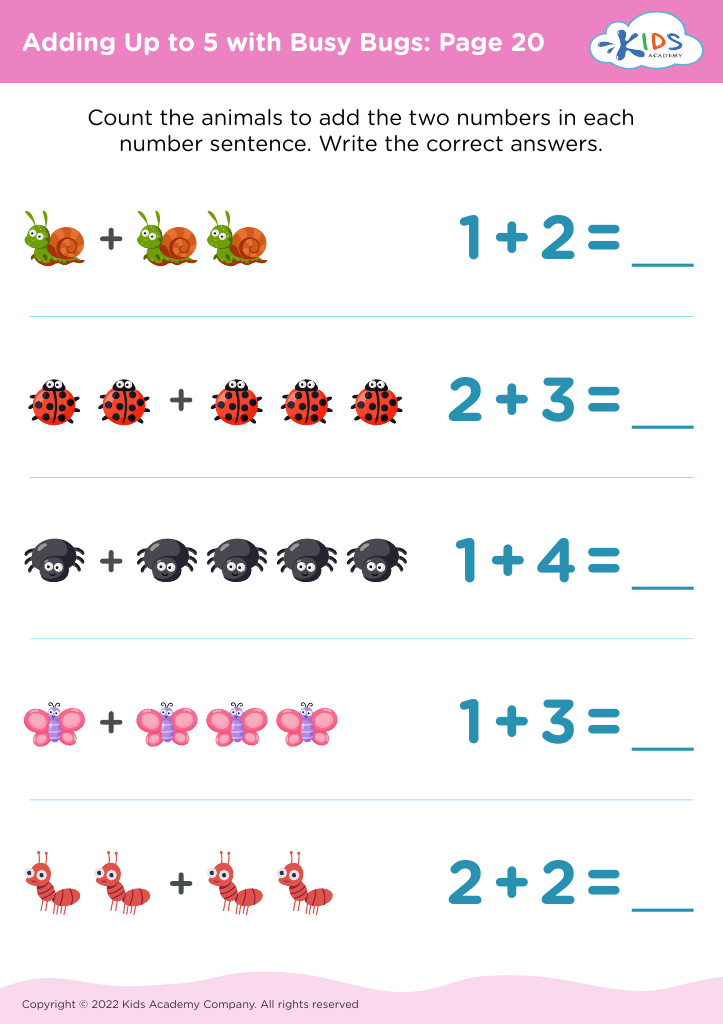
Adding Up to 5 with Busy Bugs: Page 20
Worksheet
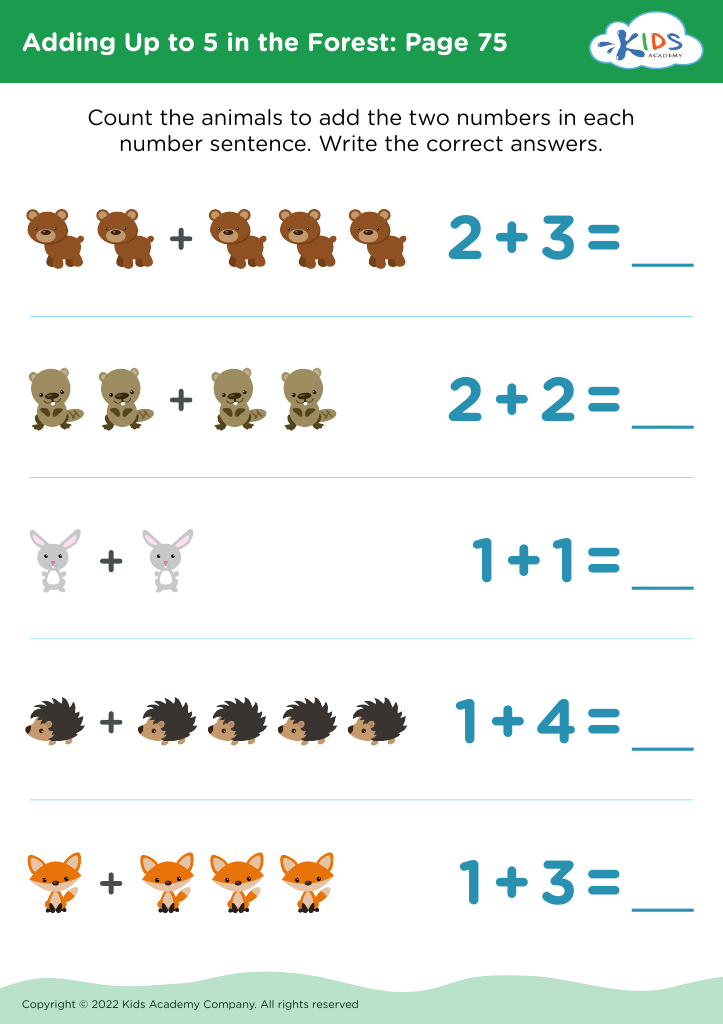
Adding Up to 5 in the Forest: Page 75
Worksheet
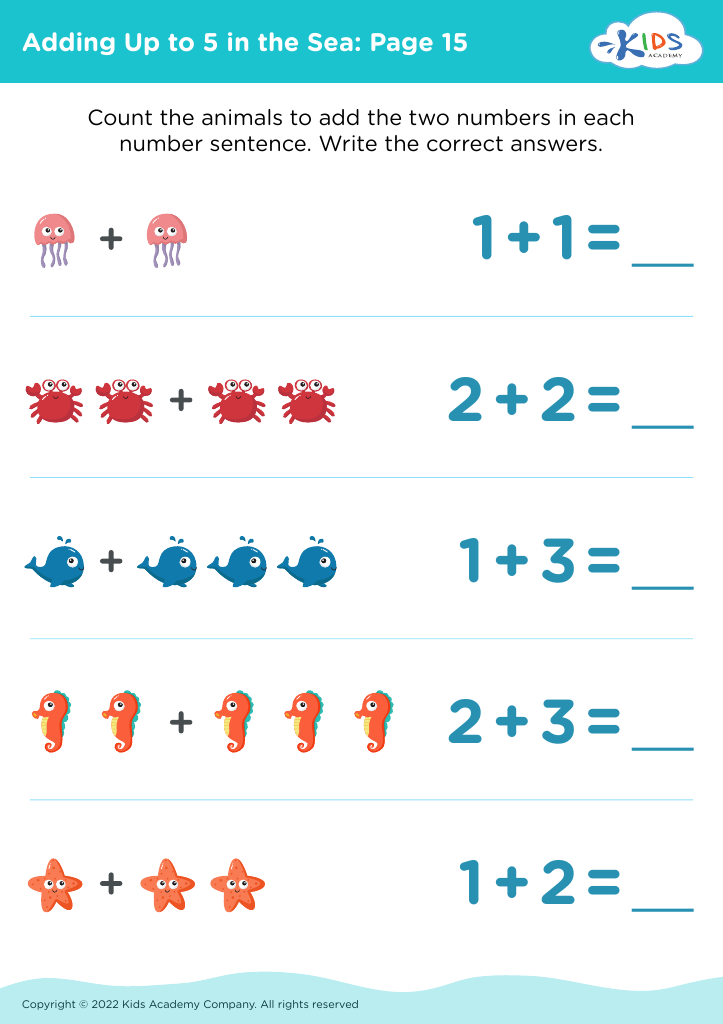
Adding Up to 5 in the Sea: Page 15
Worksheet
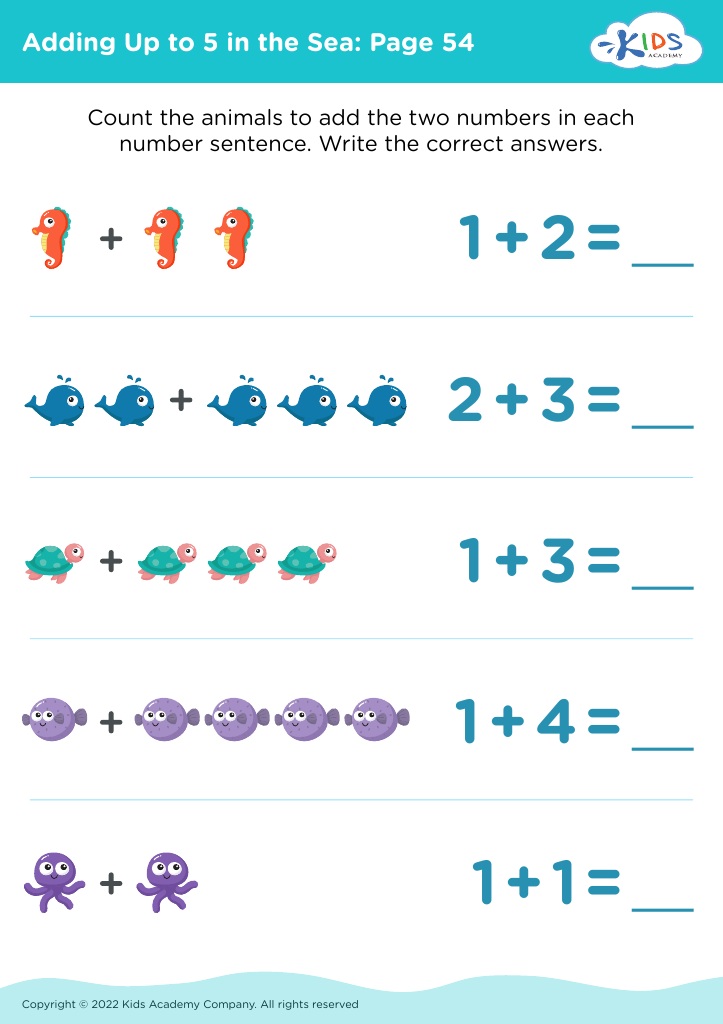
Adding Up to 5 in the Sea: Page 54
Worksheet
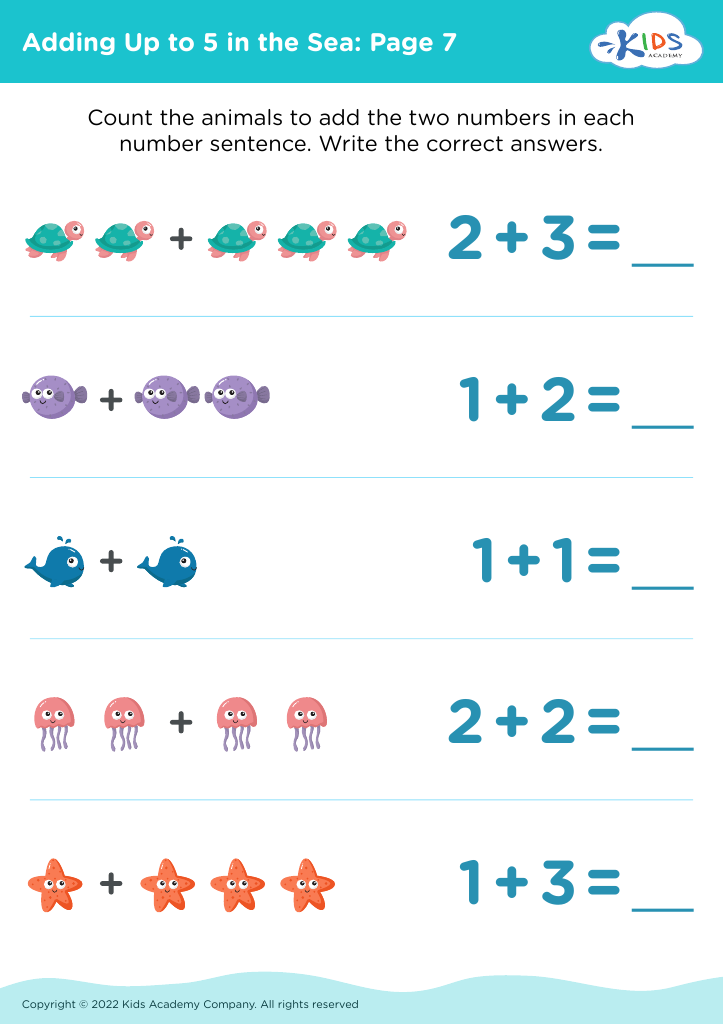
Adding Up to 5 in the Sea: Page 7

Adding Up to 5 in the Sea: Page 7

Adding Up to 5 in the Sea: Page 7
Worksheet
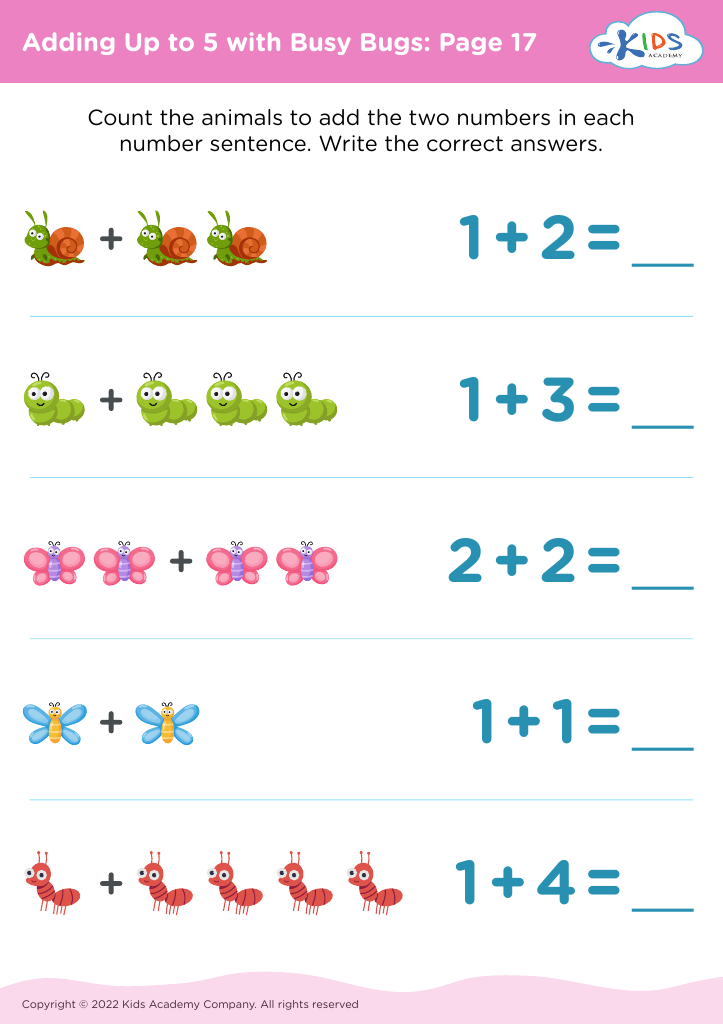
Adding Up to 5 with Busy Bugs: Page 17
Worksheet
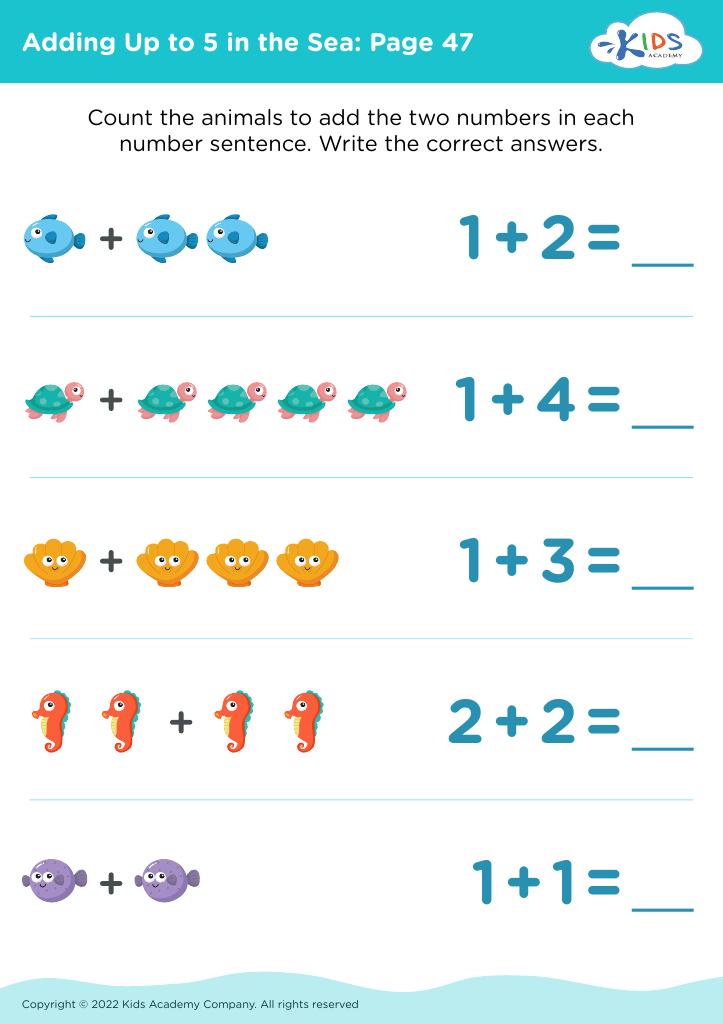
Adding Up to 5 in the Sea: Page 47
Worksheet
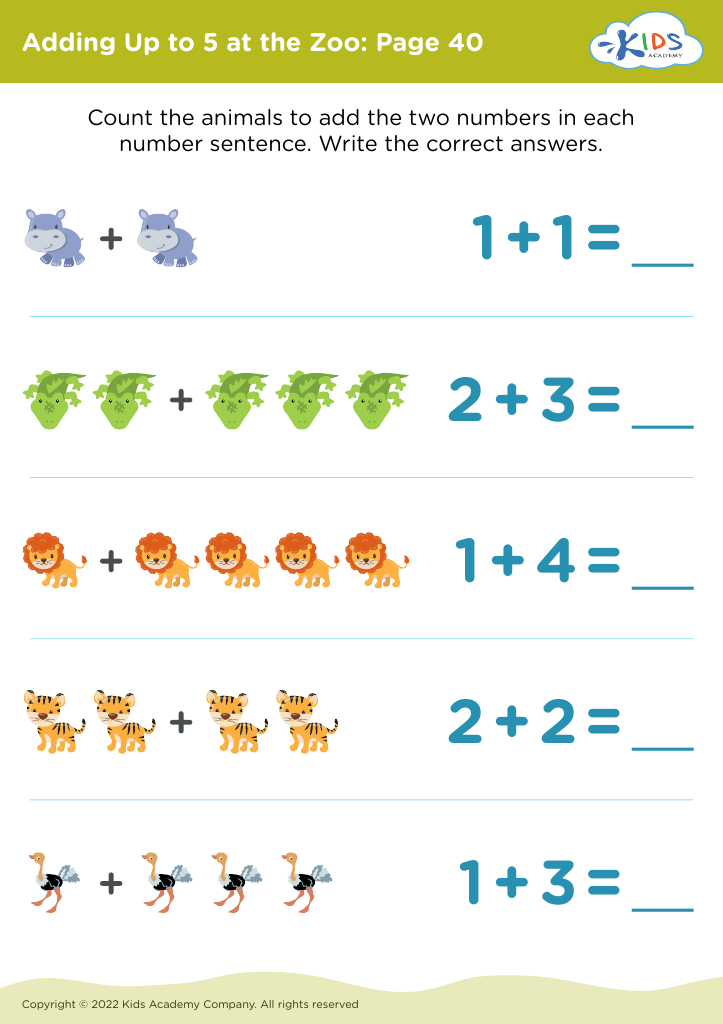
Adding Up to 5 at the Zoo: Page 40
Worksheet
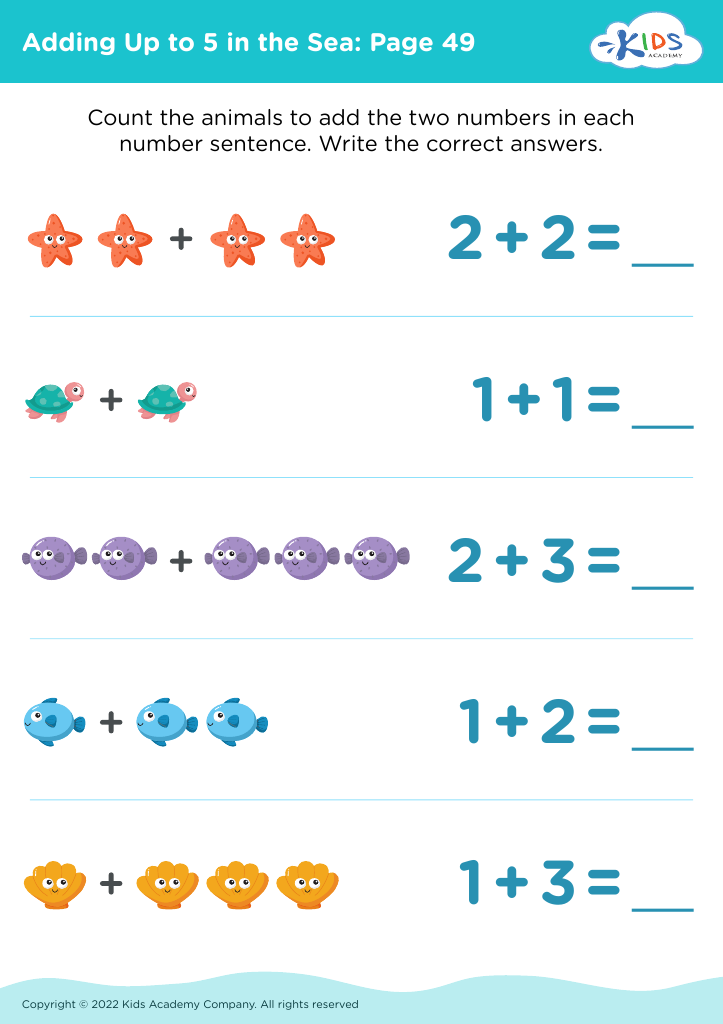
Adding Up to 5 in the Sea: Page 49
Worksheet
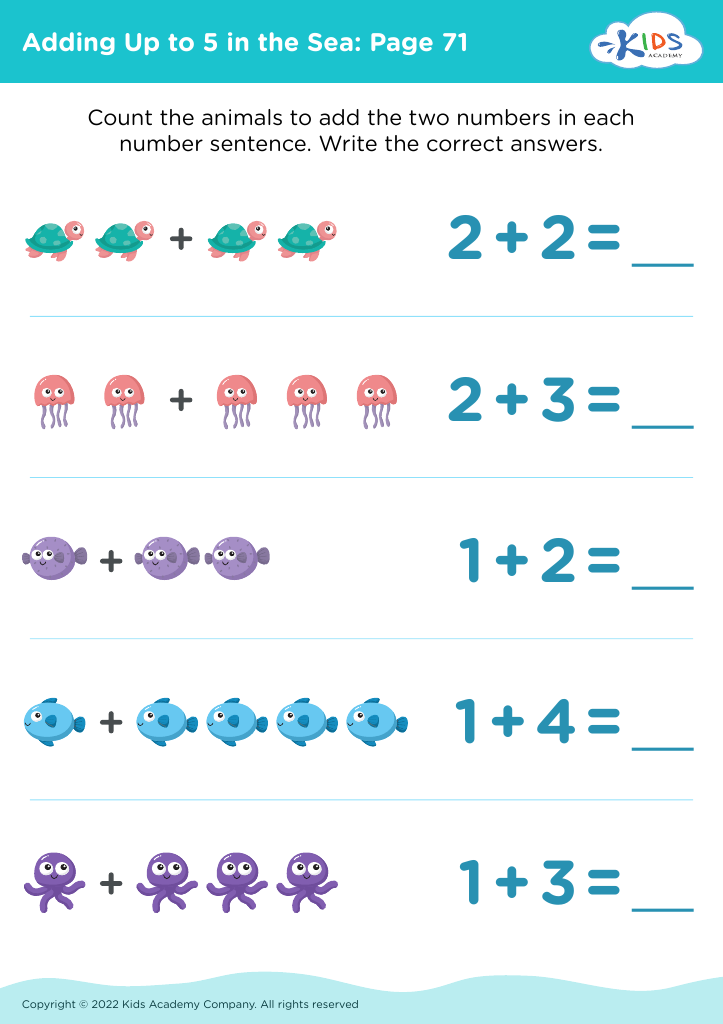
Adding Up to 5 in the Sea: Page 71
Worksheet
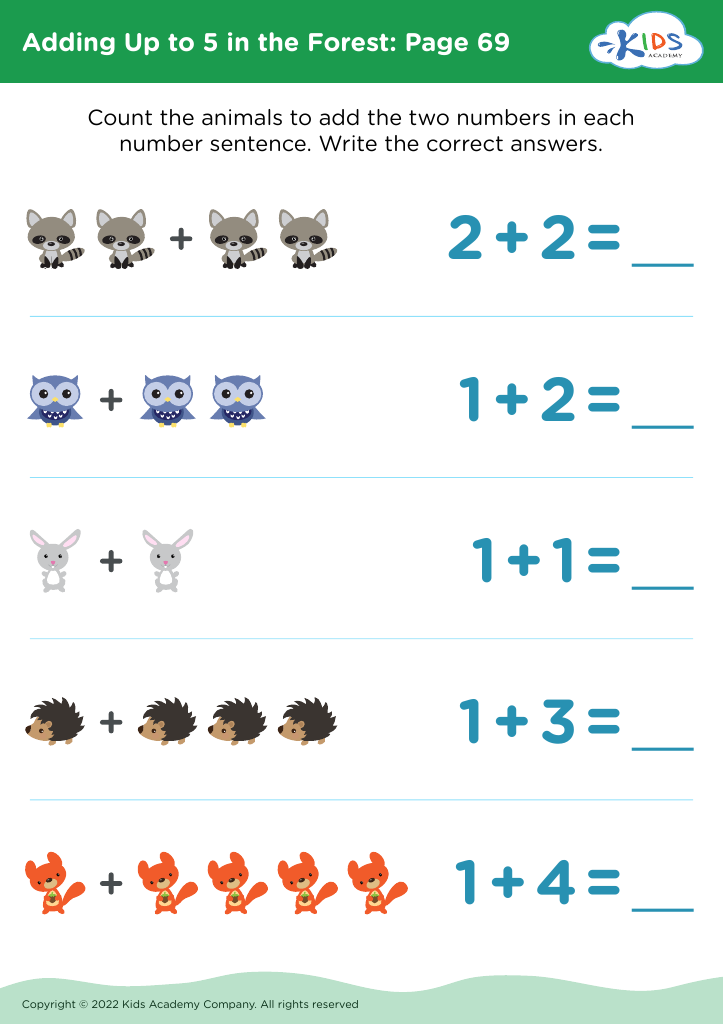
Adding Up to 5 in the Forest: Page 69
Worksheet
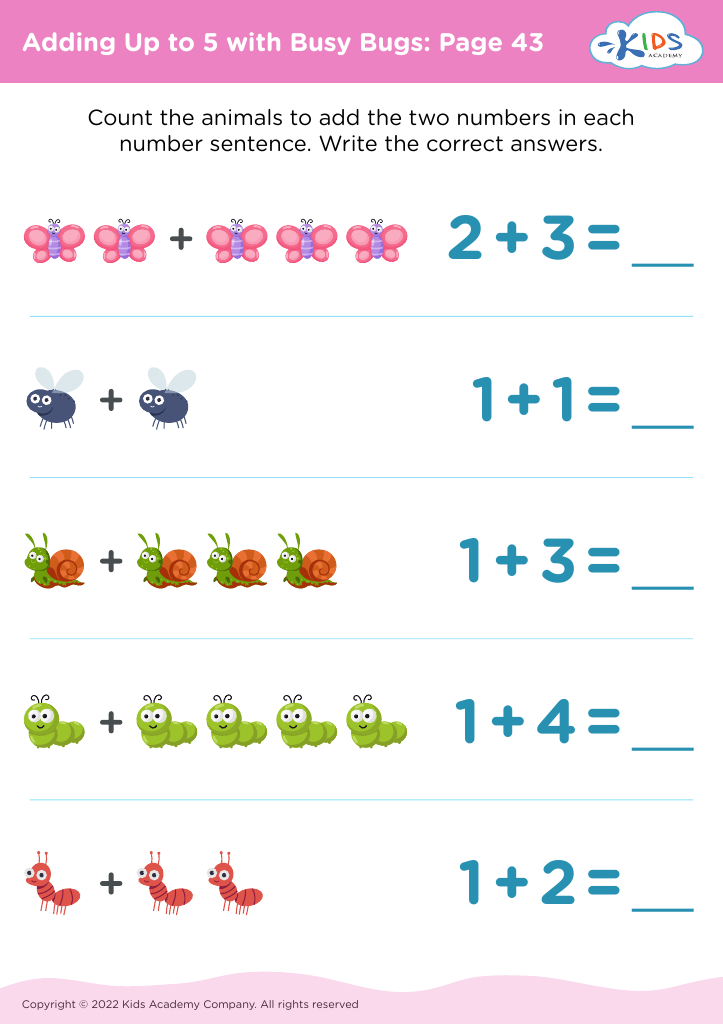
Adding Up to 5 with Busy Bugs: Page 43
Worksheet
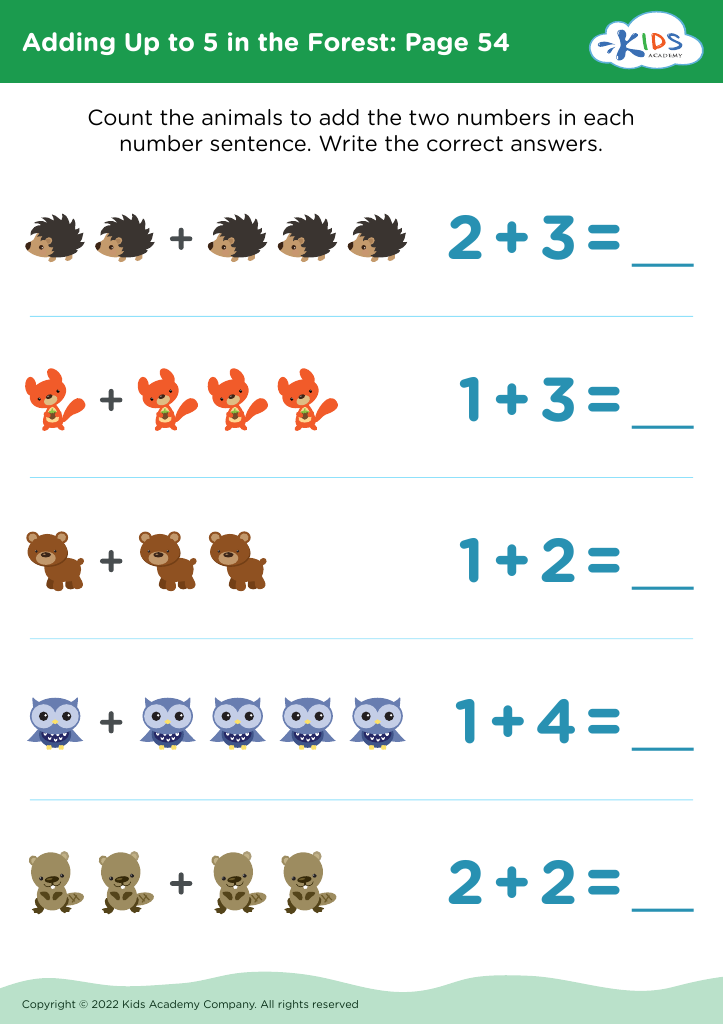
Adding Up to 5 in the Forest: Page 54
Worksheet
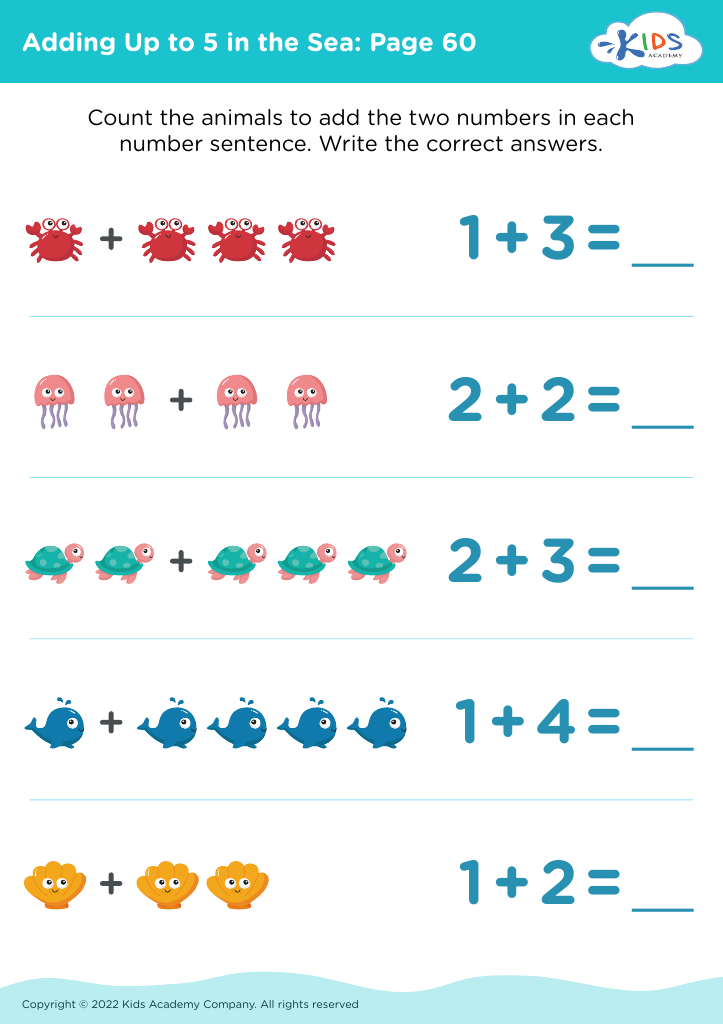
Adding Up to 5 in the Sea: Page 60
Worksheet
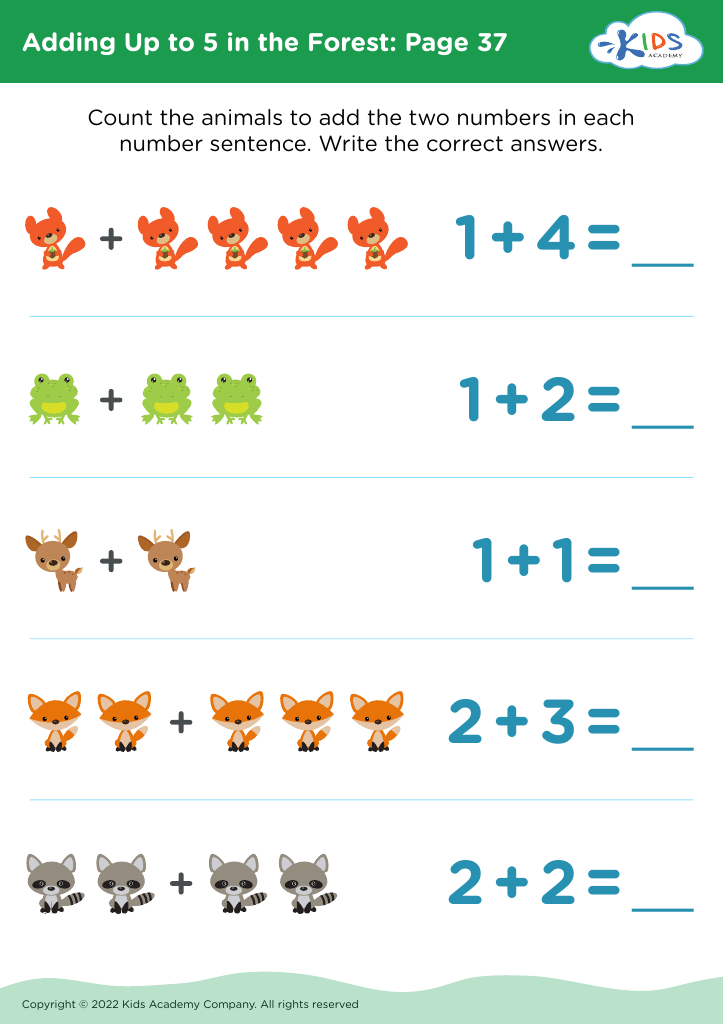
Adding Up to 5 in the Forest: Page 37
Worksheet
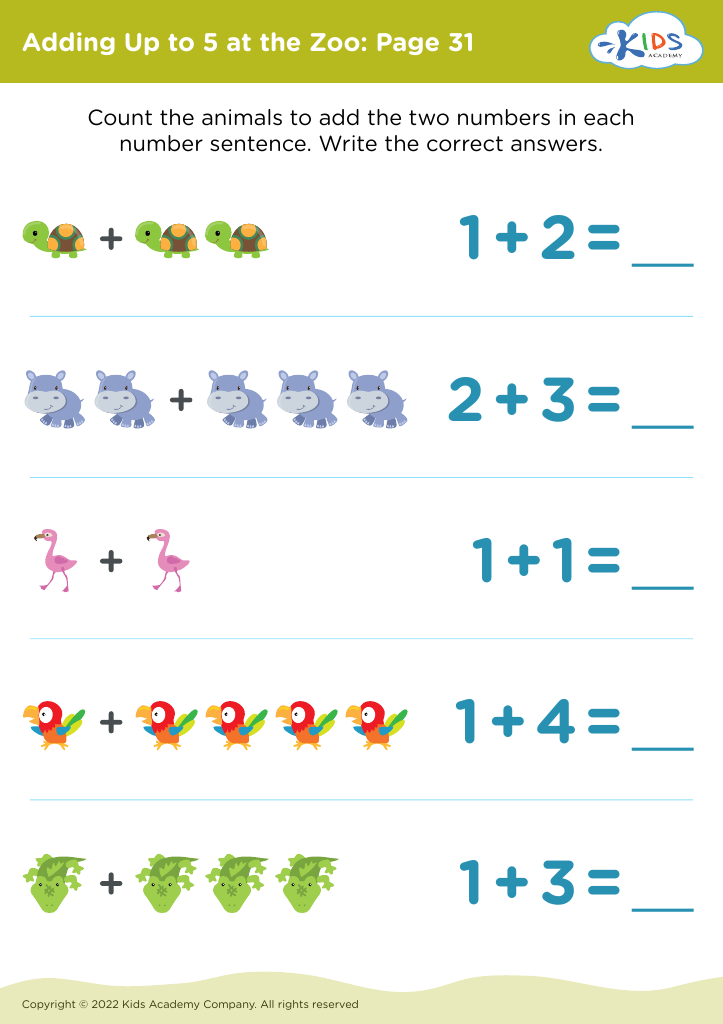
Adding Up to 5 at the Zoo: Page 31
Worksheet
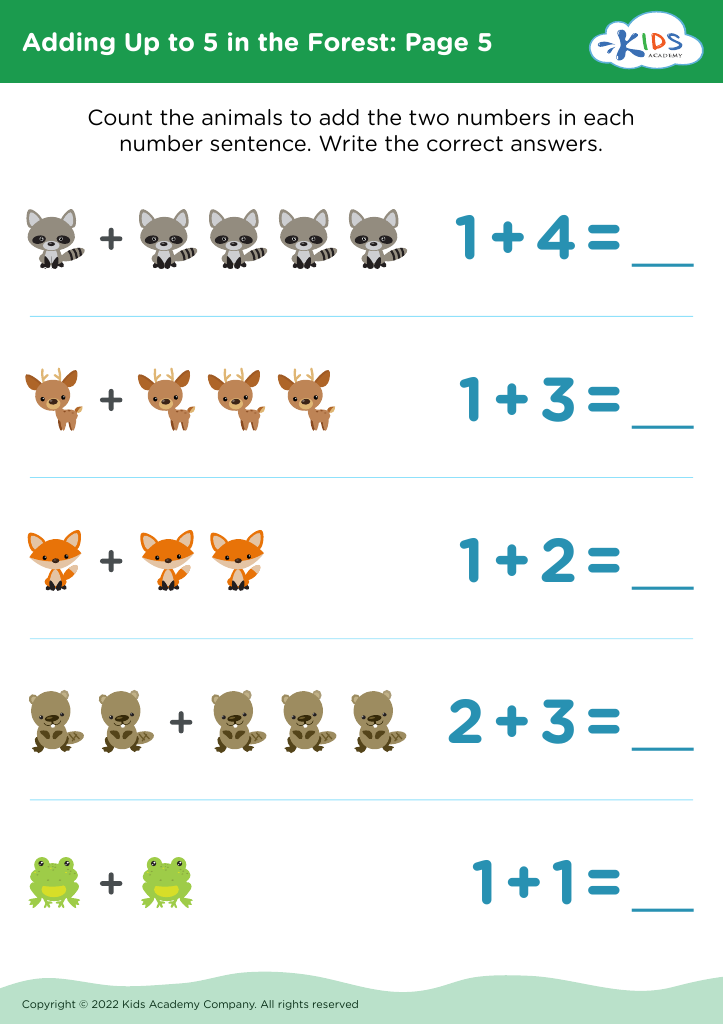
Adding Up to 5 in the Forest: Page 5
Worksheet
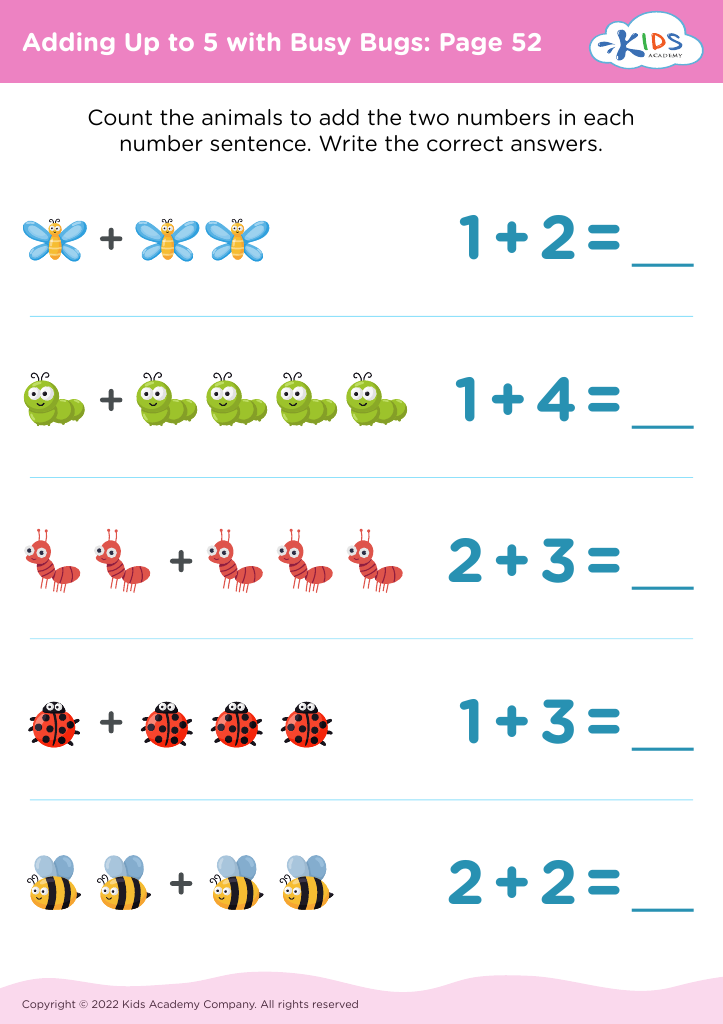
Adding Up to 5 with Busy Bugs: Page 52
Worksheet
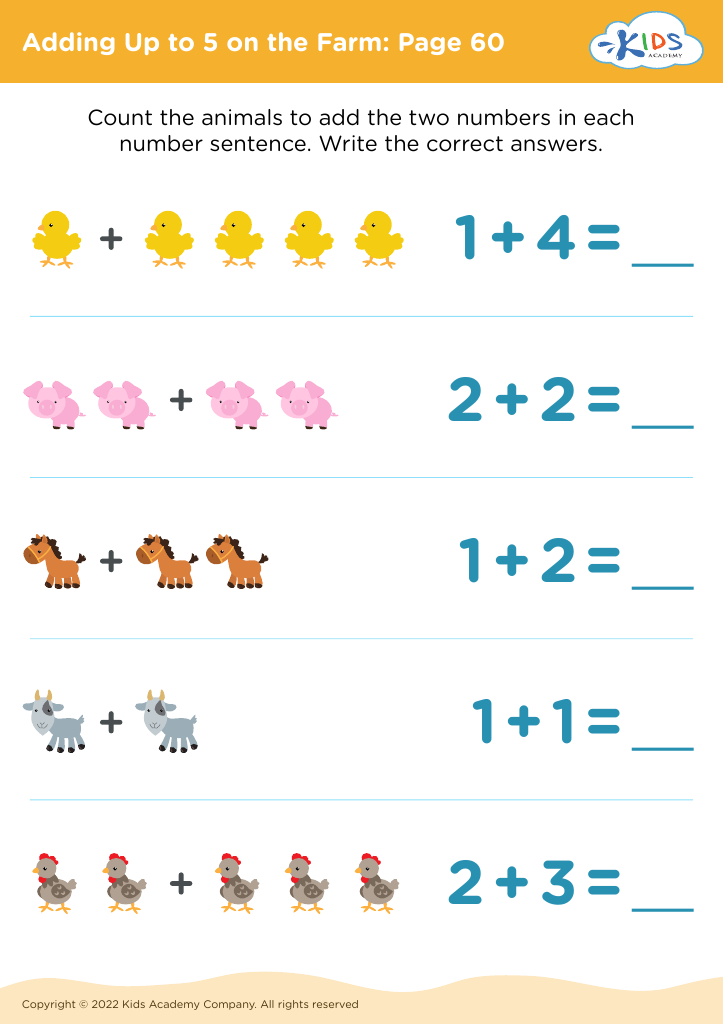
Adding Up to 5 on the Farm: Page 60
Worksheet
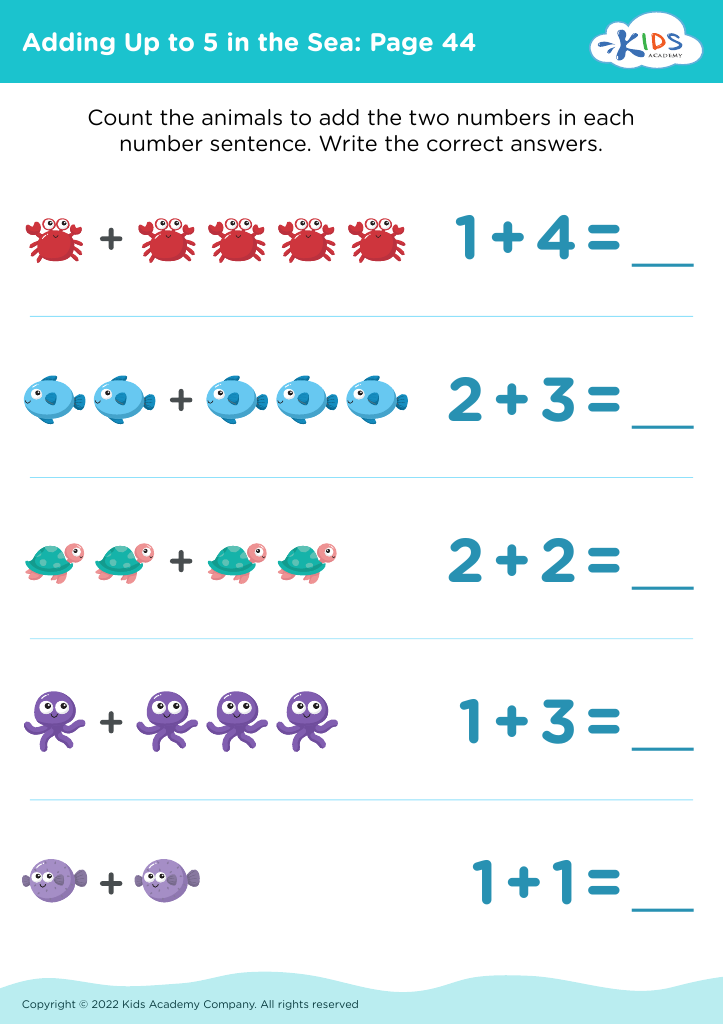
Adding Up to 5 in the Sea: Page 44
Worksheet


... 3 4

Cognitive development in early childhood, particularly the ability to add numbers up to 5, plays a crucial role in a child's overall learning and future academic success. For children aged 4-6, mastering basic addition helps build foundational skills not only in mathematics but also in problem-solving and critical thinking. When parents and teachers nurture these skills, they encourage children to explore numbers, understand relationships, and make connections between concepts.

More importantly, adding up to 5 aids in the development of number sense, a vital cognitive skill that allows children to comprehend quantities, recognize patterns, and develop mathematical vocabulary. This early exposure to addition fosters confidence and a positive attitude towards math, reducing the likelihood of math anxiety later in life.

Furthermore, engaging in cognitive activities, such as counting objects or playing math-related games, enhances attention span and memory. It promotes social skills as children engage in collaborative learning experiences. For parents and teachers, facilitating these experiences helps scaffold children’s learning, ensuring they progress at a healthy pace. By prioritizing cognitive development in early years, adults can significantly influence children's enthusiasm for learning and lay the groundwork for future educational achievements.