Filters

232 filtered results

Clear all filters
Favorites
With answer key
Interactive

232 filtered results

Difficulty Level

Grade


Check out this FREE Trial Lesson on Adding Up to 5 for age 4-6!

My Family

Favorites
With answer key
Interactive
  • 4-6
  • Counting practice
  • Adding Up to 5
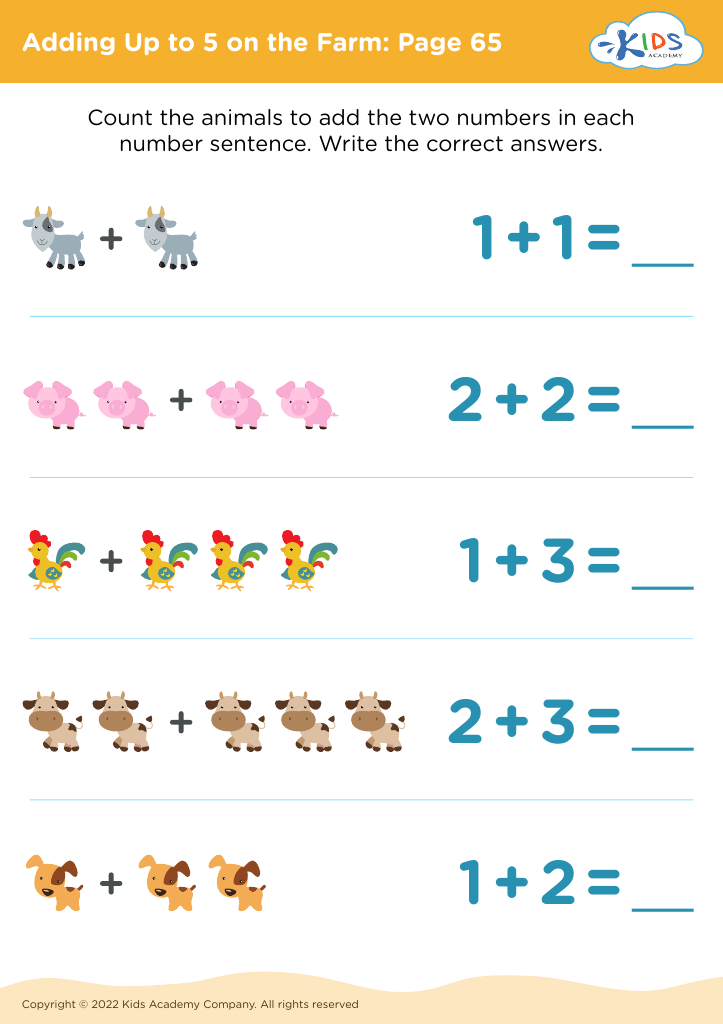
Adding Up to 5 on the Farm: Page 65
Worksheet
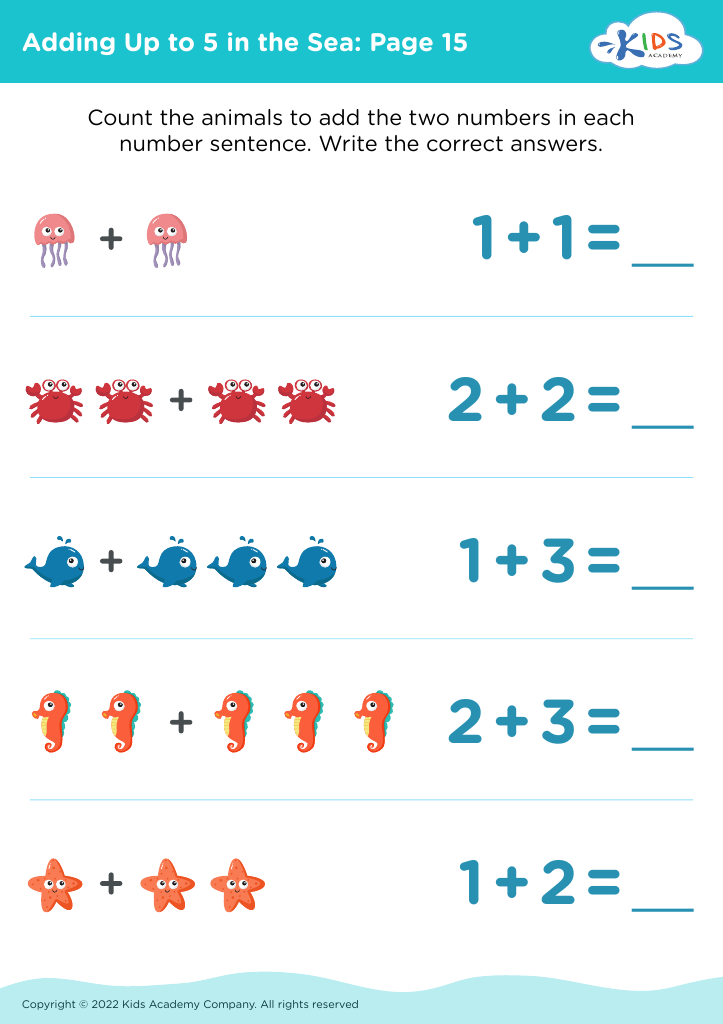
Adding Up to 5 in the Sea: Page 15
Worksheet
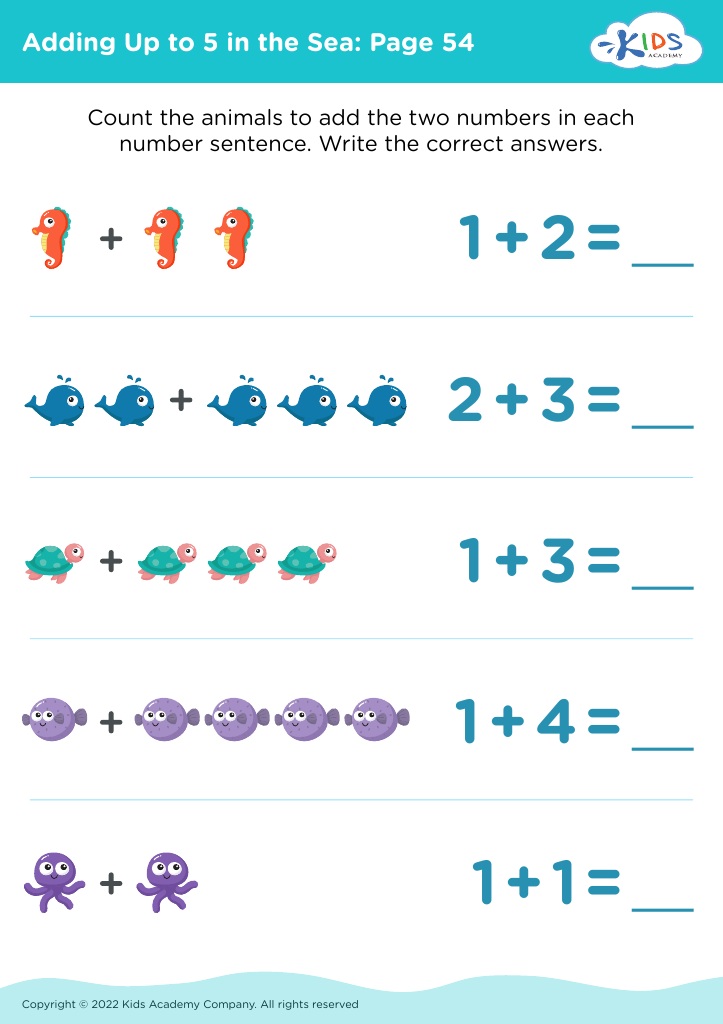
Adding Up to 5 in the Sea: Page 54
Worksheet
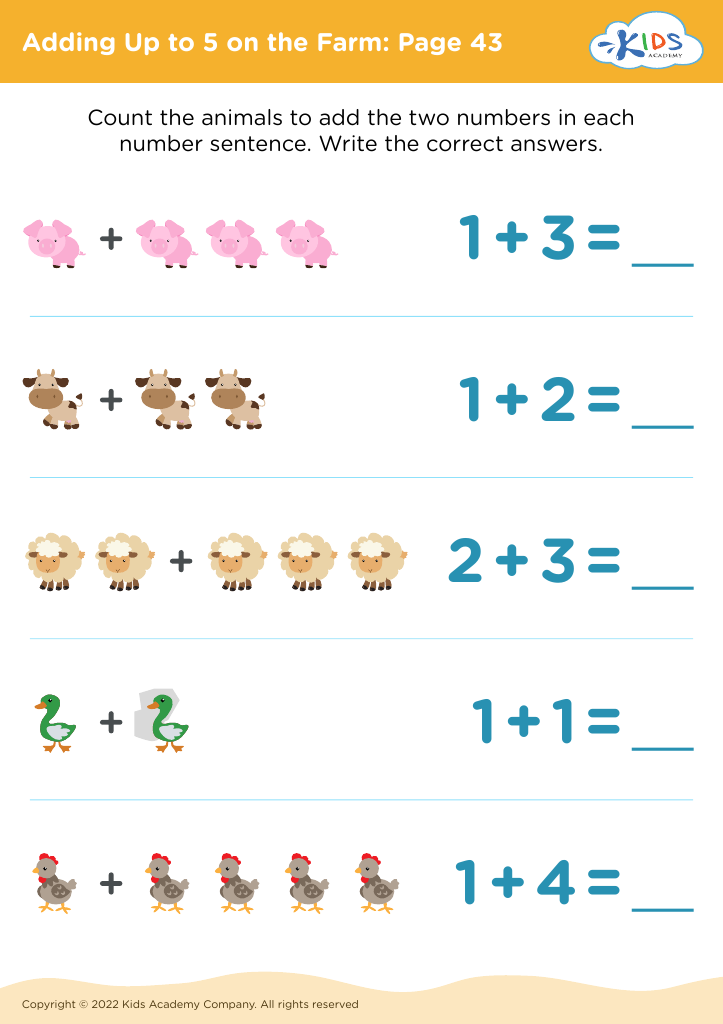
Adding Up to 5 on the Farm: Page 43
Worksheet
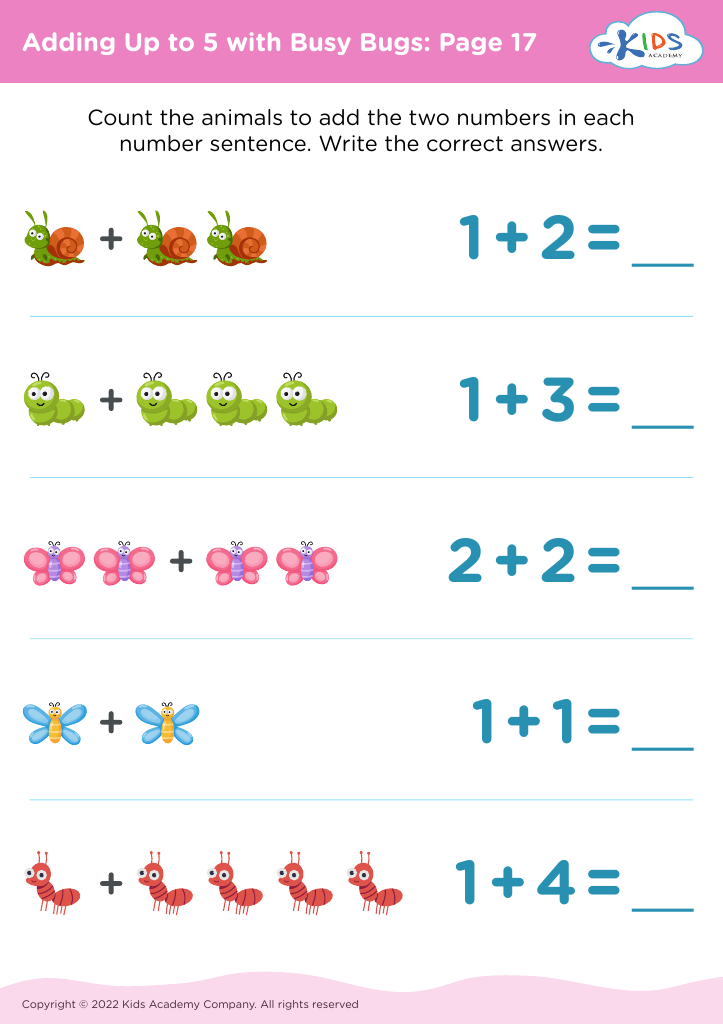
Adding Up to 5 with Busy Bugs: Page 17
Worksheet
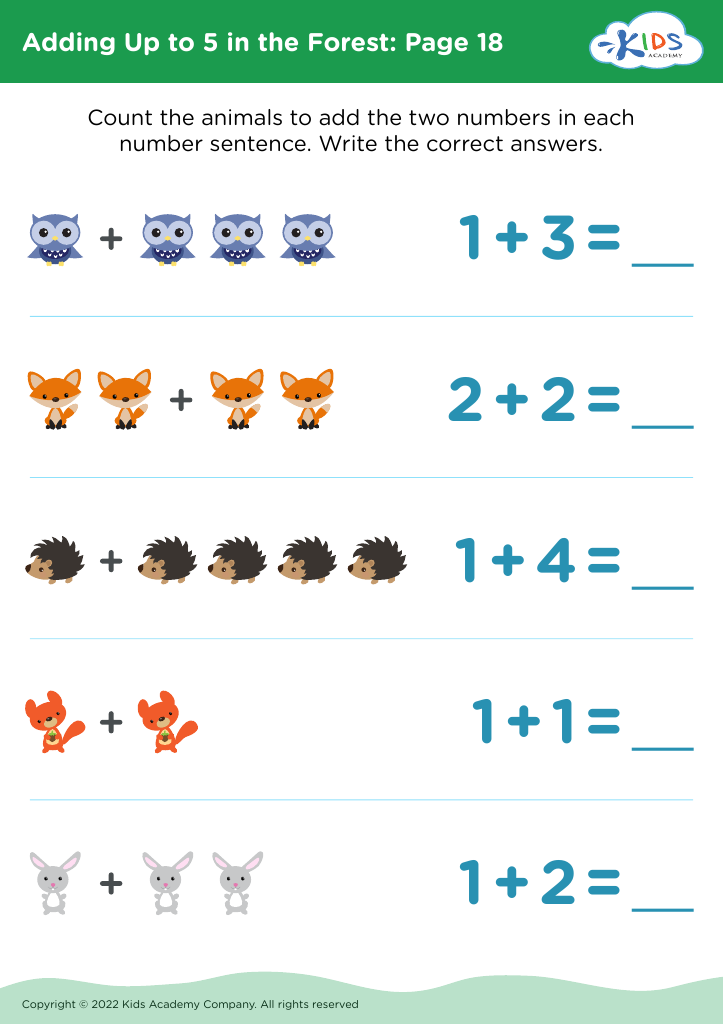
Adding Up to 5 in the Forest: Page 18
Worksheet
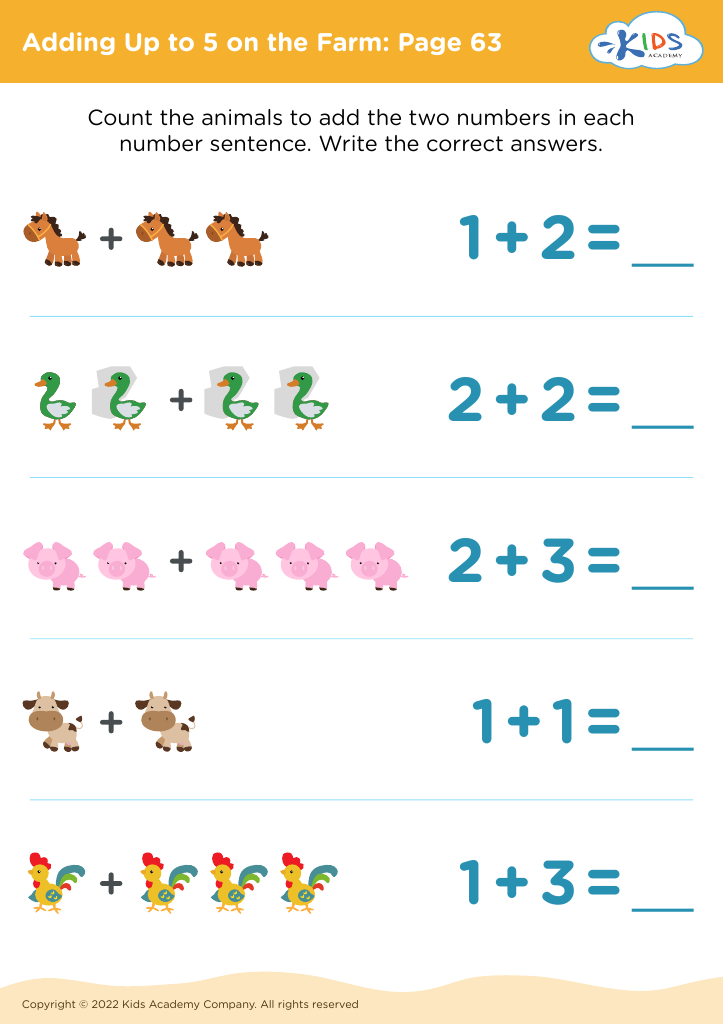
Adding Up to 5 on the Farm: Page 63
Worksheet
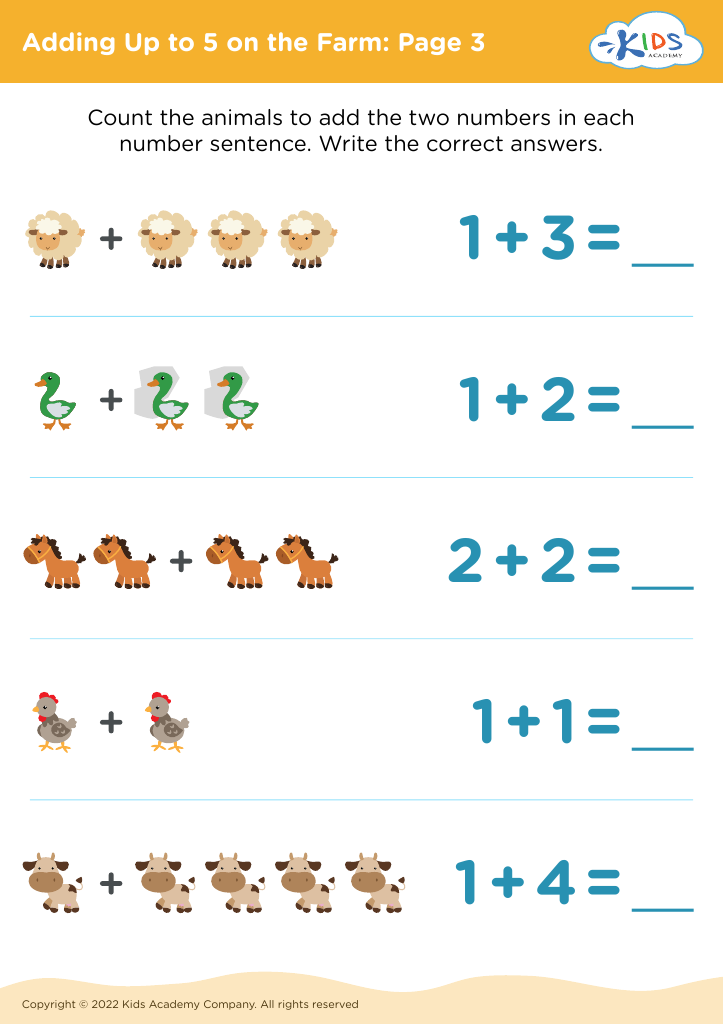
Adding Up to 5 on the Farm: Page 3
Worksheet
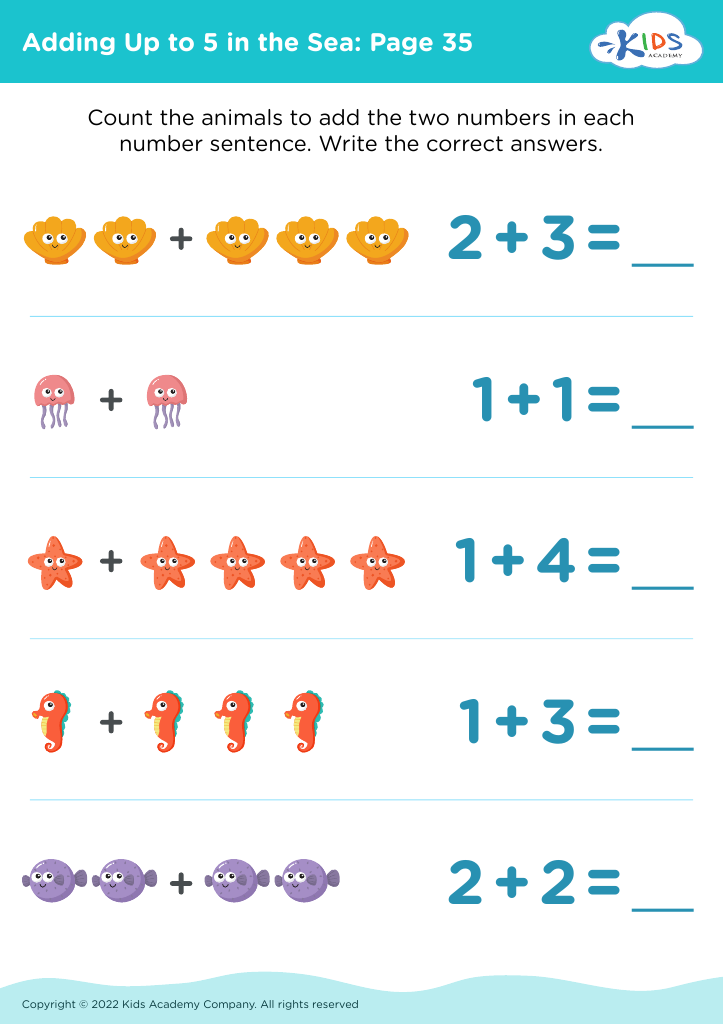
Adding Up to 5 in the Sea: Page 35
Worksheet
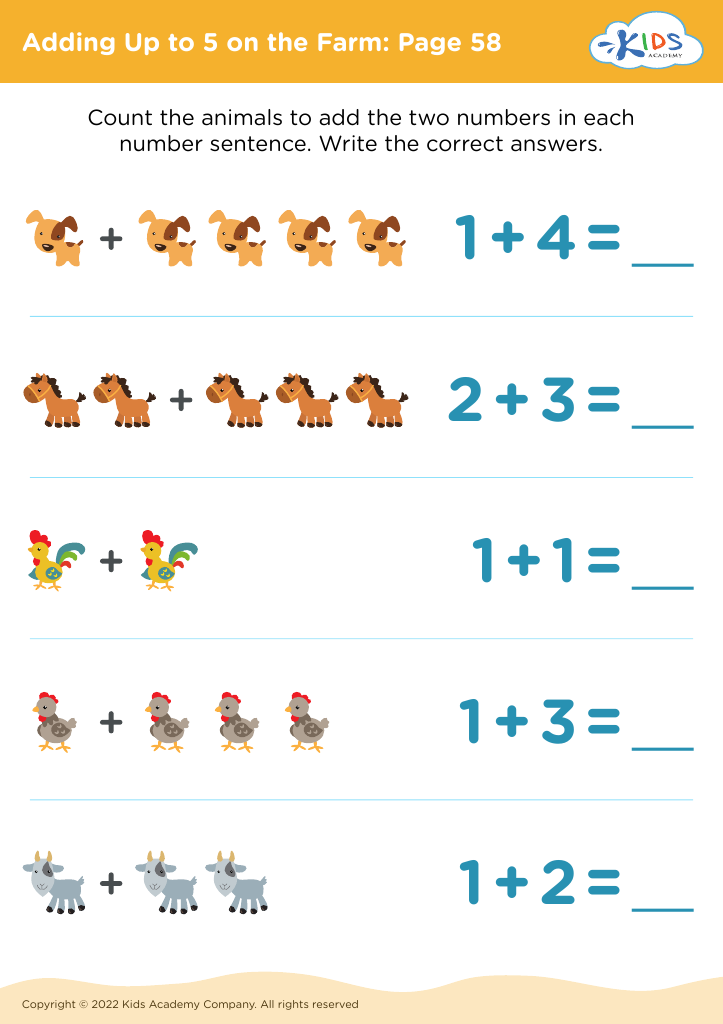
Adding Up to 5 on the Farm: Page 58
Worksheet
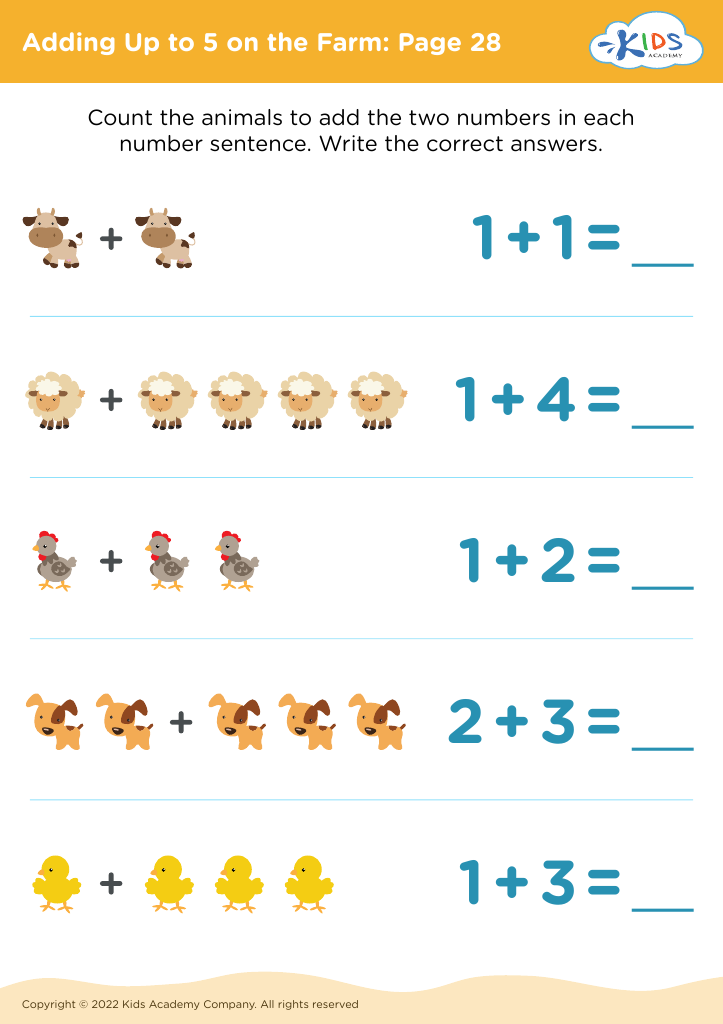
Adding Up to 5 on the Farm: Page 28
Worksheet
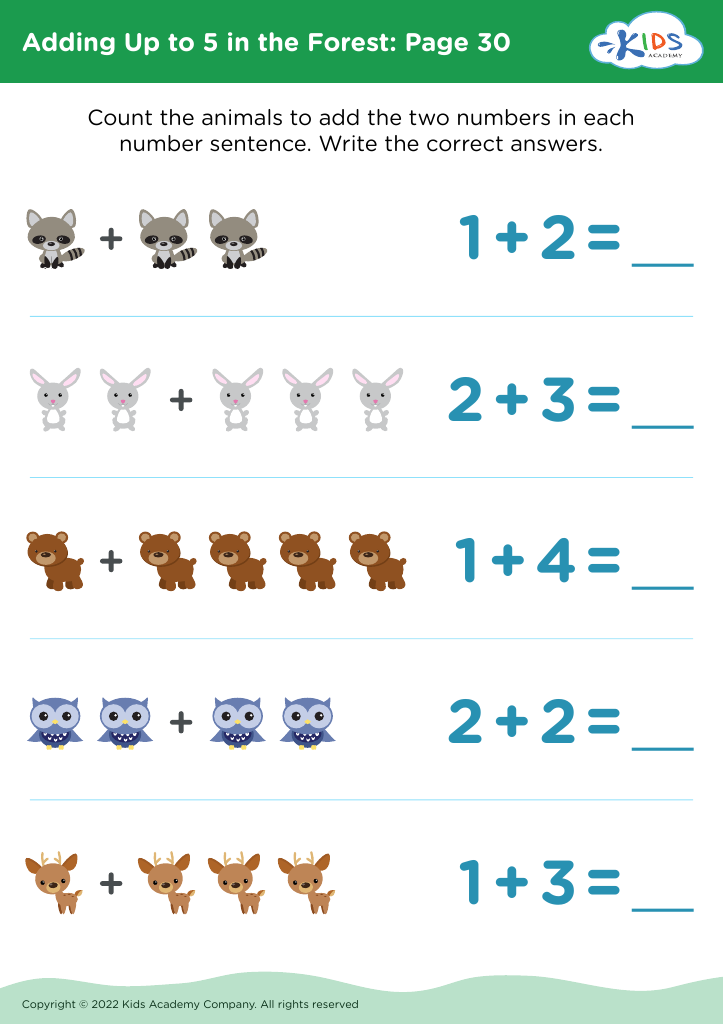
Adding Up to 5 in the Forest: Page 30
Worksheet
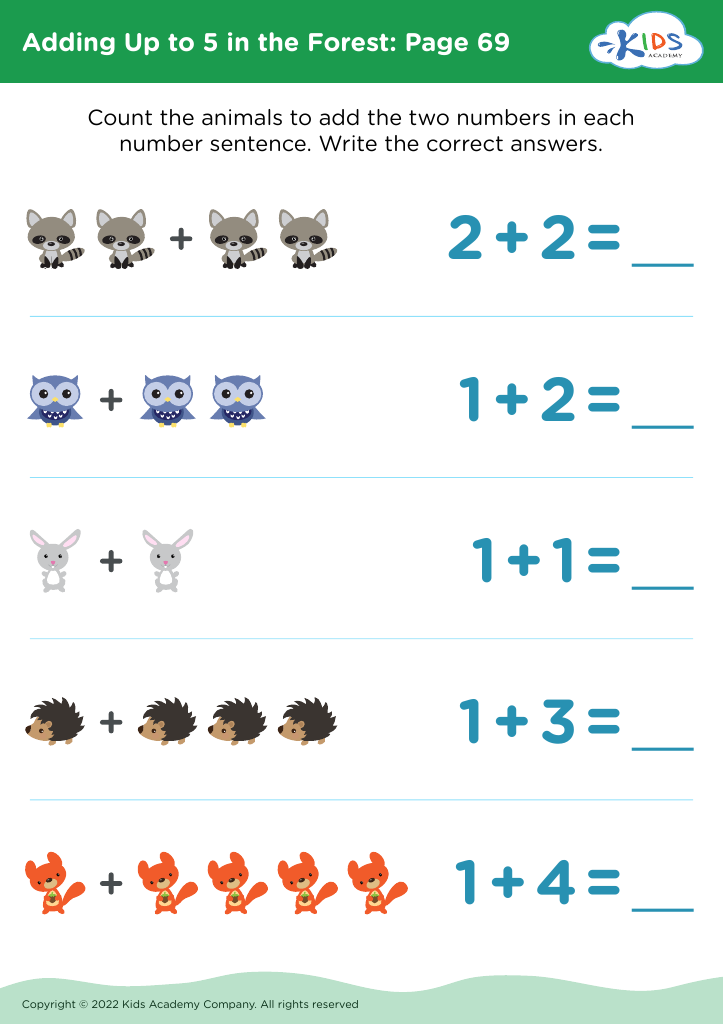
Adding Up to 5 in the Forest: Page 69
Worksheet
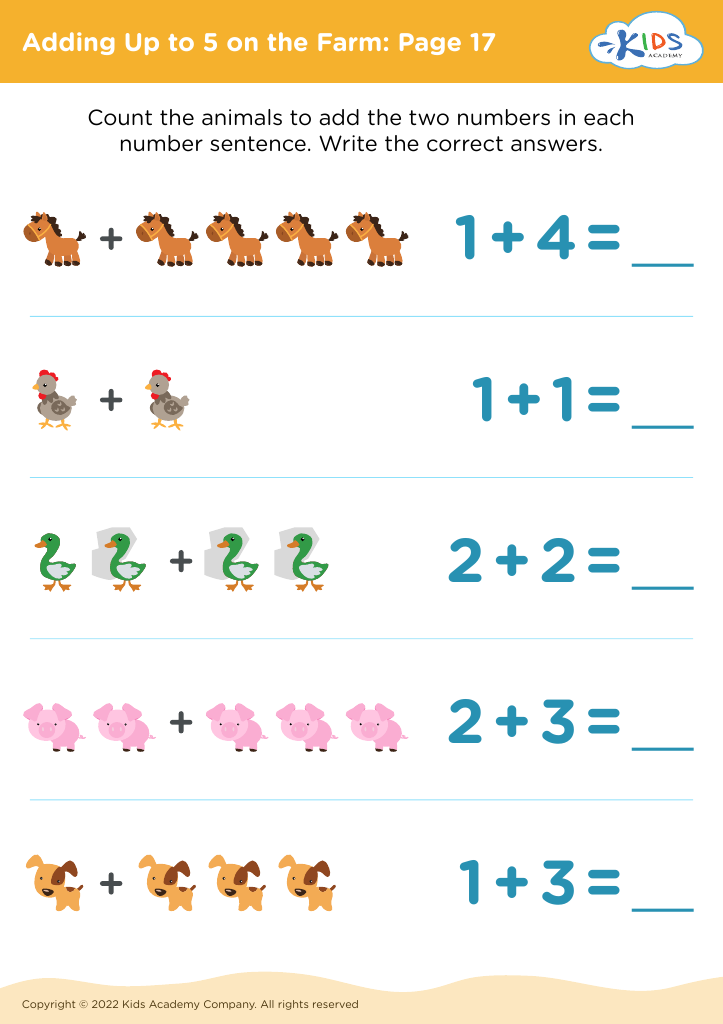
Adding Up to 5 on the Farm: Page 17
Worksheet
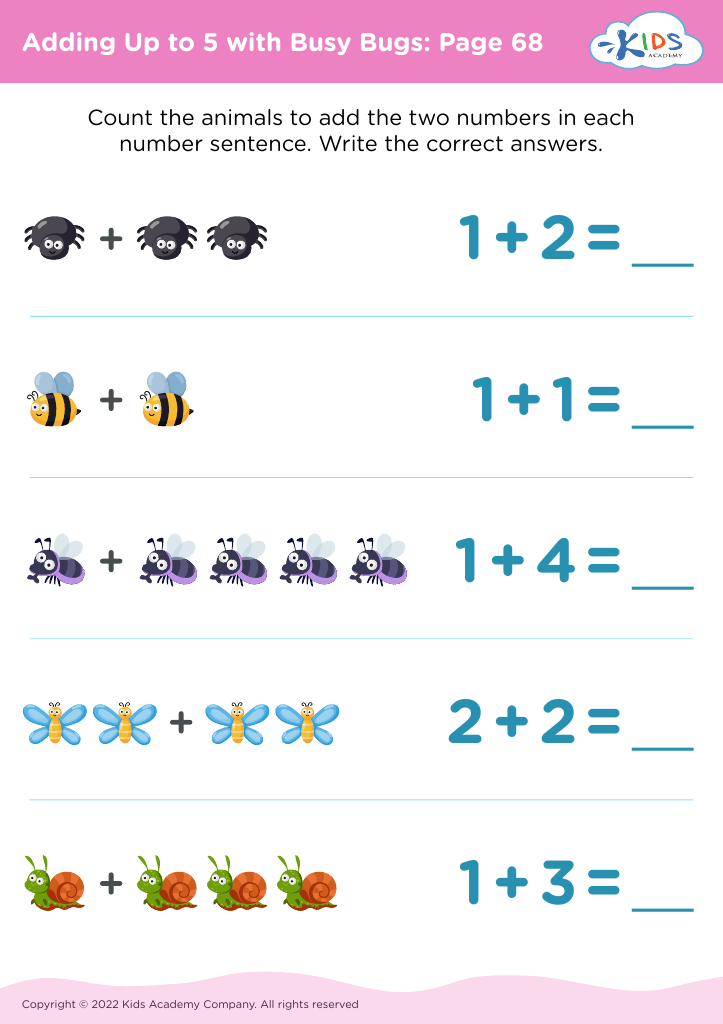
Adding Up to 5 with Busy Bugs: Page 68
Worksheet
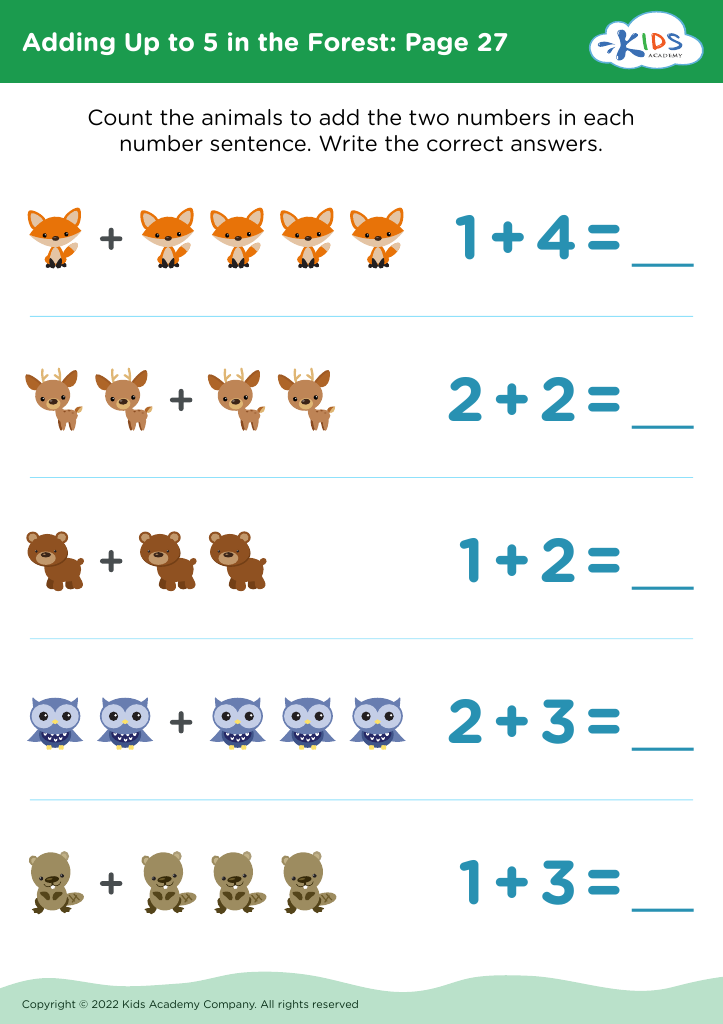
Adding Up to 5 in the Forest: Page 27
Worksheet
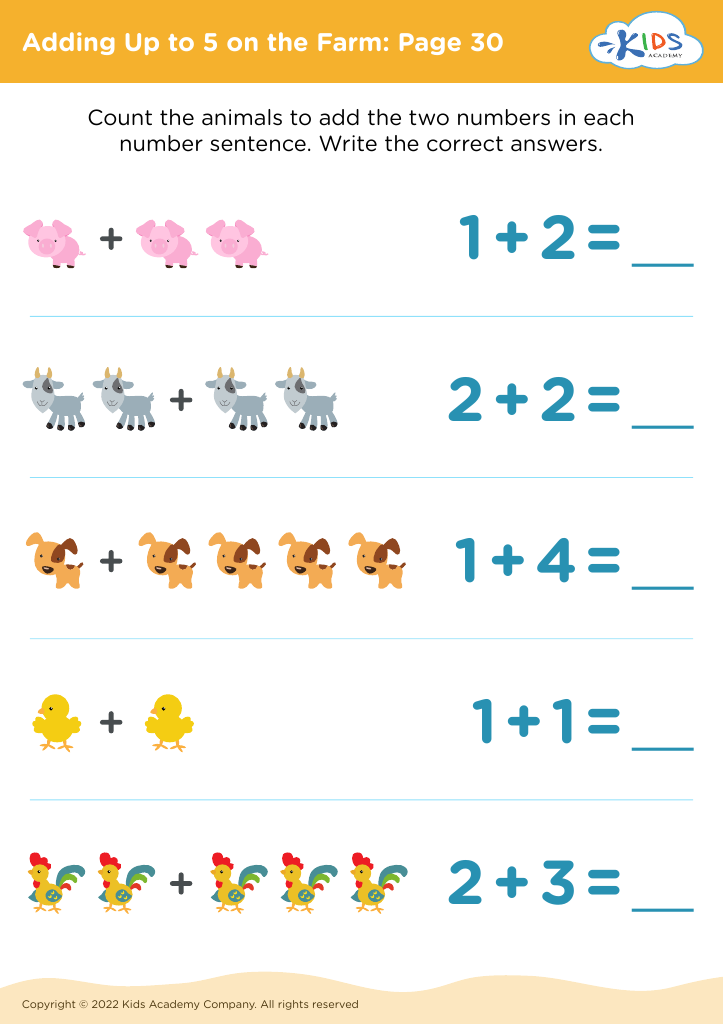
Adding Up to 5 on the Farm: Page 30
Worksheet
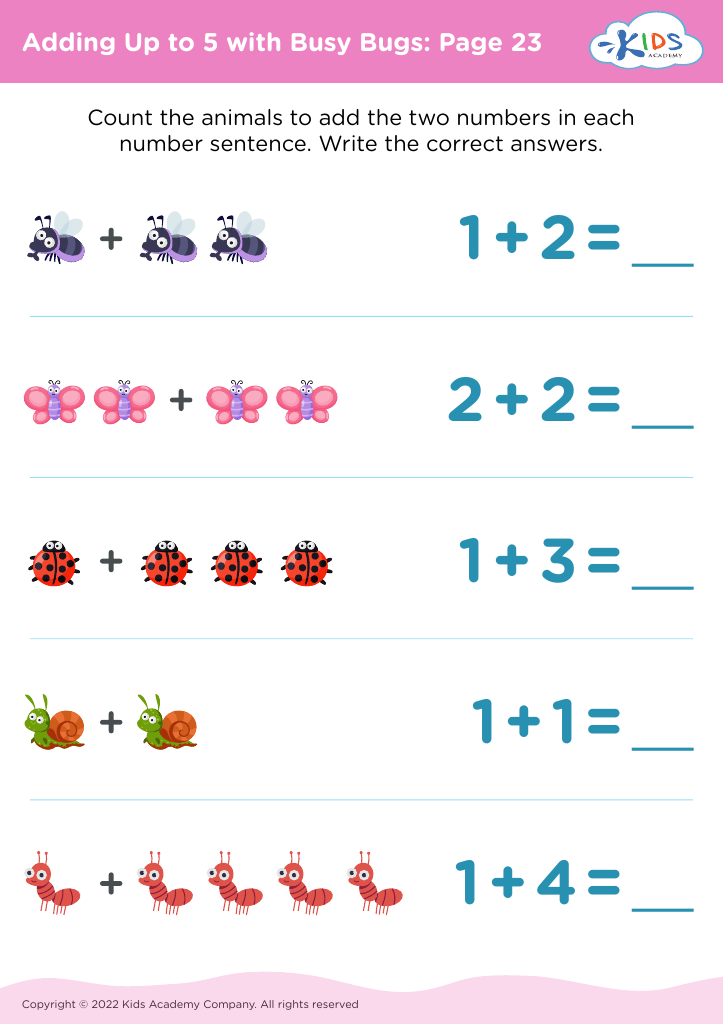
Adding Up to 5 with Busy Bugs: Page 23
Worksheet
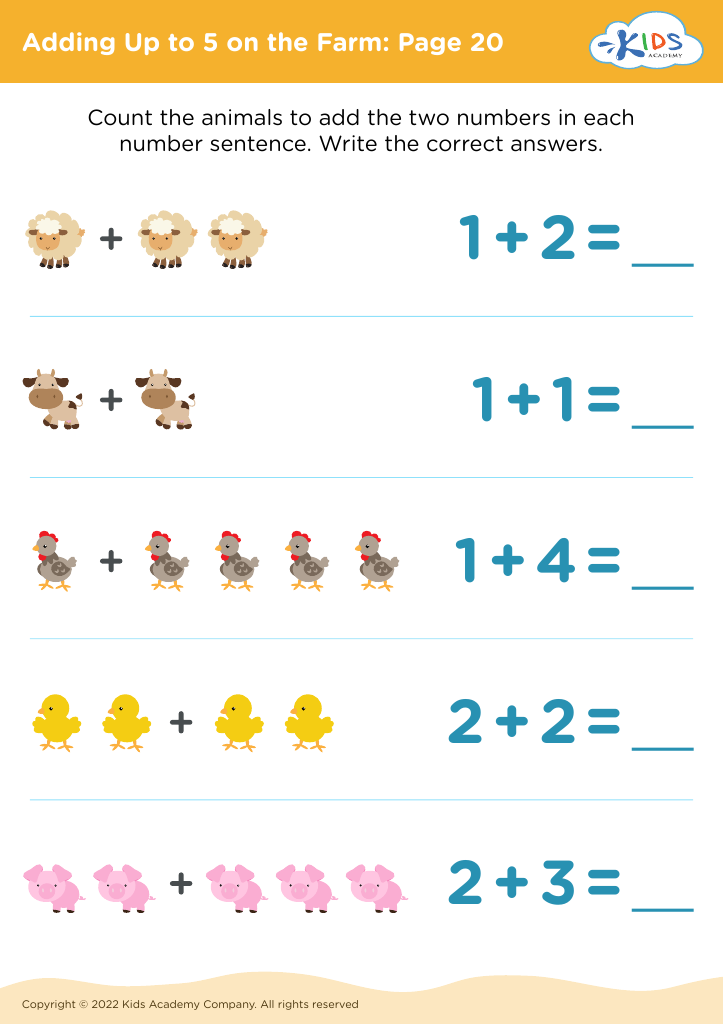
Adding Up to 5 on the Farm: Page 20
Worksheet
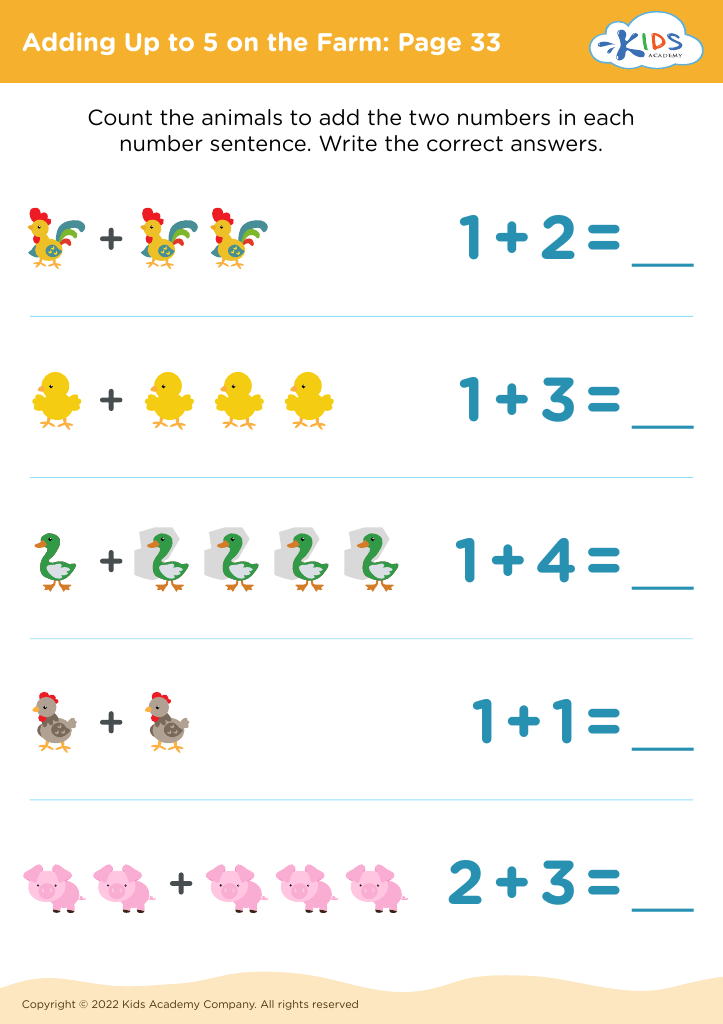
Adding Up to 5 on the Farm: Page 33
Worksheet
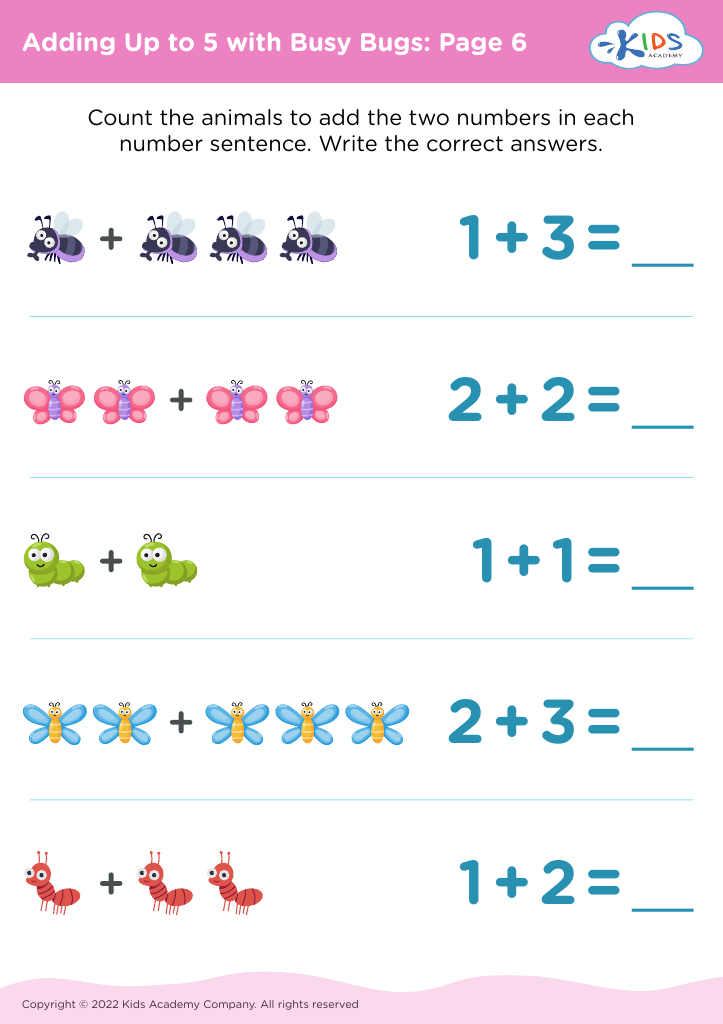
Adding Up to 5 with Busy Bugs: Page 6
Worksheet
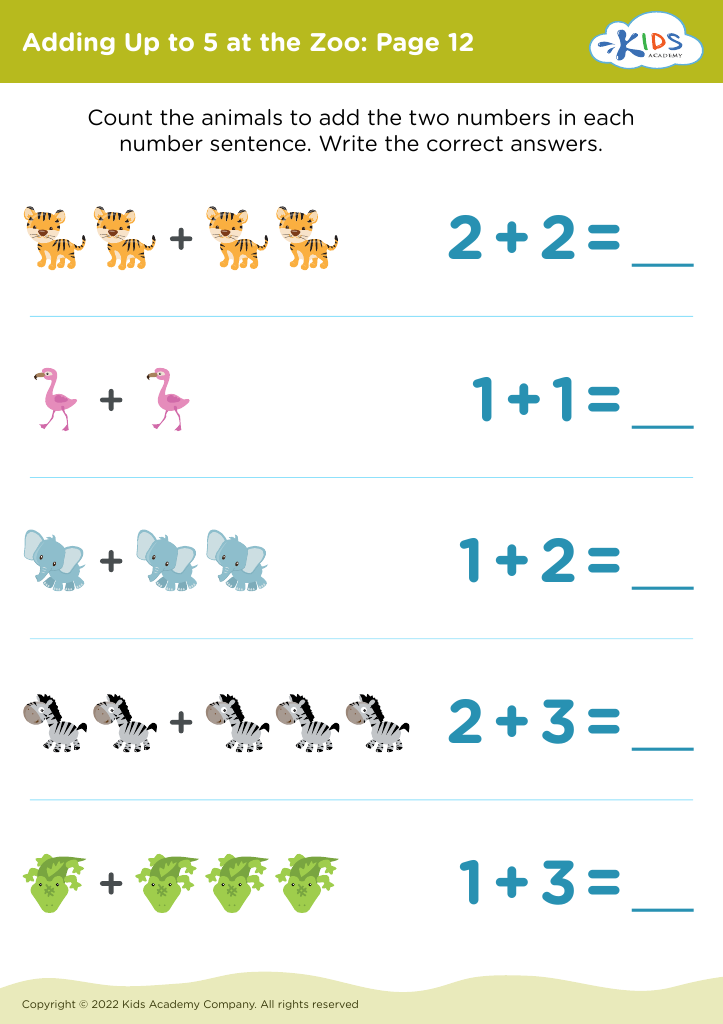
Adding Up to 5 at the Zoo: Page 12
Worksheet
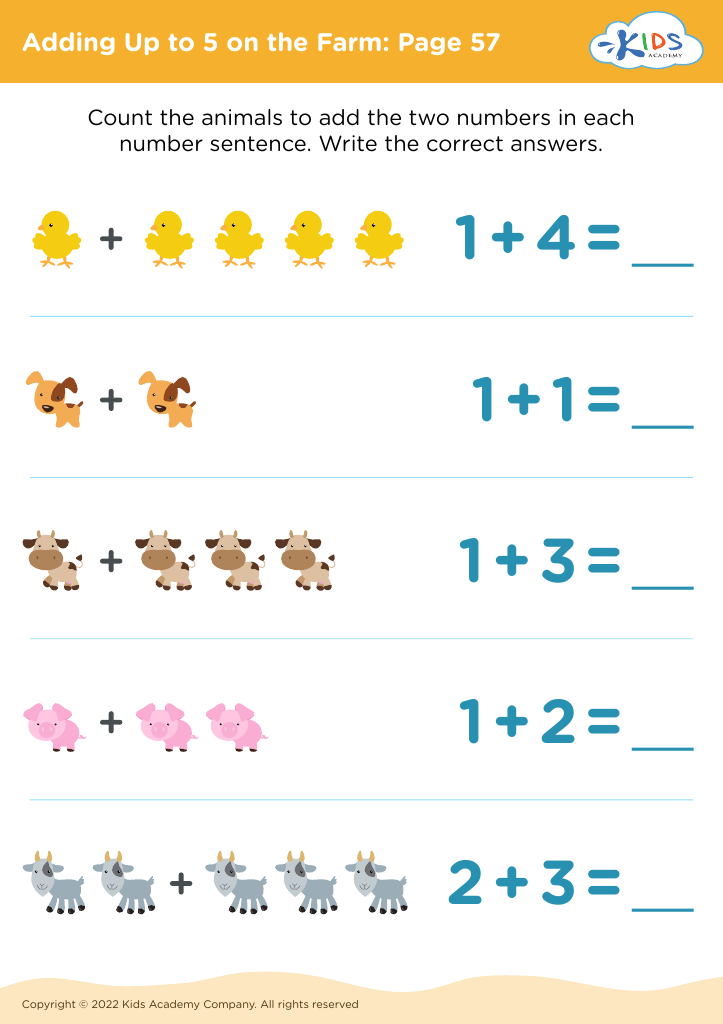
Adding Up to 5 on the Farm: Page 57
Worksheet
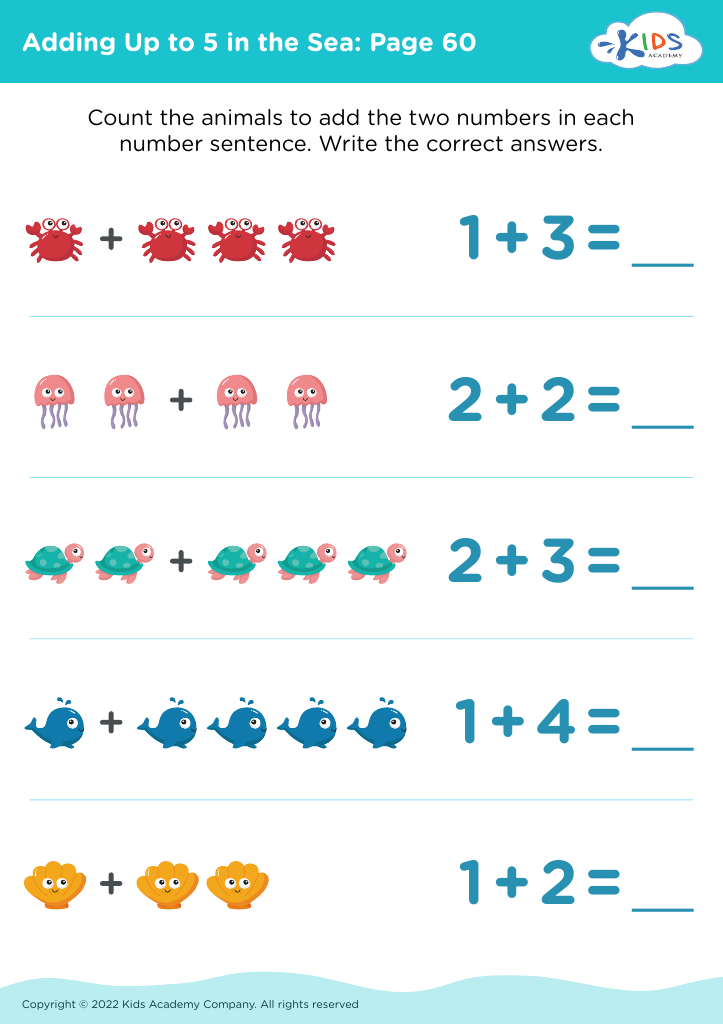
Adding Up to 5 in the Sea: Page 60
Worksheet


Counting practice and adding up to 5 are foundational math skills vital for young children's cognitive development. For children aged 4-6, mastering these basic concepts builds a strong mathematical foundation essential for future academic success.

Firstly, early exposure to counting enhances number sense—a child's ability to understand and manipulate numbers. This understanding includes recognizing number patterns, understanding quantity, and developing problem-solving skills. Integrating games or activities focused on adding up to 5 makes learning engaging and enjoyable, catering to young minds' exploratory and playful nature.

Additionally, grasping these basic addition concepts aids in developing confidence and a positive attitude toward math. Early successes in simple math problems foster a can-do mindset and resilience when faced with more challenging math tasks later in their academic journey.

Counting up to 5 also complements language development and fine motor skills. Activities like counting objects or arranging items in specific numbers stimulate verbal skills and hand-eye coordination, fostering holistic growth.

Moreover, parents and teachers who prioritize early math skills promote academic readiness, ensuring children are well-prepared for the school curriculum's progression. Therefore, investing time and effort in teaching young learners to count and add up to 5 cultivates essential competencies that ripple into broader learning domains.