Counting skills Adding Up to 5 Worksheets for Ages 4-6 - Page 5
102 filtered results
-
From - To



.jpg)



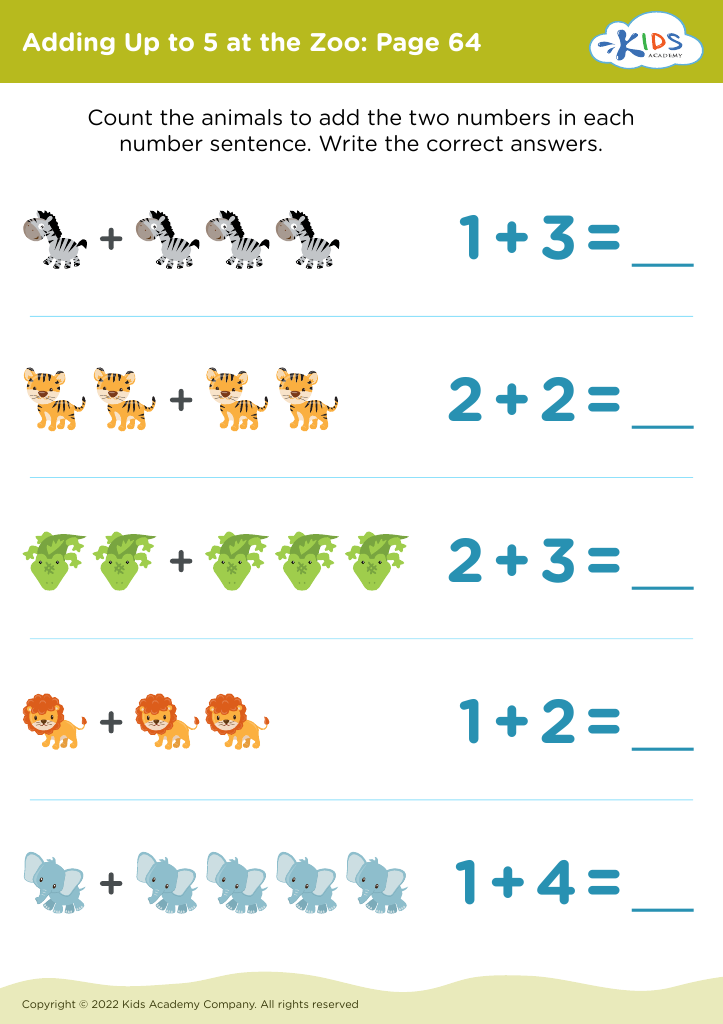
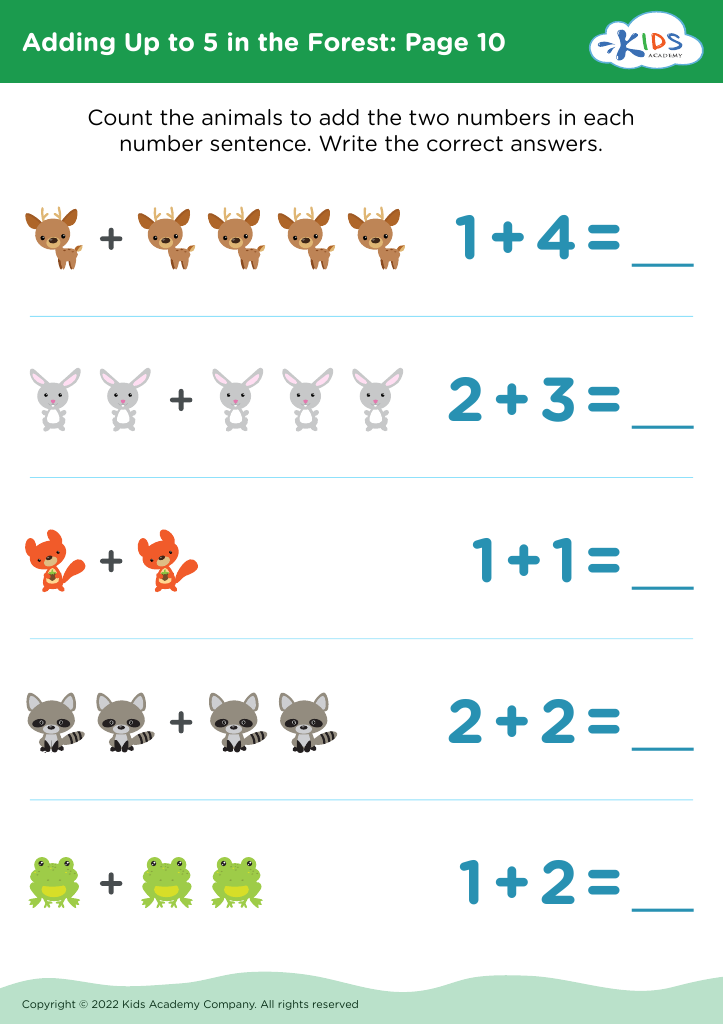
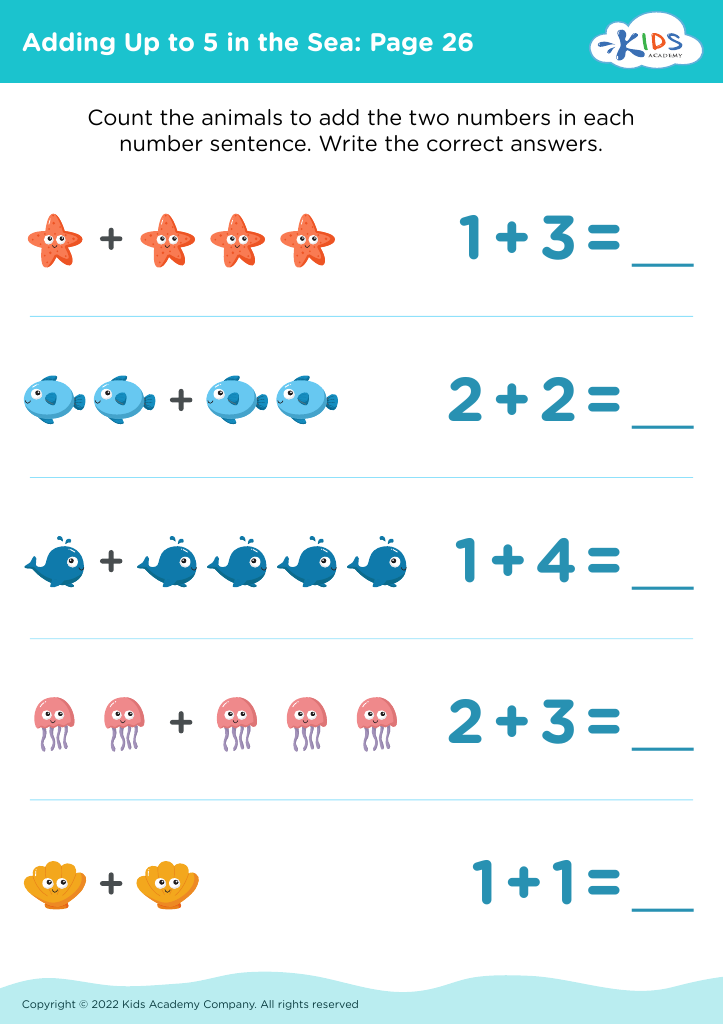
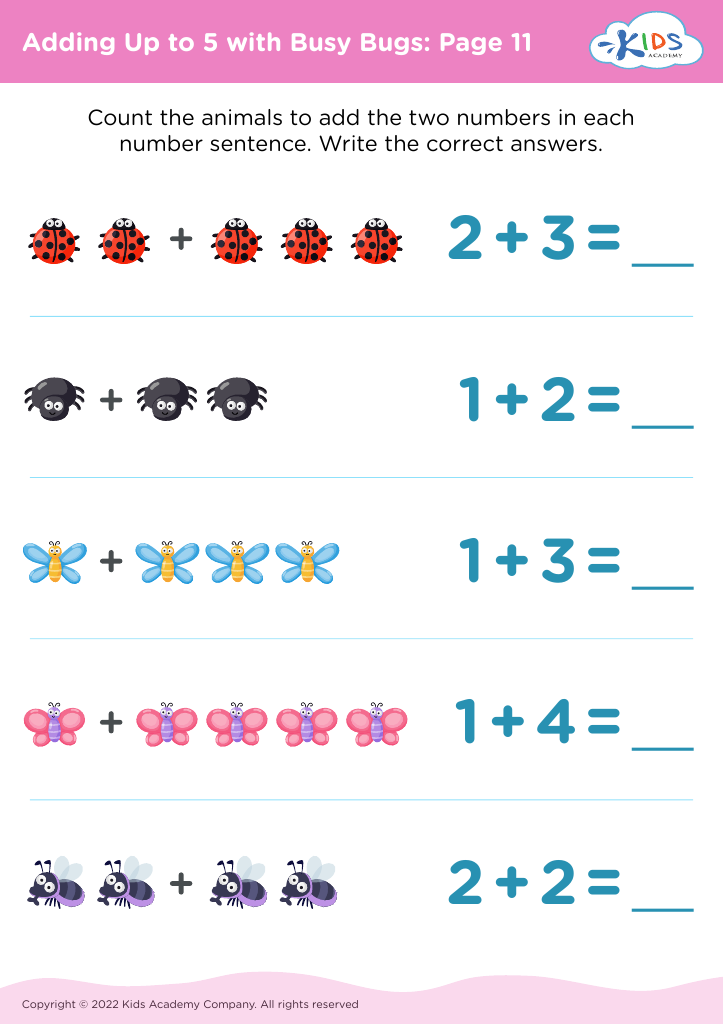
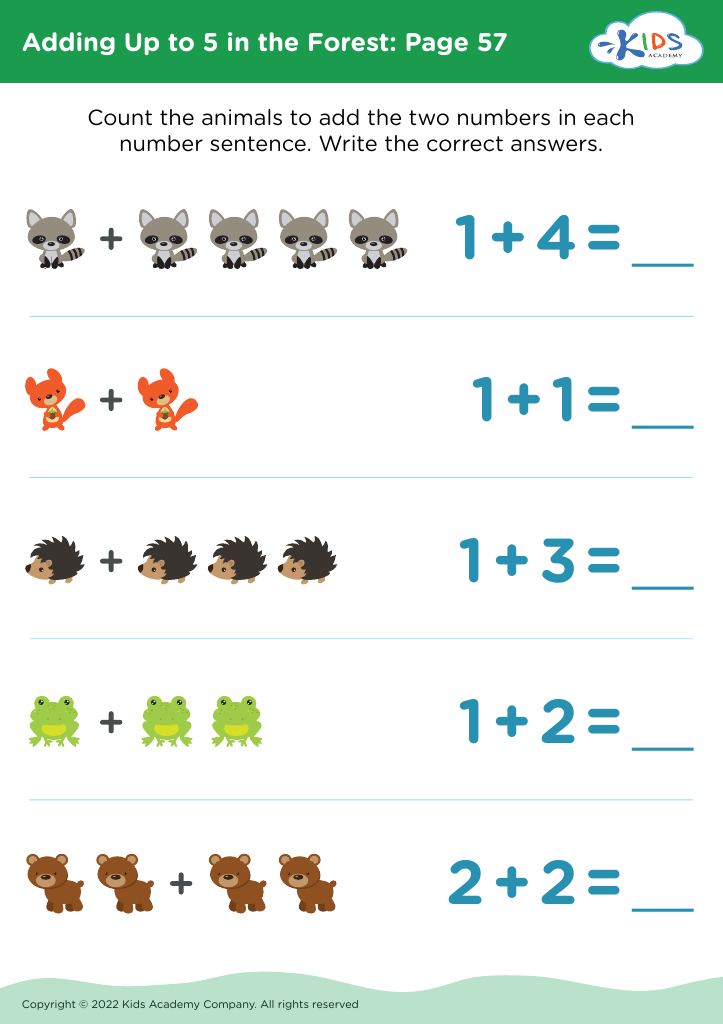
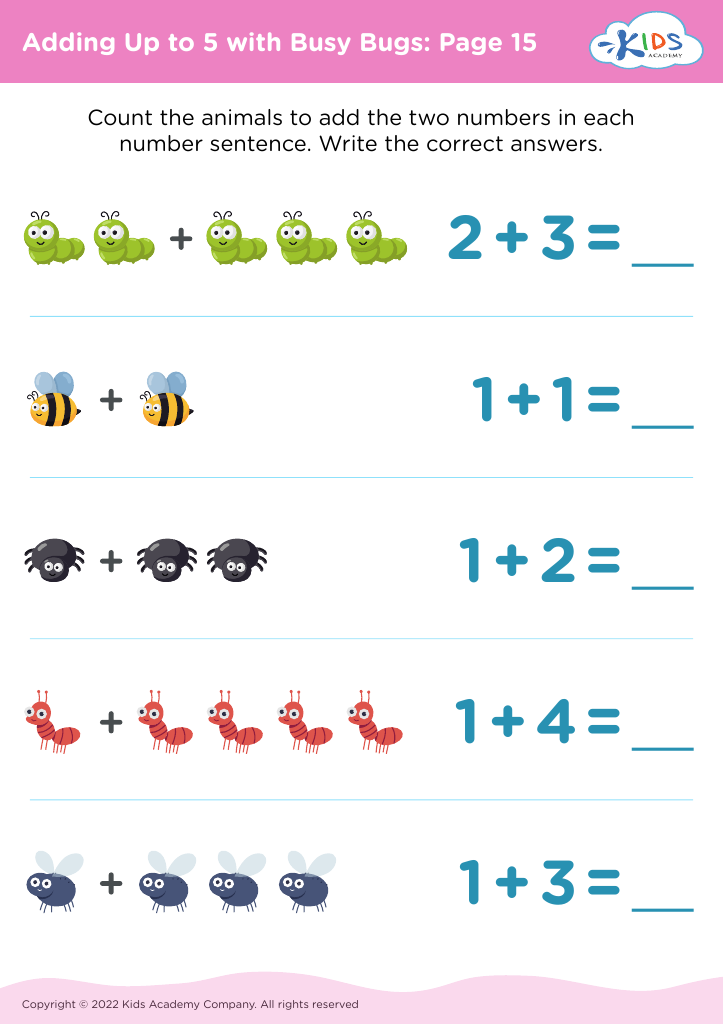
Counting skills, particularly the ability to add up to 5, are foundational for young children aged 4-6. At this stage, children are developing critical cognitive abilities that will impact their future learning. Understanding how to count and add reinforces basic numeracy skills, fostering confidence and competence in mathematics.
For parents and teachers, nurturing these skills helps lay the groundwork for more complex mathematical concepts, such as addition, subtraction, and ultimately, more advanced arithmetic. Children learn to recognize numbers, develop one-to-one correspondence, and understand the concept of quantity, which enhances their overall cognitive development.
Moreover, counting to 5 involves not only numerical skills but also encourages fine motor skills as children manipulate small objects during counting activities. It also enhances language development, as children learn to verbalize numbers and understand instructions.
By engaging young learners in playful, hands-on experiences that promote counting skills, parents and teachers cultivate a positive attitude towards math that can last a lifetime. Ultimately, supportive learning environments boost children's self-esteem and spark a lifelong interest in learning, equipping them with essential skills required for everyday life and academic success.








