Enhances concentration Adding Up to 5 Worksheets for Ages 4-6
4 filtered results
-
From - To
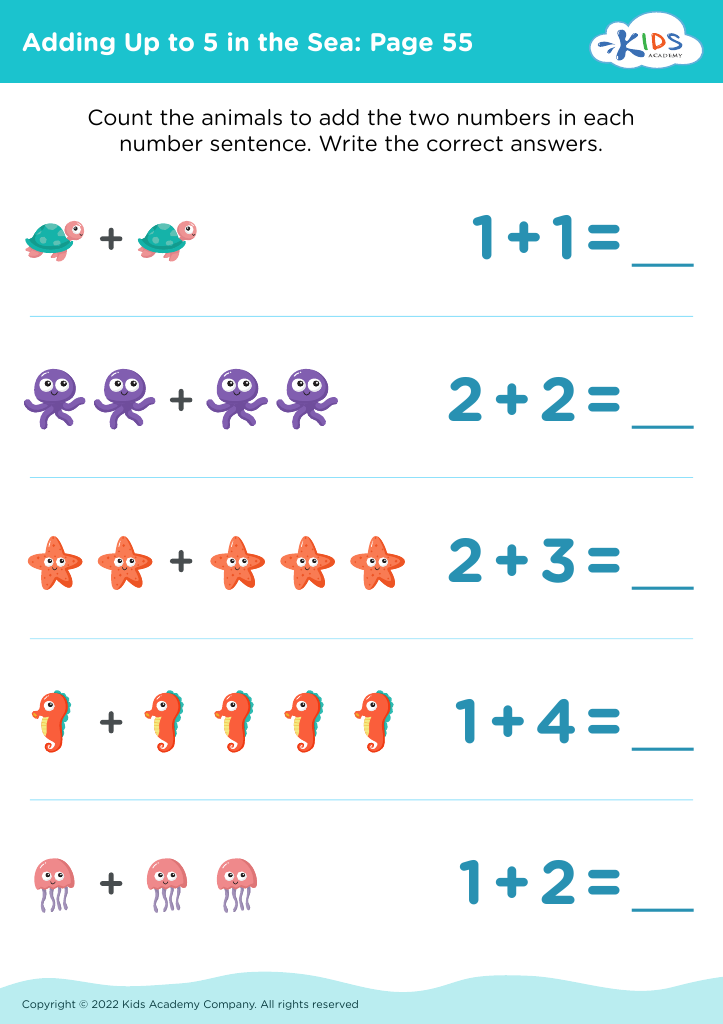
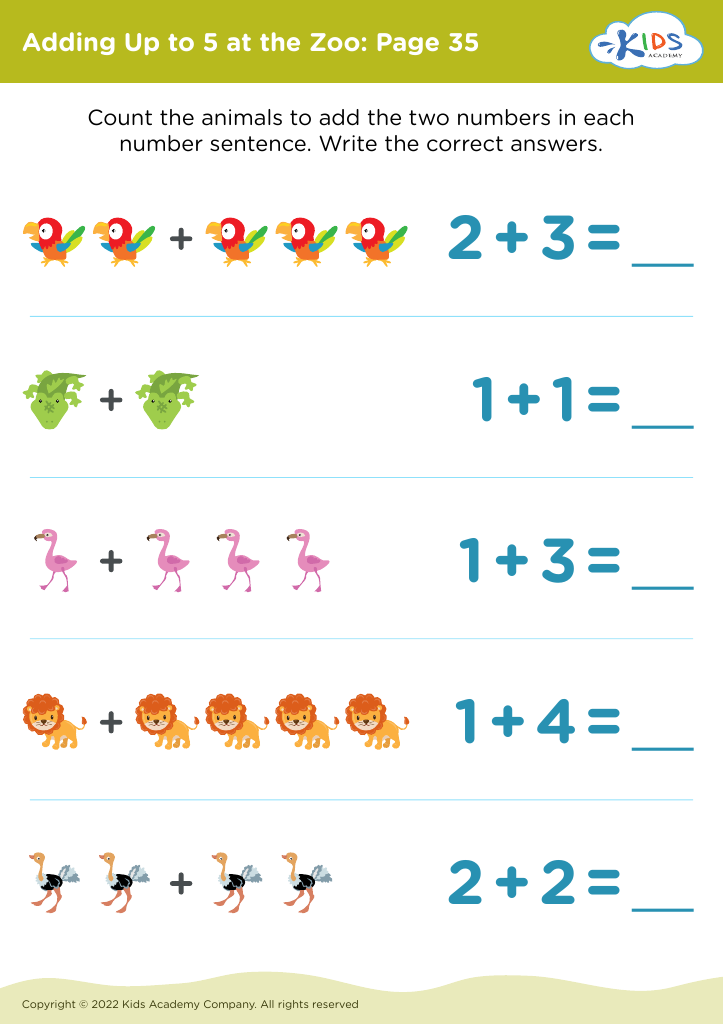
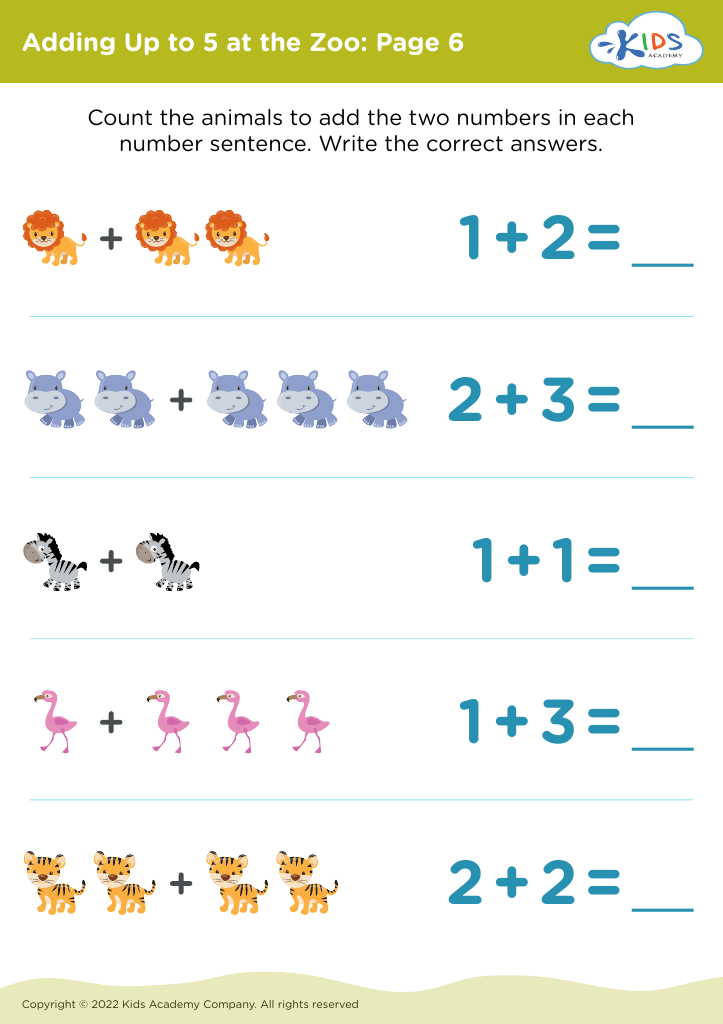
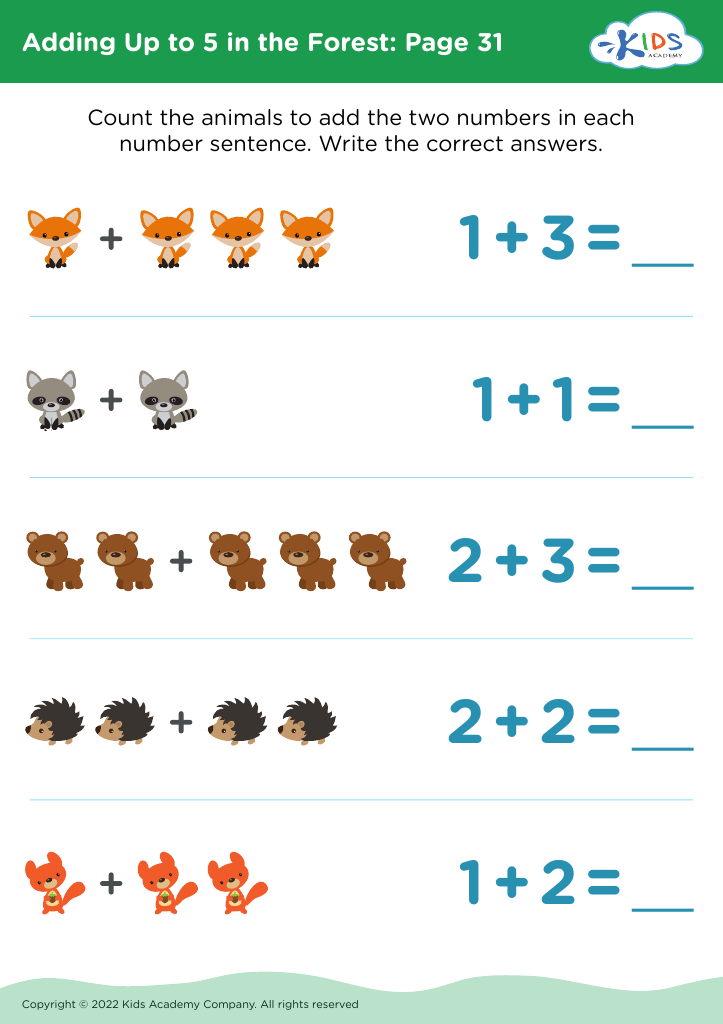
Boost your child's concentration skills with our "Adding Up to 5 Worksheets," specifically designed for ages 4-6! These engaging worksheets not only introduce basic addition concepts but also sharpen focus and attention span. Each activity encourages young learners to solve problems and engage with numbers, making learning both fun and effective. By working through these exercises, children will develop essential cognitive skills and improve their ability to concentrate on tasks. Perfect for home or classroom use, our worksheets provide a solid foundation in math while fostering critical thinking and perseverance. Discover the joy of learning while enhancing concentration today!




.jpg)
%20(1).jpg)


Enhancing concentration in children aged 4 to 6 when learning to add up to 5 is crucial for their cognitive and emotional development. At this age, children are naturally curious and eager to learn, yet their attention spans are still limited. Concentration skills help them focus on tasks without becoming easily distracted, which is essential for mastering early math concepts like addition.
By fostering concentration, parents and teachers can create a more enriching learning environment. It allows children to engage more fully in activities, leading to better retention of information and higher self-confidence. This foundation is vital, as strong cognitive skills contribute to later academic success.
Moreover, understanding the concept of addition lays the groundwork for future math competencies. It also nurtures problem-solving skills, encouraging children to think critically and approach challenges with perseverance. Engaging in practices that promote concentration—through interactive games, hands-on activities, and structured routines—can significantly enhance children’s learning experiences.
Ultimately, the development of concentration and early math skills not only aids academic achievements but also prepares children for lifelong learning. It empowers them to engage in their surroundings, building curiosity and a zest for knowledge. Thus, supporting concentration in these formative years is an investment in a child's future.








