Hand-eye Coordination Adding Up to 5 Worksheets for Ages 4-6
15 filtered results
-
From - To
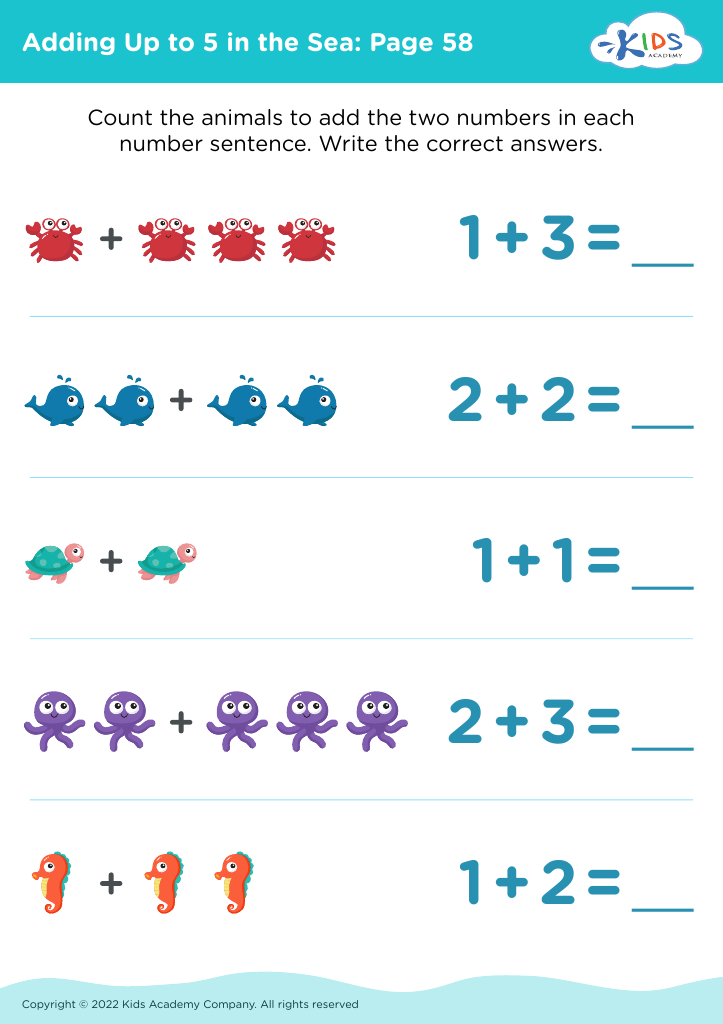
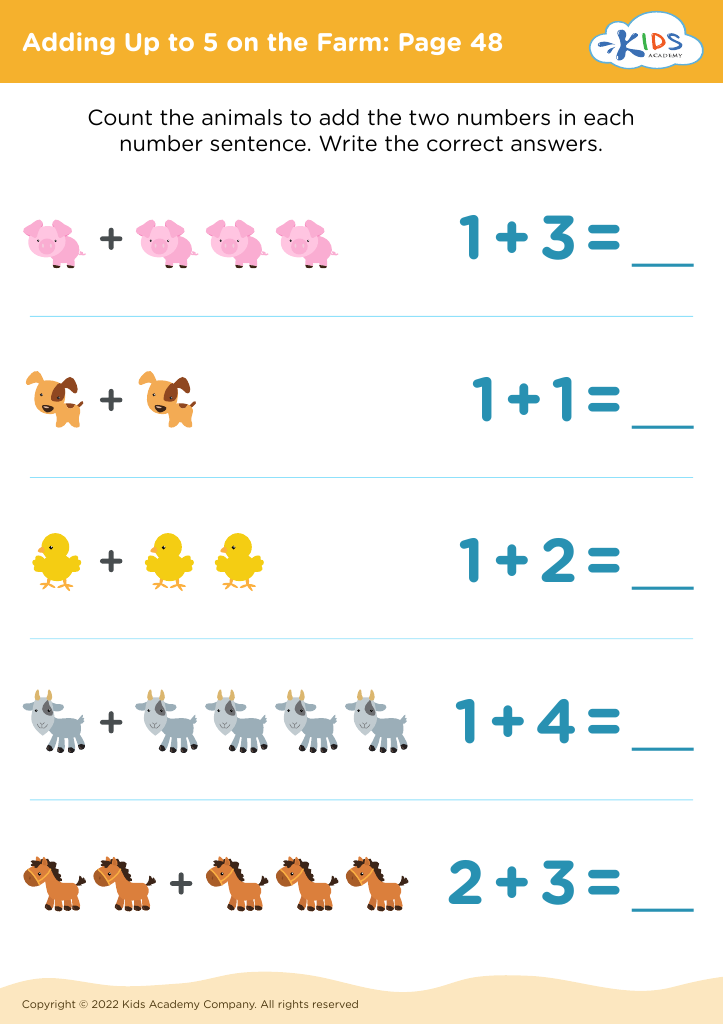
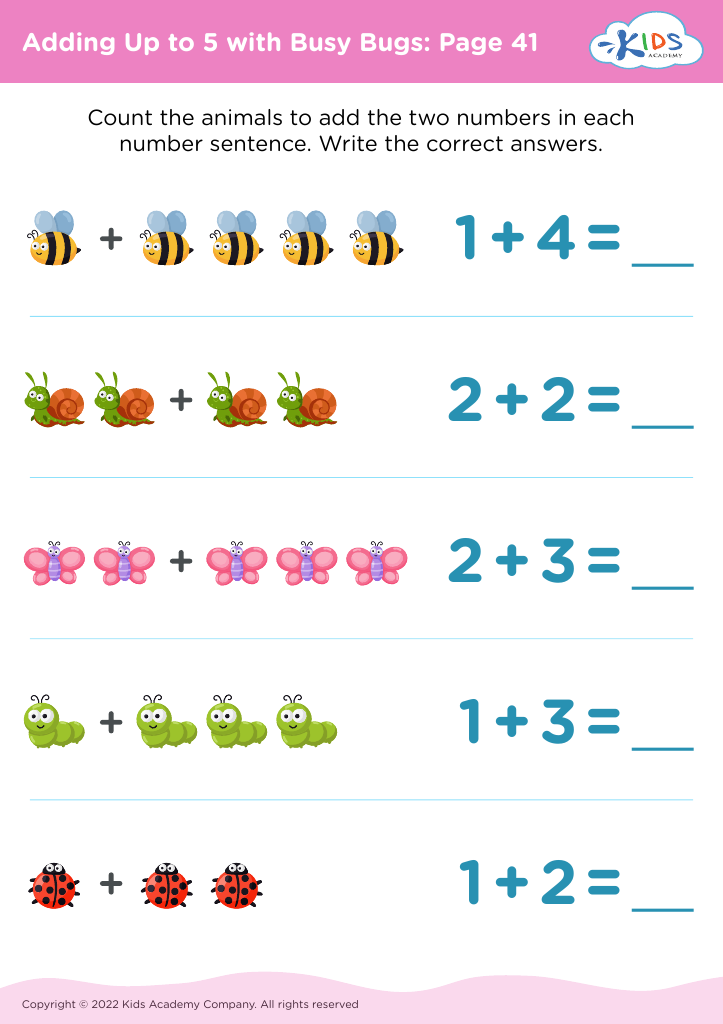
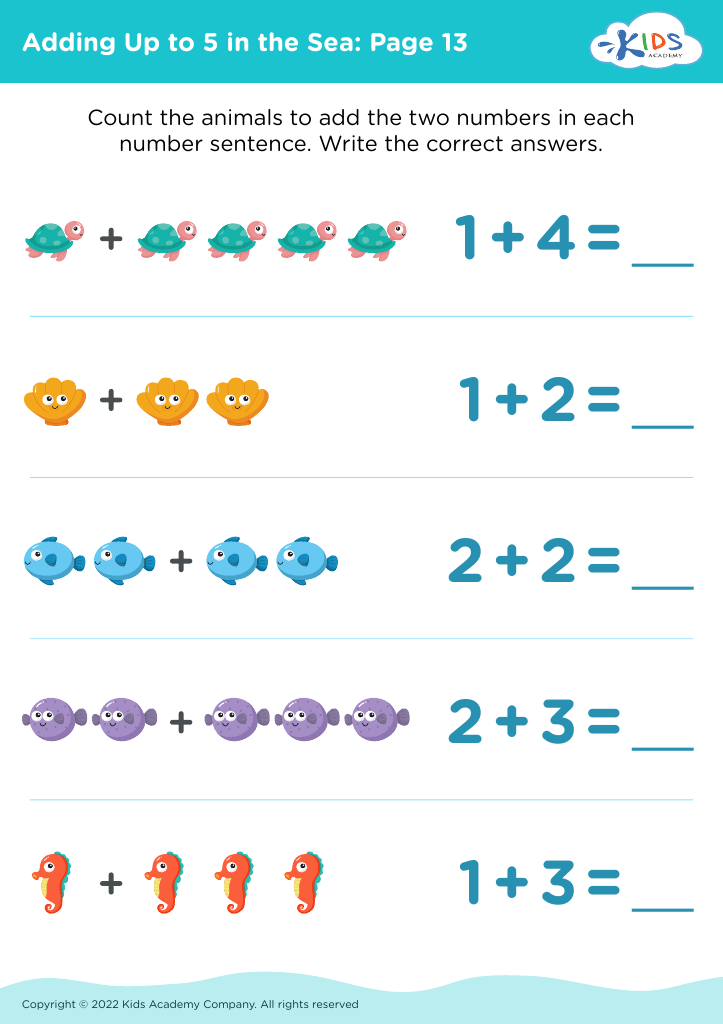
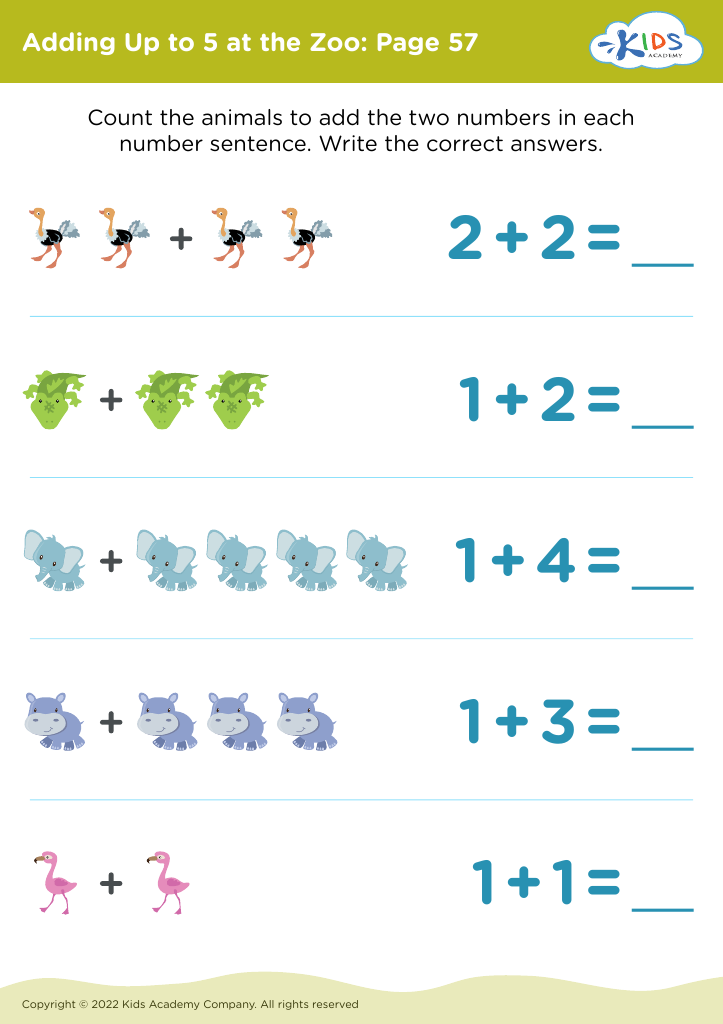
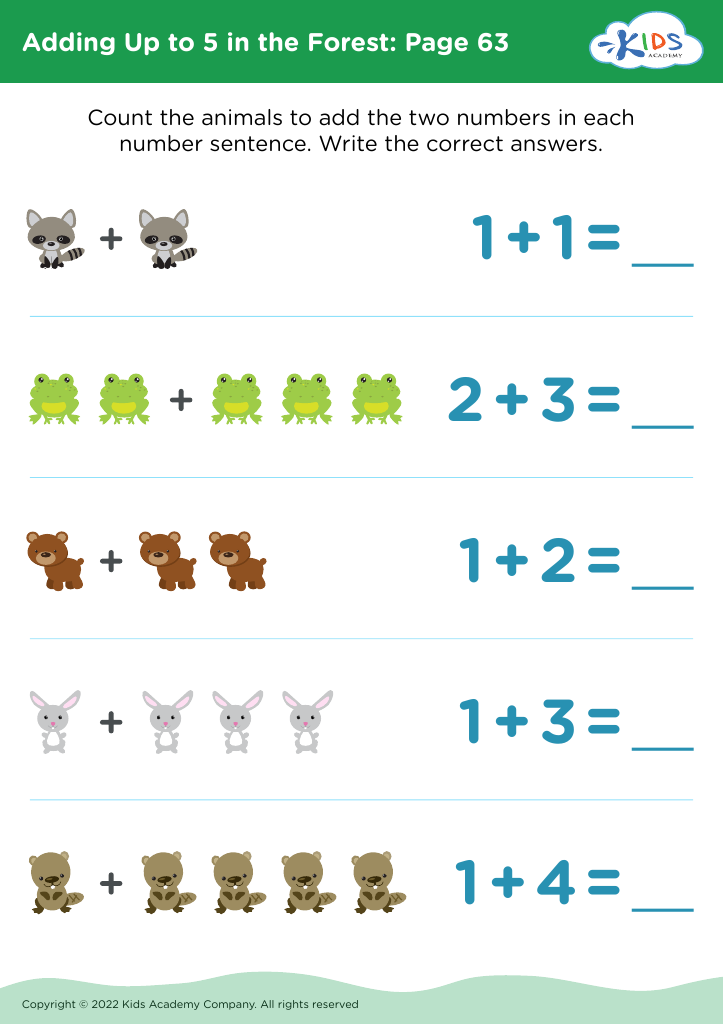
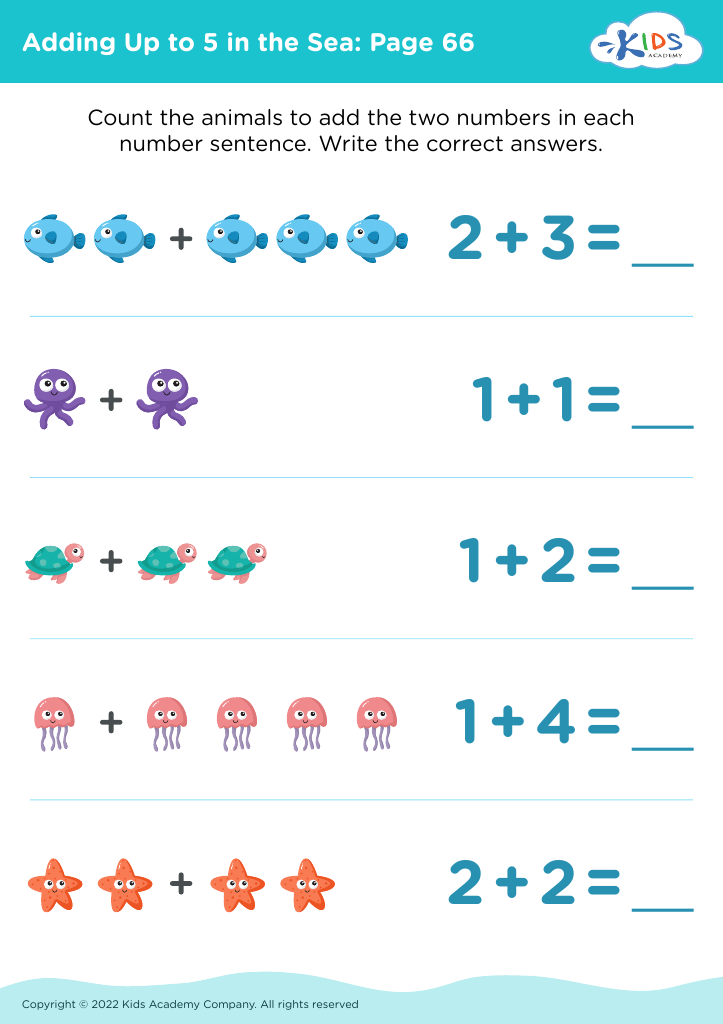
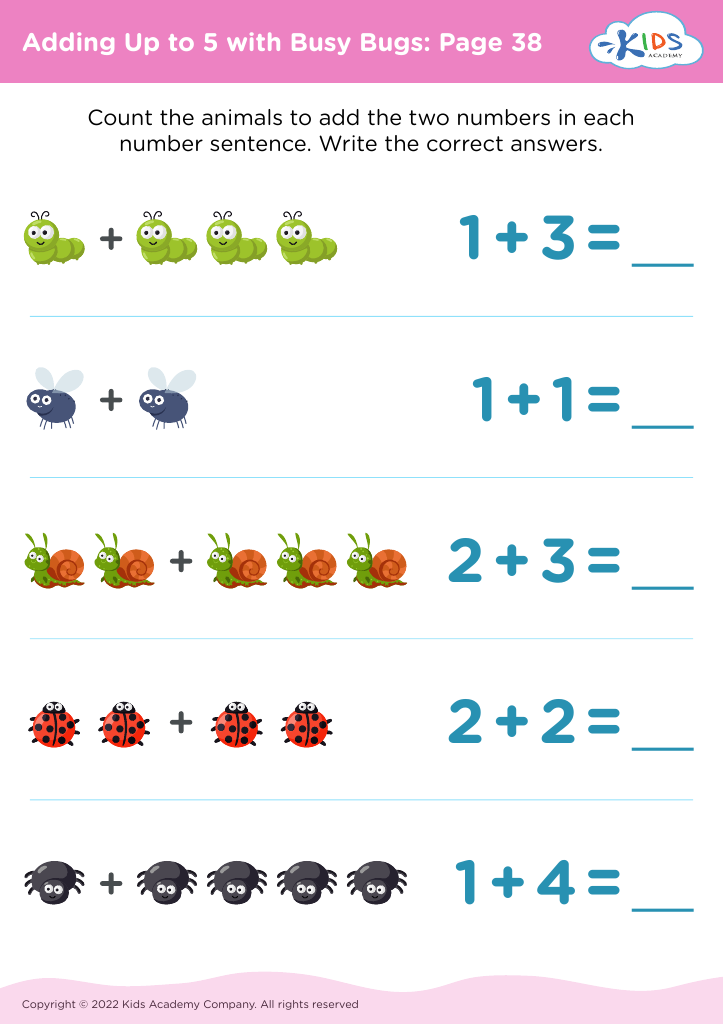
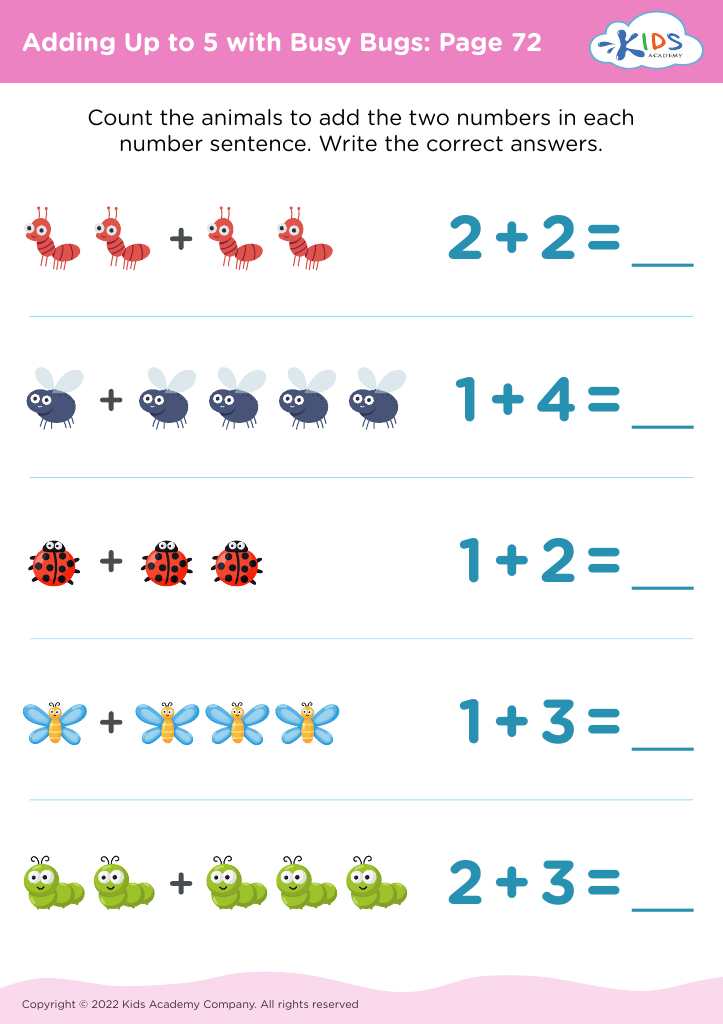
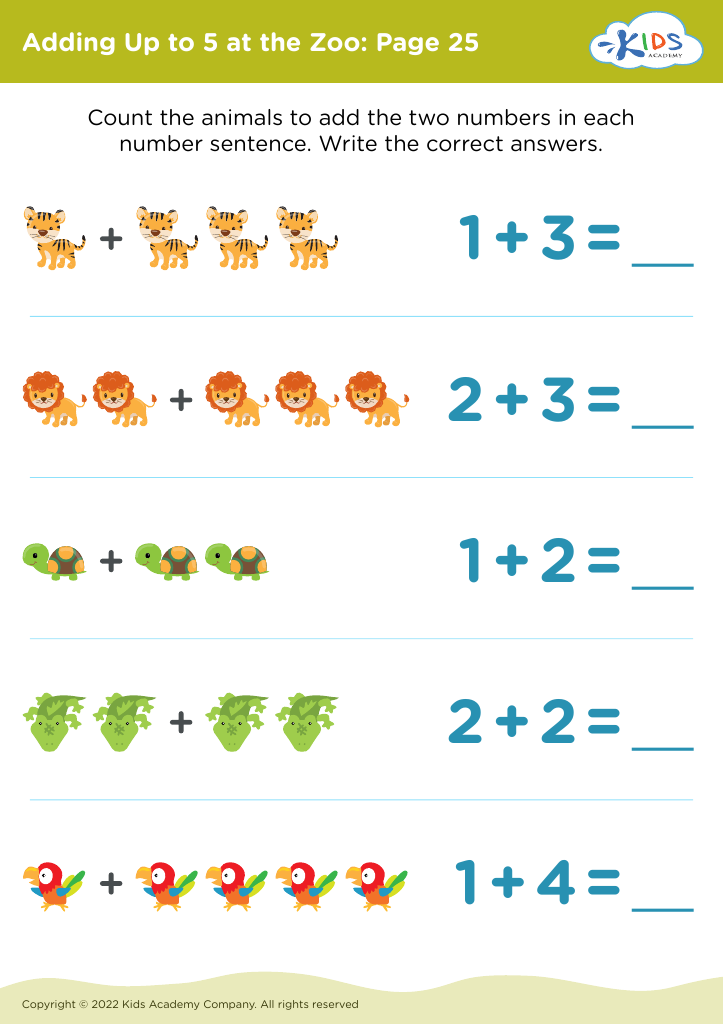
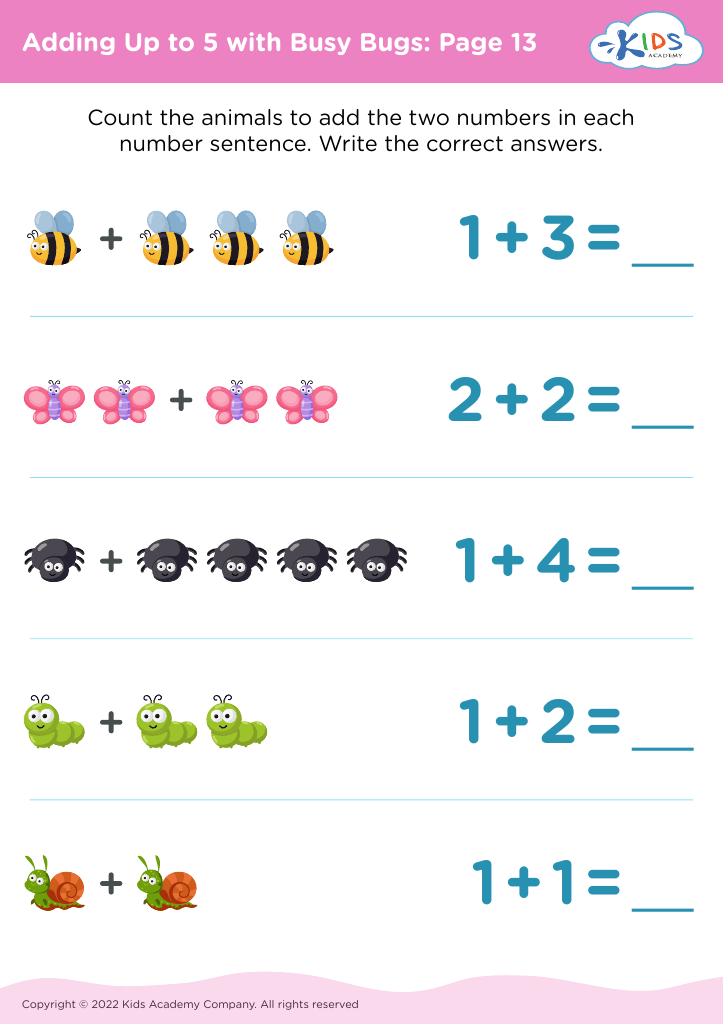
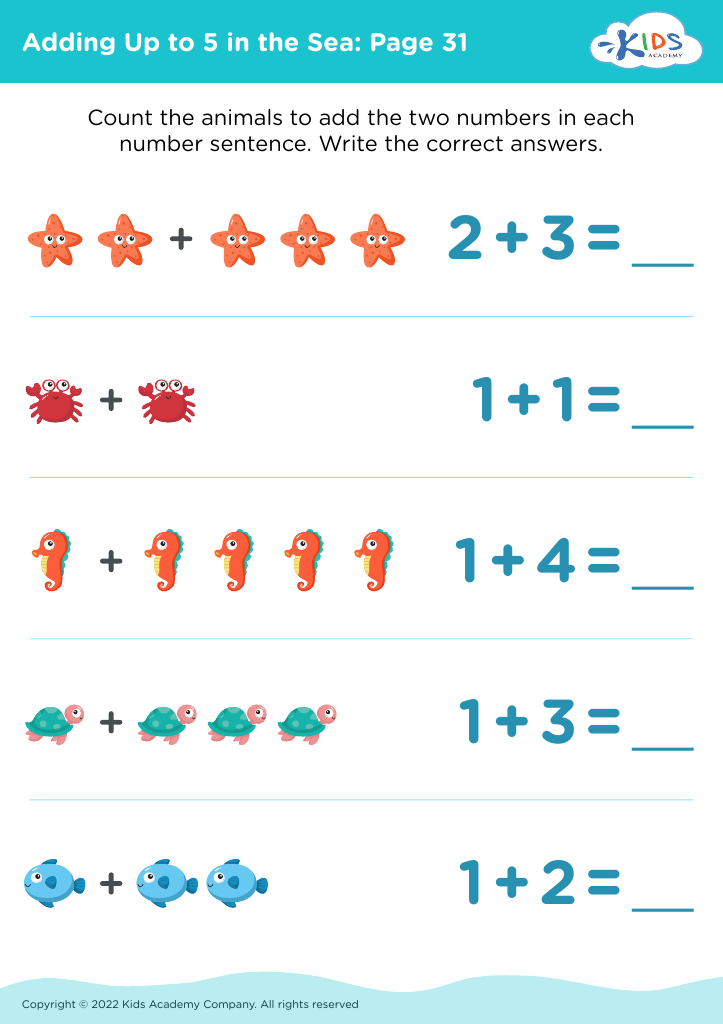
Boost your child's mathematical skills and hand-eye coordination with our "Hand-eye Coordination Adding Up to 5 Worksheets" designed for ages 4-6. These engaging worksheets combine fun activities and easy-to-understand visuals, making learning enjoyable and efficient. Children will practice simple addition, enhancing their ability to quickly and accurately count, all while improving fine motor skills through hands-on exercises. Perfect for early grade learners, these worksheets are excellent resources for both classroom and home use, fostering foundational math skills and developmental growth in a supportive and interactive environment. Start building core abilities today!
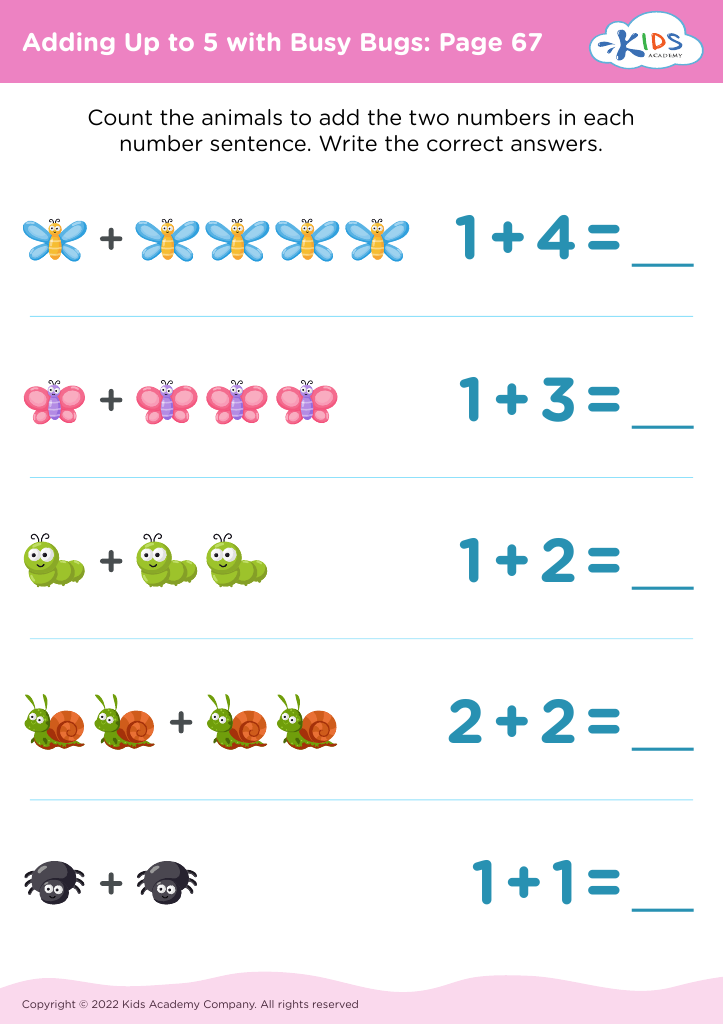
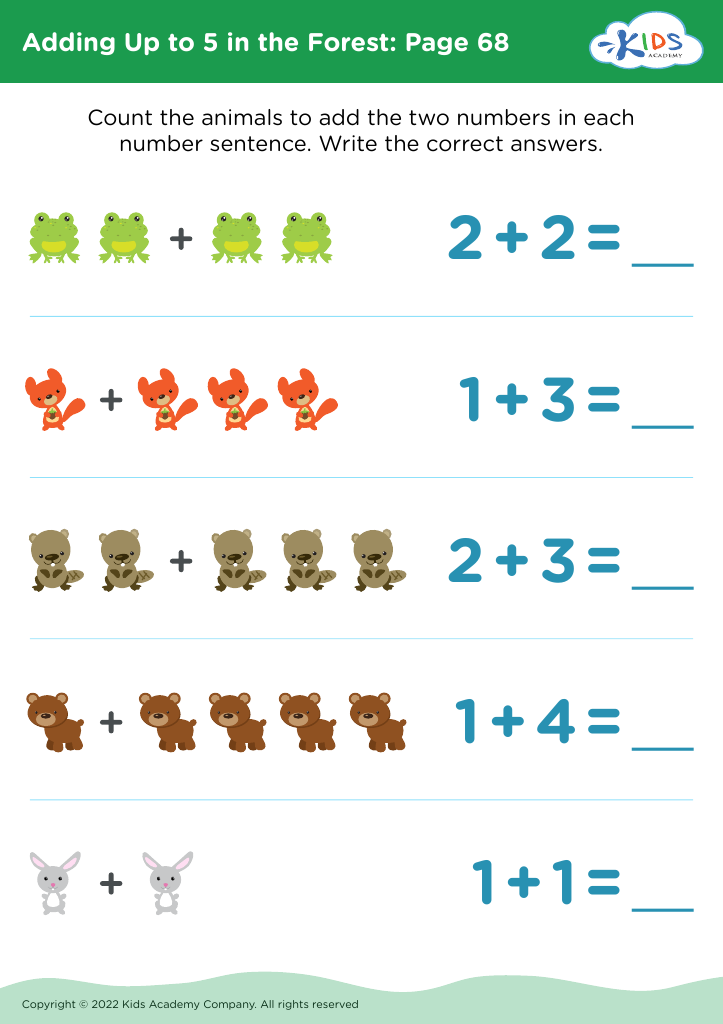
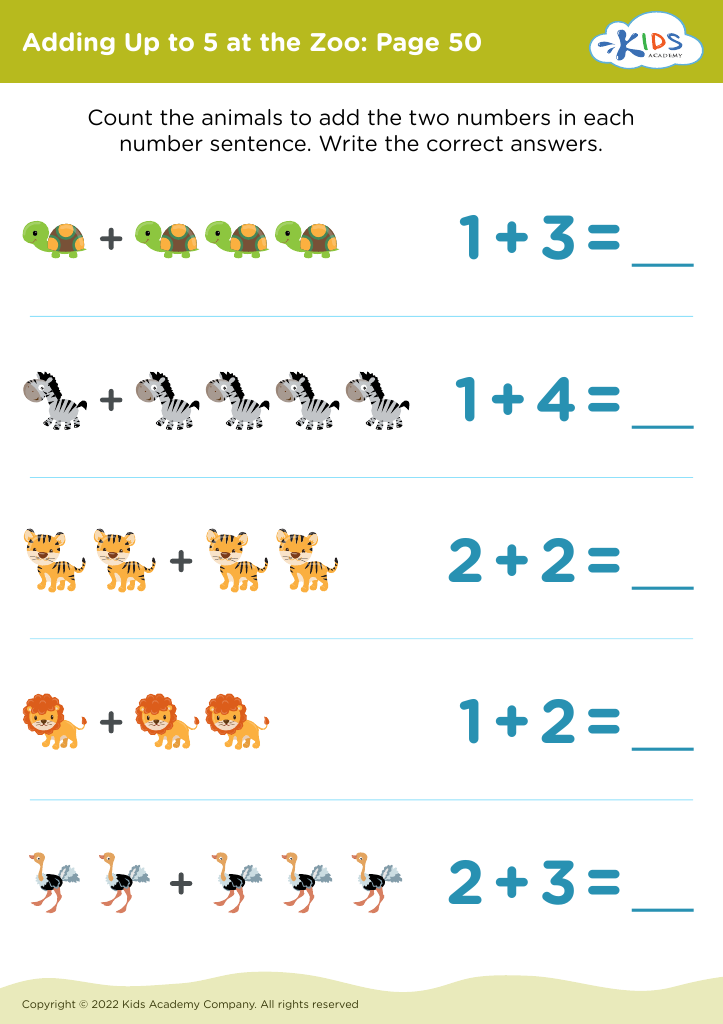




%20(1).jpg)



Hand-eye coordination is a crucial developmental skill for children aged 4-6 as it sets a foundation for many essential aspects of learning and daily activities. In this age range, combining hand-eye coordination with basic math skills, such as adding up to 5, is particularly impactful.
First, developing hand-eye coordination helps children improve their fine motor skills, which are necessary for tasks like writing, cutting, and even dressing themselves. Engaging in activities that require adding up to 5, such as counting objects or number games, further enhances their ability to interact effectively with the world around them.
Second, introducing basic math through interactive activities supports cognitive development. By practicing simple addition, children start to understand the concept of numbers and their relationships, fostering early mathematical thinking. This lays a necessary groundwork for future academic success in more complex math topics.
Additionally, activities that merge these skills often involve problem-solving and critical thinking. As children manipulate objects to sum numbers, they learn perseverance and the value of trial and error.
Overall, focusing on hand-eye coordination and basic addition for young children blends physical, cognitive, and social skills, making it an essential aspect of early childhood education that parents and teachers should nurture for well-rounded development.








