Understanding number relationships Adding Up to 5 Worksheets for Ages 4-6
3 filtered results
-
From - To
Enhance early math skills with our "Understanding Number Relationships: Adding Up to 5" worksheets, tailored for ages 4-6. These engaging, educational printables help young learners grasp the concept of number relationships through fun, interactive activities. Perfect for pre-kindergarten and kindergarten children, our worksheets boost confidence in addition, paving the way for a solid math foundation. Each exercise fosters critical thinking, encouraging kids to recognize patterns and make connections. Ideal for classroom or home use, our resources support your child's journey to mastering early math skills in an enjoyable and effective way. Start building a love for numbers today!
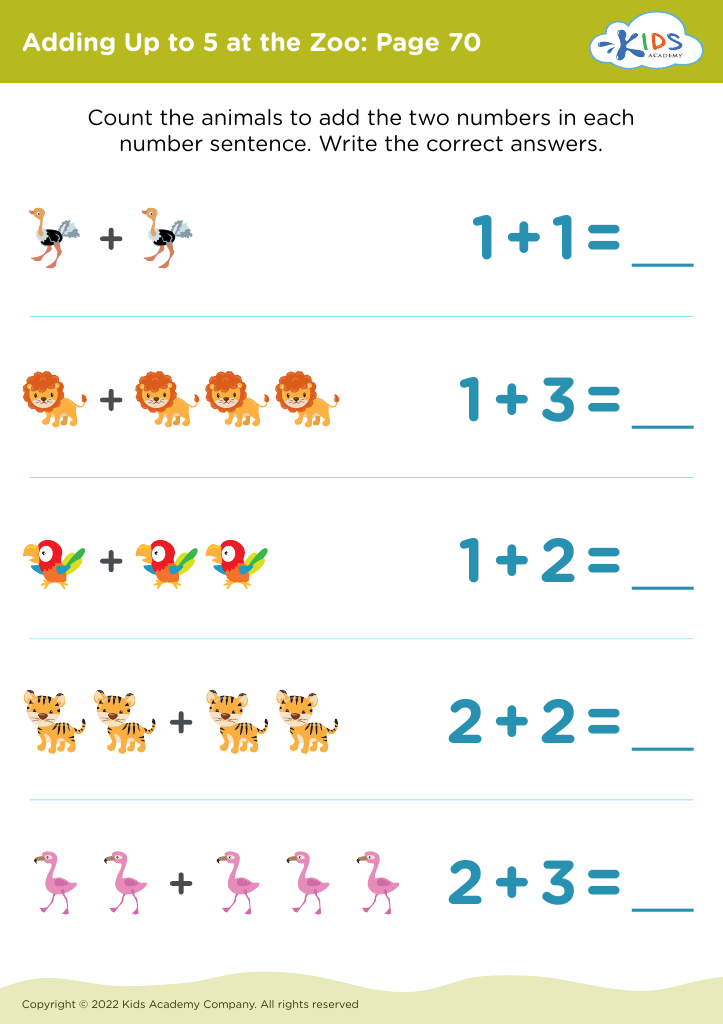
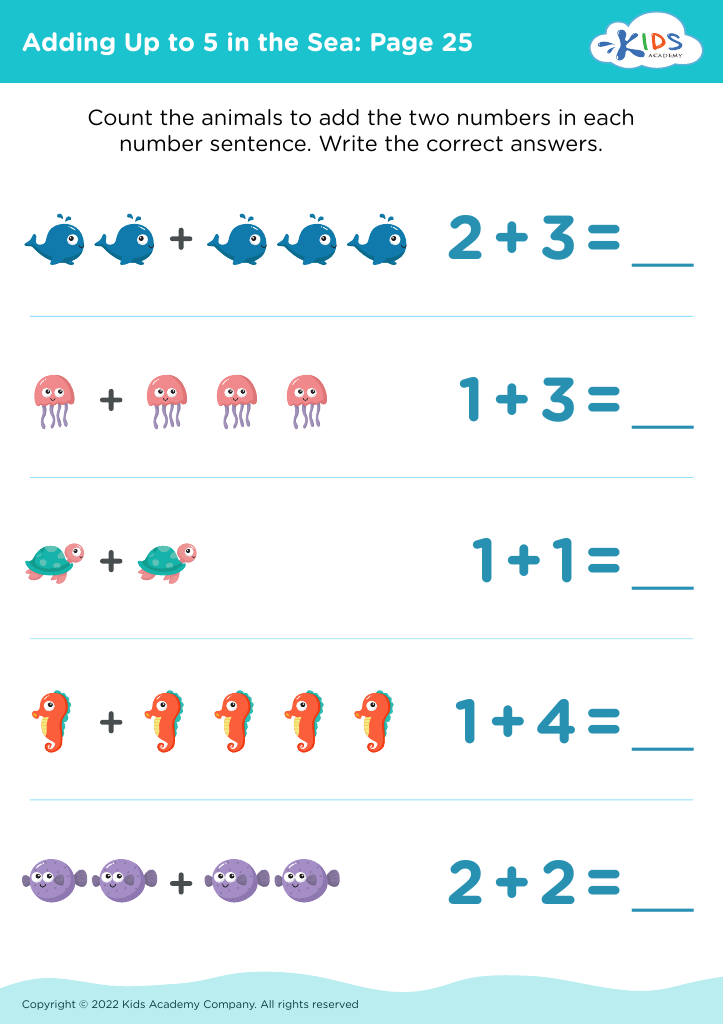
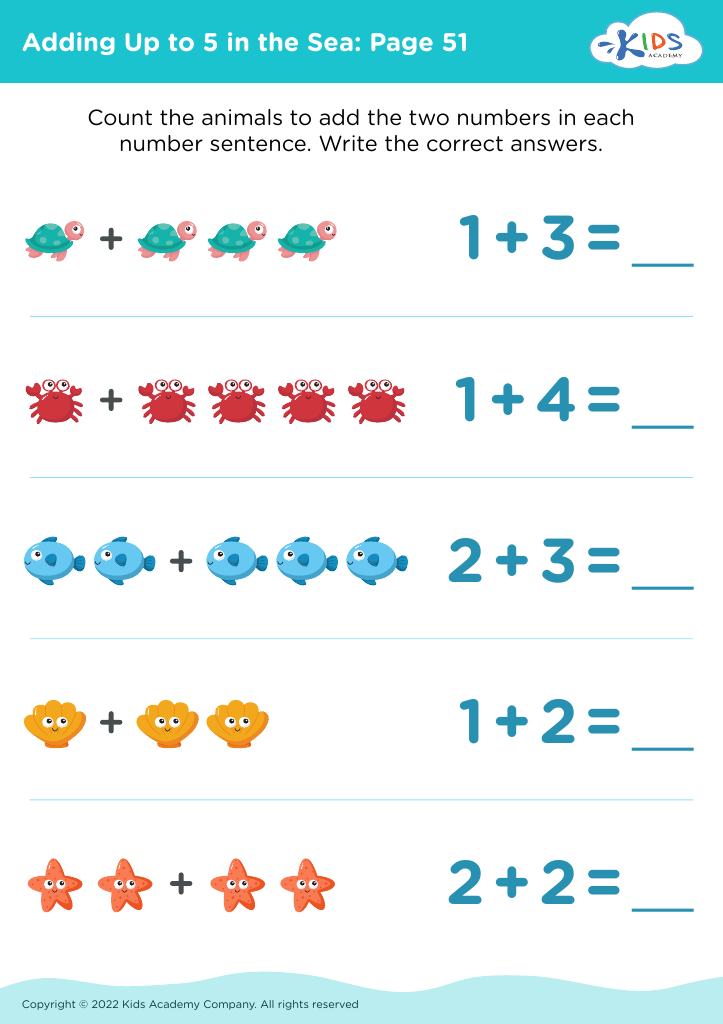








Understanding number relationships that add up to 5 is a fundamental concept for children ages 4-6, which serves as a building block for more advanced math skills. At this early stage, young learners are developing their basic number sense, which includes recognizing numbers, understanding their values, and comprehending how different numbers relate to each other.
By learning how different numbers combine to make 5, children begin to grasp the concept of addition, subtraction, and the idea that numbers are interconnected. This skill helps in fostering a robust mathematical foundation that is critical for future learning. For example, knowing that 2 + 3 equals 5 helps children understand that if they have 5 objects and take away 3, they will have 2 left. These simple equations teach children about the inverse relationships between addition and subtraction, laying the groundwork for more complex arithmetic operations.
Moreover, understanding number relationships enhances problem-solving skills and logical thinking. It allows children to approach math with confidence, reducing anxiety and creating positive experiences with the subject early on. Engaging in activities that explore these relationships can also be very interactive and fun, fostering a love for learning and exploration in mathematics from an early age. Hence, parents and teachers should prioritize this aspect of early education to encourage lasting academic success.








