Understanding Quantities Adding Up to 5 Worksheets for Ages 4-6 - Page 2
36 filtered results
-
From - To
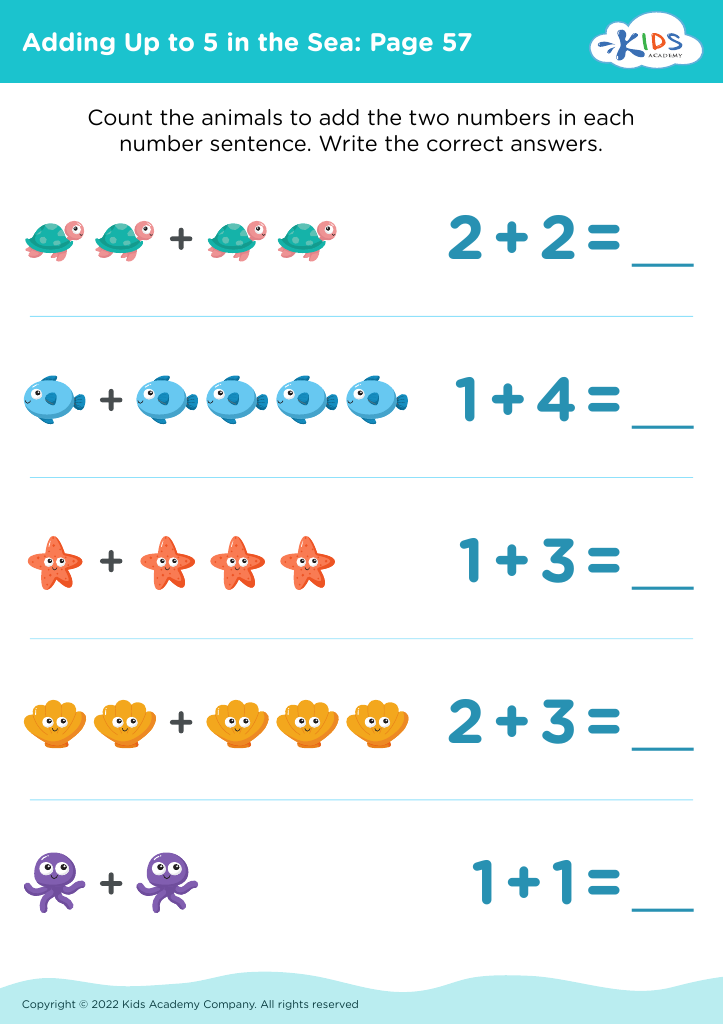
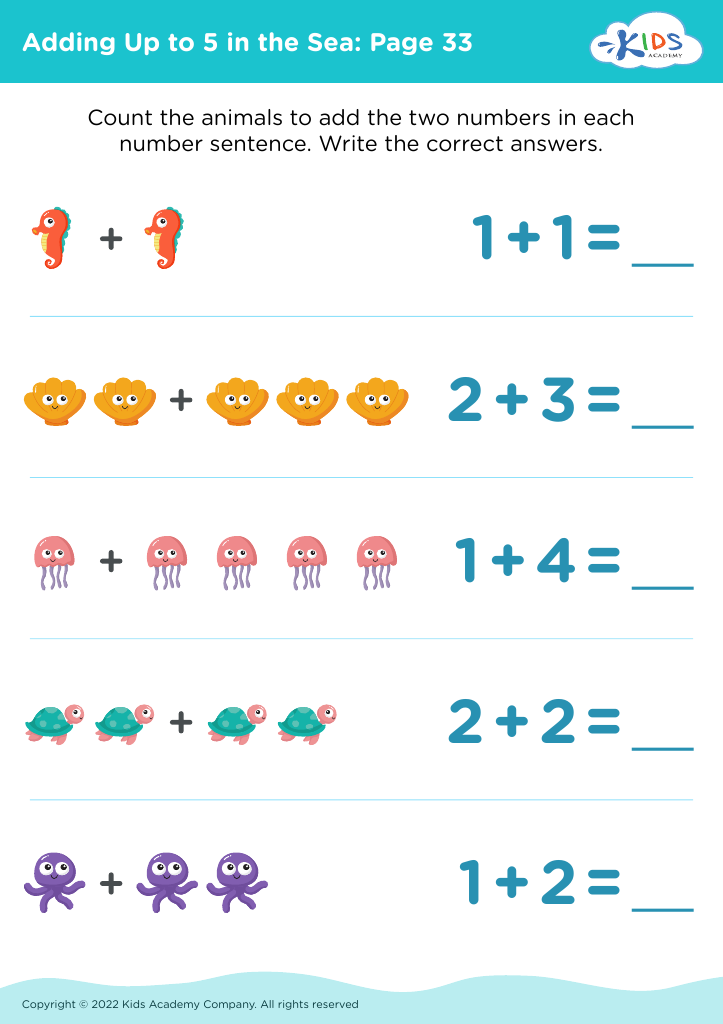
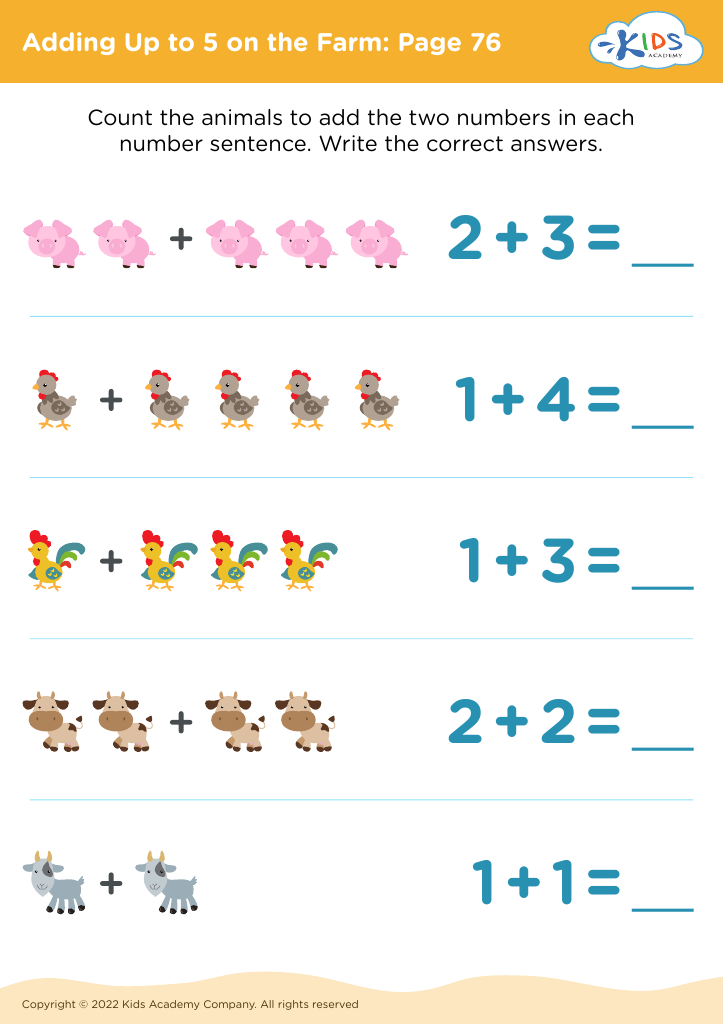
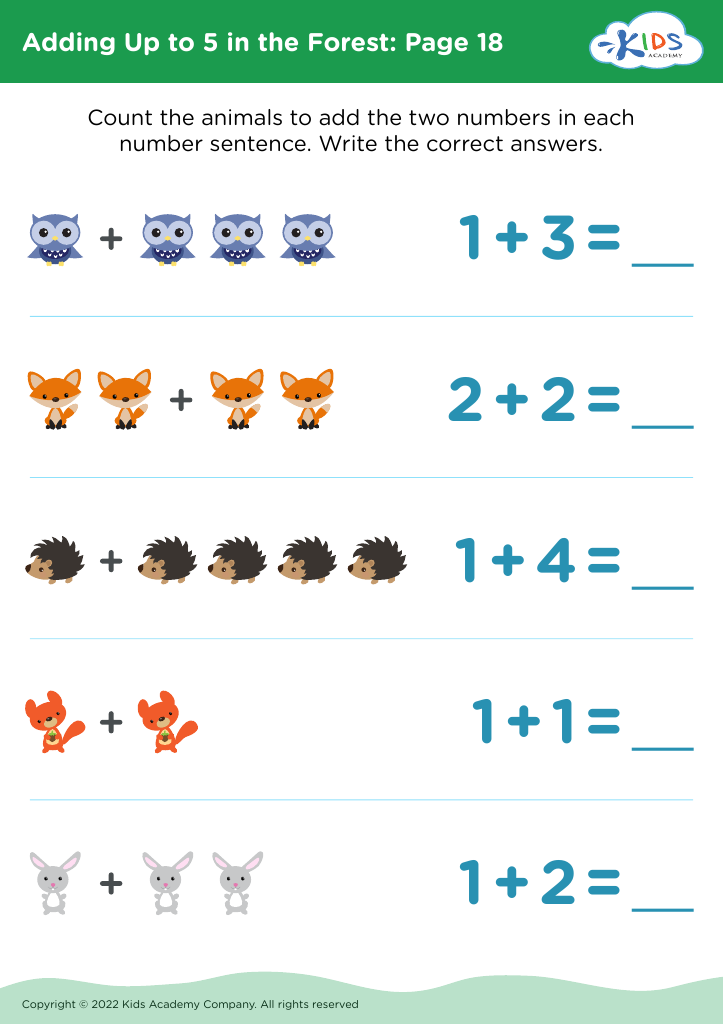
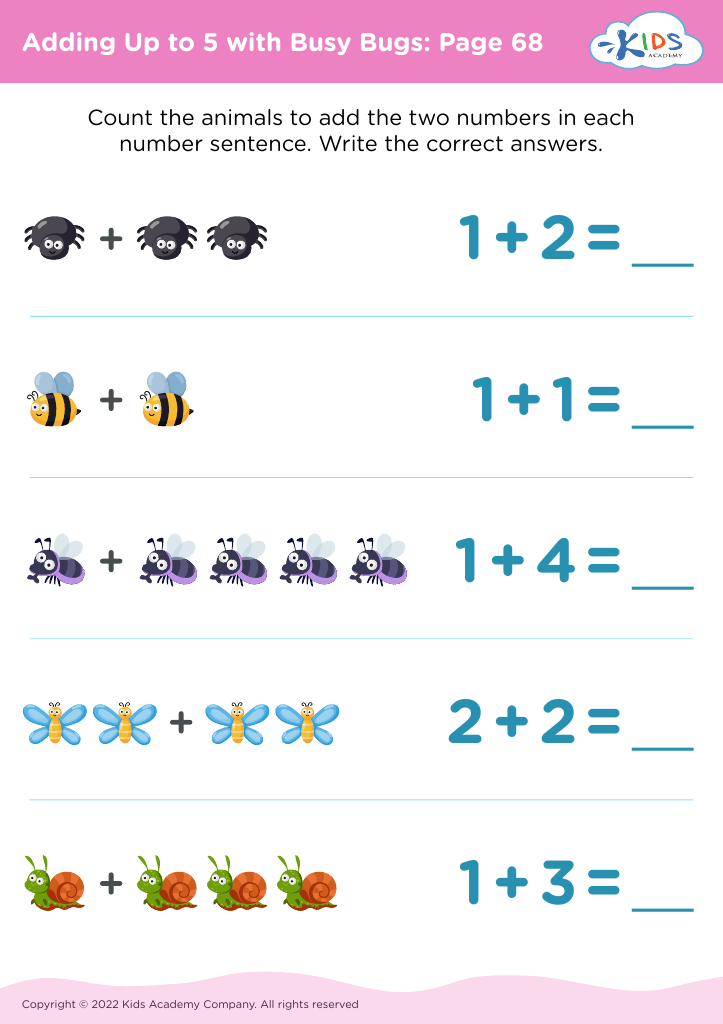
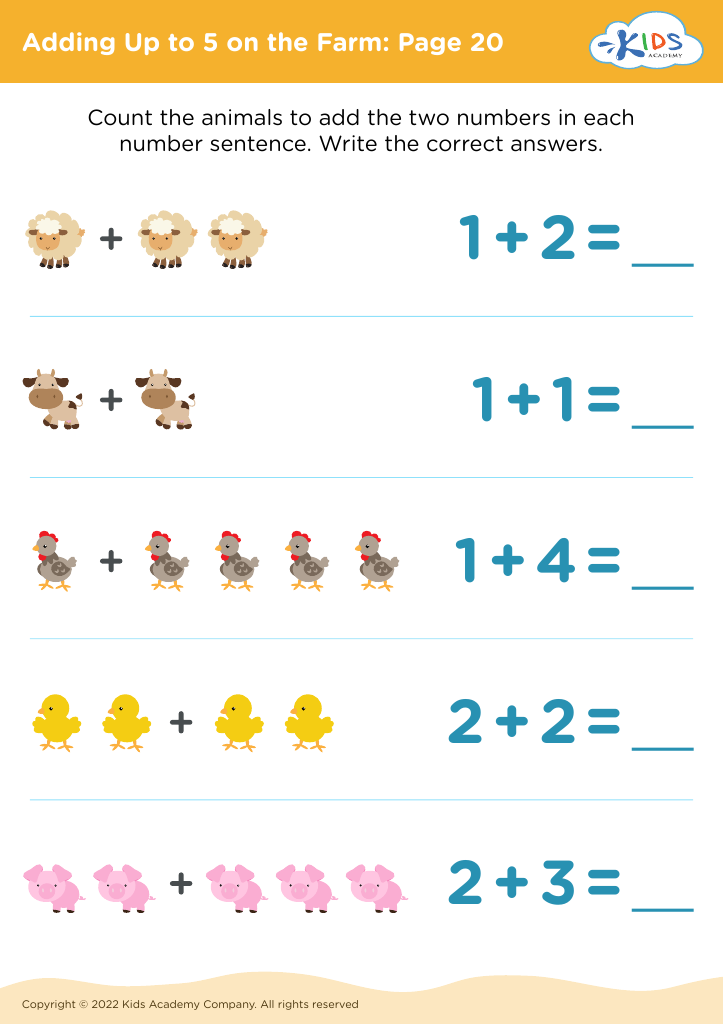
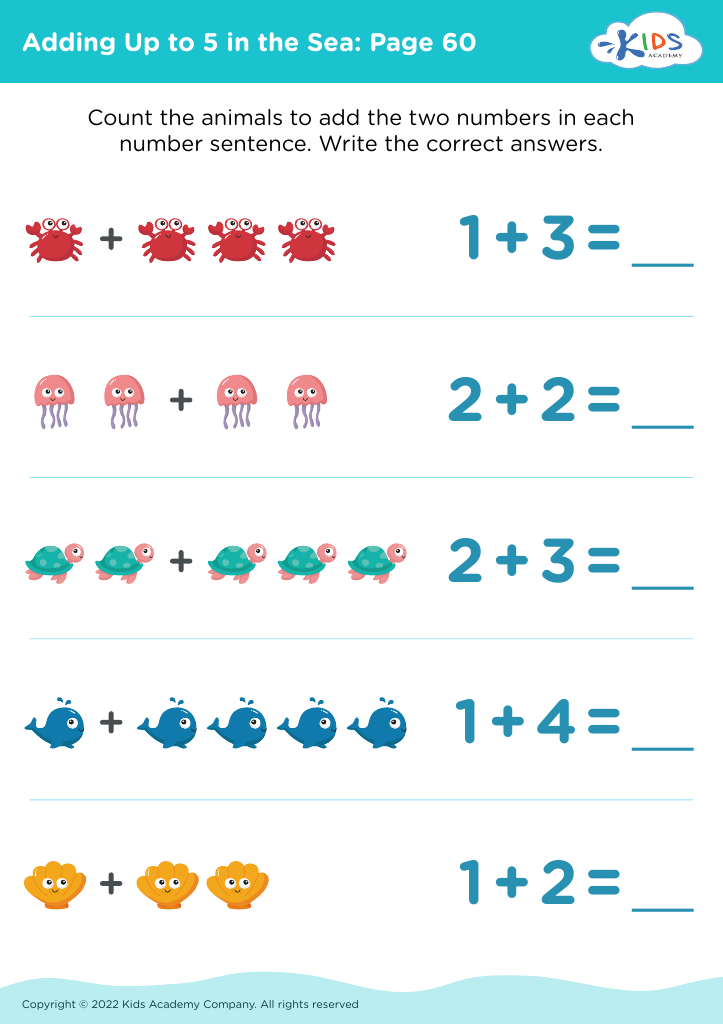
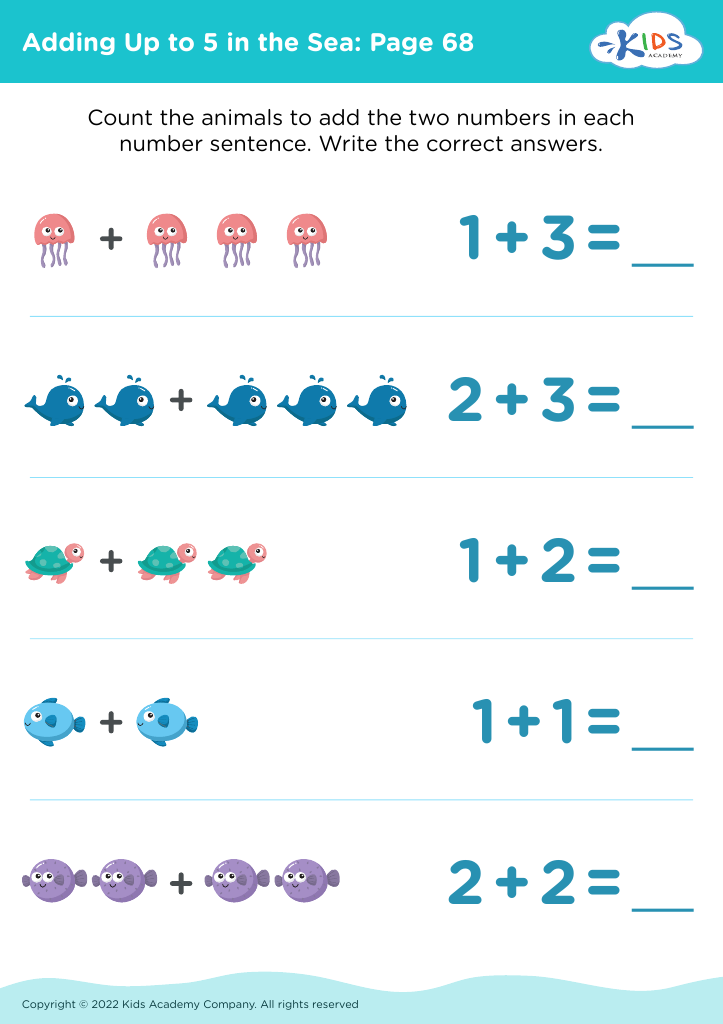
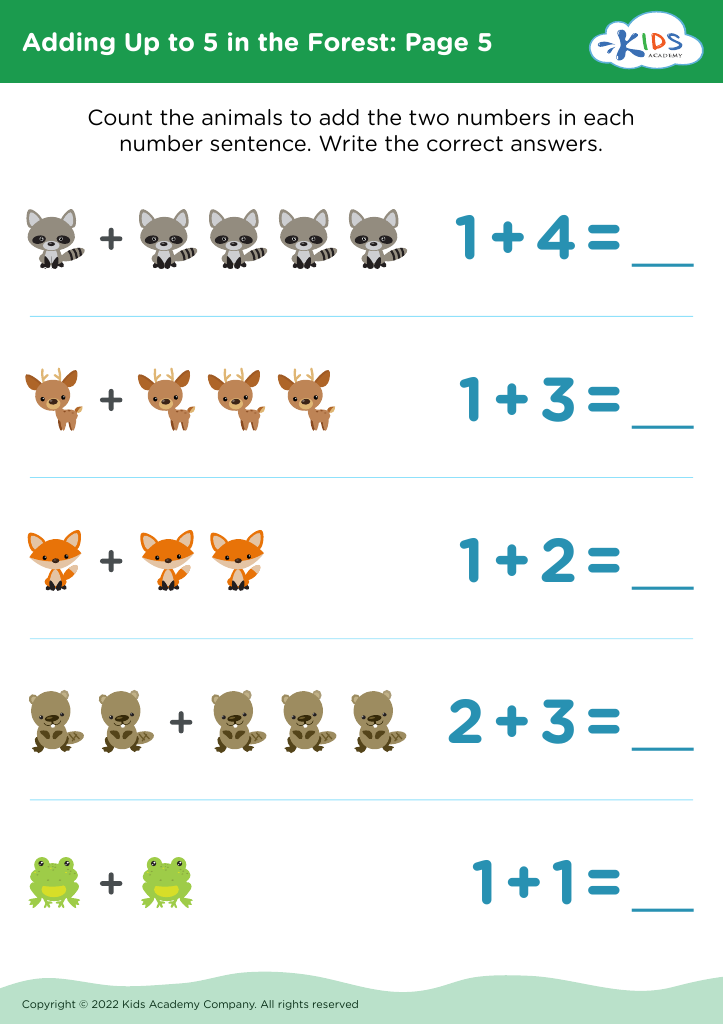
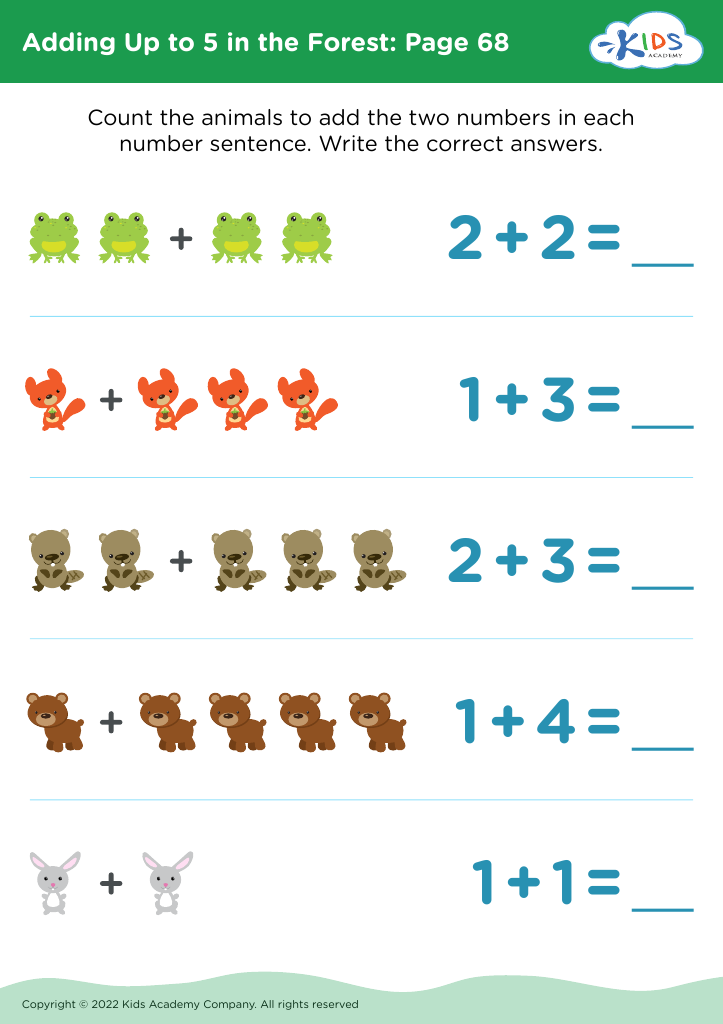
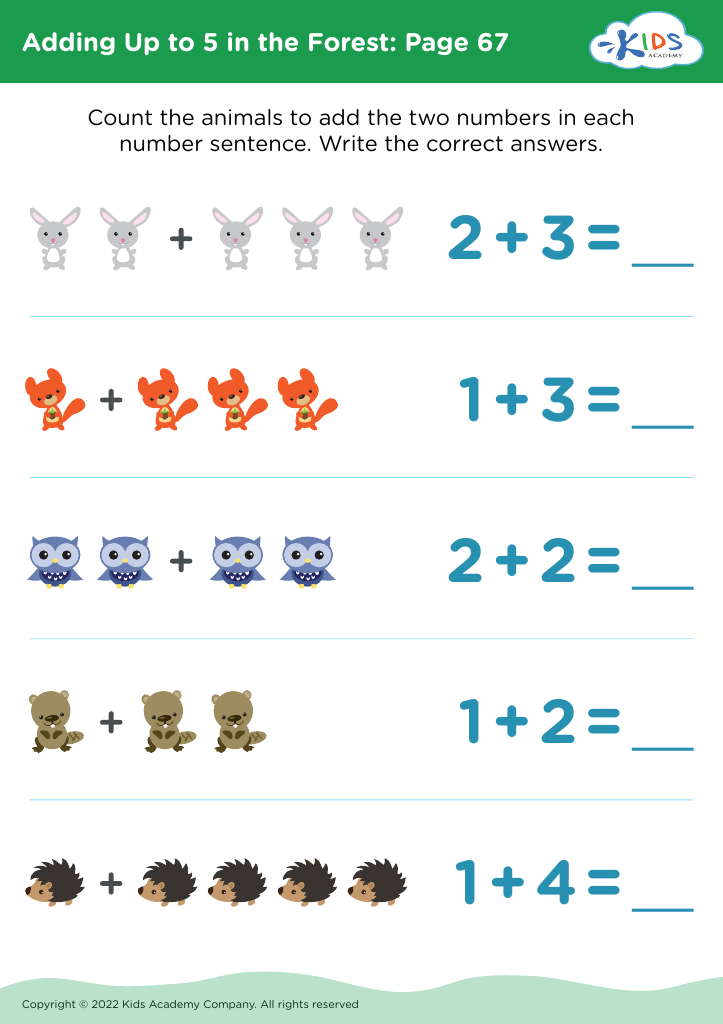
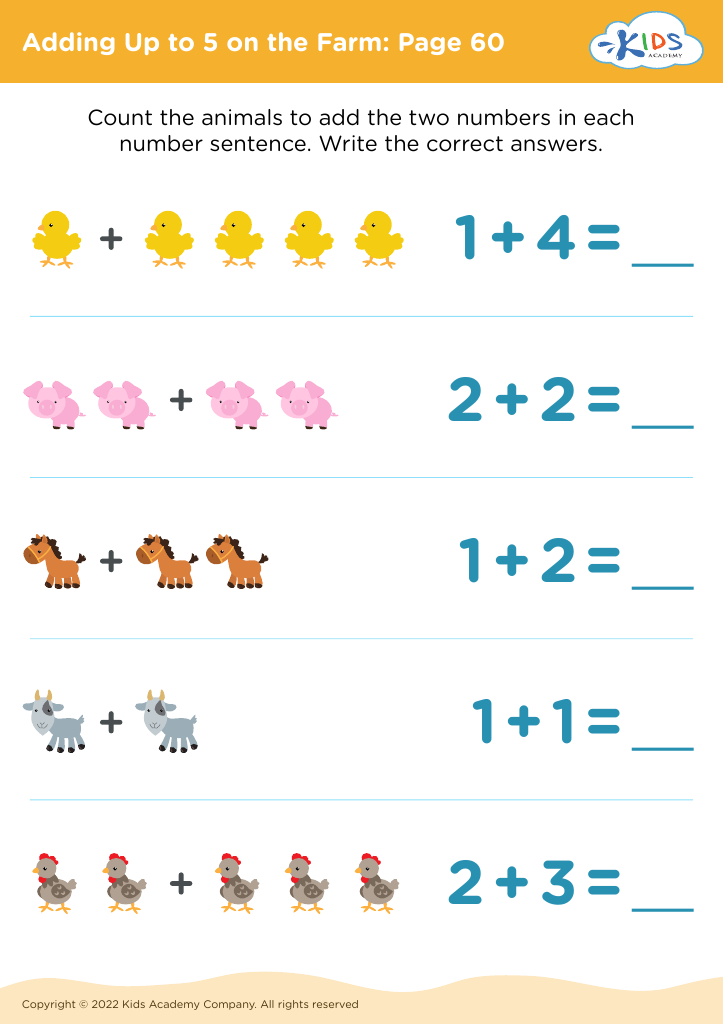








Understanding quantities adding up to 5 is foundational for early learners aged 4 to 6, as it establishes crucial mathematical concepts necessary for future success in math. This comprehension supports children in recognizing and manipulating numbers, which fosters their ability to perform basic addition and subtraction. Engaging with the idea that different combinations of numbers can result in the same total, such as 2 + 3 or 1 + 4, enhances their problem-solving skills and prepares them for more complex mathematical operations later on.
From a developmental perspective, this skill also aids in cognitive growth, promoting logical thinking and pattern recognition. Moreover, understanding quantities within this range allows children to explore concepts like more and less, a critical social-emotional skill for sharing and cooperation in group settings.
By being introduced to addition through hands-on activities, games, and visual aids, young learners solidify their understanding in a fun, engaging manner. For parents and teachers, fostering this understanding not only enhances math fluency but also builds a child's confidence and enthusiasm towards learning, setting a strong foundation for their educational journey ahead. Thus, prioritizing this early comprehension of quantities benefits both individual development and long-term academic achievement.








