Fine motor skills (writing) Adding with Busy Bugs Worksheets for Ages 4-6
5 filtered results
-
From - To
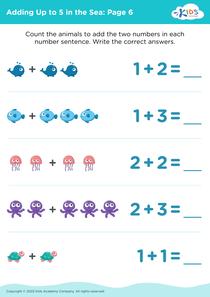
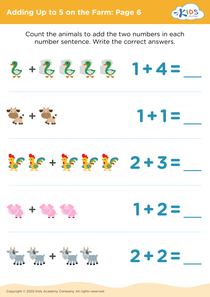
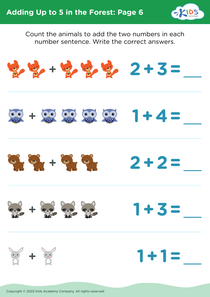
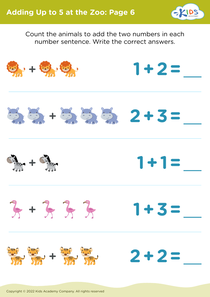
Enhance your child's fine motor skills and early math abilities with our "Adding with Busy Bugs Worksheets" designed for ages 4-6. These engaging worksheets focus on developing fine motor skills through fun and interactive writing activities. Each sheet features colorful bug-themed addition problems that capture young learners' attention while helping them practice number writing, counting, and addition. Perfect for early learners, these worksheets provide an enjoyable way to build a strong foundation in mathematics and hand-eye coordination. Foster a love of learning and boost your child's confidence with our busy bugs addition worksheets.
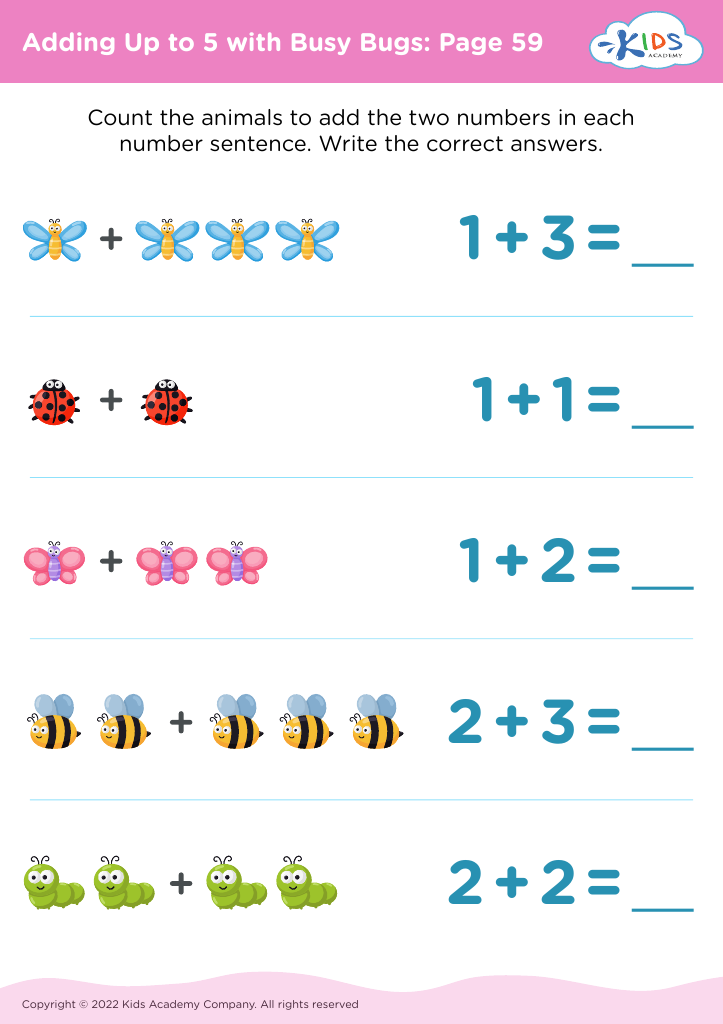
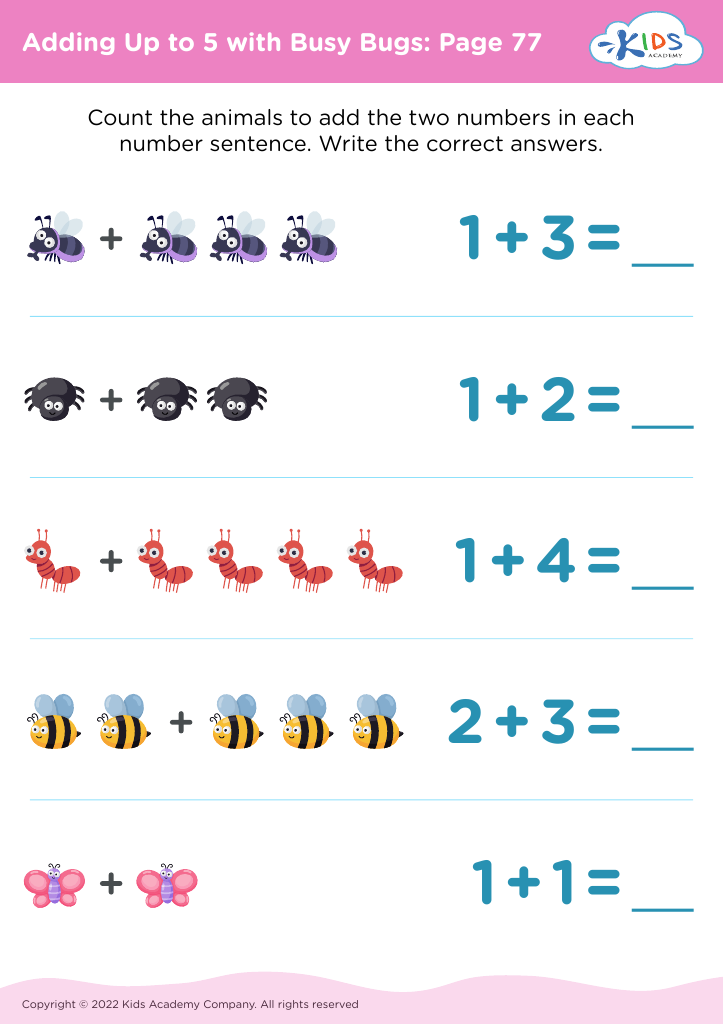
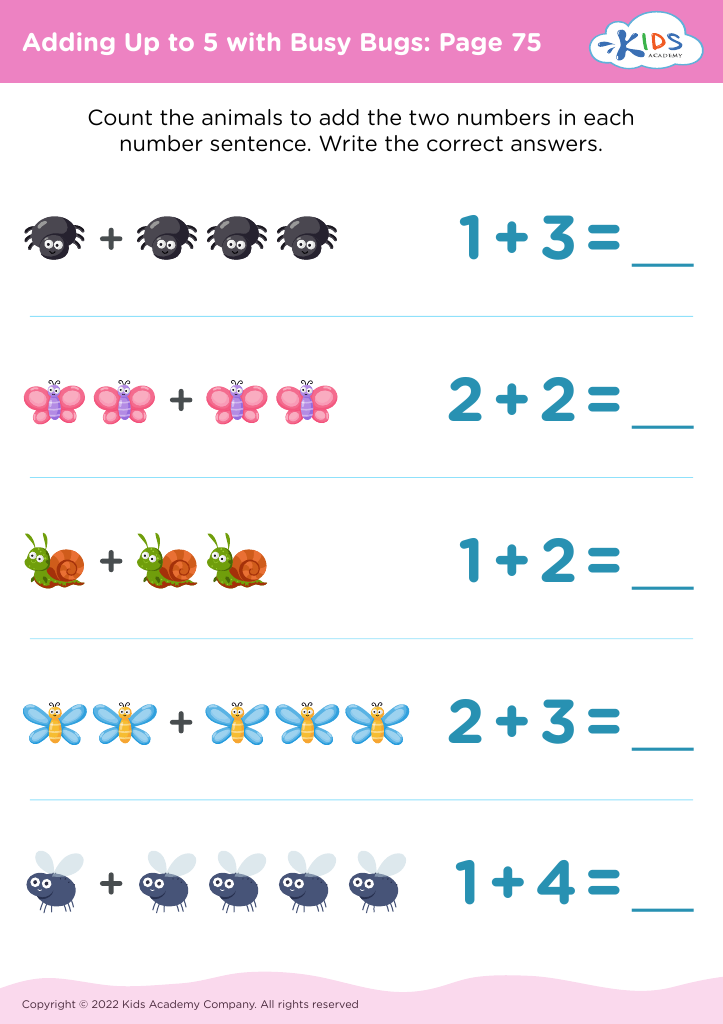
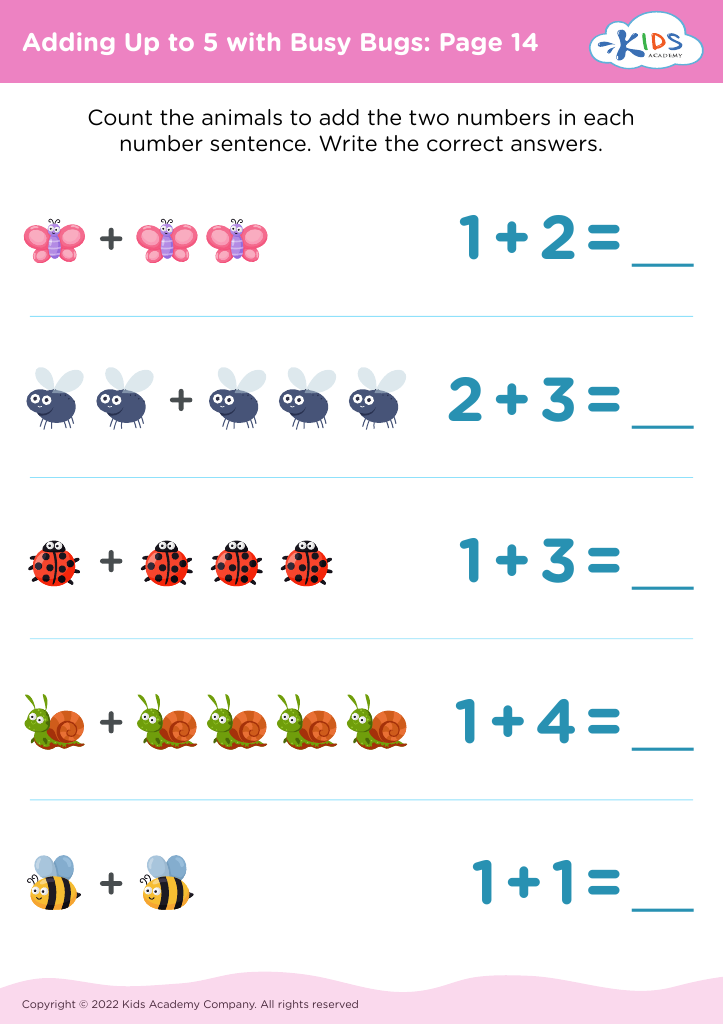
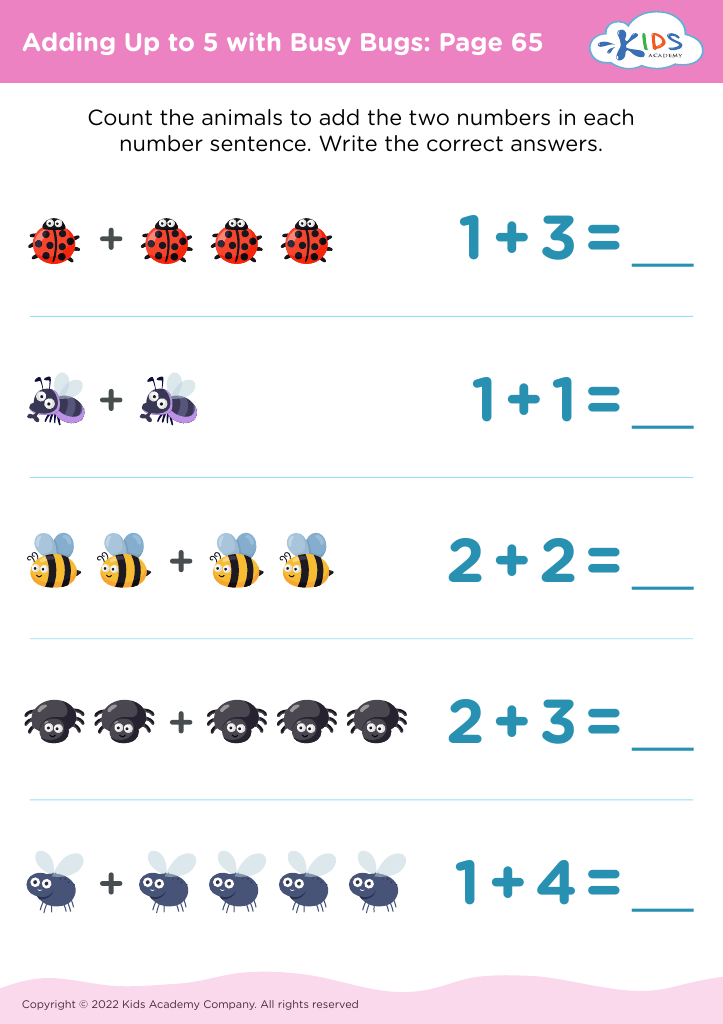



Fine motor skills are essential for young children as they form the foundation for tasks that require precise hand-eye coordination, such as writing, drawing, and buttoning clothes. Developing these skills at an early age sets the stage for academic success and everyday functionality. Activities like "Adding with Busy Bugs" for ages 4-6 are especially beneficial because they integrate fine motor development with early math skills, fostering a well-rounded skill set in a fun and engaging way.
When children participate in activities that combine fine motor practice with counting and adding, they are effectively working on two critical areas simultaneously. The small act of manipulating the Busy Bugs helps refine their finger dexterity, hand strength, and control, which in turn supports writing skills. Writing, in itself, is a complex activity that requires a blend of physical and cognitive skills, and early practice can make a significant difference in a child’s schooling experience.
Moreover, combining these tasks within a playful context helps maintain a child's interest and encourages learning through play. This addresses both the cognitive aspect of learning math and the motor development necessary for writing and other daily tasks. Consequently, focusing on fine motor activities like "Adding with Busy Bugs" can give children a valuable head start, making the foundational years both productive and enjoyable.