Mathematical reasoning Addition Facts Worksheets for Ages 4-6
4 filtered results
-
From - To
Explore our engaging "Mathematical Reasoning Addition Facts Worksheets" designed specifically for children ages 4-6. These fun and interactive activities introduce young learners to the fundamentals of addition, helping them build essential skills in mathematical reasoning. Our worksheets feature vibrant illustrations and imaginative scenarios to capture attention while encouraging critical thinking. Children will practice basic addition concepts, enhance their problem-solving abilities, and develop a strong foundation in math through related exercises. Ideal for both home and classroom use, these worksheets are perfect for reinforcing addition facts and fostering a love for learning in early education. Empower your child’s math journey today!
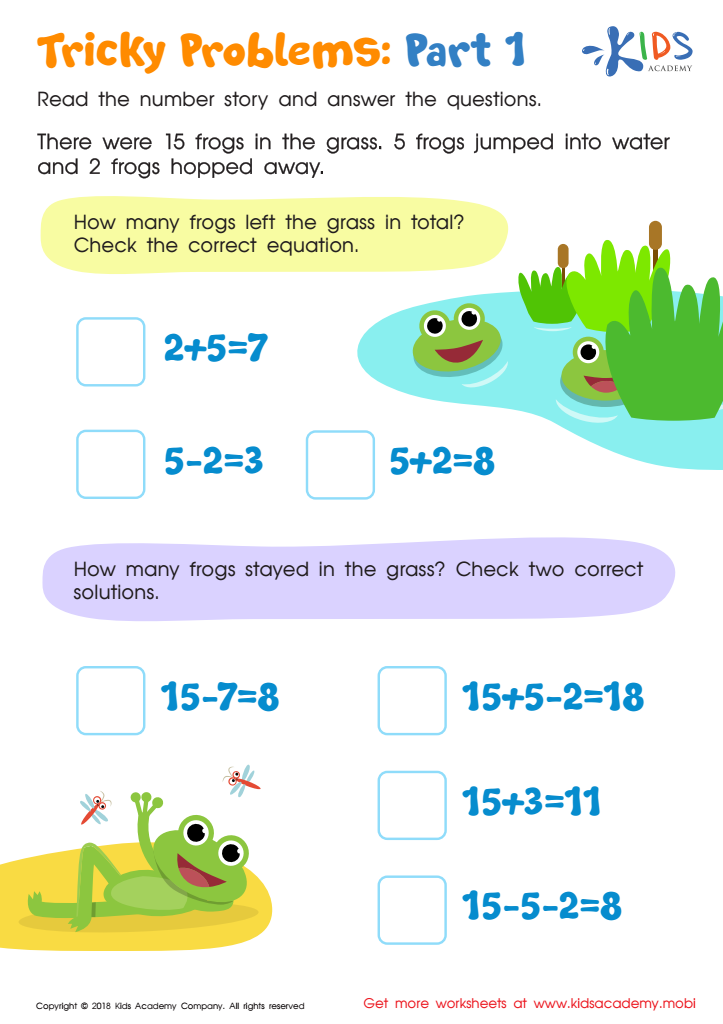
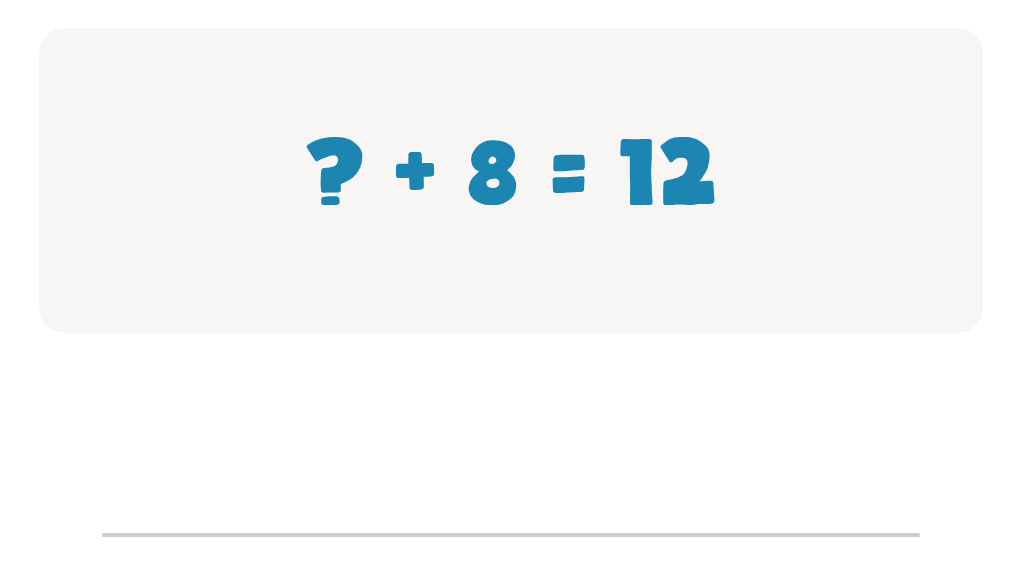
Tricky Problems Worksheet: Part 1
 Assign to My Students


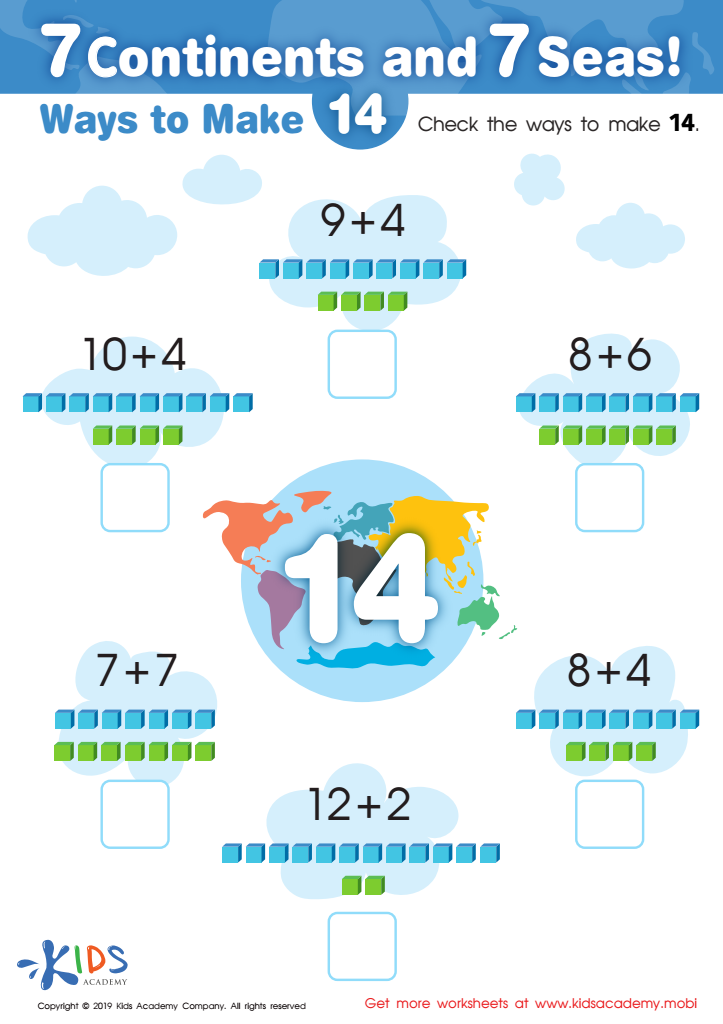
7 Continents and 7 Seas Worksheet
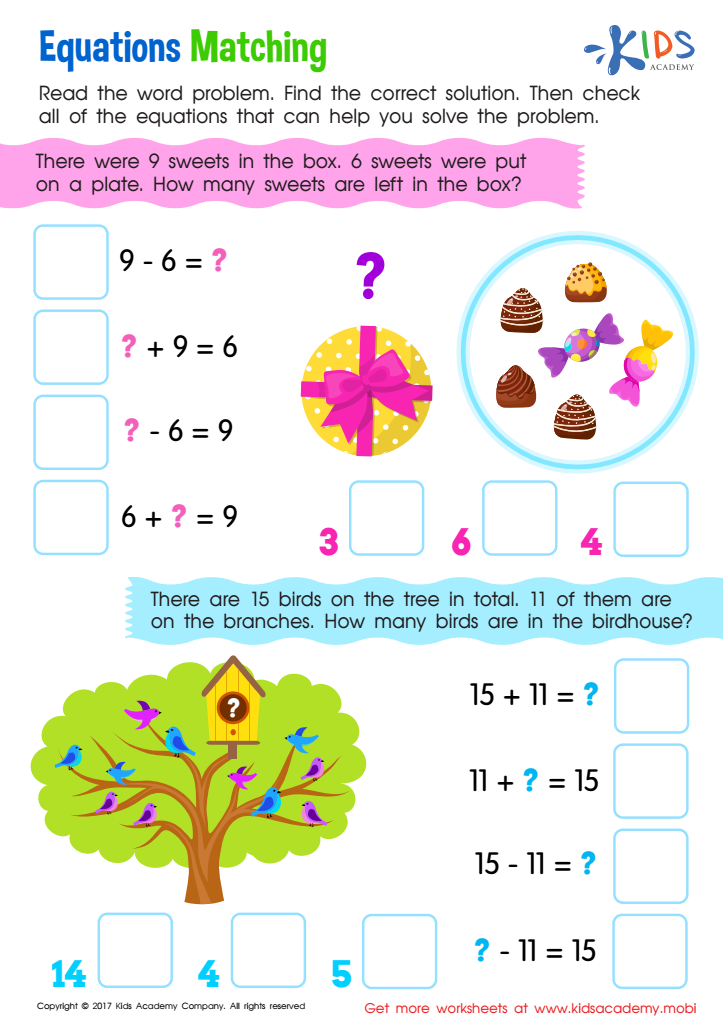
Equations Matching Word Problems Worksheet
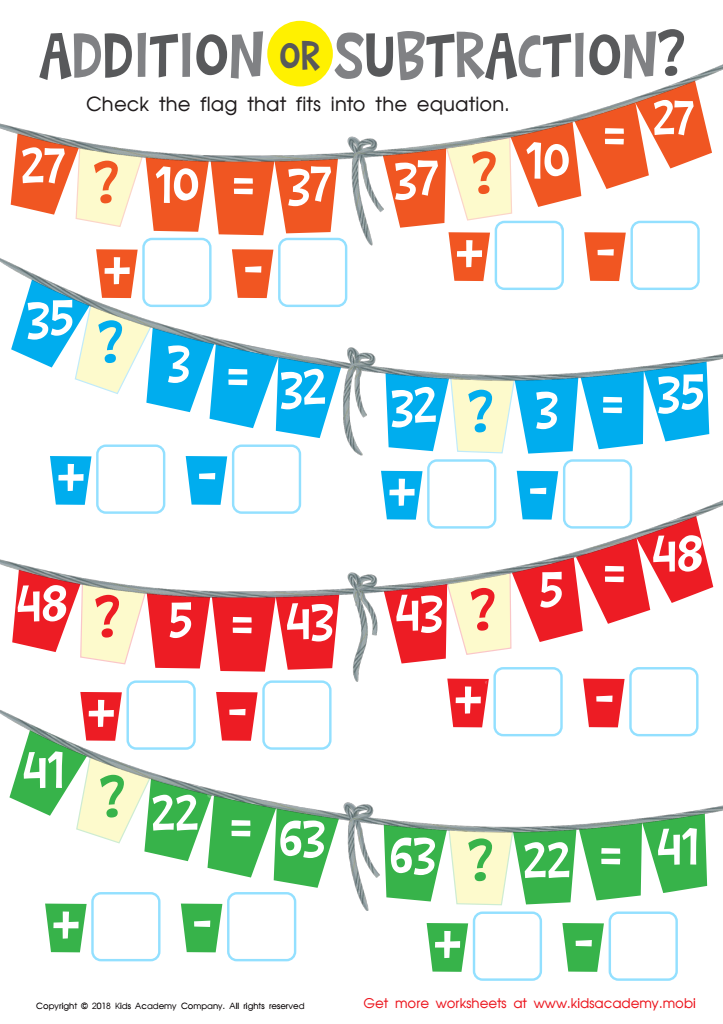
Addition or Subtraction? Worksheet








Mathematical reasoning and addition facts are foundational skills for children aged 4-6 that significantly impact their future learning. First, developing a strong grasp of addition lays the groundwork for more complex mathematical concepts. Young children are naturally curious and capable of understanding basic numerical operations, and engaging them in addition helps build their confidence and comfort with math, promoting a positive attitude toward the subject.
Additionally, mastering addition facts fosters critical thinking and problem-solving abilities. Children learn to recognize patterns, understand relationships between numbers, and apply reasoning in various contexts, which are essential skills not just in math but across all areas of learning. Parents and teachers play a crucial role in encouraging this cognitive development through playful activities, games, and real-life applications that make learning enjoyable and relatable.
Furthermore, early mathematical reasoning is linked to long-term academic success. Children who develop these skills early on are less likely to struggle with advanced math later. Investing time and resources into teaching addition facts during these formative years can have lasting benefits, making it essential for parents and educators to be actively involved in nurturing children's mathematical understanding. Ultimately, equipping children with strong reasoning skills is paramount in building a solid foundation for lifelong learning.








