Basic counting skills Addition & Subtraction Worksheets for Ages 4-6
3 filtered results
-
From - To
Discover engaging Basic Counting Skills Addition and Subtraction Worksheets designed for children ages 4 to 6! Our resources aim to build foundational math skills in a fun and interactive way, perfect for young learners. With colorful illustrations and simple exercises, these worksheets help kids practice counting, adding, and subtracting through enjoyable activities. Each worksheet encourages hands-on learning and boosts confidence in math. Parents and teachers can easily incorporate these activities into daily learning routines. Foster a love for mathematics while ensuring your child gains essential skills necessary for their educational journey. Start your child’s math adventure today!
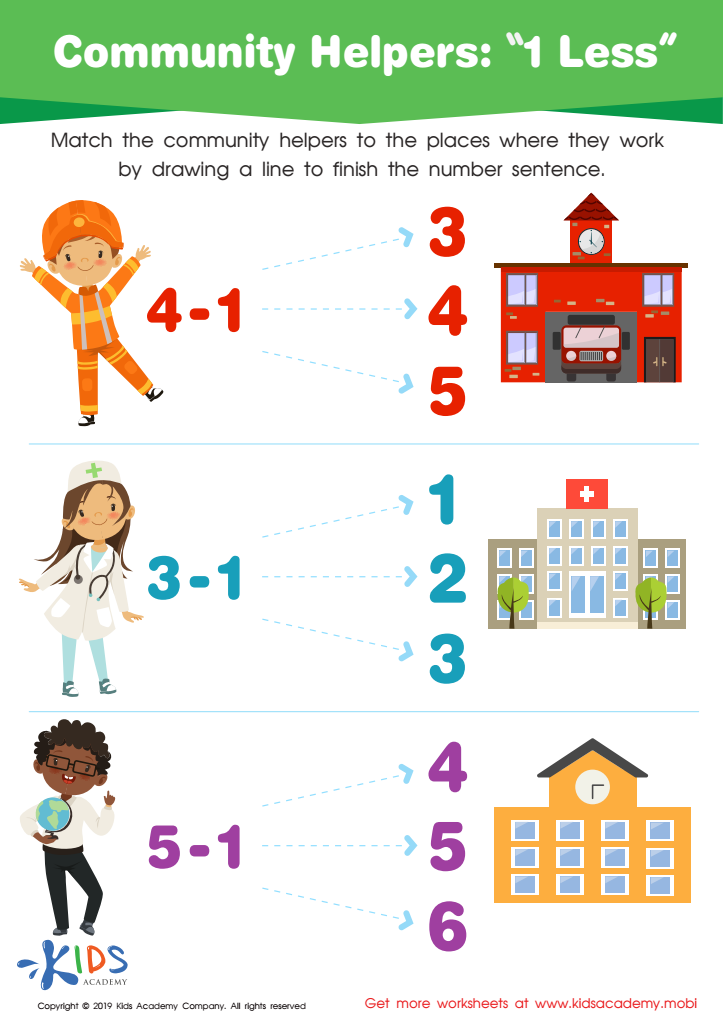
Community Helpers: 1 less Worksheet
 Assign to My Students








Basic counting skills, alongside addition and subtraction, form the foundation of early mathematics and are essential for children's cognitive development. For children aged 4-6, mastering these skills is crucial for their overall academic success. First, they help enhance critical thinking and problem-solving abilities. As children learn to count, add, and subtract, they develop a better understanding of numbers and how they work together, setting the stage for more complex mathematical concepts later on.
Additionally, these skills are vital for daily life tasks. Children will encounter counting and basic arithmetic in diverse situations, such as sharing snacks or solving simple puzzles, fostering independence and confidence. Engaging with numbers also boosts language development and boosts fine motor skills through activities like counting objects.
Parents and teachers play a pivotal role in reinforcing these skills. By creating fun, interactive learning environments, such as games and hands-on activities, they can make math enjoyable and relatable. This early engagement can ignite a lifelong interest in mathematics, paving the way for future academic achievements. Encouraging basic counting, addition, and subtraction is not only vital for children’s educational journey but also helps them navigate the world confidently and competently.








