Fine Motor Skills (coloring) Addition & Subtraction Worksheets for Ages 4-6
3 filtered results
-
From - To
Enhance your child's fine motor skills while making learning fun with our engaging coloring addition and subtraction worksheets designed for ages 4-6! These interactive worksheets creatively combine coloring activities with essential math concepts, helping young learners develop their hand-eye coordination and dexterity. As they select colors and fill in the designs while solving math problems, kids reinforce their understanding of basic addition and subtraction. Our worksheets are perfect for classroom use or at-home learning, encouraging creativity and cognitive growth. Foster a love for math and art in your child with our colorful and educational resources tailored specifically for little hands!
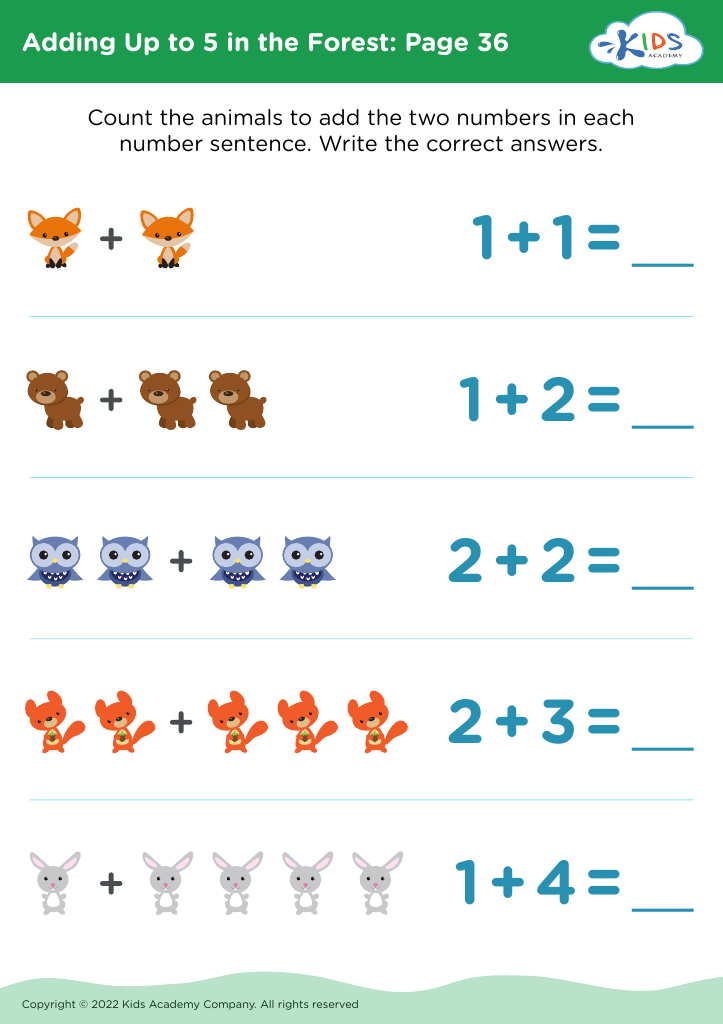
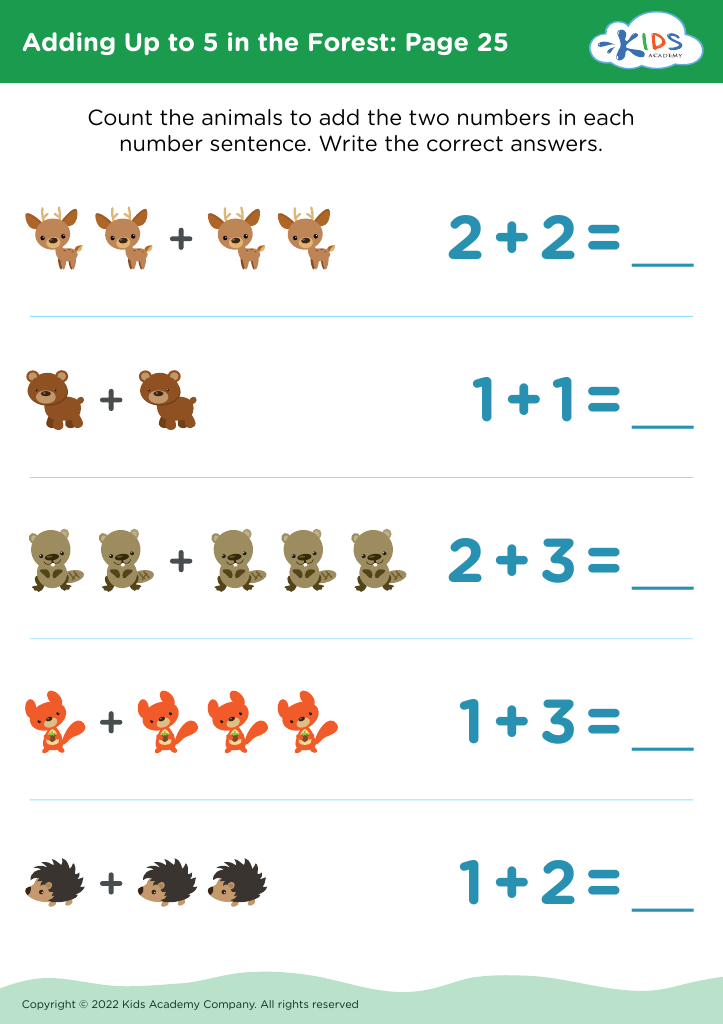
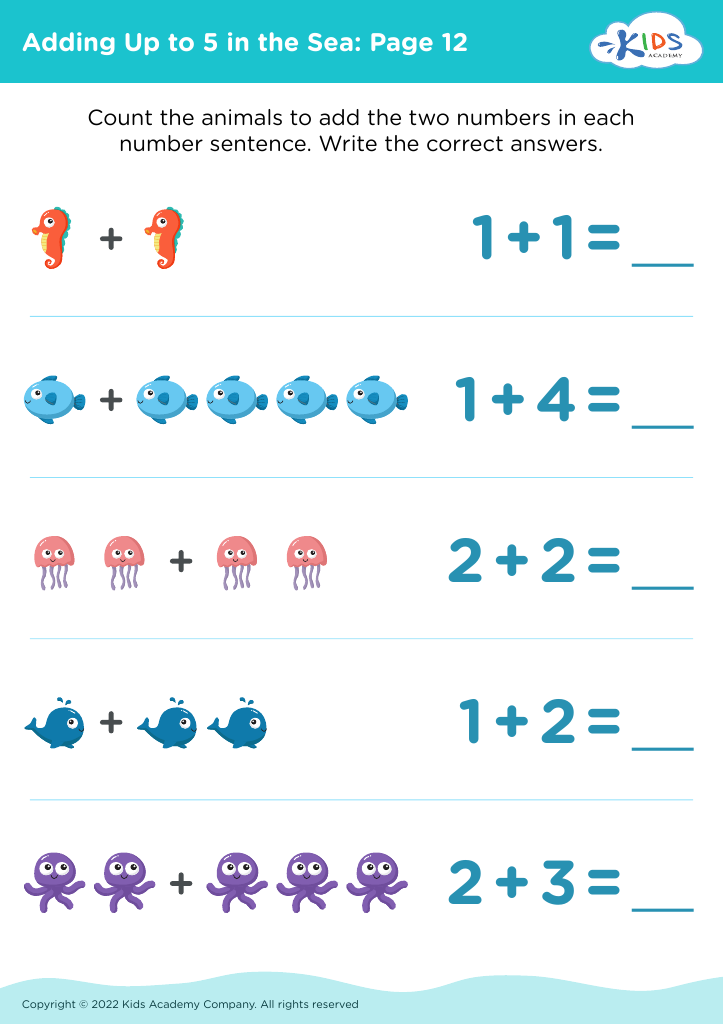








Fine motor skills are essential developmental milestones for children aged 4-6, significantly influencing their academic readiness and everyday activities. Coloring activities, such as using crayons or markers, help children strengthen the small muscles in their hands and fingers. This fine motor control is crucial for a variety of tasks, from writing to self-care, such as buttoning their clothes or zipping a jacket.
In addition to developing fine motor skills, introducing early mathematics through addition and subtraction during this age group lays the foundation for mathematical understanding. Engaging in simple counting and number activities, whether through games or drawing, helps children recognize patterns and quantities, fostering critical thinking and problem-solving abilities.
Combining fine motor skill activities with basic math concepts can make learning more effective and engaging. For instance, coloring shapes that represent addition or subtraction can make abstract concepts visual and tangible. Parents and teachers play a vital role in facilitating these activities, making them enjoyable and integrated into daily routines. By emphasizing the importance of fine motor development and early math skills, we equip children with the tools they need for successful learning experiences in the future, laying the groundwork for effective communication, problem-solving, and academic achievement.








