Addition up to 5 Addition Worksheets for Ages 4-6
4 filtered results
-
From - To
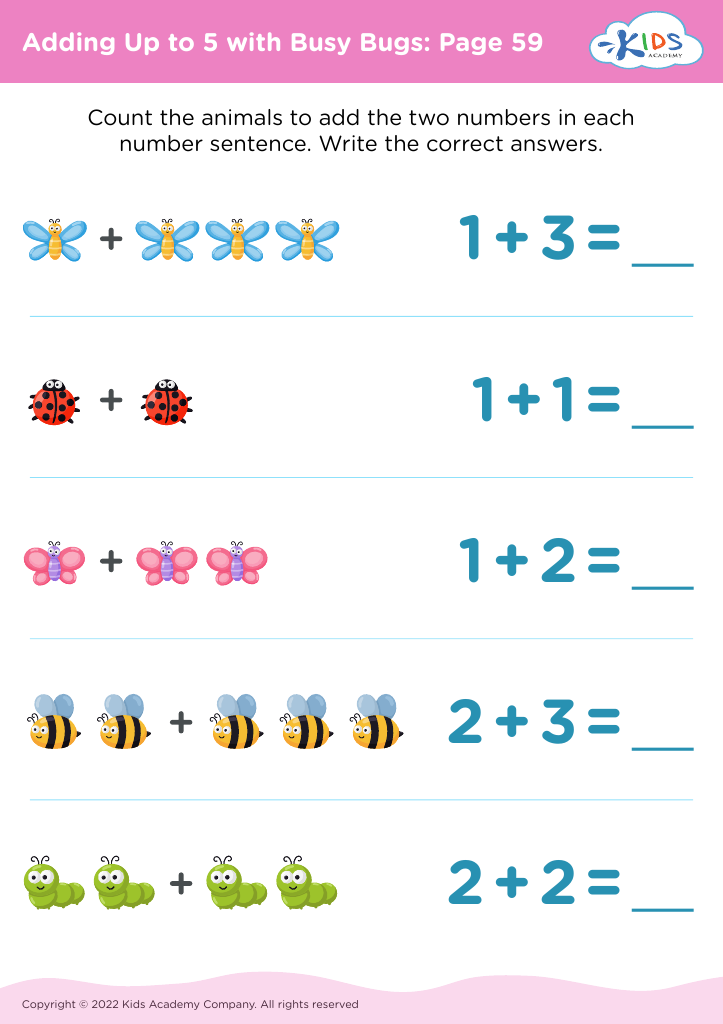
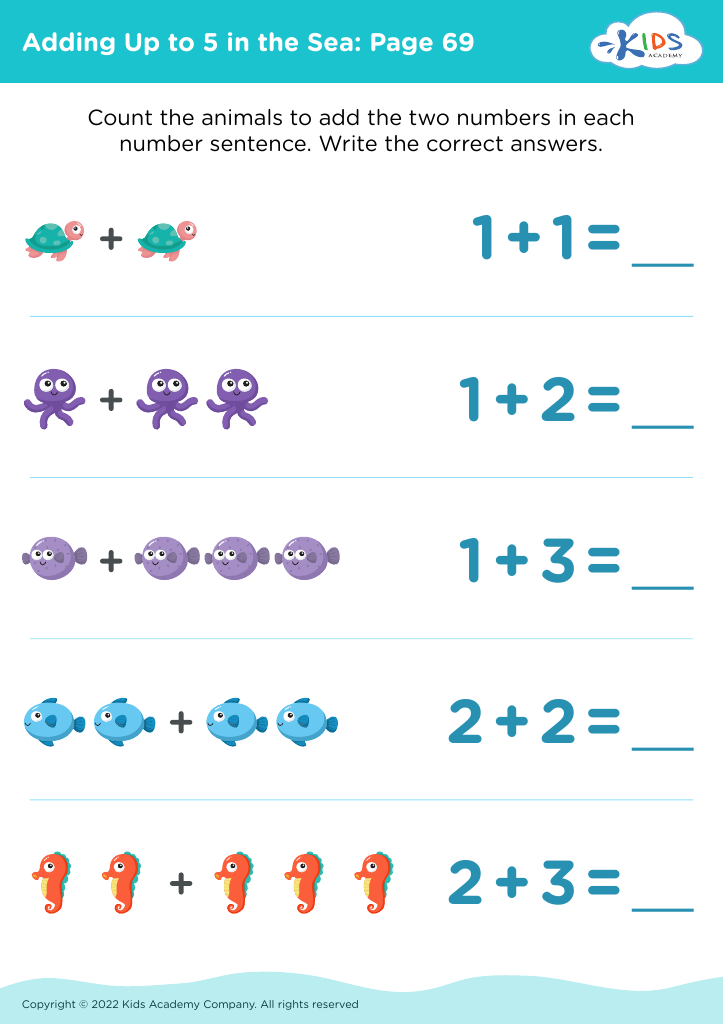
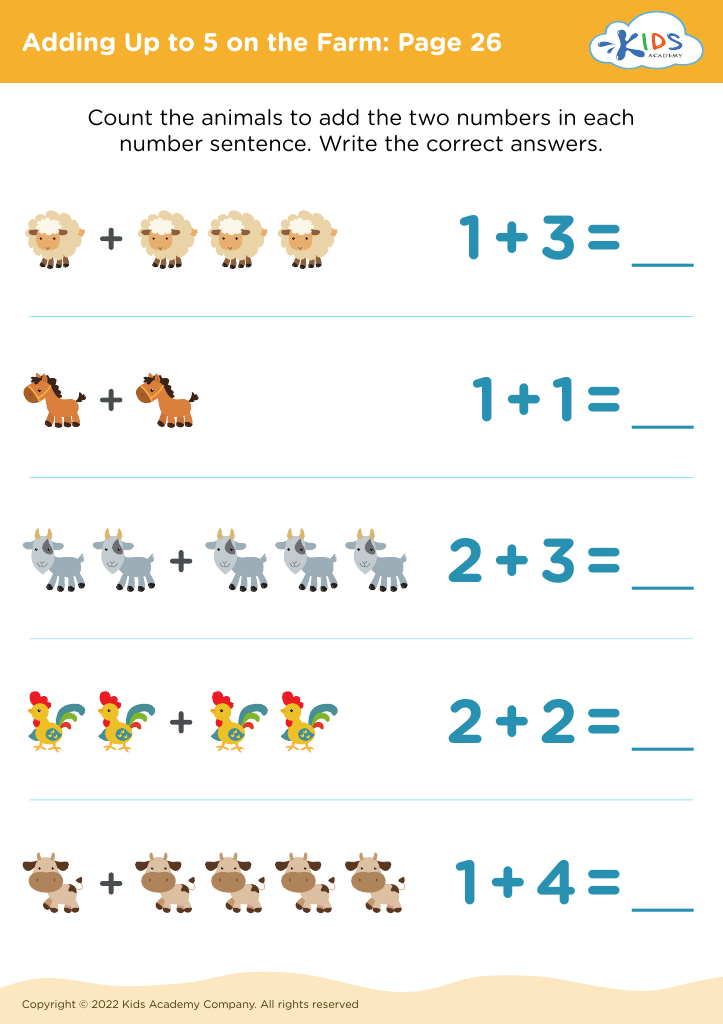
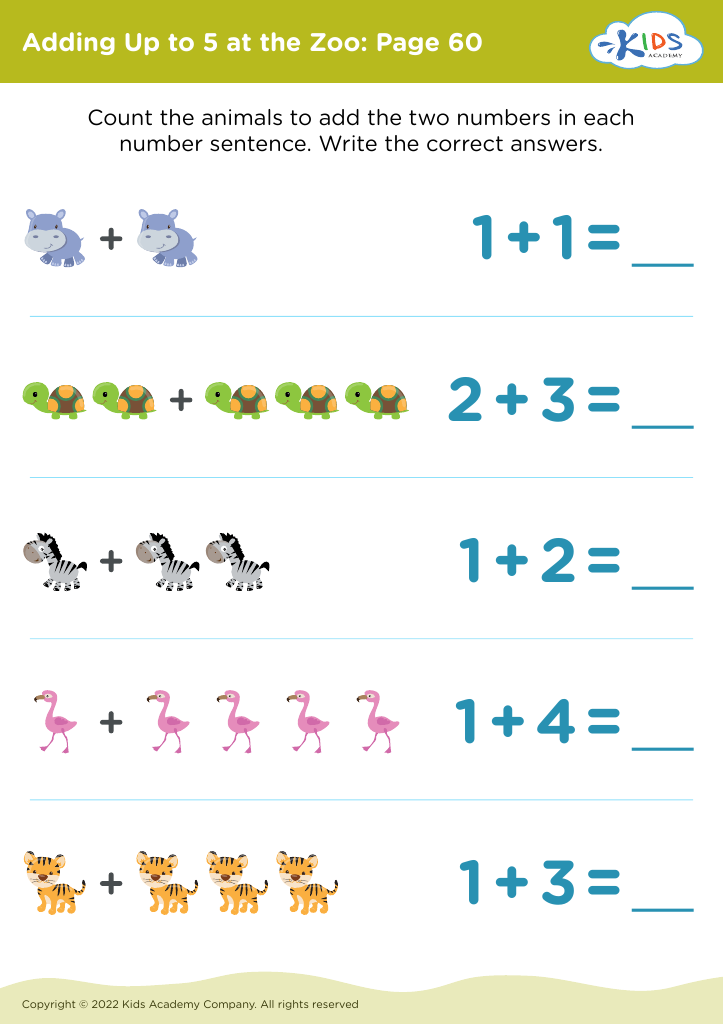
Discover our engaging "Addition up to 5 Worksheets" designed specifically for children ages 4-6! These fun and interactive worksheets help young learners build a solid foundation in basic math skills. Through colorful illustrations and relatable themes, kids will explore addition in a stress-free and enjoyable way. Each worksheet features simple exercises that reinforce the concepts of counting and adding small numbers, ensuring children develop confidence in their math abilities. Perfect for homeschooling or classroom use, our worksheets support early childhood education and promote cognitive growth. Foster a love for math while mastering addition up to 5 today!








Addition up to 5 is a foundational skill for children ages 4-6, making it essential for parents and teachers to prioritize. Understanding basic addition lays the groundwork for more complex math concepts in the future. At this stage, children are developing their cognitive abilities, and engaging with math helps enhance critical thinking, problem-solving skills, and logical reasoning.
Additionally, learning addition promotes numerical fluency, which is crucial for daily life tasks, such as counting money or managing time. When children grasp the idea of combining numbers, they build confidence and a positive attitude towards math, setting the tone for their future learning experiences.
Moreover, early exposure to addition encourages the development of social skills during group activities and cooperative learning. As children work together to solve addition problems, they learn the values of teamwork and communication.
Parents can reinforce these skills at home through games, songs, and hands-on activities, making learning fun and engaging. Teachers can incorporate interactive lessons and visual aids, catering to different learning styles.
In conclusion, caring about addition up to 5 ensures that children have a solid mathematical foundation, prepares them for future academic challenges, and fosters essential life skills that extend beyond the classroom.








