Animal identification Addition Worksheets for Ages 4-6 - Page 2
27 filtered results
-
From - To





.jpg)


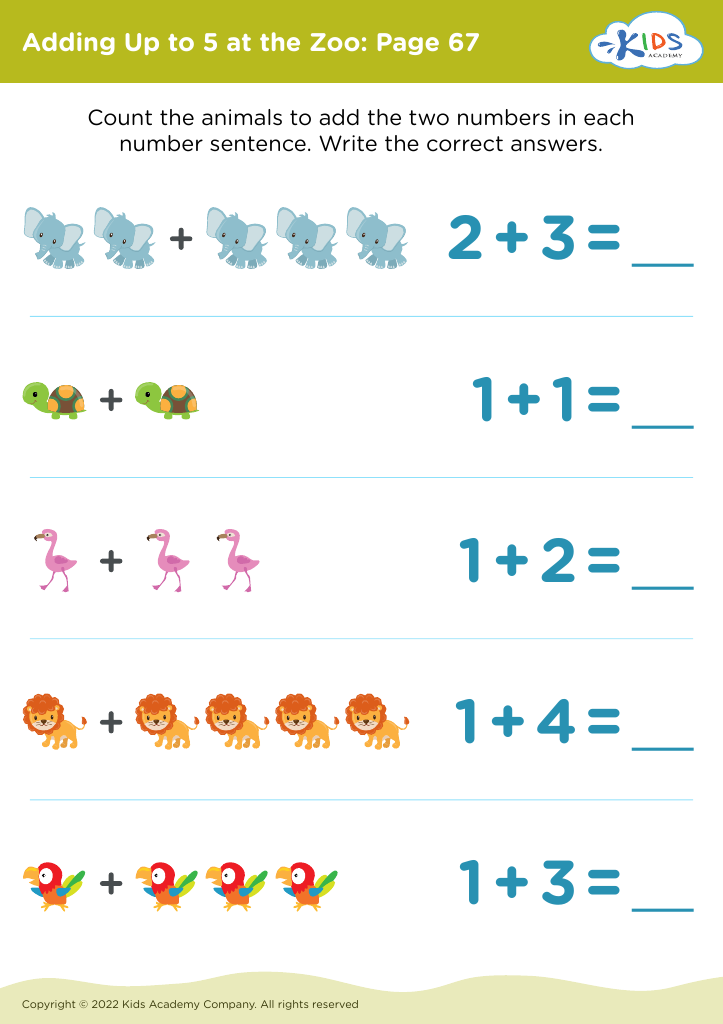
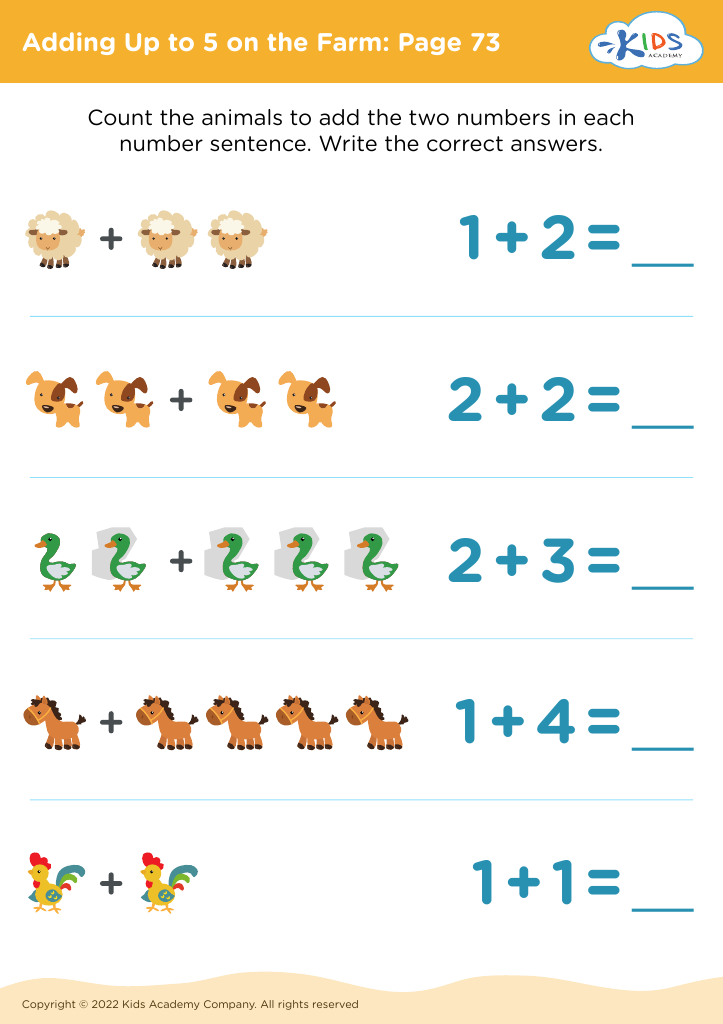
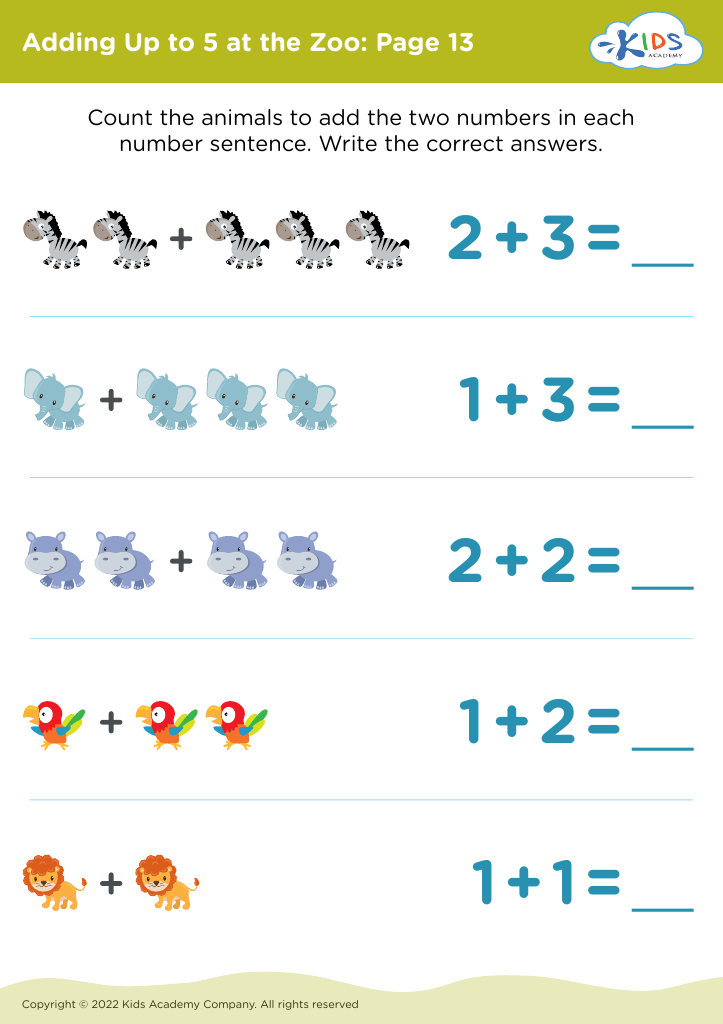
Animal identification addition is an engaging way to help young learners, aged 4-6, develop critical early math skills while fostering a love for animals and nature. Parents and teachers should care about this educational approach as it combines foundational math concepts with interactive, hands-on learning. As children identify different animals—whether through pictures or toys—and engage in adding them together, they not only practice counting but also enhance their cognitive abilities related to categorization and comparison.
This method supports the development of fine motor skills as children manipulate objects and helps improve language skills through discussing the characteristics and names of the various animals. Furthermore, integrating real-world examples makes learning relevant and exciting, capturing the natural curiosity of young children.
By creating a playful learning environment around animal identification addition, educators nurture critical thinking and problem-solving skills. In essence, this approach lays the groundwork for mathematical understanding and supports emotional and social development by fostering cooperative play during group activities. Teachers and parents who prioritize such engaging learning experiences equip children with essential skills while promoting a lifelong enthusiasm for learning.








