Basic arithmetic practice Addition Worksheets for Ages 4-6
10 filtered results
-
From - To
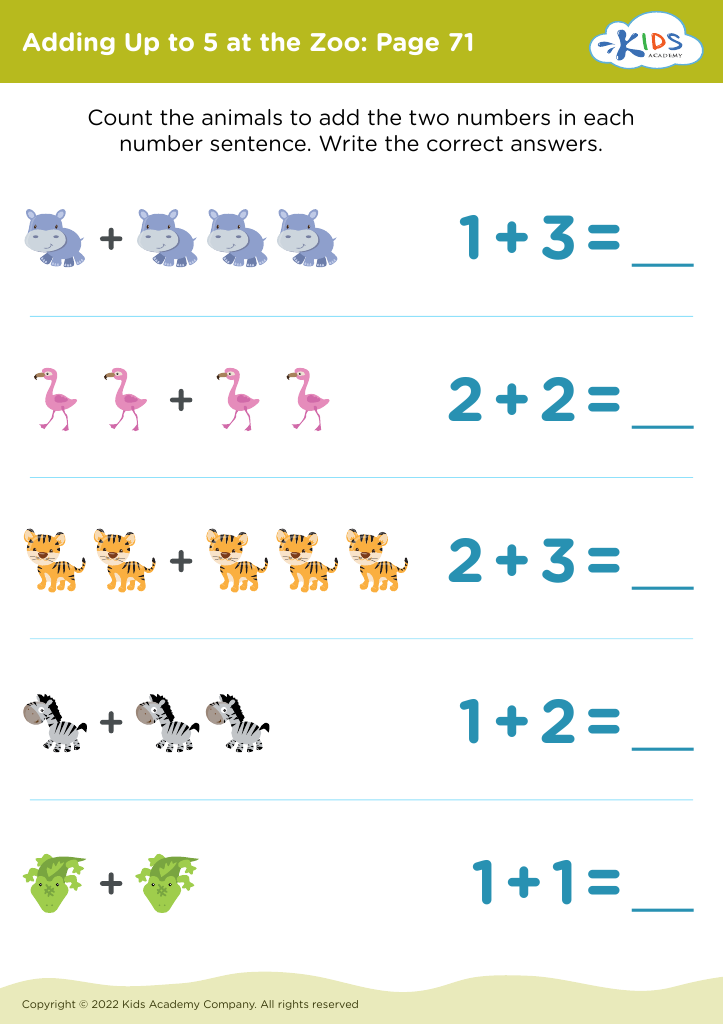
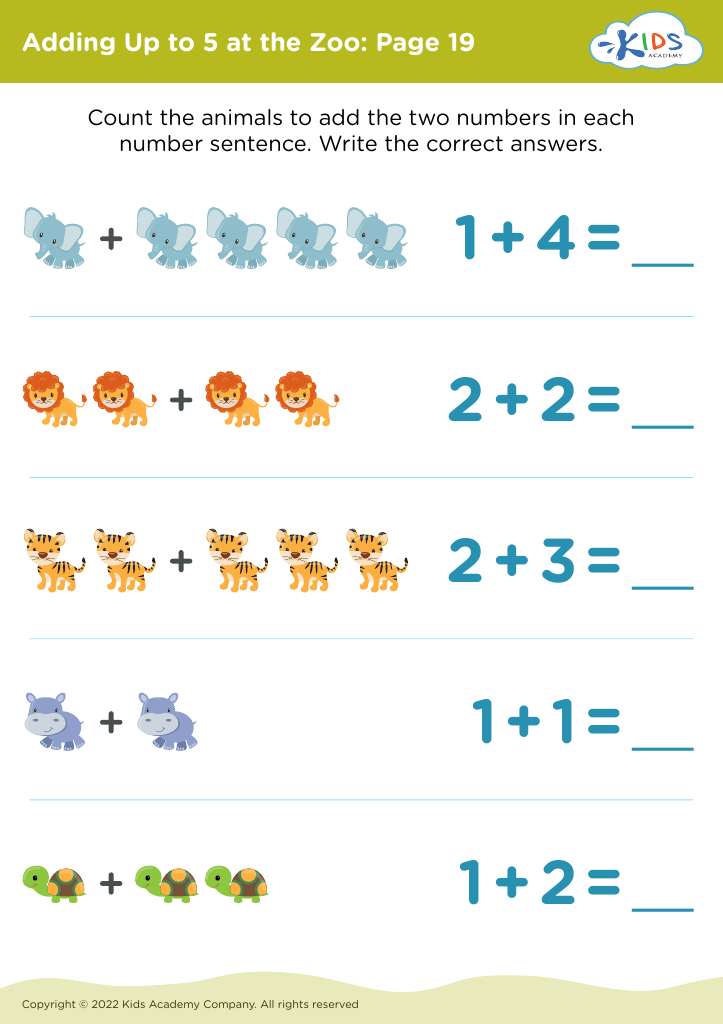
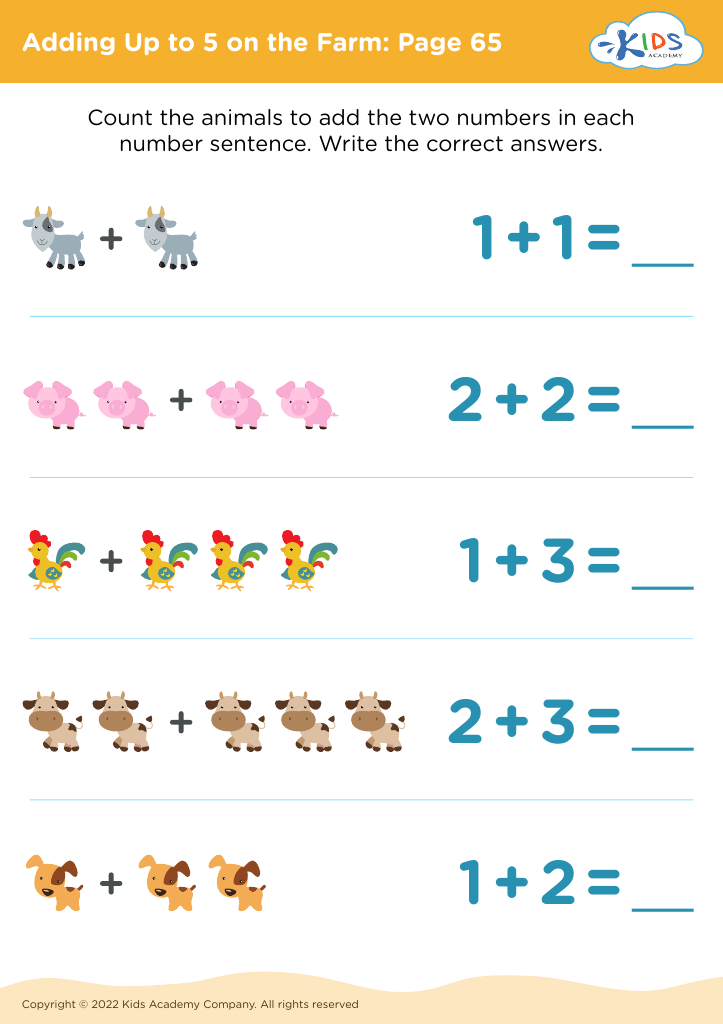
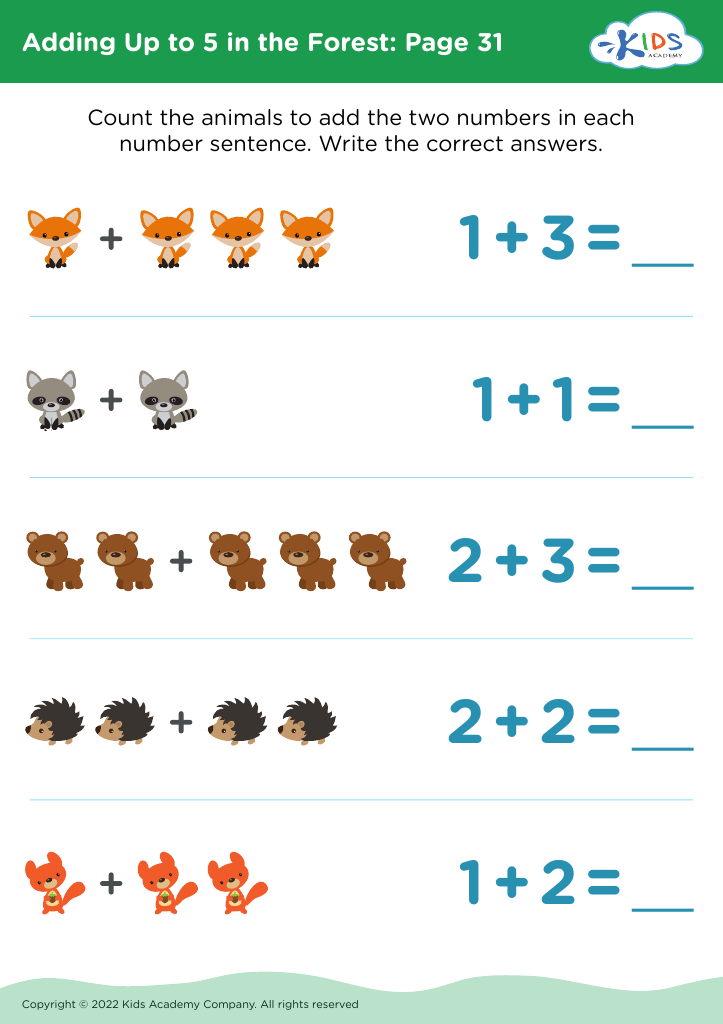
Boost your child's math skills with our Basic Arithmetic Practice Addition Worksheets designed for ages 4-6. These engaging and colorful worksheets make learning addition fun and effective, helping young learners grasp foundational math concepts. Each worksheet presents simple addition problems, encouraging kids to practice and strengthen their arithmetic abilities while building confidence. Ideal for preschool and kindergarten, these printables support educators and parents in providing high-quality math instruction at home or in the classroom. Lay a strong foundation for your child's future mathematical success with our expertly crafted addition practice worksheets.
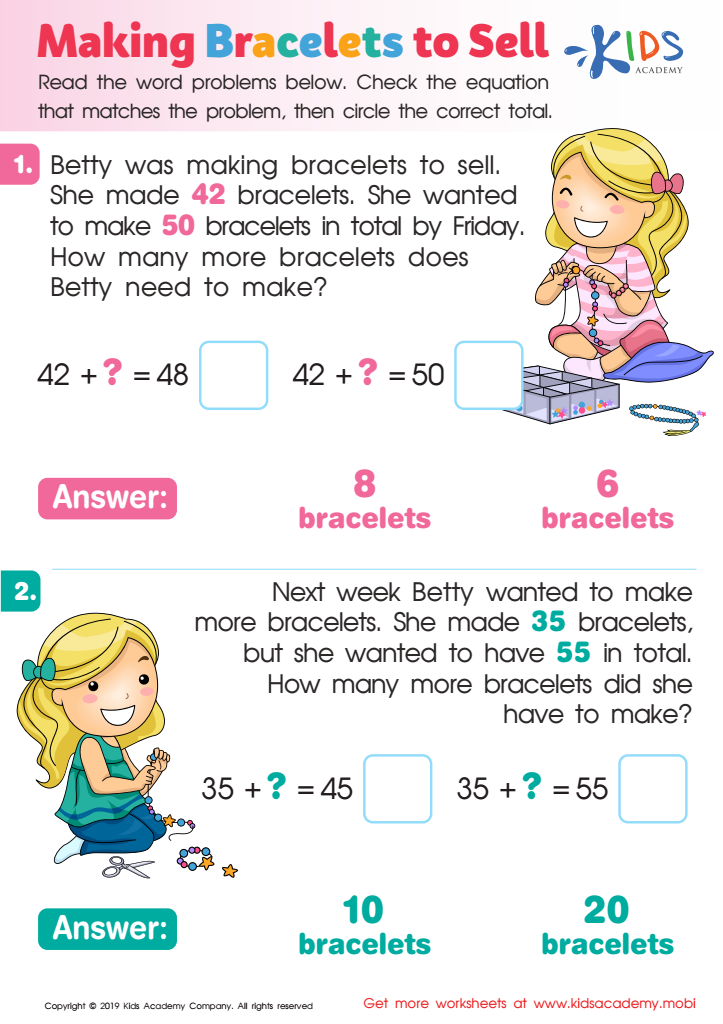
Making Bracelets to Sell Worksheet
 Assign to My Students
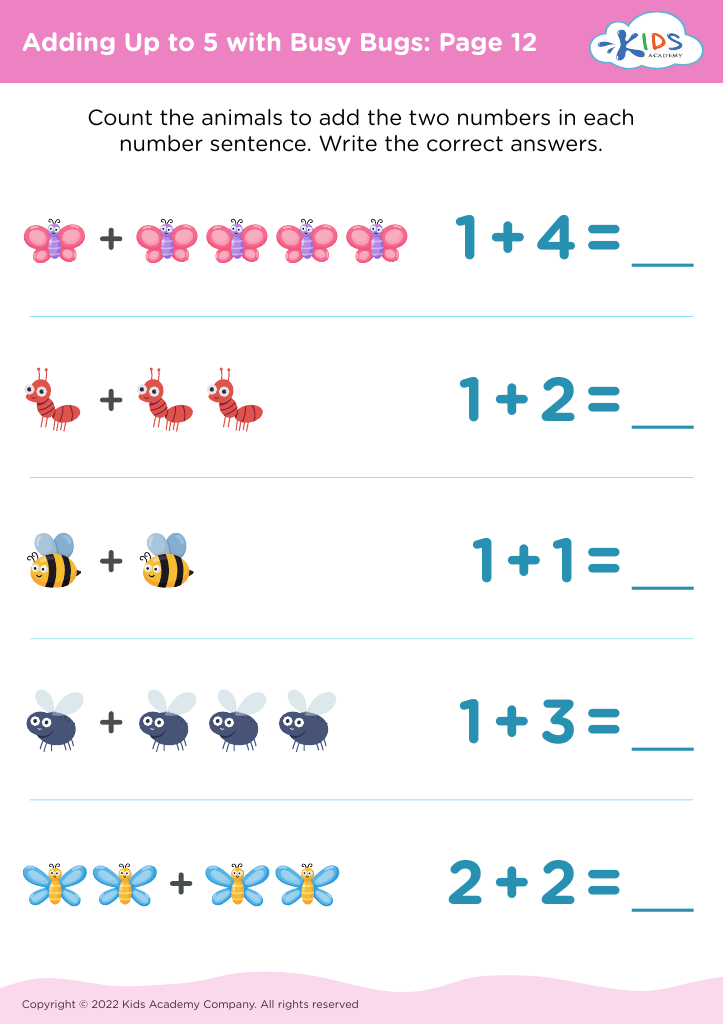
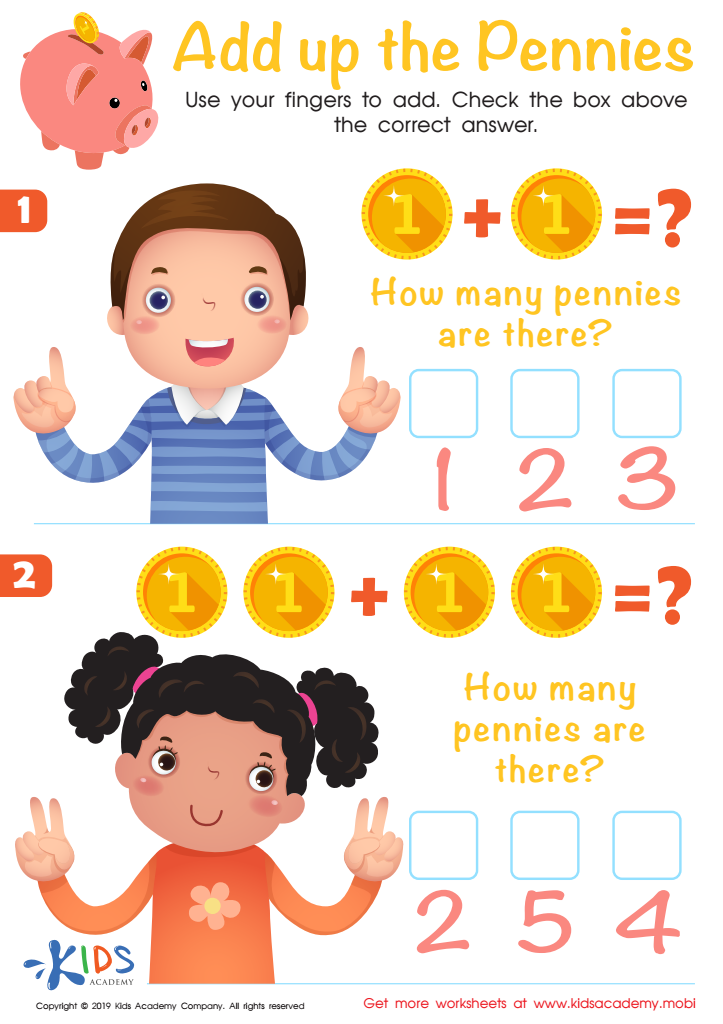
Add up the Pennies Worksheet
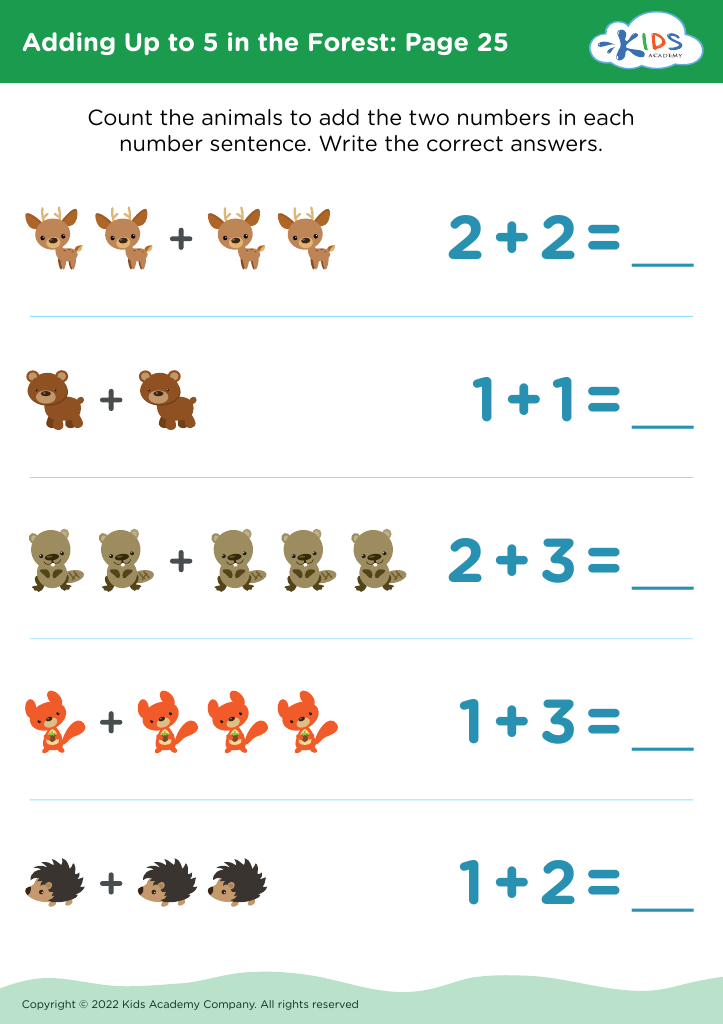
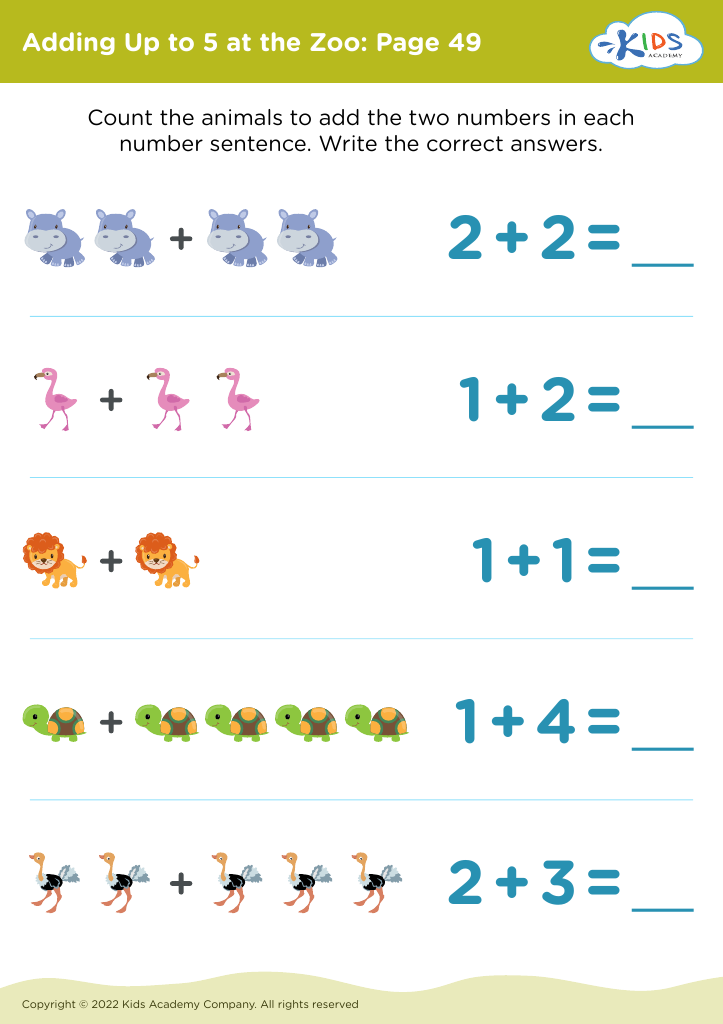
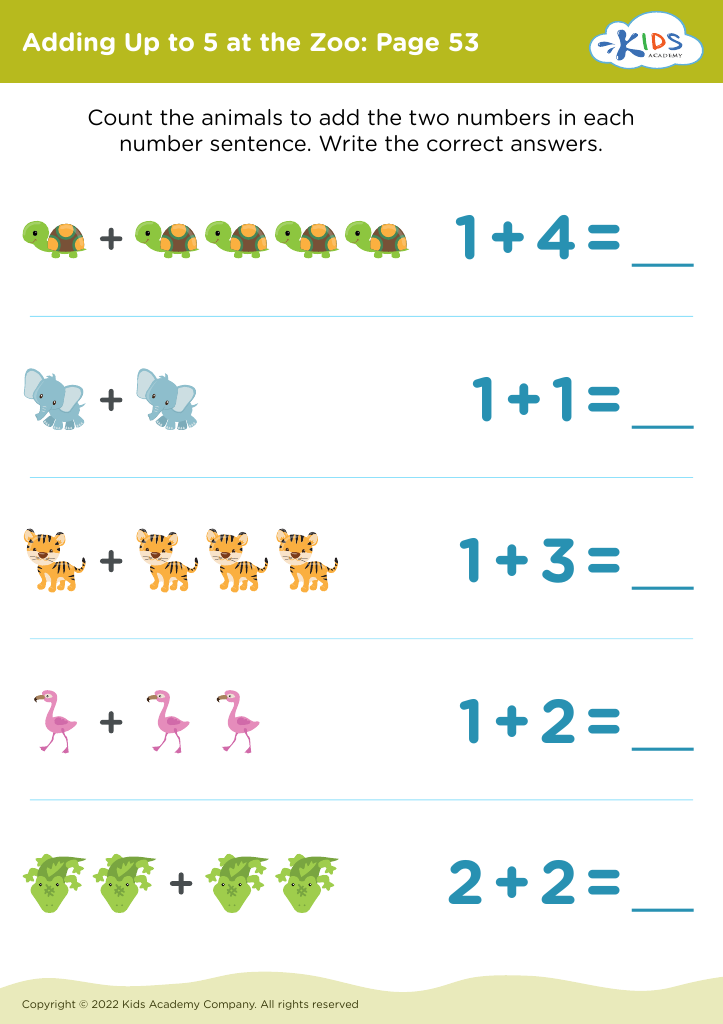








Parents and teachers should be especially attentive to basic arithmetic practice, particularly addition, for children ages 4-6, as it forms the cornerstone of future mathematical learning and cognitive development. At this formative stage, young learners' brains are highly adaptable and capable of acquiring foundational skills that will support more complex mathematical concepts later on. Mastering addition at an early age fosters critical thinking, problem-solving abilities, and numerical fluency, which are essential competencies for academic success across various subjects.
Addition practice promotes the development of key cognitive skills such as memory, concentration, and logical reasoning. When children regularly engage with addition problems, they learn to recognize patterns and relationships between numbers, paving the way for a deeper understanding of more advanced operations like subtraction, multiplication, and division.
Moreover, experiencing success in early arithmetic can significantly boost a child's confidence and enthusiasm for learning. It lays the groundwork for a positive attitude towards mathematics, reducing math anxiety that could impede academic performance in later years. Early achievements in addition provide a sense of accomplishment and motivate children to persevere through challenging problems.
Thus, by focusing on basic addition practice for young children, parents and teachers not only enhance immediate academic abilities but also set the stage for long-term educational and personal growth.








