
Basic Math understanding Addition Worksheets for Ages 4-6
7 filtered results
Difficulty Level
Grade
Age
-
From - To
Subject
Activity
Standards
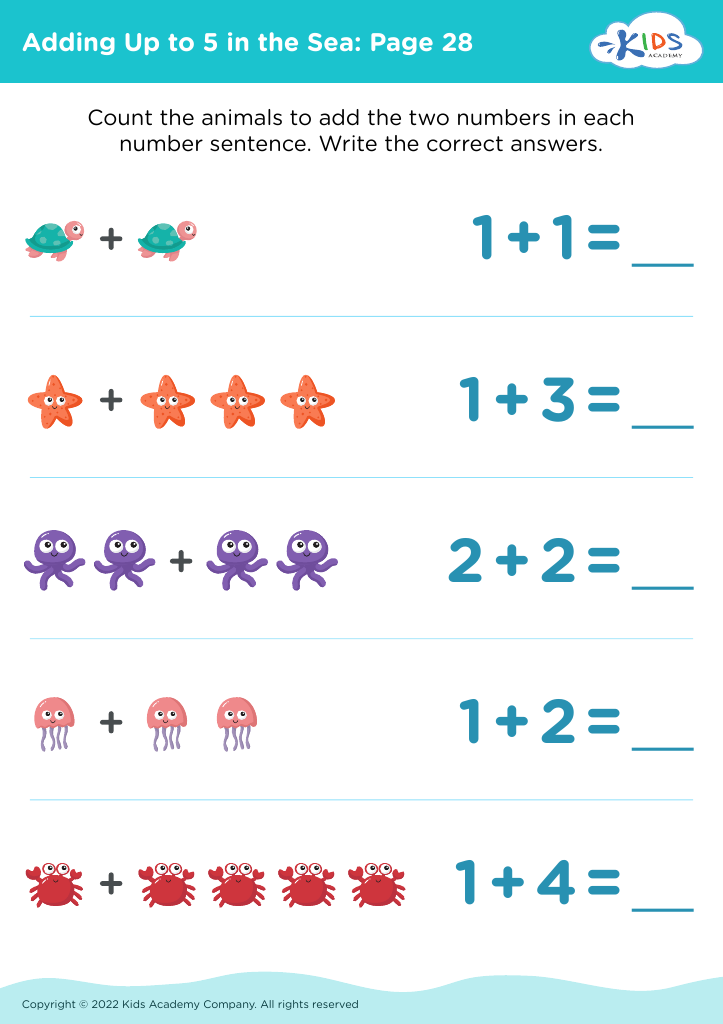
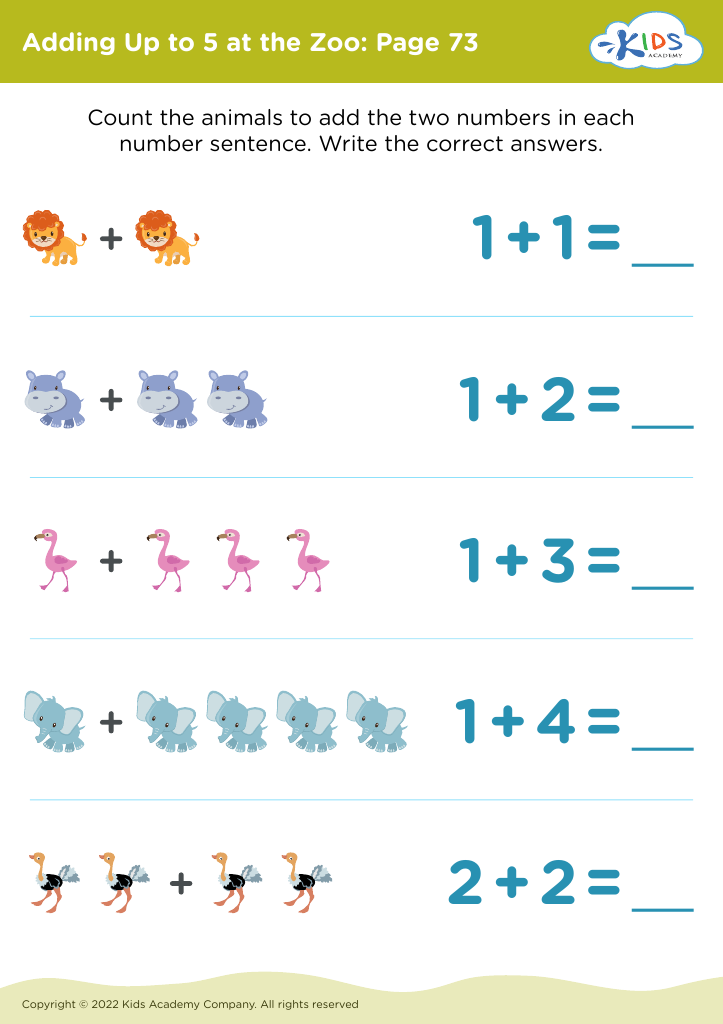
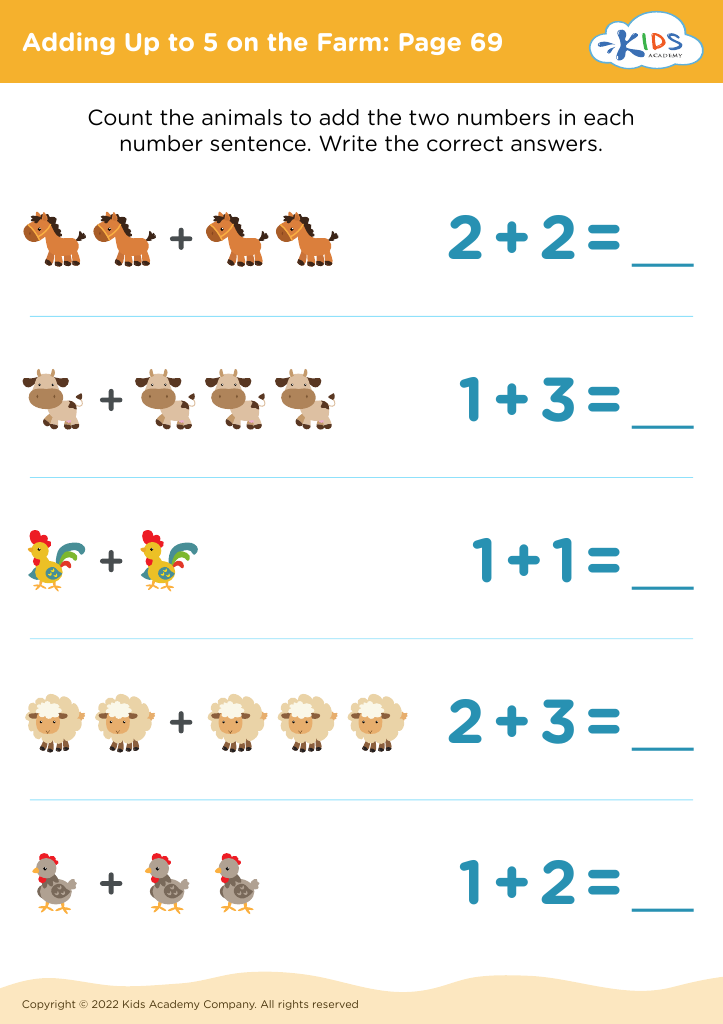
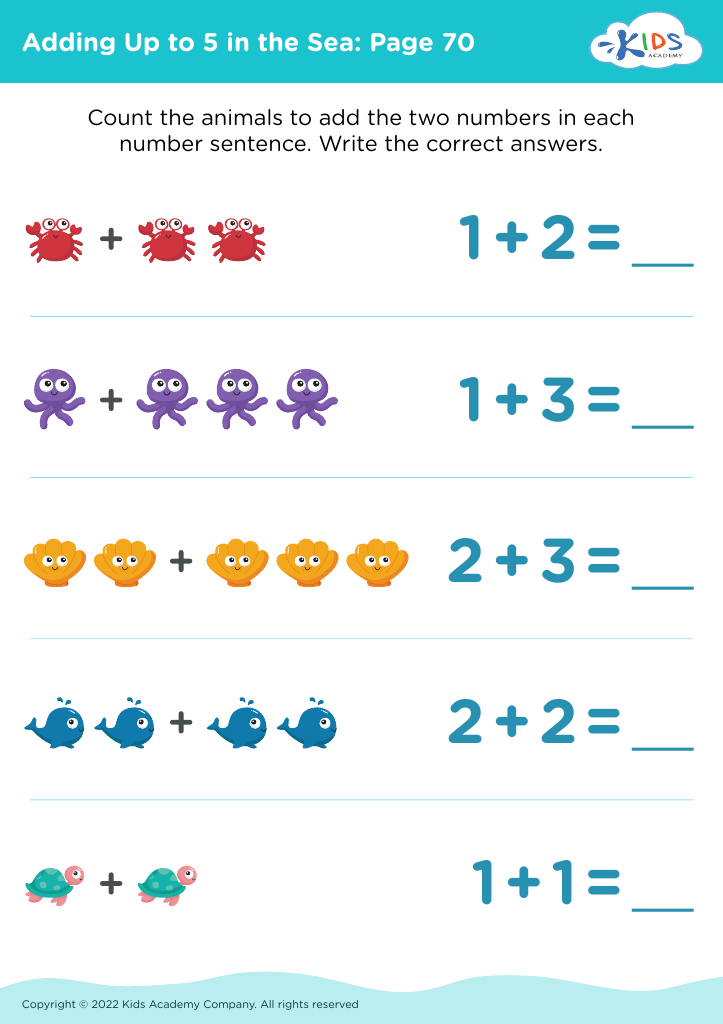
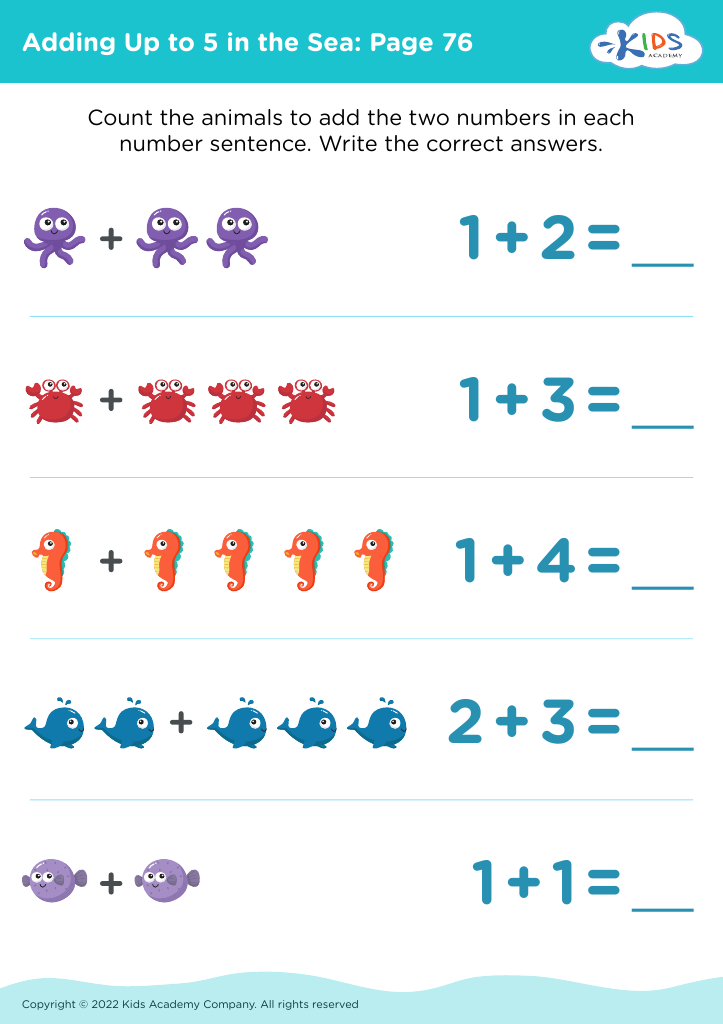
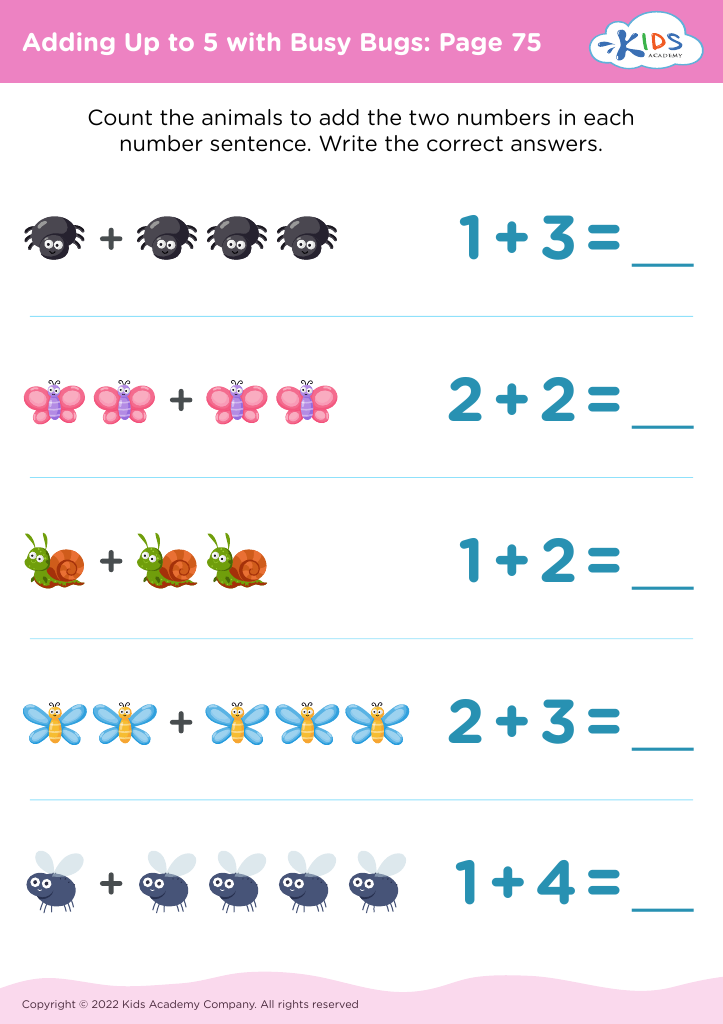
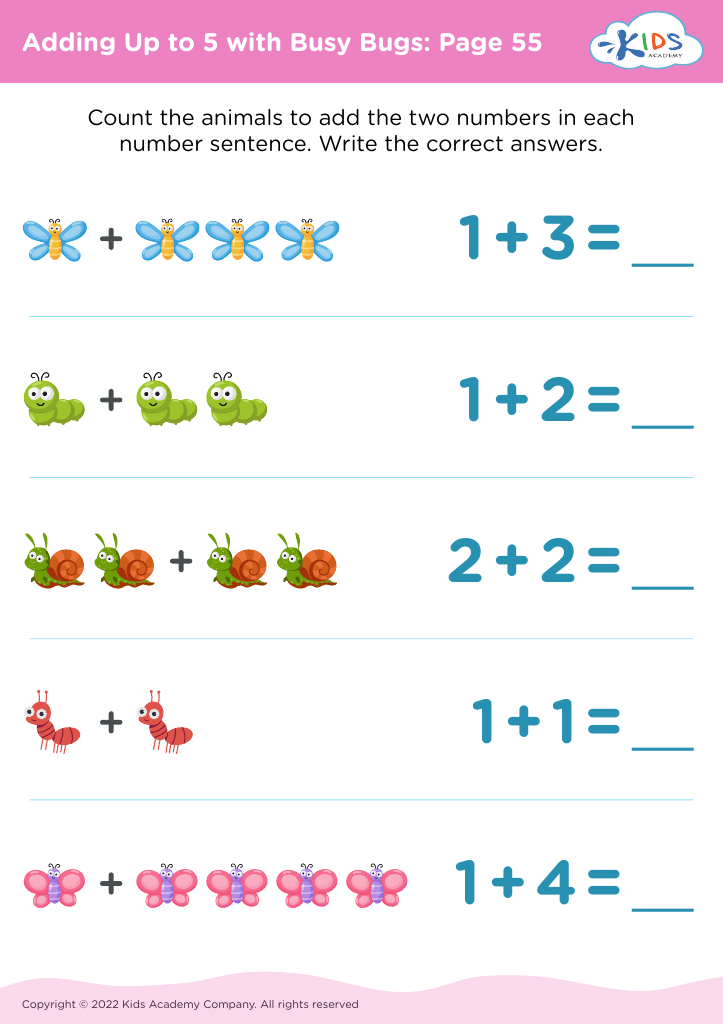
Enhance your child's early math skills with our Basic Math Understanding Addition Worksheets, designed specifically for ages 4-6. These printable worksheets offer fun and engaging activities that make learning addition enjoyable while helping young learners build a solid foundational understanding of mathematics. By using colorful visuals and relatable examples, children will easily grasp the concept of addition through hands-on practice. Our worksheets promote critical thinking, problem-solving, and number recognition in a playful manner, making them perfect for home or classroom use. Start your child's math journey today and watch their confidence soar as they master the art of addition!
Favorites
With answer key
Interactive
Join Kids Academy for Free
Who is primarily going to use this learning content?








Understanding basic math, particularly addition, is crucial for children aged 4-6 as it lays the foundation for their future learning experiences. At this stage, children are developing cognitive skills that will serve as the building blocks for more complex mathematical concepts. Moreover, mastering basic addition aids in enhancing logical thinking and problem-solving abilities.
When parents and teachers prioritize addition understanding, they promote a child's confidence and motivation around math. Engaging with addition through playful activities, like using physical objects or fun games, helps children develop a positive attitude towards mathematics. This strengthens their readiness to tackle higher-level math as they progress in their education.
Additionally, a solid grasp of basic addition fosters essential life skills. Through addition, children learn to count, categorize, and understand concepts such as quantity and comparison, which are relevant in everyday situations, including shopping and sharing.
Furthermore, early math skills are closely linked to overall academic achievement. Children who develop these foundational skills early are more likely to succeed in future learning. Therefore, it's essential for parents and teachers to focus on addition in early education—it's not just about numbers; it's about nurturing curious, confident, and competent lifelong learners.








