Mental math skills Addition Worksheets for Ages 4-6
5 filtered results
-
From - To
Boost your child's arithmetic confidence with our "Mental Math Skills Addition Worksheets for Ages 4-6." These engaging and colorful worksheets are designed specifically for young learners to develop their mental math abilities through fun, age-appropriate challenges. The activities encourage quick thinking and reinforce foundational addition concepts, preparing your child for future math success. With a variety of stimulating exercises, our worksheets cater to different learning styles and help children build essential cognitive skills while enjoying the learning process. Make math exciting and effective with our carefully crafted addition worksheets.
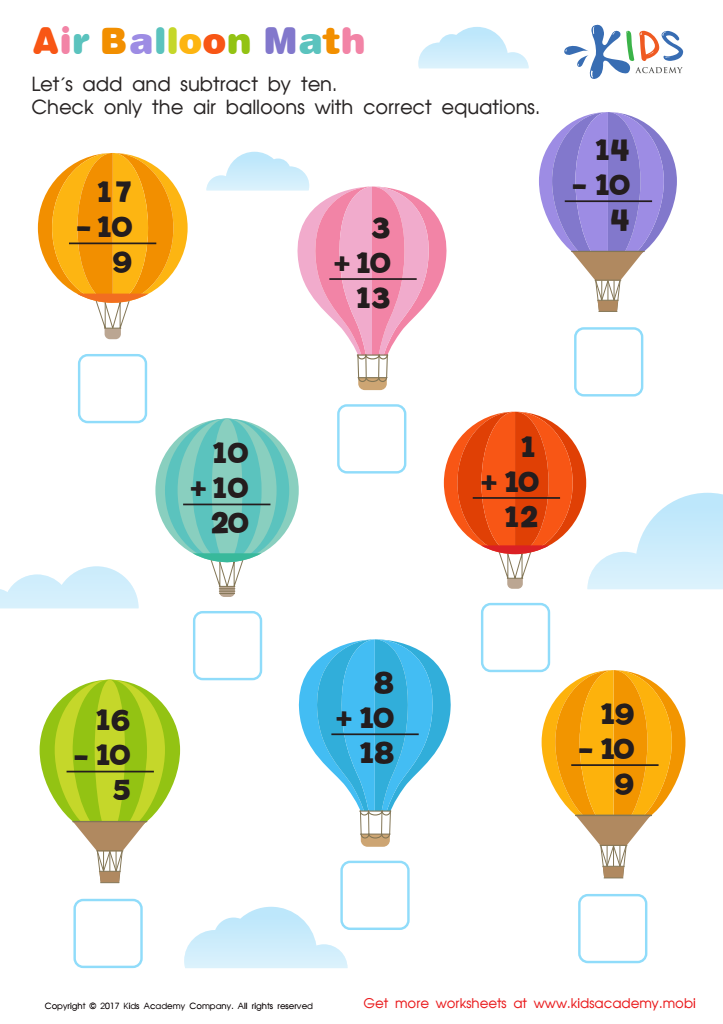
Air Balloon Math Worksheet
 Assign to My Students
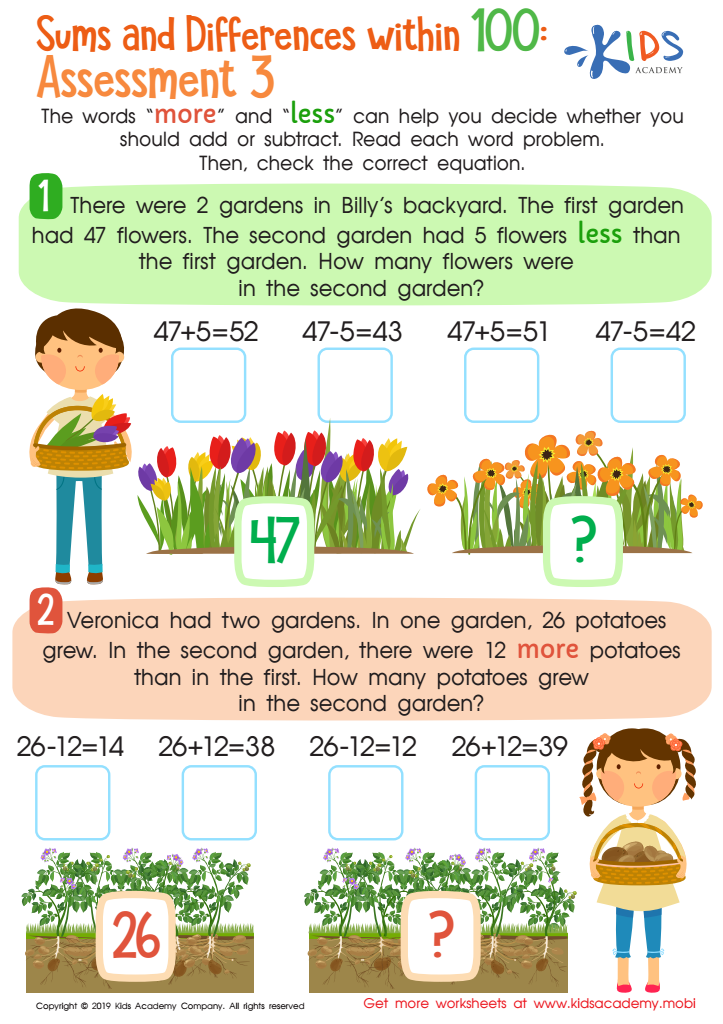
Sums and Differences Within 1 - Assessment 1 Worksheet
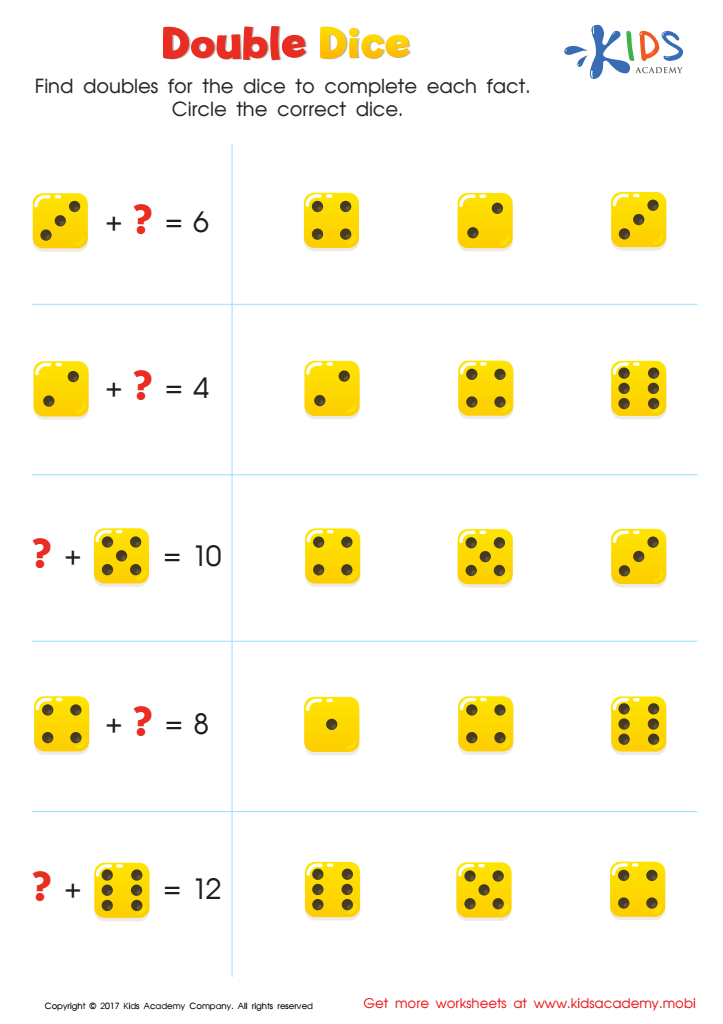
Addition Facts: Double Dice Worksheet
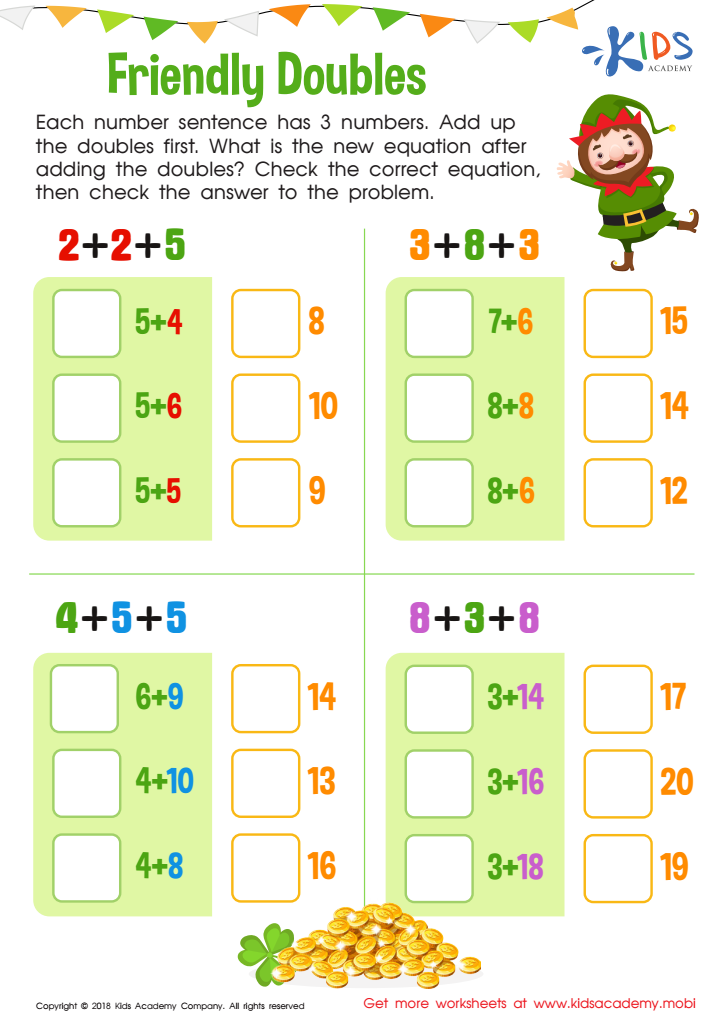
Friendly Doubles Worksheet
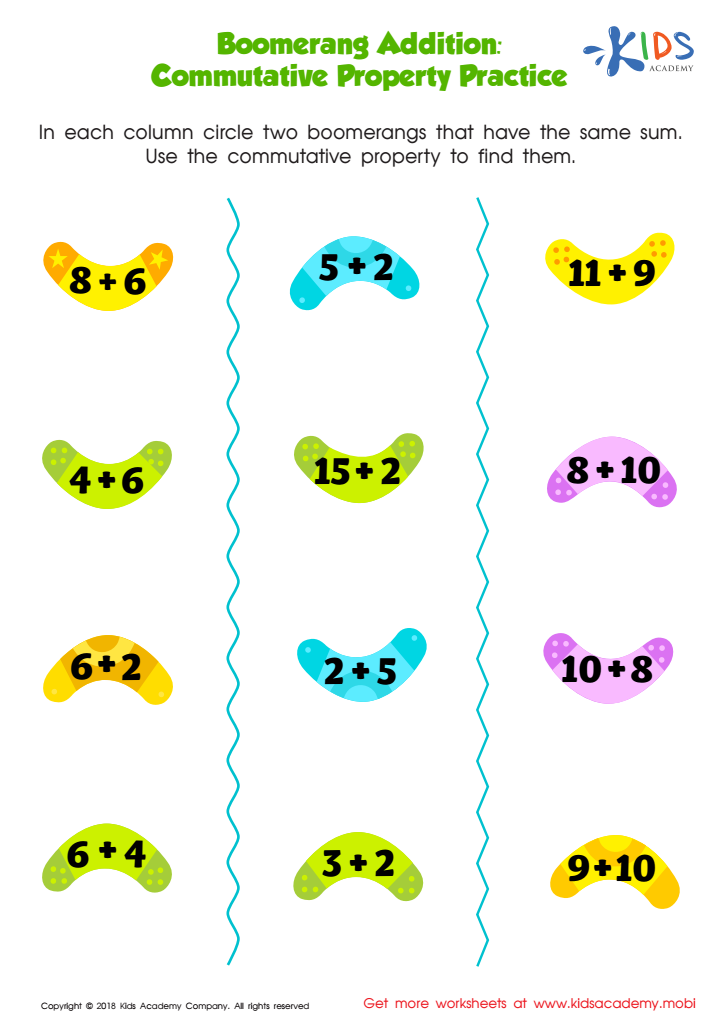
Boomerang Addition Worksheet








Parents and teachers should prioritize mental math skills, particularly addition, for children aged 4-6 because these skills form the foundation of future mathematical learning and cognitive development. At this age, children's brains are highly plastic, meaning they can easily adapt and learn new skills. Introducing early mental math helps improve number sense, enabling children to understand and manipulate numbers conceptually rather than just memorizing facts.
Moreover, mental addition enhances problem-solving skills and logical thinking as kids begin to approach problems more creatively and develop strategies to find solutions. This early practice in arithmetic contributes to a smoother transition into more complex math concepts like subtraction, multiplication, and division, often encountered in later grades.
On top of cognitive benefits, learning mental math fosters confidence and a positive attitude toward mathematics. Children who can perform these tasks build self-efficacy, making them more likely to enjoy and engage in mathematical activities throughout their education. This boost in confidence also translates into other academic areas, improving overall academic performance.
Furthermore, developing mental math skills allows real-world application, such as determining quantities and making quick calculations, making everyday tasks easier and more accessible for young children. Therefore, emphasizing mental math skills at an early age equips children with valuable tools for academic success and daily life.








