Sea creatures identification Addition Worksheets for Ages 4-6
3 filtered results
-
From - To
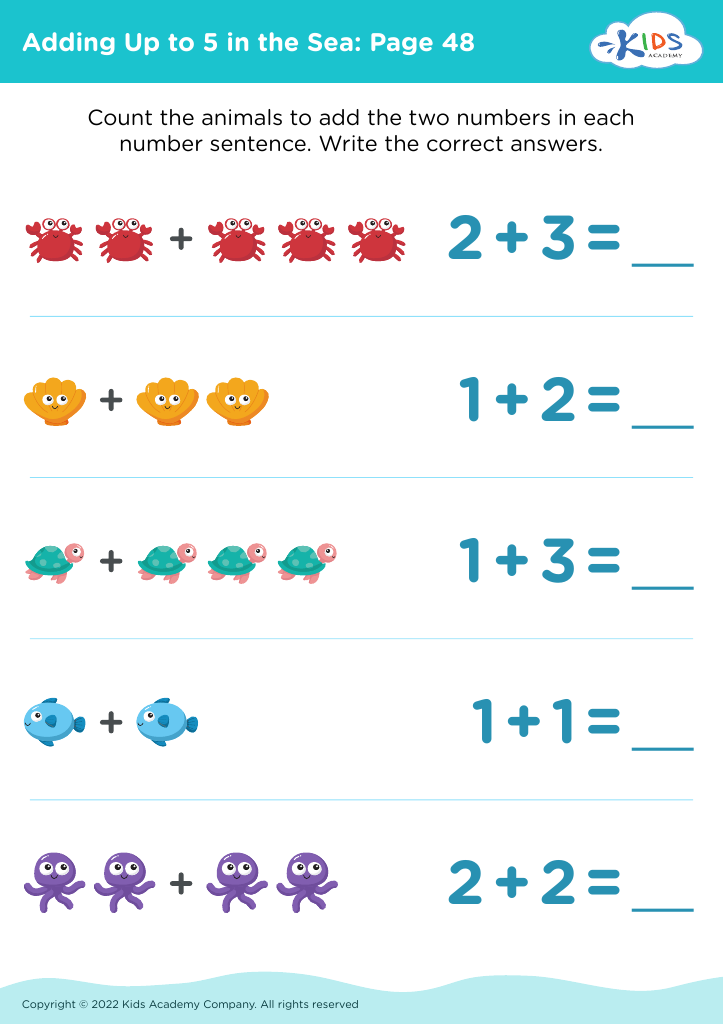
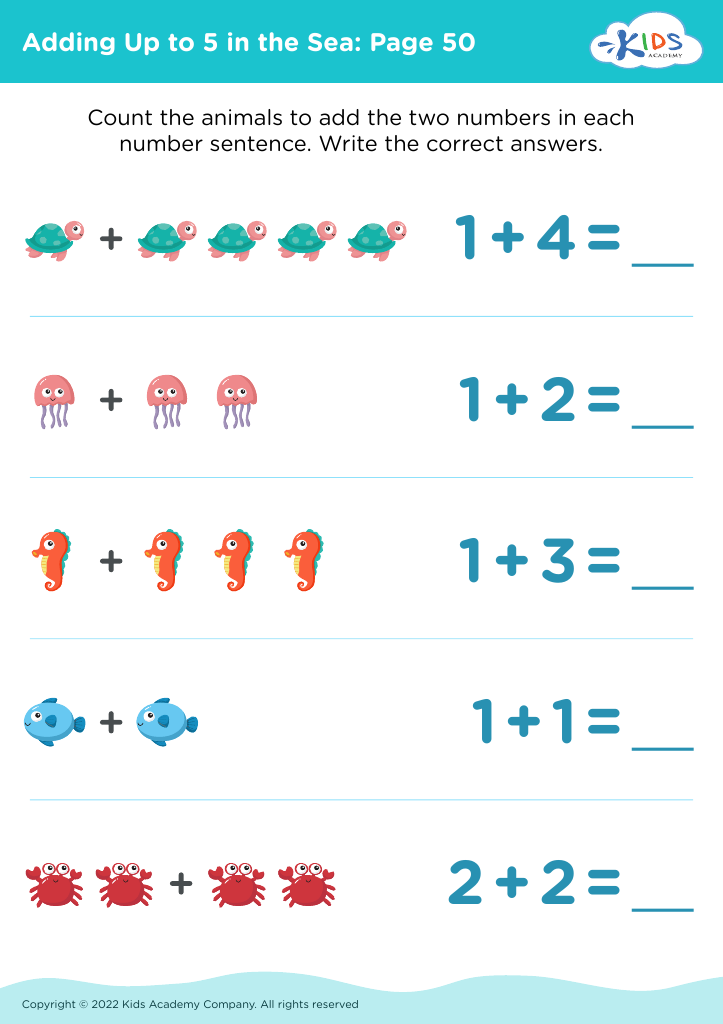
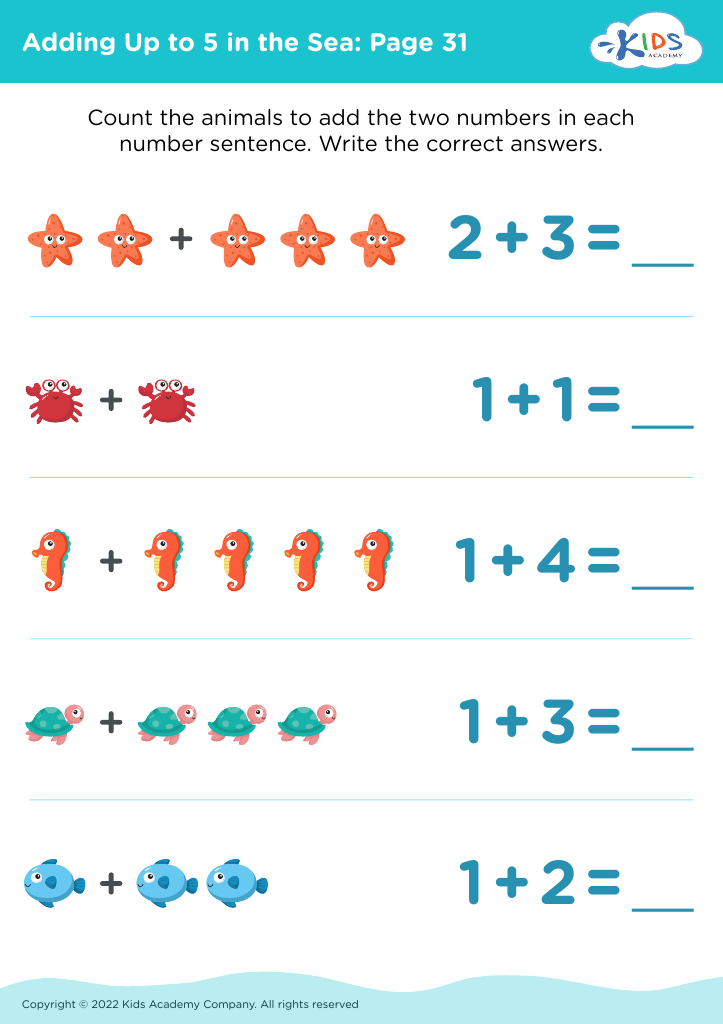
Introduce your little learners to the magical underwater world with our Sea Creatures Identification Addition Worksheets for Ages 4-6. These engaging worksheets blend math and marine life, designed to help children practice basic addition while learning about various sea creatures. Each activity features colorful images that captivate young minds, making learning fun and interactive. Perfect for preschoolers and early elementary students, these worksheets support the development of crucial math skills, cognitive abilities, and creativity. Dive into these delightful exercises to boost your child’s confidence in math and enhance their understanding of the fascinating ocean life. Download now for endless educational fun!






.jpg)

Engaging children aged 4-6 in sea creatures identification offers numerous educational and developmental benefits. At this formative age, curiosity and cognitive skills are rapidly expanding. Introducing sea creatures as part of their learning stimulates curiosity and fosters a love for nature and marine biology.
Understanding sea creatures helps develop observation skills and attention to detail, as children differentiate between various animals. It introduces them to biology and ecology fundamentals early on, cultivating an appreciation for biodiversity and environmental stewardship that can last a lifetime.
Moreover, this activity enhances language skills as children learn new vocabulary and articulate their discoveries. It also supports cognitive development by encouraging critical thinking and categorization based on animals' features, habitats, and behaviors. Activities like naming, matching, or simple charting contribute significantly to these skills.
Creativity is another area where sea creature identification shines. Drawing or crafting sea animals stimulates imagination and fine motor skills. Additionally, such activities can be calming and stress-relieving, contributing to emotional well-being.
For teachers and parents, sea creature identification is a fantastic interactive tool that can be fun and educational simultaneously. It allows meaningful bonding time while promoting a hands-on learning approach, making education feel like an adventure rather than a chore.








