Check out this FREE Trial Lesson on Addition for age 4-6!

D

Favorites
With answer key
Interactive
  • 4-6
  • Understanding Quantities
  • Addition
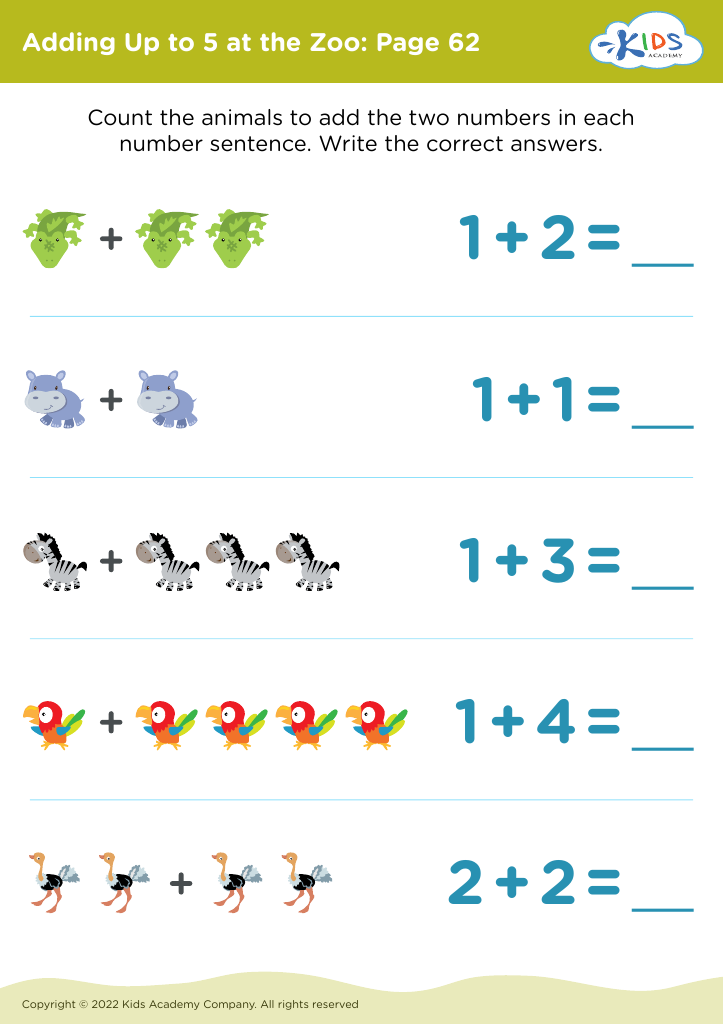
Adding Up to 5 at the Zoo: Page 62
Worksheet
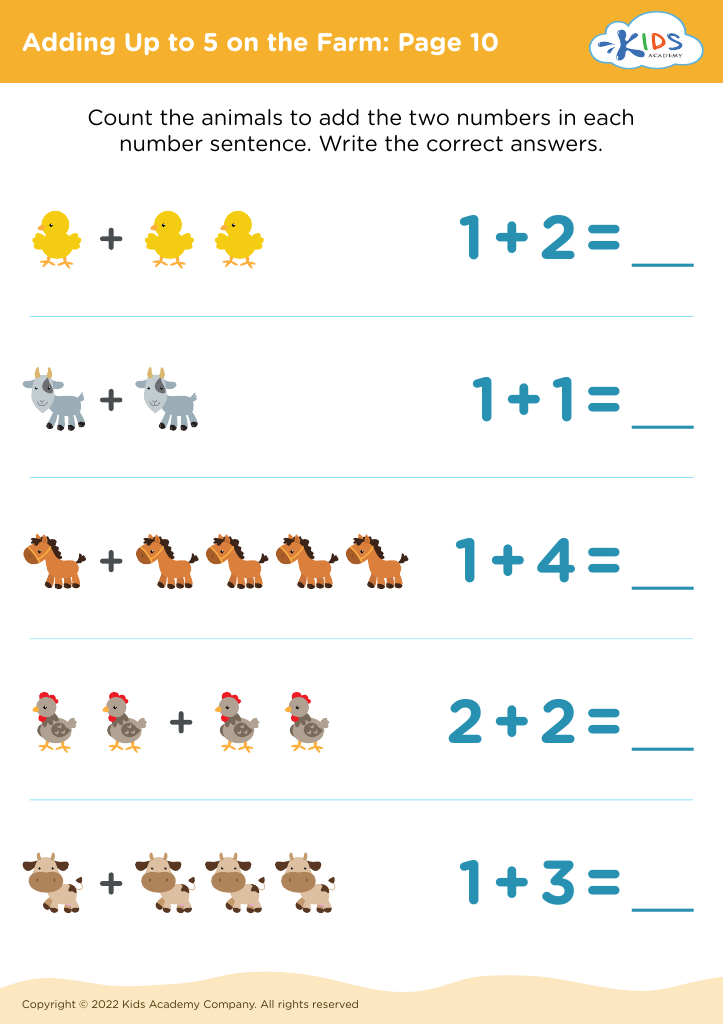
Adding Up to 5 on the Farm: Page 10
Worksheet
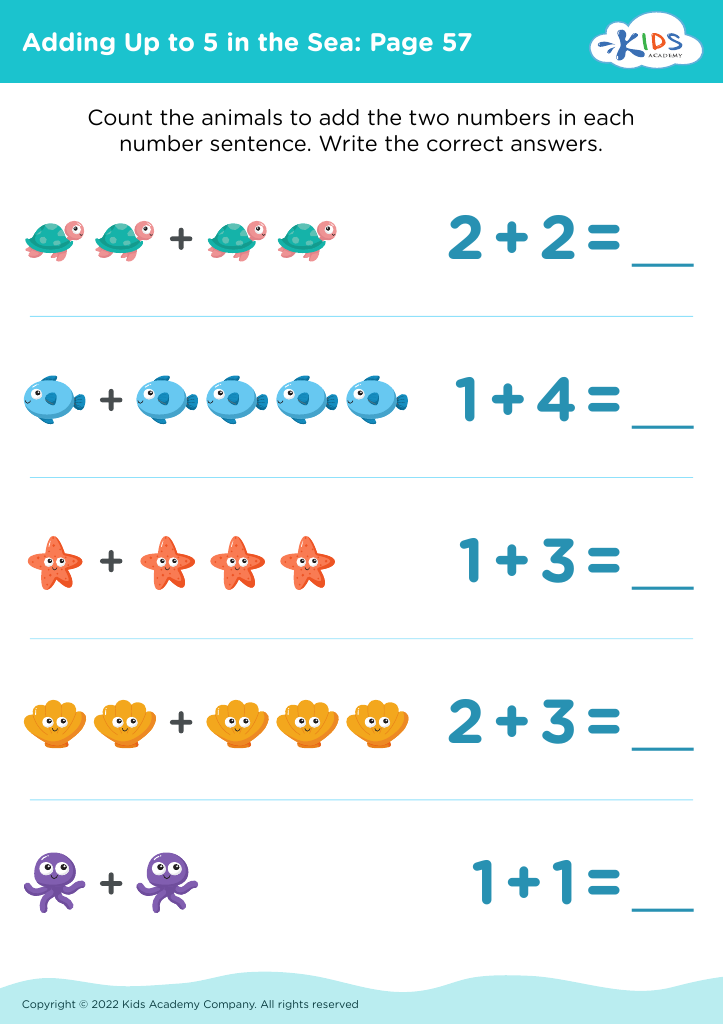
Adding Up to 5 in the Sea: Page 57
Worksheet
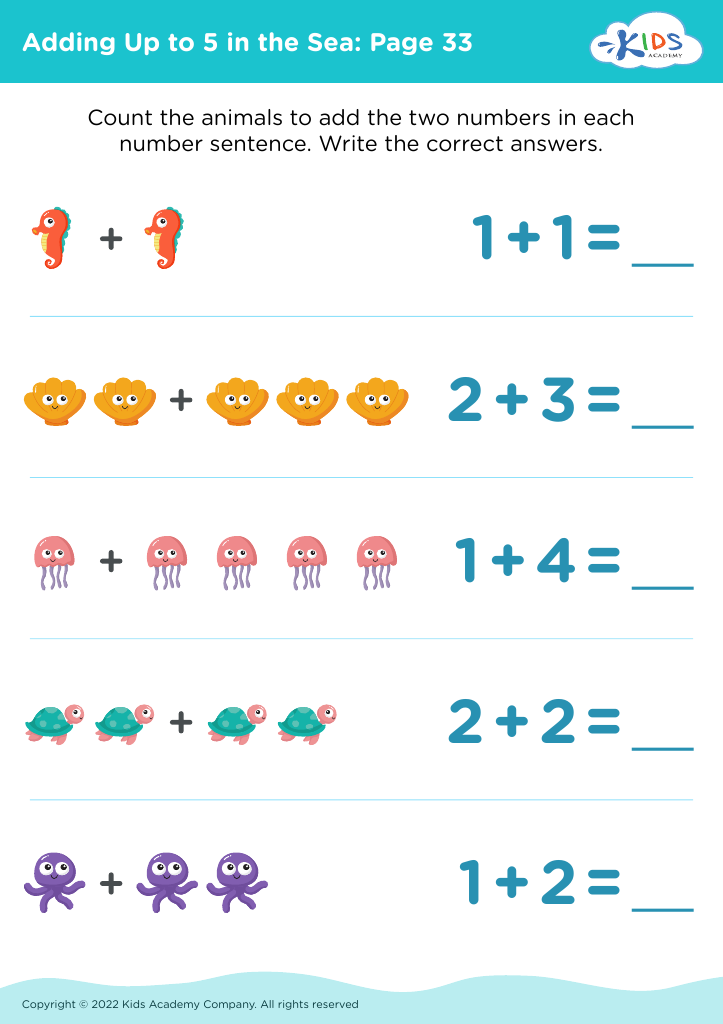
Adding Up to 5 in the Sea: Page 33
Worksheet
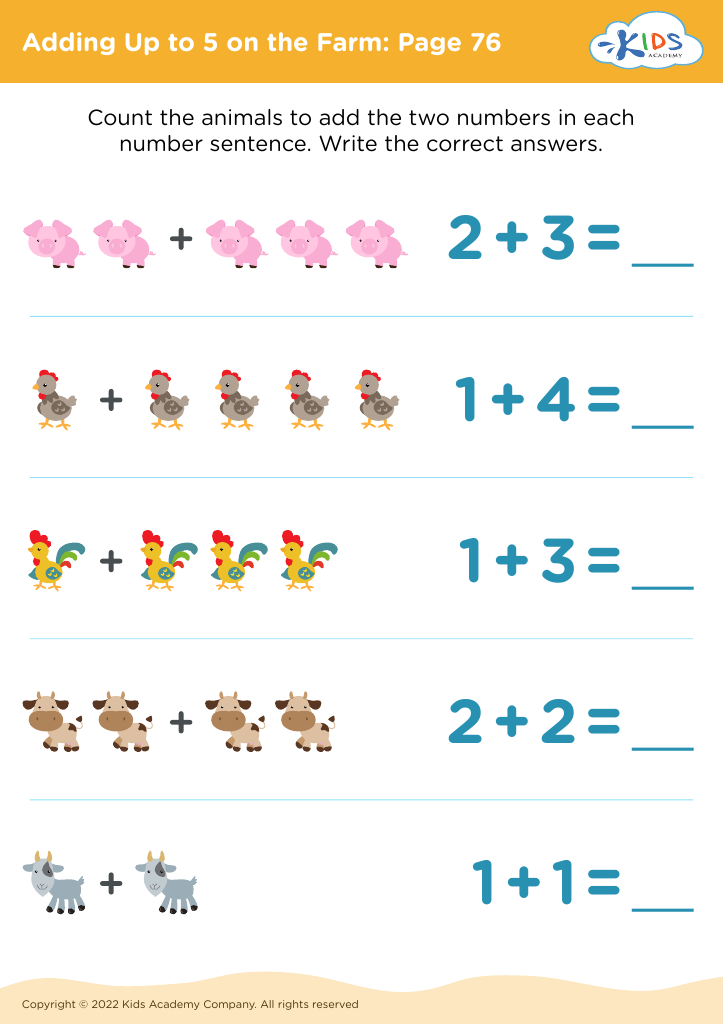
Adding Up to 5 on the Farm: Page 76
Worksheet
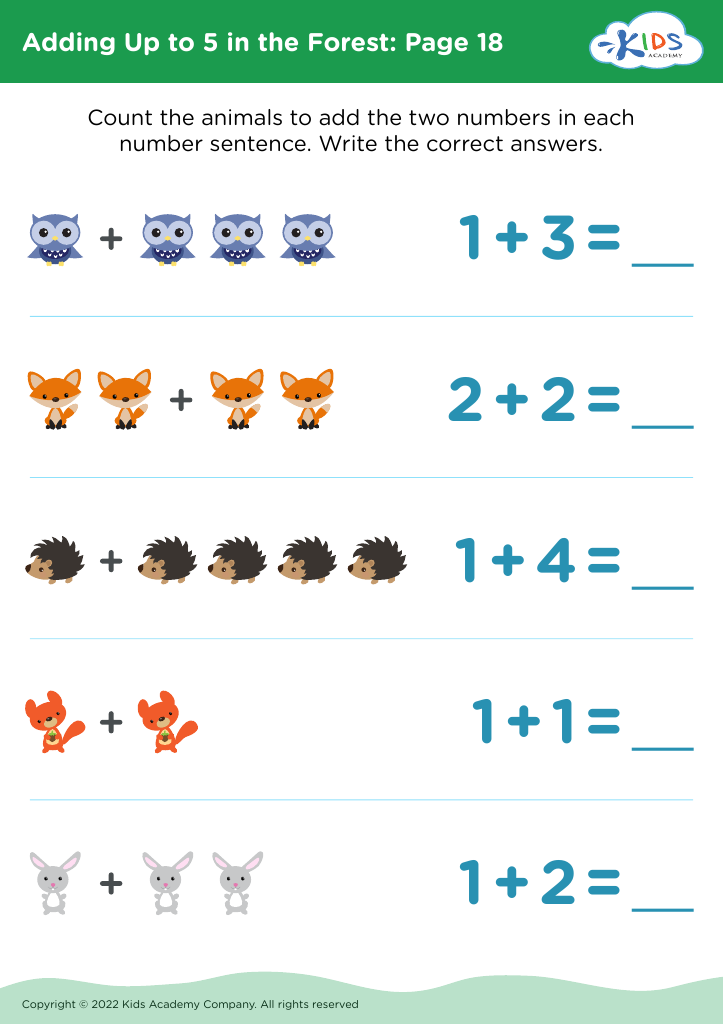
Adding Up to 5 in the Forest: Page 18
Worksheet
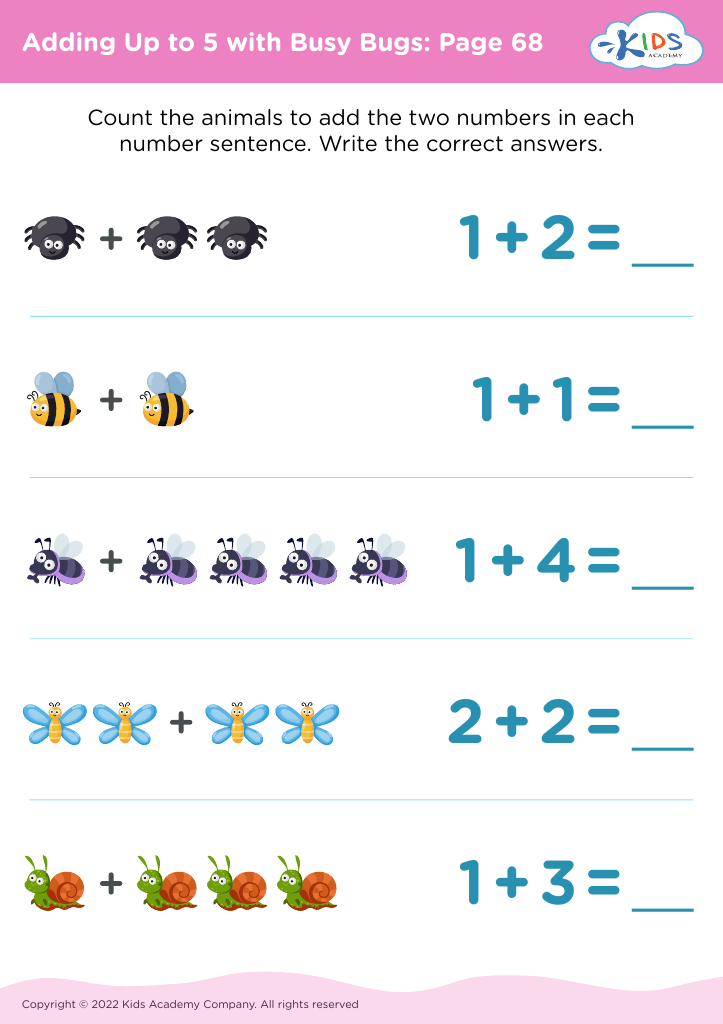
Adding Up to 5 with Busy Bugs: Page 68
Worksheet
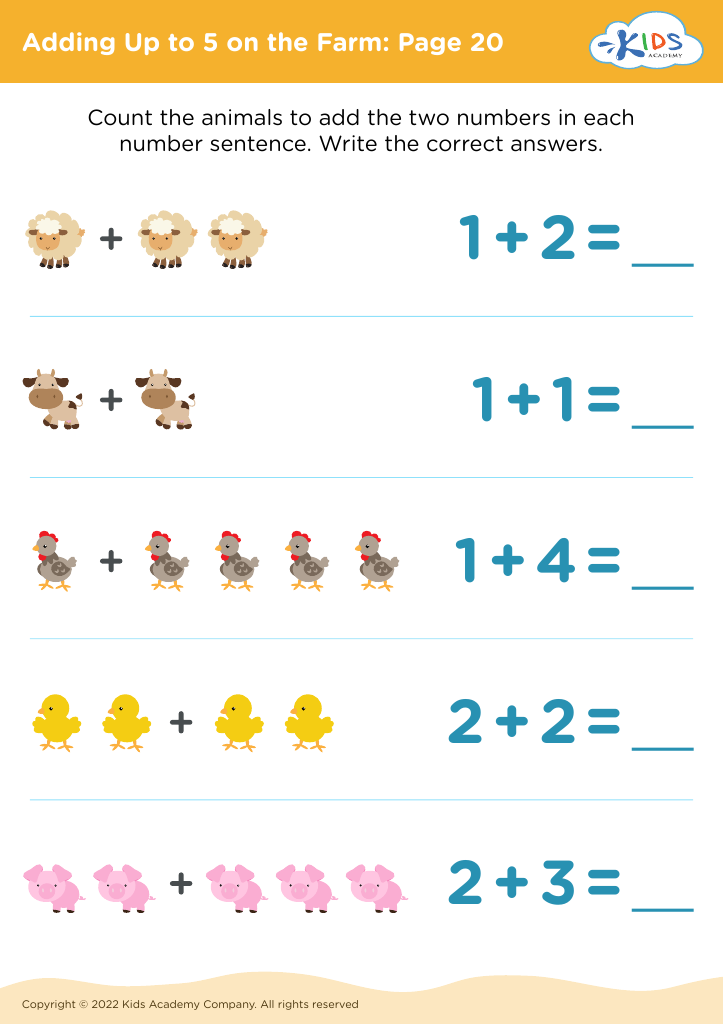
Adding Up to 5 on the Farm: Page 20
Worksheet
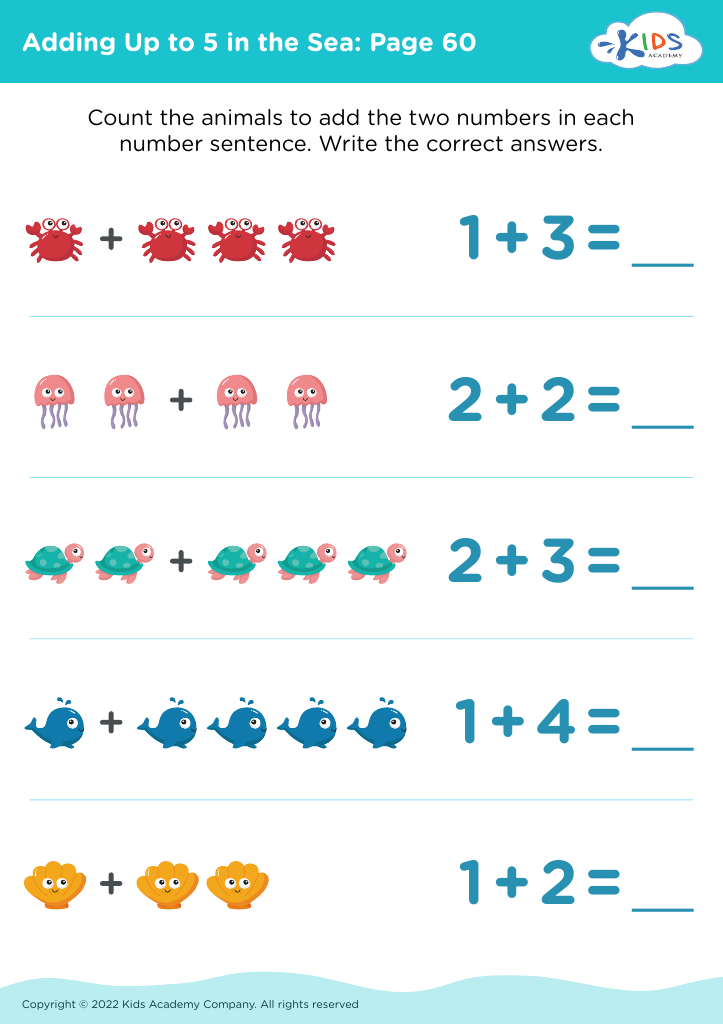
Adding Up to 5 in the Sea: Page 60
Worksheet
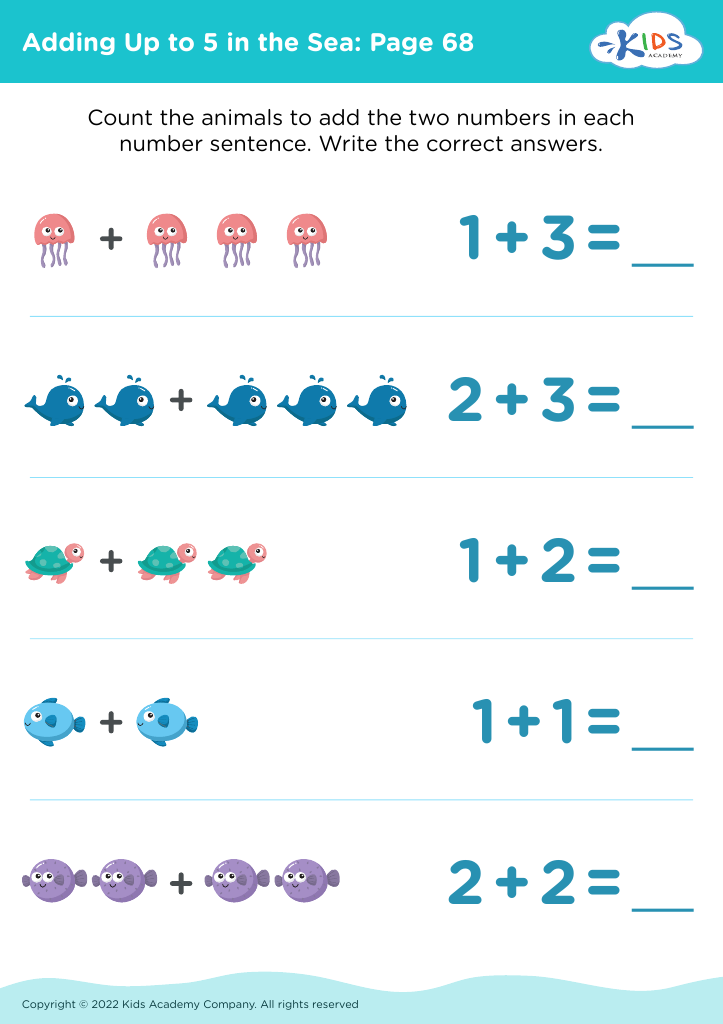
Adding Up to 5 in the Sea: Page 68
Worksheet
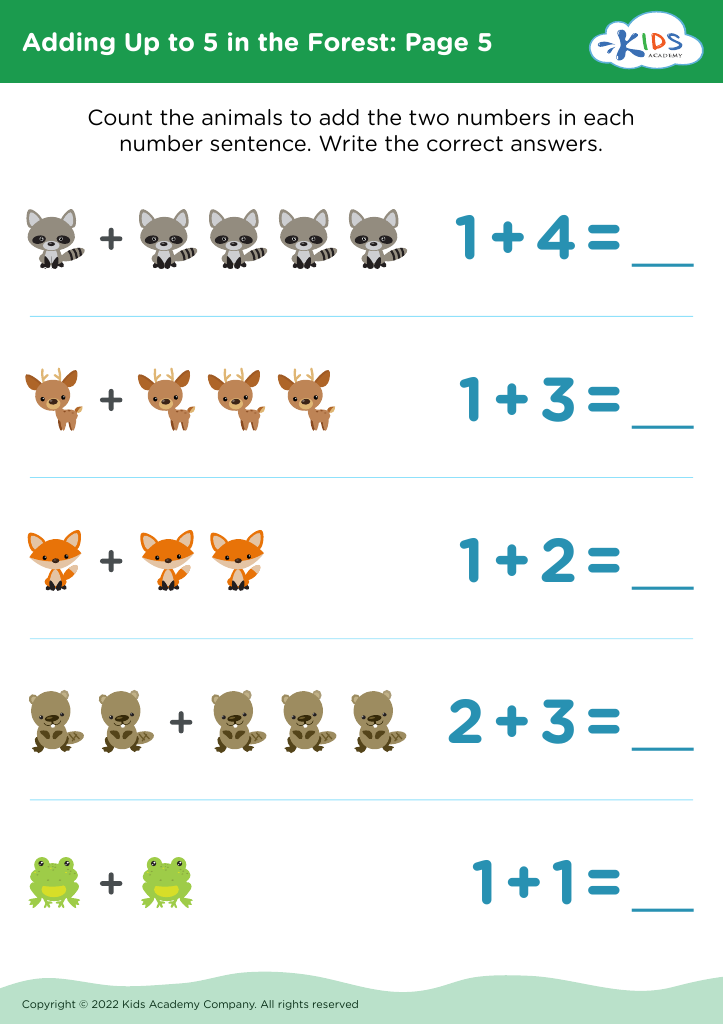
Adding Up to 5 in the Forest: Page 5
Worksheet
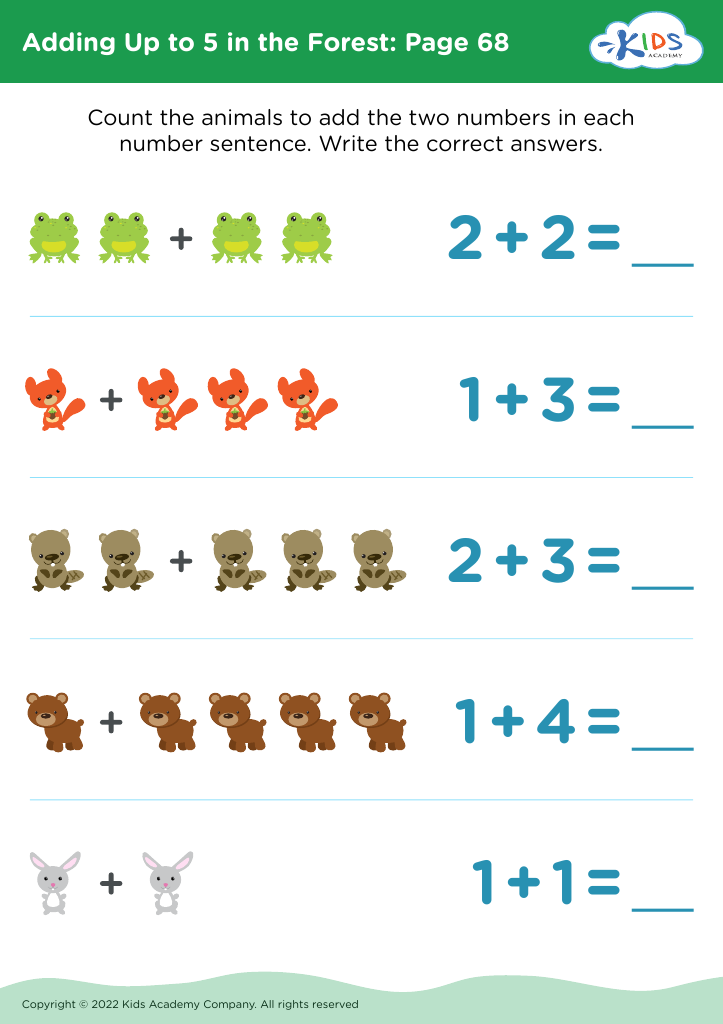
Adding Up to 5 in the Forest: Page 68
Worksheet
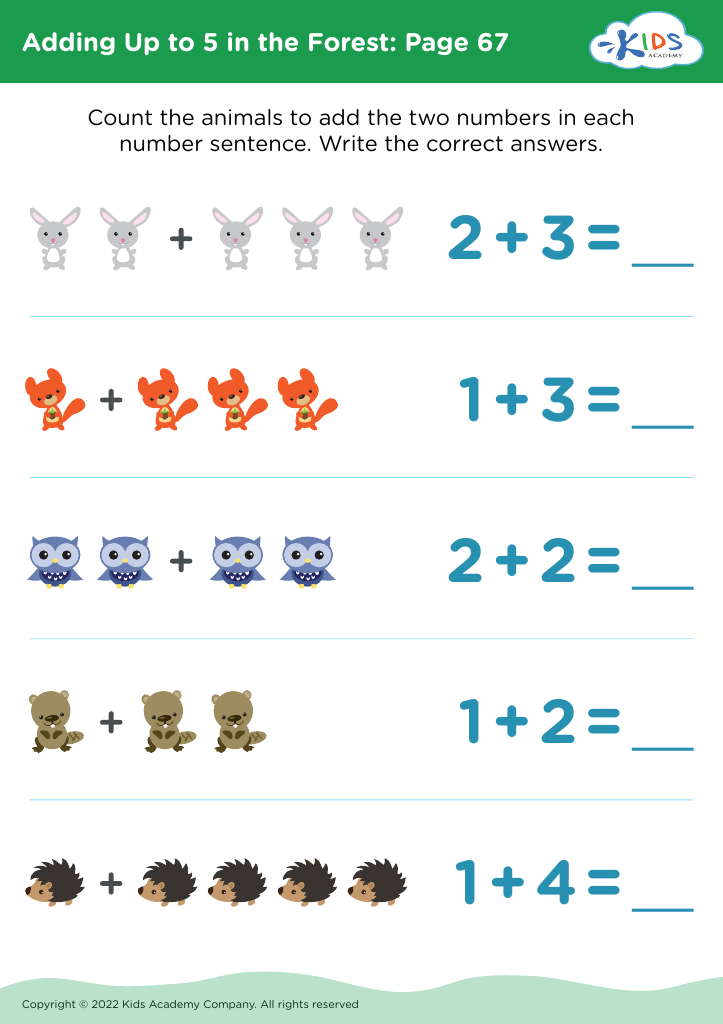
Adding Up to 5 in the Forest: Page 67
Worksheet
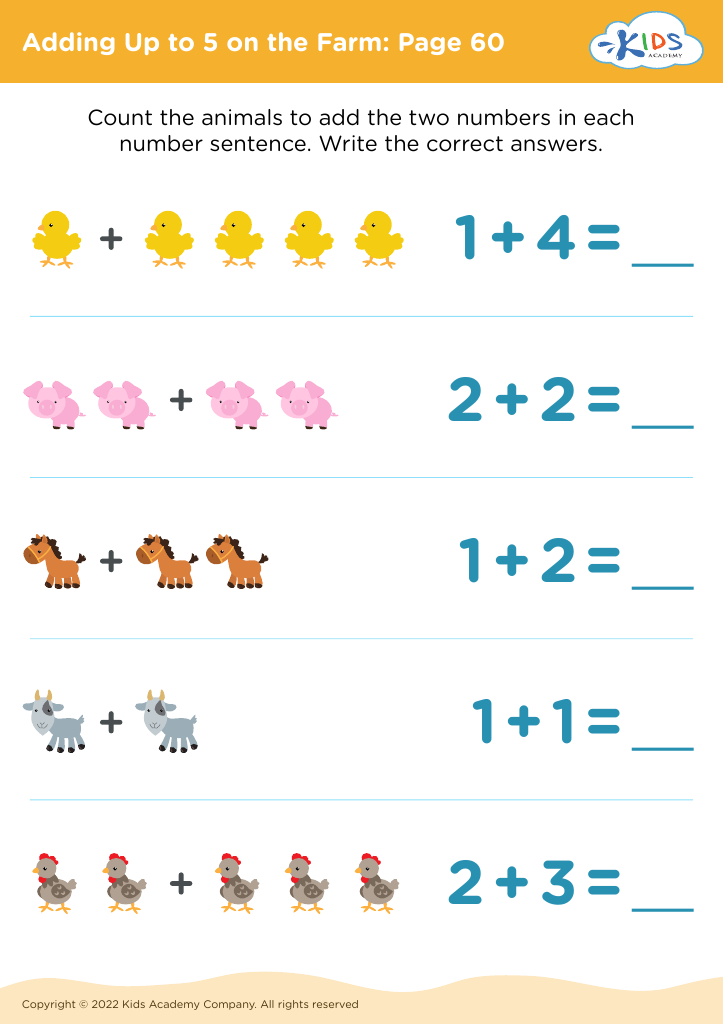
Adding Up to 5 on the Farm: Page 60
Worksheet


Understanding quantities and addition is a foundational skill for children aged 4-6, which significantly impacts their future learning. At this crucial developmental stage, children are naturally curious and eager to explore mathematical concepts. Grasping these concepts fosters critical thinking and problem-solving abilities, laying the groundwork for advanced mathematical skills in later years.

Moreover, the ability to understand and manipulate quantities supports not only math proficiency but also cognitive development. When children engage in activities that involve counting, comparing, and grouping objects, they enhance their reasoning skills and learn to recognize patterns. This not only boosts their mathematical confidence but also encourages them to approach learning with a positive mindset.

For parents and teachers, providing guidance in understanding quantities and addition can help create a nurturing environment where children feel secure in making mistakes and learning from them. By integrating playful learning experiences—think counting games or fun addition puzzles—adults can ignite a passion for math that lasts a lifetime. Ultimately, this foundational knowledge supports everyday life skills, ensuring that children grow up with the capabilities needed for academic success and practical problem-solving in future situations.