Underwater animal identification Addition Worksheets for Ages 4-6
3 filtered results
-
From - To
Explore the fascinating world of underwater creatures with our Underwater Animal Identification Addition Worksheets designed specifically for children ages 4-6. These engaging worksheets combine fun and learning by introducing young learners to various sea animals while developing their addition skills. Each worksheet features vibrant illustrations and interactive exercises that encourage kids to identify marine animals and practice basic math concepts. Perfect for parents and teachers, these resources are ideal for enhancing early math proficiency in a playful context. Dive into math learning with our worksheets and foster your child's love for both numbers and nature!
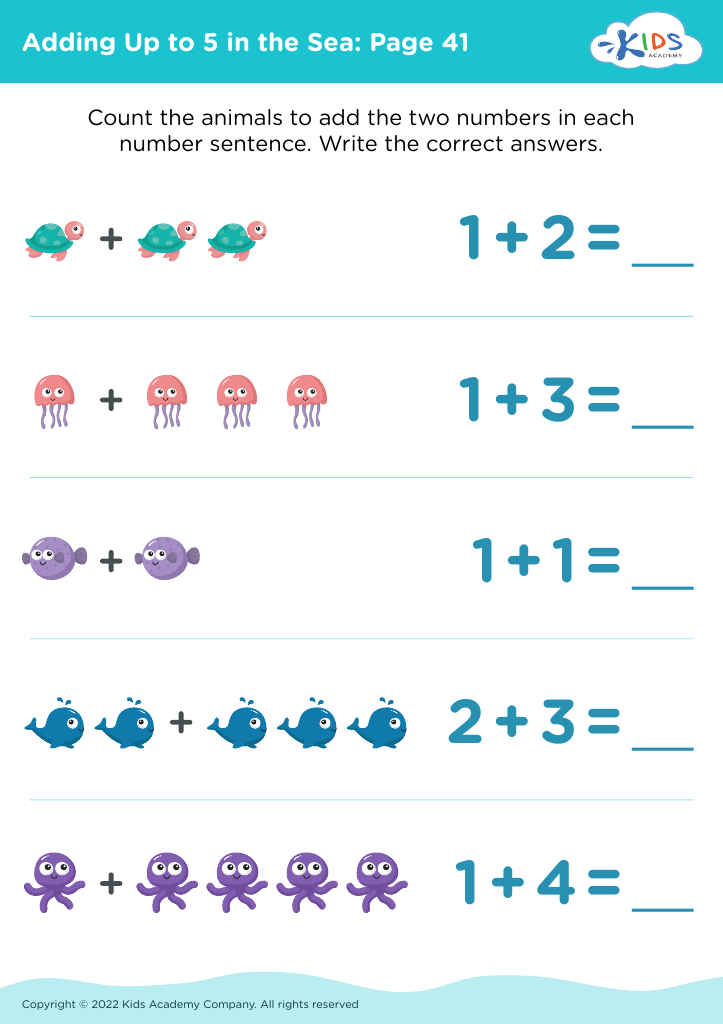
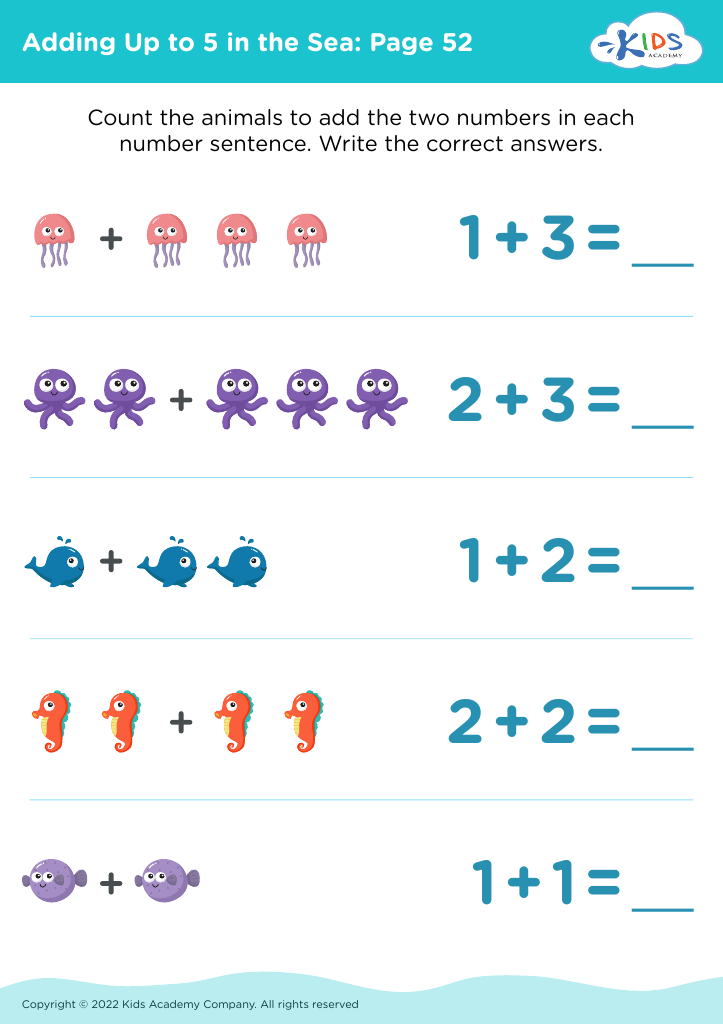
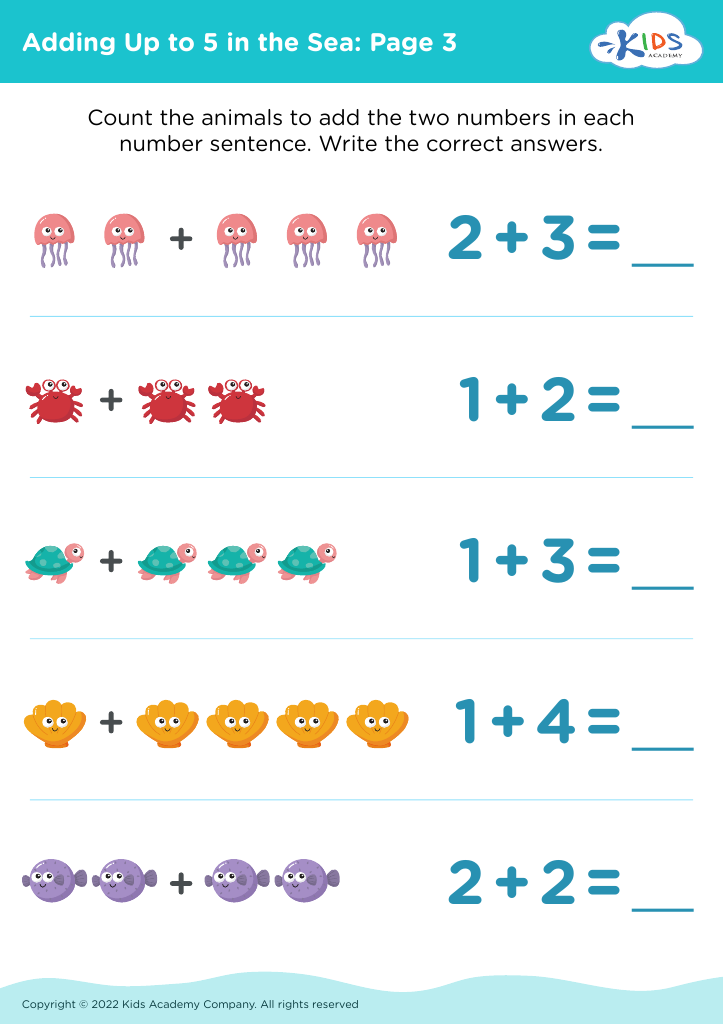








Underwater animal identification and addition activities for ages 4-6 offer significant benefits for early childhood development. Firstly, these activities combine learning with fun, engaging young learners through colorful visuals and interactive gameplay. Identifying underwater creatures fosters curiosity about marine life, further promoting environmental awareness and encouraging future generations to care for our oceans.
Secondly, integrating addition with animal identification supports the development of fundamental math skills. At this age, children are naturally exploring counting and basic addition, so connecting these concepts to real-life examples enhances understanding and retention. For instance, counting dolphins or jellyfish in a game can make math relatable and exciting.
Furthermore, such educational activities often enhance language skills, as children label and describe various animals, enriching their vocabulary. Social skills are also developed as they may collaborate in group settings, sharing knowledge and working together, fostering teamwork.
Ultimately, teachers and parents play a vital role in shaping a child’s learning experience. By incorporating underwater animal identification and addition, they are not only igniting a passion for learning but also nurturing critical thinking skills and promoting a love for both mathematics and nature that will benefit children throughout their lives.








