Visualization skills Addition Worksheets for Ages 4-6
3 filtered results
-
From - To
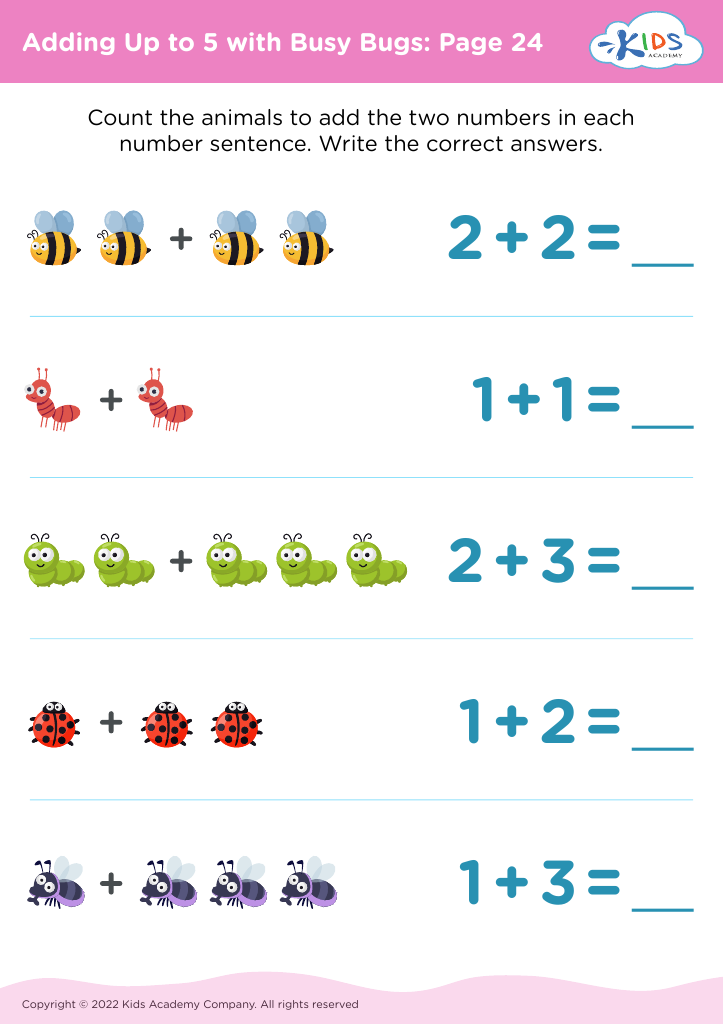
Boost your child's math confidence with our Visualization Skills Addition Worksheets designed specifically for ages 4-6! These engaging worksheets help young learners develop essential visualization skills while mastering basic addition concepts. With colorful graphics and creative exercises, children will enjoy practicing their counting and problem-solving abilities. Our resources are perfect for home or classroom use, making learning fun and interactive. These worksheets are crafted to support early learners in visualizing numbers and stories, allowing them to grasp addition concepts intuitively. Help your child build a solid foundation in math with our carefully designed visualization tools today!
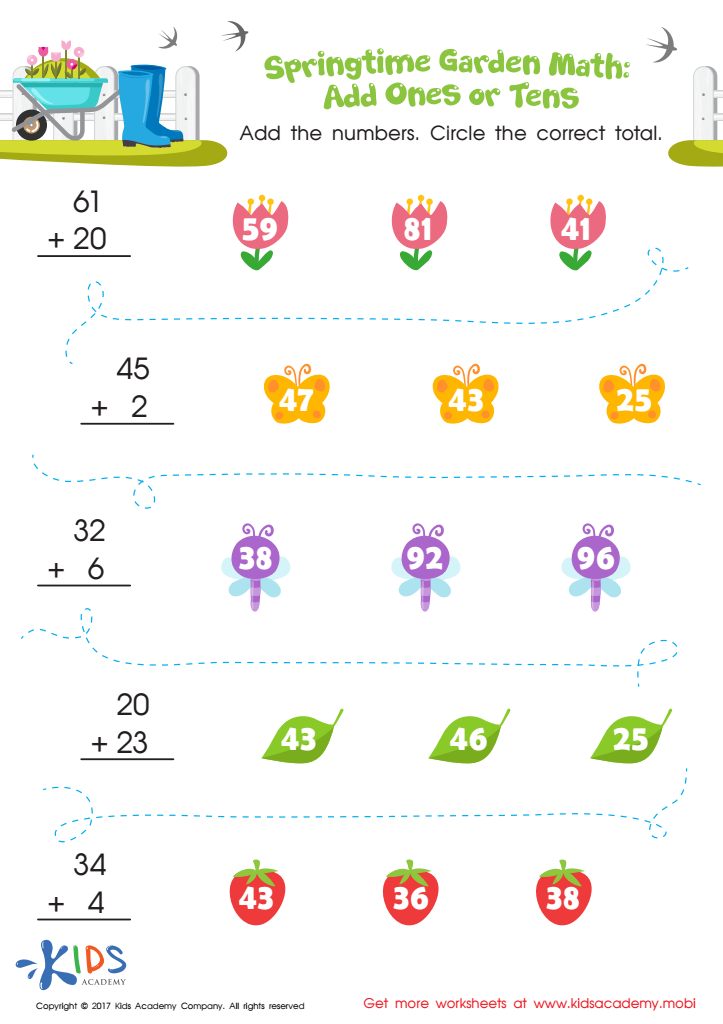
Springtime Garden Math Worksheet
 Assign to My Students
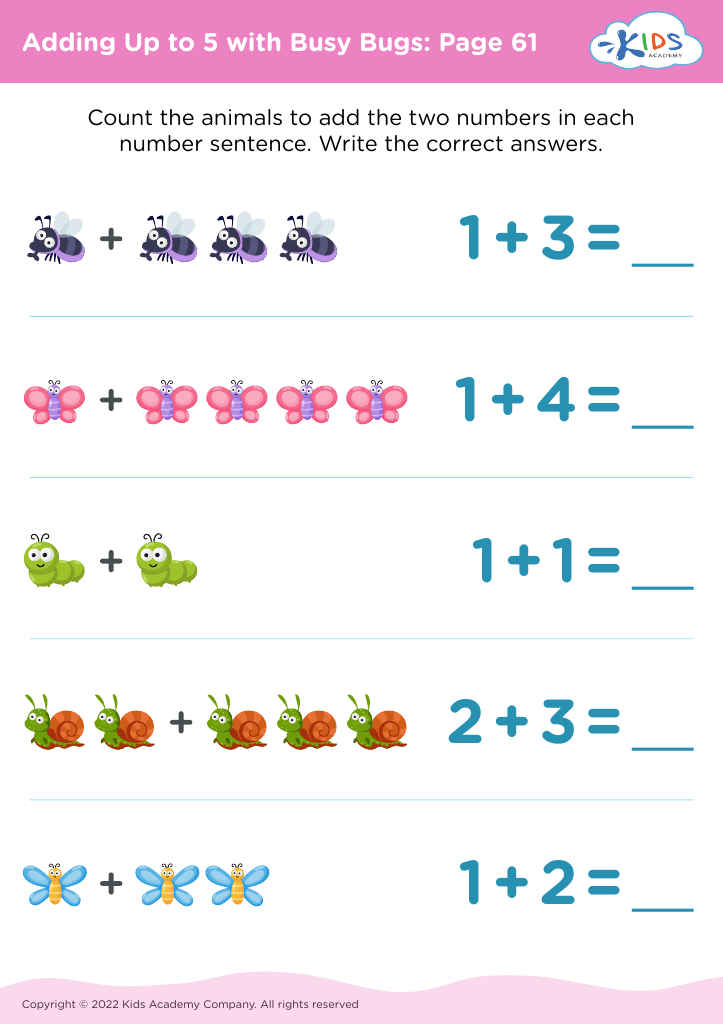








Parents and teachers should prioritize visualization skills in children aged 4-6, particularly in the context of addition, for several compelling reasons. Visualization skills enable young learners to create mental images of numbers and quantities, which are crucial for understanding mathematical concepts. When children can visualize addition, they are more likely to grasp the relationships between numbers and see how they combine to form new totals.
Strengthening visualization skills early in a child’s education supports cognitive development and enhances problem-solving abilities. For example, when a child can picture five apples and then visualize adding three more, they can better understand the concept of “five plus three equals eight.” This foundational skill fosters confidence and resilience, as children learn to navigate challenges through mental imagery rather than relying solely on counting physical objects.
Moreover, visualization is linked to improved academic performance not just in mathematics, but across subjects. It encourages creativity and critical thinking—skills essential for success in the 21st century. By nurturing visualization skills during these early years, parents and teachers can provide children with the tools to become independent learners, capable of tackling complex problems and developing a lasting love for learning.








