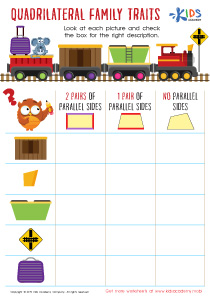
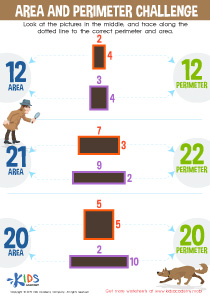
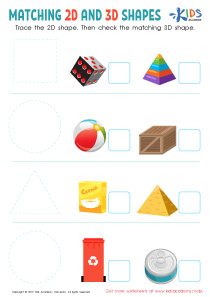
Shape Recognition Fractions of Shapes Worksheets for Ages 4-6
4 filtered results
-
From - To
Introducing our "Shape Recognition Fractions of Shapes Worksheets" designed specifically for ages 4-6! These engaging worksheets help young learners develop fundamental math skills by recognizing and understanding fractions using various shapes. Children will easily grasp concepts such as halves, thirds, and quarters as they identify and color different segments. Our worksheets are perfect for both classroom and at-home learning, offering an enjoyable and educational way to build foundational math skills. Foster your child’s shape recognition and fractional understanding with our creative and interactive worksheets! Download now and start your youngster’s journey to math mastery!
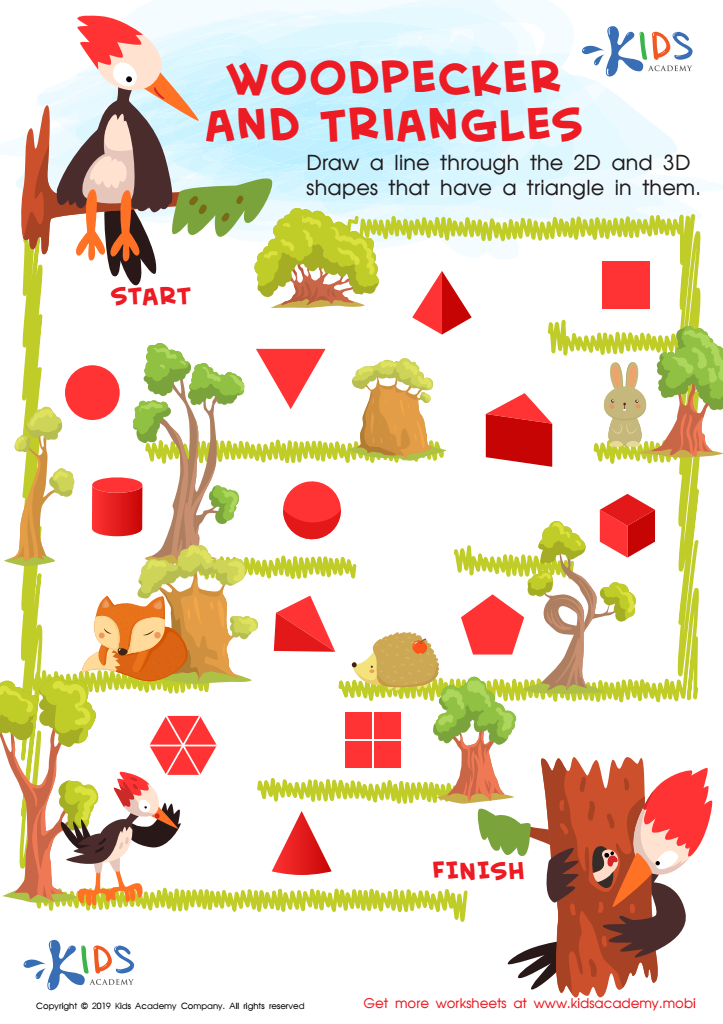
Woodpecker and Triangles Worksheet
 Assign to My Students
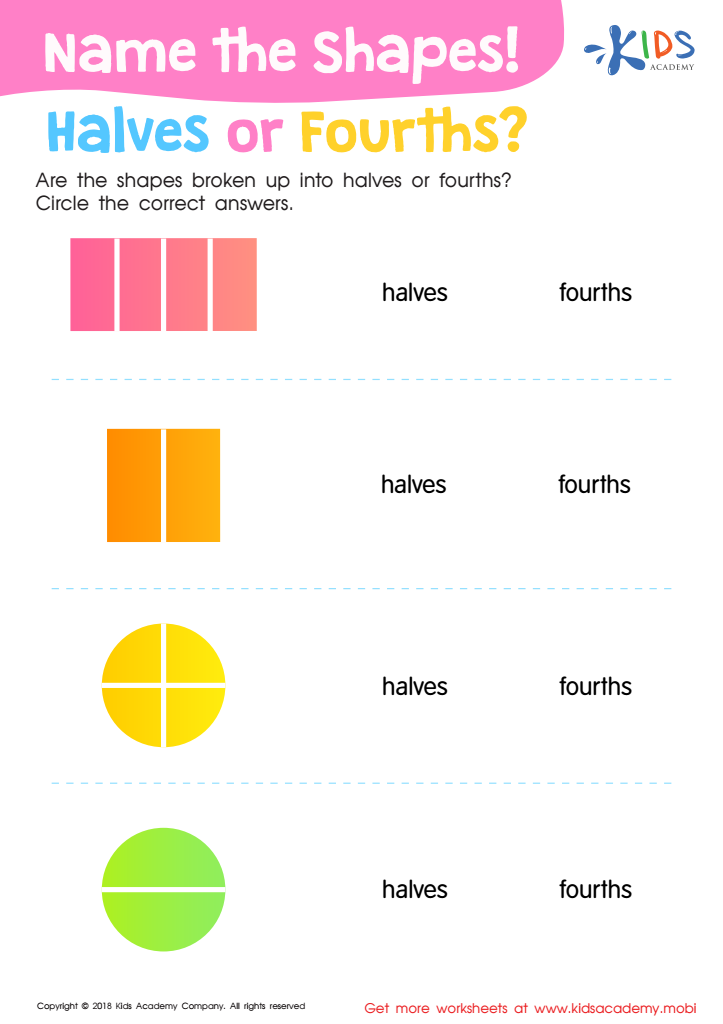
Name the Shapes Halves or Fourths? Worksheet
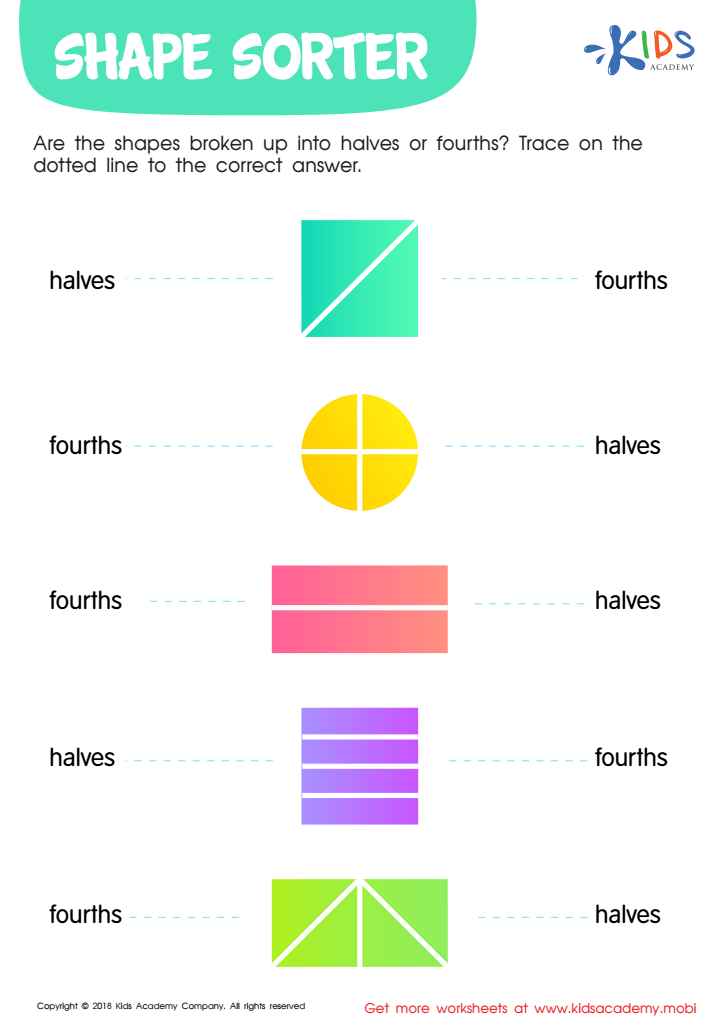
Shape Sorter Worksheet
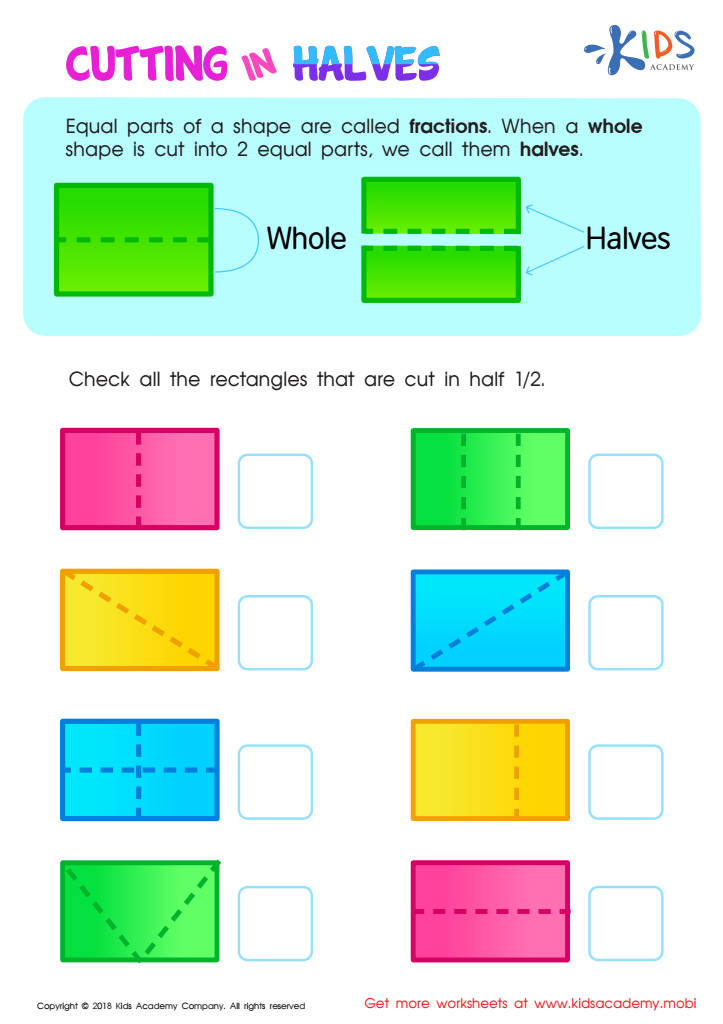
Cutting in Halves Worksheet








Parents and teachers should care deeply about teaching shape recognition and fractions of shapes to children aged 4-6 because these skills lay a critical foundation for future mathematical understanding and cognitive development. At this developmental stage, young children are naturally curious and more receptive to visual and tactile learning experiences. Shape recognition helps them distinguish between different geometric figures, which not only enhances their spatial awareness but also prepares them for more complex mathematical concepts.
Introducing fractions of shapes at this age encourages an intuitive grasp of parts and wholes, number sense, and proportion. By manipulating and visualizing divided shapes, children can better understand the concept of equal parts and sharing, which is a fundamental arithmetic skill. This hands-on learning cultivates problem-solving and logical reasoning abilities while fostering a positive attitude towards mathematics.
Moreover, these early math skills are intertwined with language development. As children describe shapes and their properties, they expand their vocabulary and improve communication skills. Incorporating shape recognition and fractions into daily activities and play also ensures that learning is seen as fun and engaging rather than daunting.
In summary, focusing on shape recognition and fractions of shapes for young children promotes comprehensive cognitive development, foundational math skills, and a lifelong enthusiasm for learning.