Identifying shapes Geometry Worksheets for Ages 4-6
3 filtered results
-
From - To
Explore our engaging "Identifying Shapes" geometry worksheets, designed specifically for children aged 4-6. These fun and interactive activities help young learners develop essential math skills by recognizing and distinguishing various shapes. Our worksheets feature colorful illustrations and simple exercises, making it easy for kids to grasp concepts like circles, squares, triangles, and more. Perfect for both home and classroom use, these resources aim to spark children's creativity while enhancing their spatial awareness. Foster a love for math by incorporating these worksheets into your child's learning routine, ensuring a solid foundation for future geometric understanding. Download now and watch them shine!
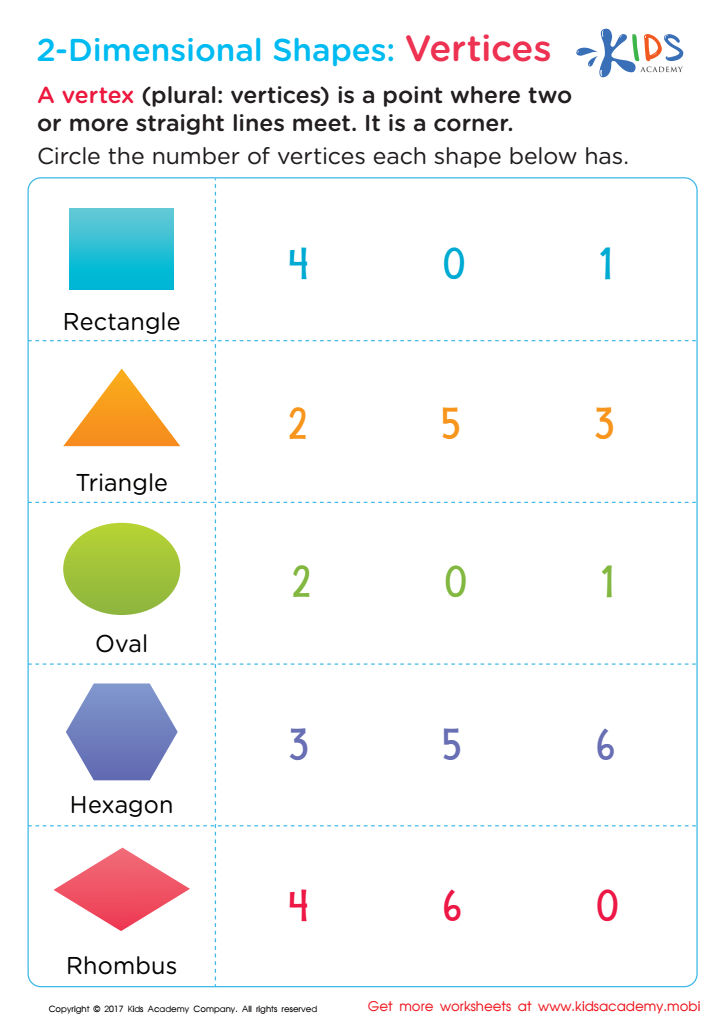
Two–Dimensional Shapes: Vertices Printable











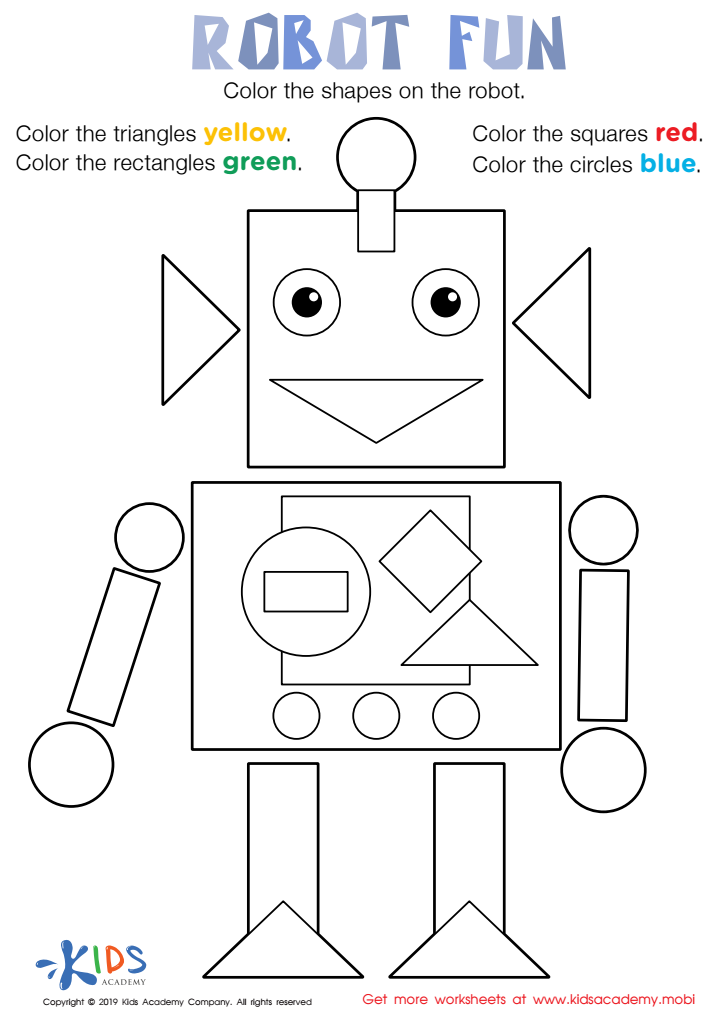
Robot Fun Worksheet
 Assign to My Students
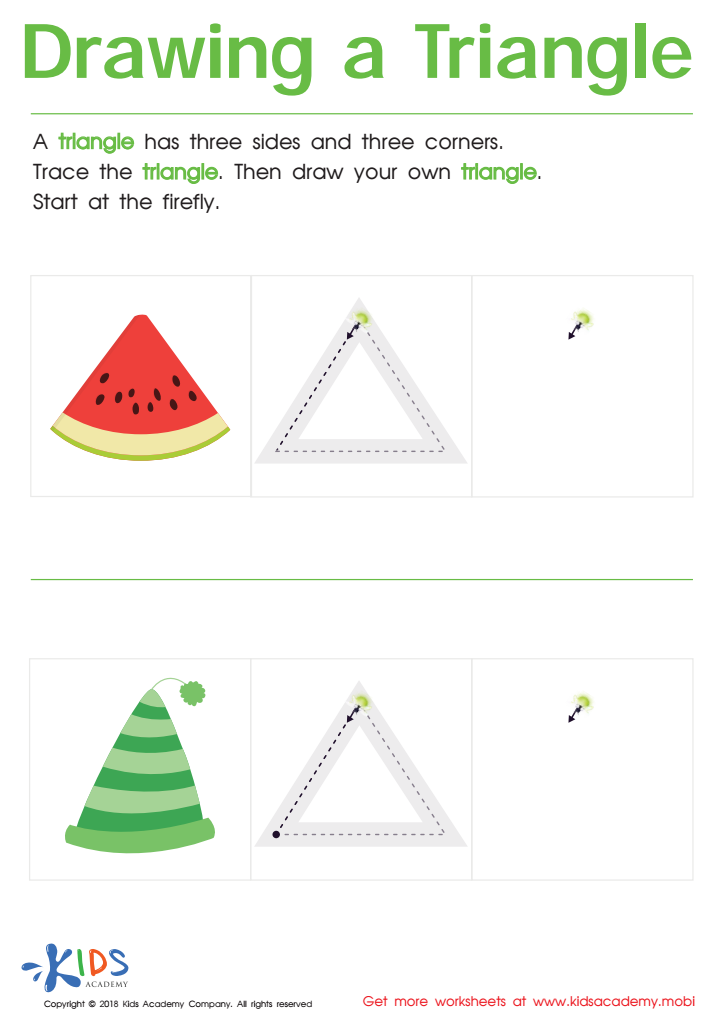
Drawing a Triangle Worksheet








Identifying shapes is a fundamental skill in early childhood education, especially for children aged 4 to 6. At this stage, children are developing their visual-spatial awareness and critical thinking abilities, which are crucial for their cognitive development. Learning about shapes helps children understand their environment, improves their ability to classify and categorize objects, and lays the groundwork for more complex mathematical concepts in the future.
Parents and teachers should care about teaching shape identification because it enhances children's problem-solving skills and boosts their confidence as they recognize and name shapes in everyday situations. This learning is not just academic; it fosters creativity and imagination, as children begin to see connections between different shapes and how they can form larger structures, like houses or animals, in art and play.
Moreover, identifying shapes is linked to other important concepts like symmetry, patterning, and measurement. Engaging with shapes also promotes fine motor skills through activities like drawing, cutting, and building. Ultimately, an early focus on geometry not only prepares children for future math success but also enriches their understanding of the world around them, making it essential for holistic development.








