Differentiating shapes Math Worksheets for Ages 4-6
3 filtered results
-
From - To
Enhance your child's early math skills with our engaging Differentiating Shapes Math Worksheets, specifically designed for ages 4-6. These interactive worksheets help young learners identify, compare, and differentiate various shapes, fostering foundational geometric understanding in a fun and approachable way. Each activity encourages hands-on exploration, allowing kids to visualize shapes in different contexts while developing critical thinking and problem-solving abilities. Perfect for home or classroom use, our worksheets provide ample opportunities for practice and reinforce essential math concepts leading to a confident start in math education. Download and watch your child thrive as they discover the world of shapes!
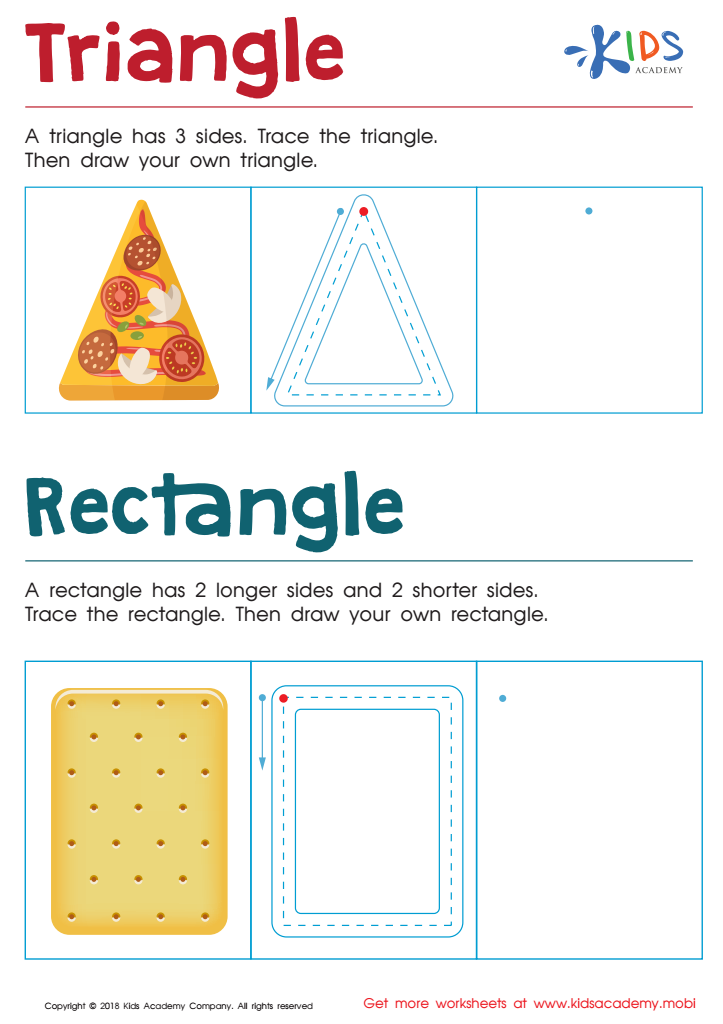
Triangle Rectangle Worksheet
 Assign to My Students
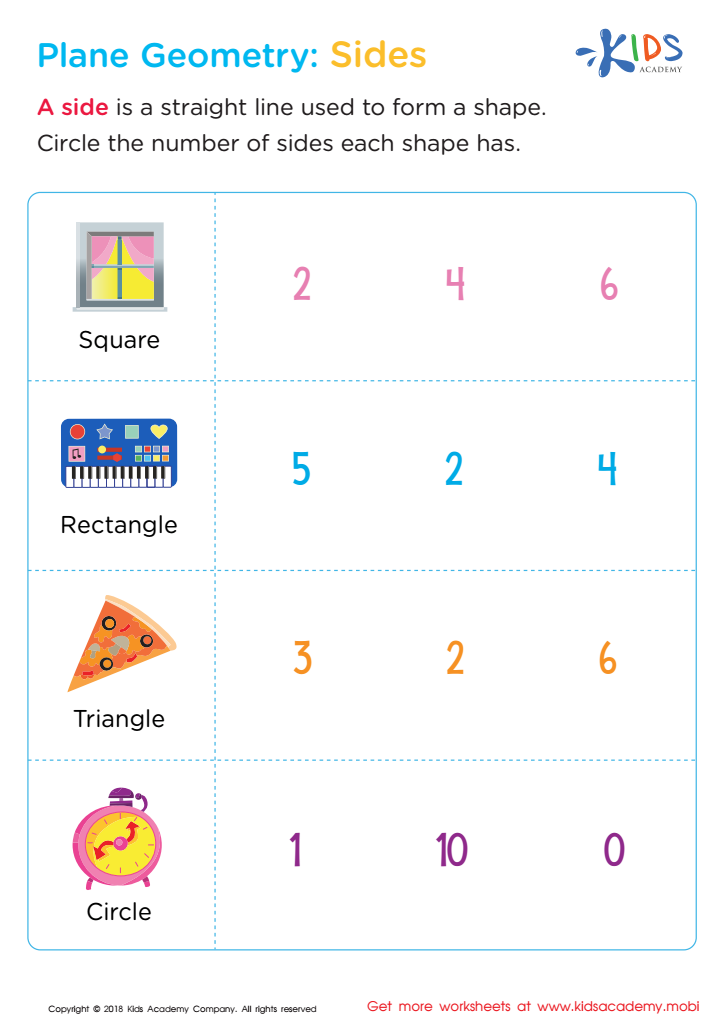
Plane Geometry: Sides Worksheet
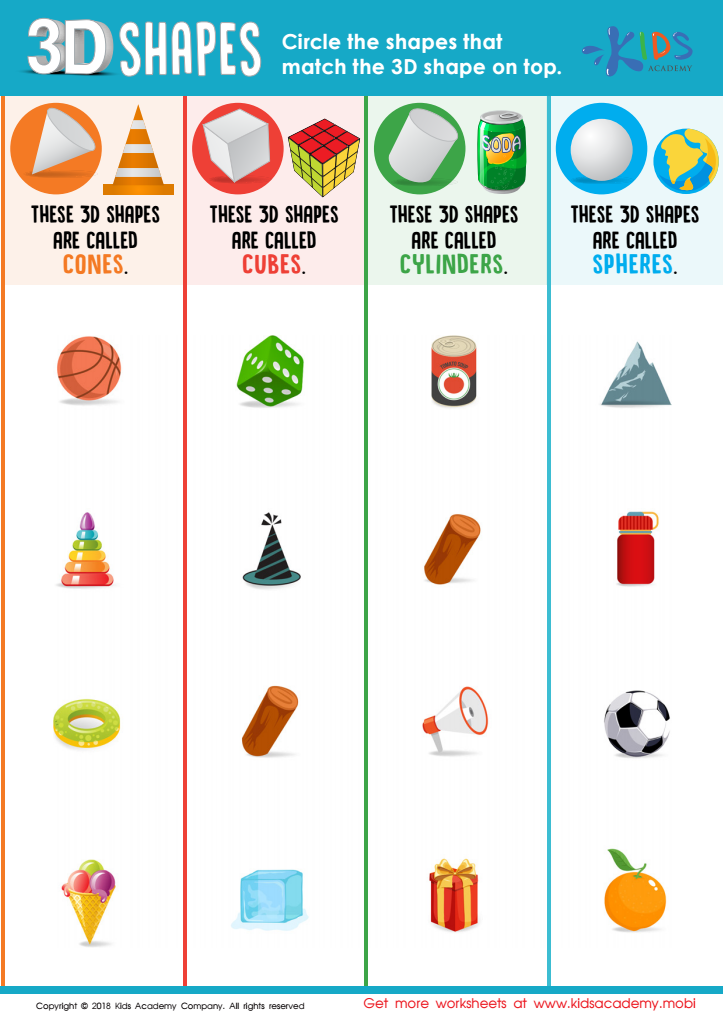
3D Shapes Worksheet








Differentiating shapes in math for ages 4-6 is crucial for fostering foundational skills in early childhood education. At this age, children are naturally curious and eager to explore their environment, making it an ideal time to introduce concepts such as shapes, sizes, and spatial awareness. By differentiating shapes through varied teaching strategies, teachers and parents can cater to individual learning styles and developmental levels, ensuring that each child grasps essential geometric concepts.
Differentation allows for engaging and concrete experiences, such as sorting, categorizing, and creating with shapes, which enhances cognitive development. Students who struggle with grasping basic concepts benefit from targeted instruction that meets their specific needs, while advanced learners can be challenged with more complex tasks. This approach not only builds confidence but also encourages a love for learning.
Moreover, understanding shapes supports broader math comprehension and problem-solving skills that are foundational for future learning. Early shape recognition lays the groundwork for geometry and spatial reasoning, which are essential for subjects like science and engineering later on. In sum, prioritizing differentiated shape instruction is a vital step in equipping young learners with critical skills that foster intellectual growth and lifelong learning.








