Fruit identification Math Worksheets for Ages 4-6
3 filtered results
-
From - To
Introducing our vibrant "Fruit Identification Math Worksheets for Ages 4-6" designed to make learning fun and engaging for young minds. These worksheets help children practice early math skills such as counting, sorting, and simple addition by identifying and working with colorful fruits. Perfectly tailored for little learners, these activities foster critical thinking and fine motor skills in a playful way. Boost your child's confidence and interest in math with our interactive and beautifully illustrated printables which seamlessly blend education with enjoyment. Ideal for preschool and kindergarten students starting their mathematical journey.
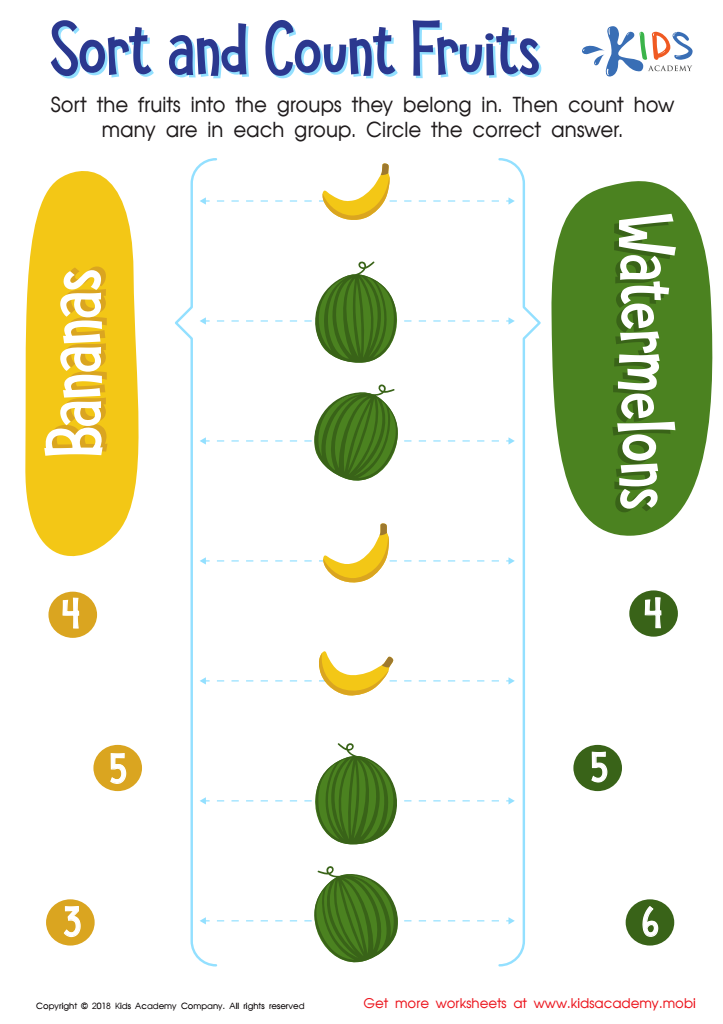
Sort and Count Fruits Worksheet
 Assign to My Students
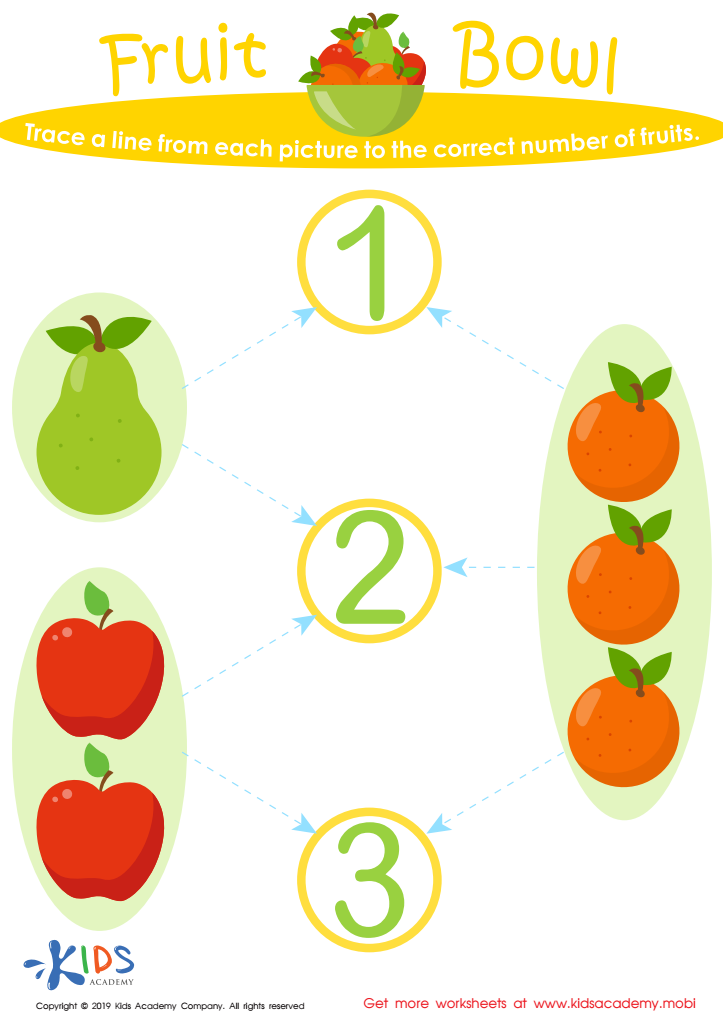
Fruit Bowl Worksheet
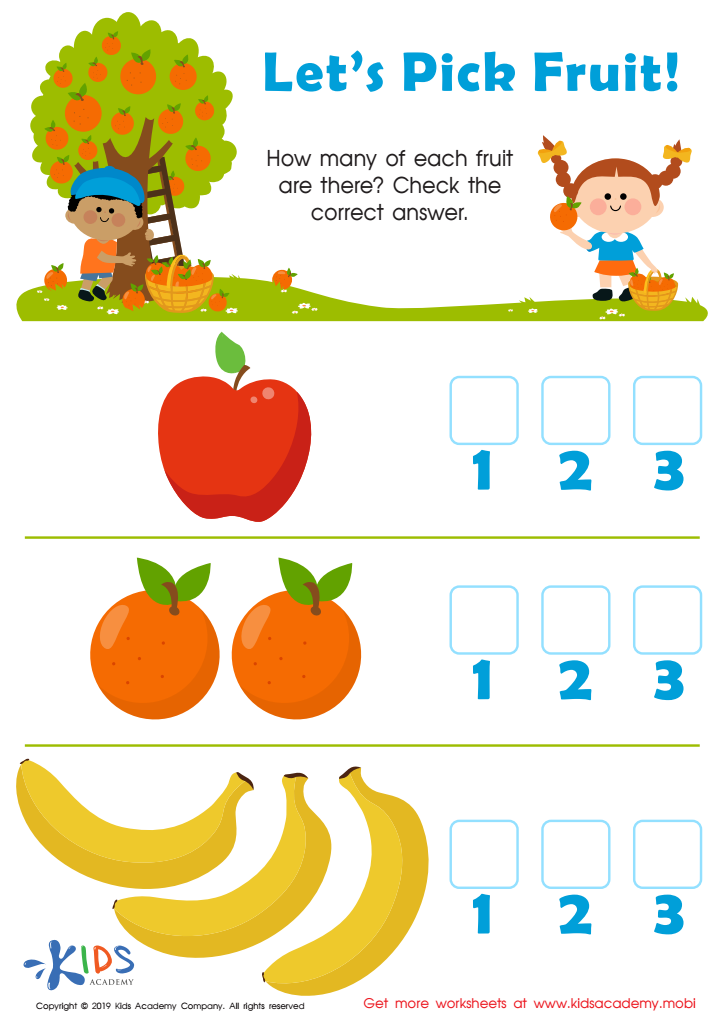
Let's Pick Fruit Worksheet





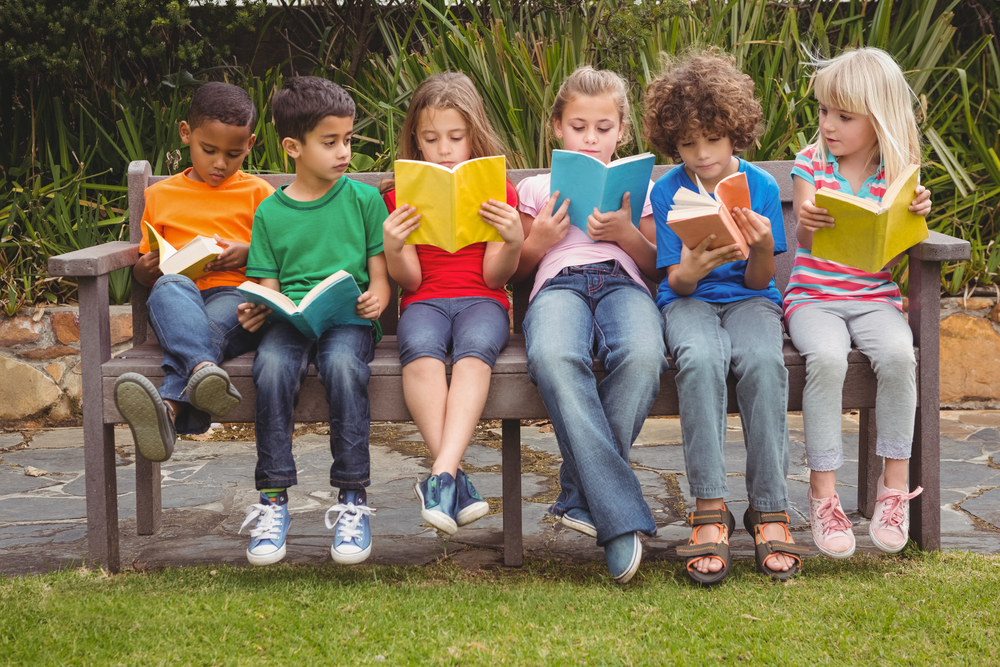
Fruit identification math for children aged 4-6 is an engaging and multi-disciplinary activity that supports early childhood development in several essential ways. When parents or teachers incorporate fruits into math exercises, it creates an enjoyable and relatable learning experience that makes abstract concepts more concrete. Children at this age are highly visual and tactile learners, so introducing colorful and tactile items like fruits can help solidify their understanding of basic math concepts such as counting, sorting, and categorizing.
Fruits come in various shapes, sizes, and colors, providing endless opportunities for kids to practice important mathematical skills. For example, you can have children count apples, compare the sizes of grapes and oranges, or sort fruits by color. This hands-on experience helps develop their number sense, understanding of size and quantity, and even early geometry skills. Additionally, fruit identification can enhance a child's vocabulary and language skills as they learn to name different fruits and describe their characteristics.
Moreover, these activities integrate sensory experiences, which are essential for cognitive development and fine motor skills. Children can touch, feel, and even smell the fruits, making the learning process more immersive and memorable. Lastly, emphasizing fruits promotes healthy eating habits, subtly encouraging children to make nutritious food choices as they grow. By blending math with everyday objects like fruits, parents and teachers are laying a foundation for lifelong learning and well-rounded development.








