Mathematical thinking Math Worksheets for Ages 4-6
5 filtered results
-
From - To
Discover the magic of early math learning with our "Mathematical Thinking Math Worksheets for Ages 4-6"! Designed to nurture young minds, these engaging worksheets enhance critical thinking, problem-solving, pattern recognition, and foundational math skills. Perfect for preschoolers and kindergarteners, our worksheets combine fun activities with educational rigor, ensuring joyful learning. From counting and basic operations to shape recognition and sorting, each printable worksheet inspires curiosity and builds confidence. Foster a love for math in your little ones with Kids Academy's expertly crafted resources, creating a strong foundation for future academic success. Explore today and turn learning into an adventure!
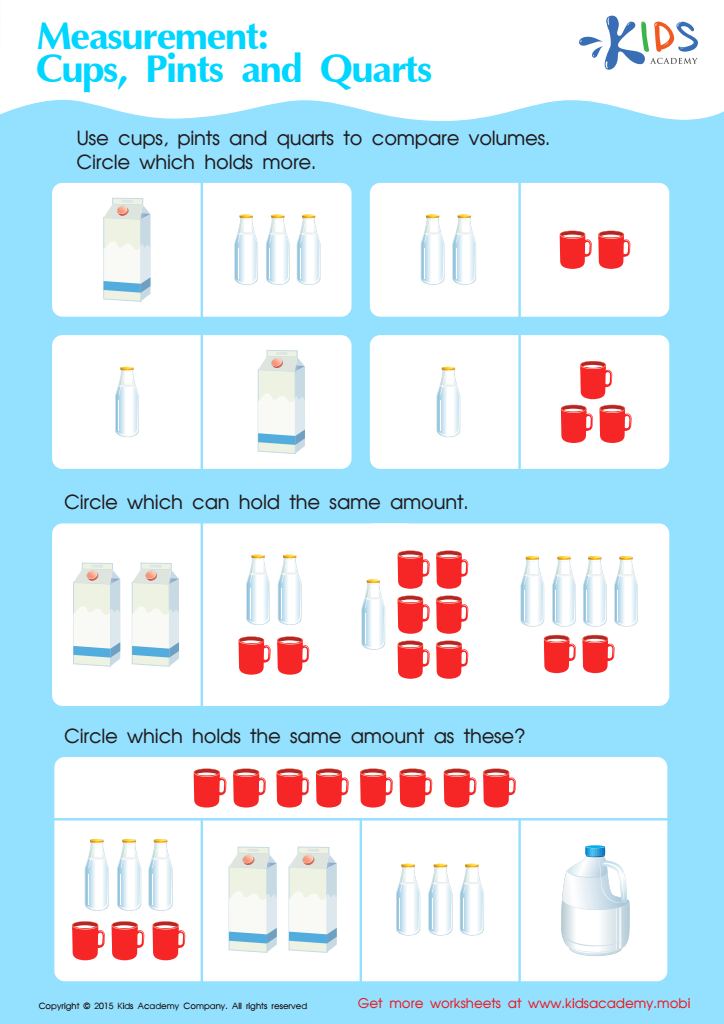
Measurement: Compare Volumes Worksheet
 Assign to My Students
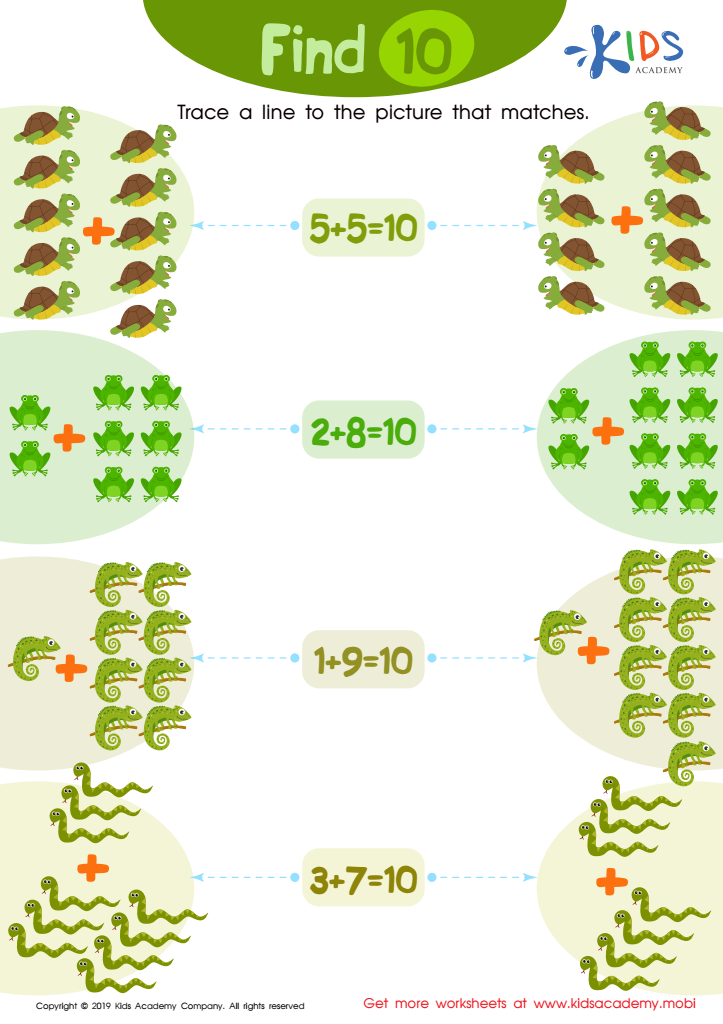
Find 10 Worksheet
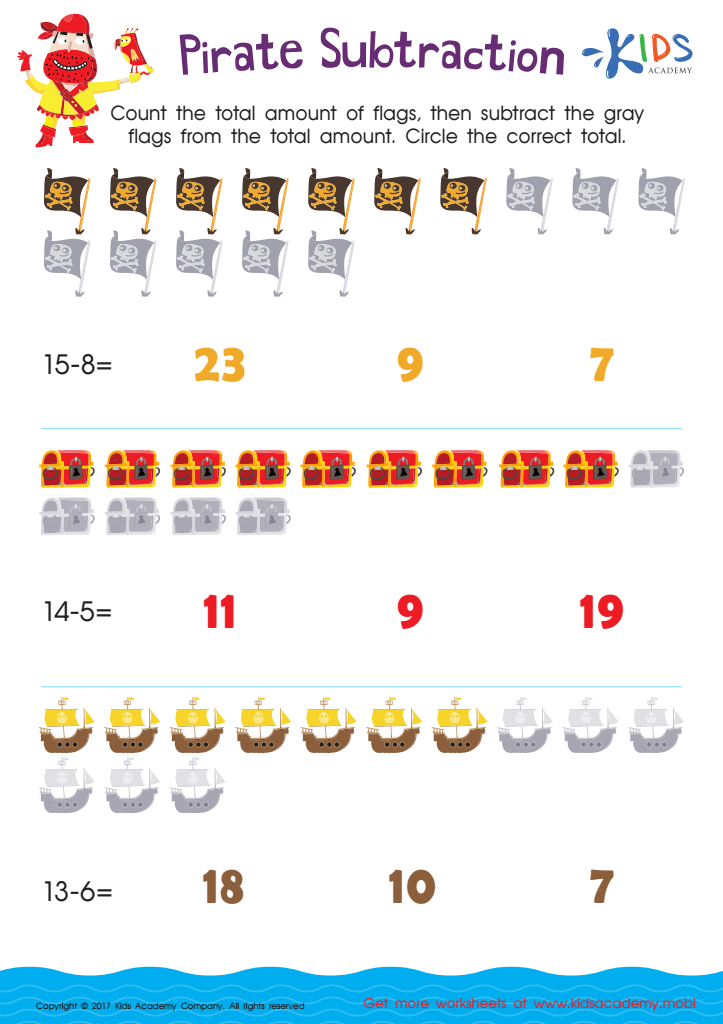
Pirate Subtraction Substraction Worksheet
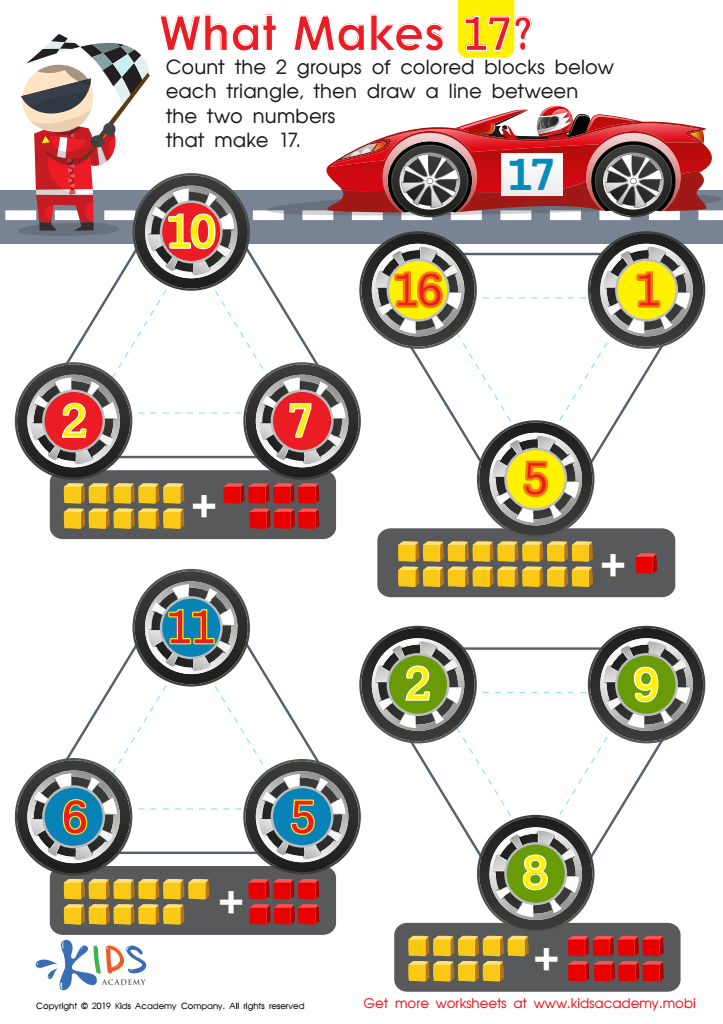
What Makes 17 Worksheet
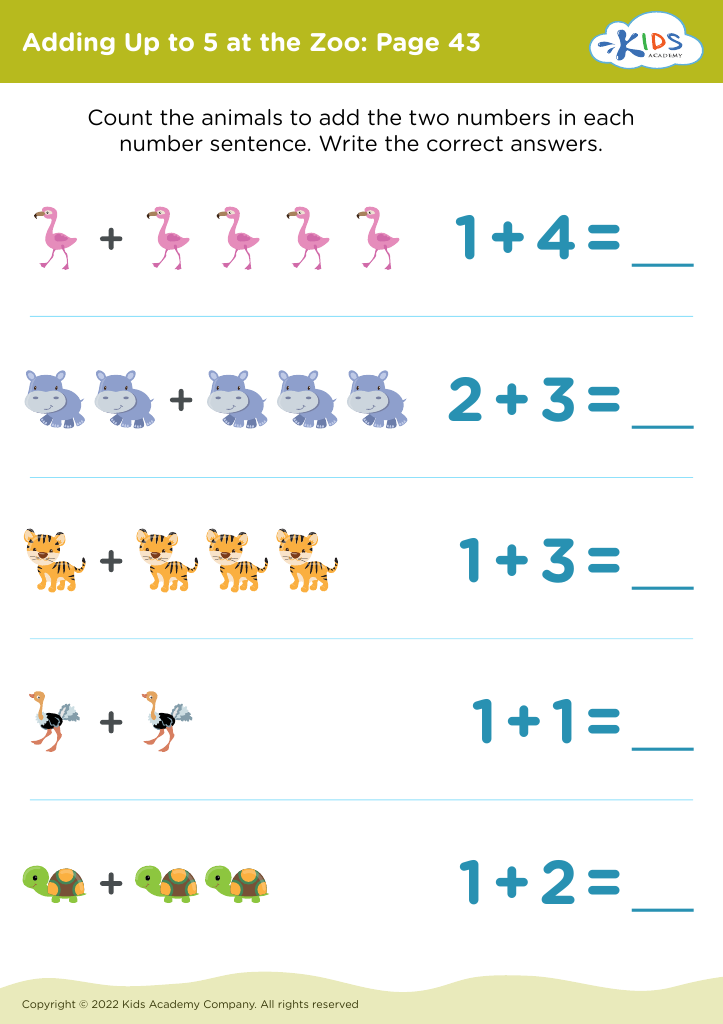







Parents and teachers play a pivotal role in nurturing mathematical thinking in children aged 4-6, a crucial period for cognitive development. Mathematical thinking goes beyond mere number recognition; it fosters problem-solving skills, logical reasoning, and the ability to make connections, all of which are vital throughout life.
At this young age, children naturally exhibit curiosity and a desire to explore their environment. Introducing basic math concepts such as counting, pattern recognition, and spatial awareness taps into this innate curiosity, making learning enjoyable and meaningful. Encouraging mathematical thinking helps children develop critical thinking skills early on, laying a strong academic foundation.
Moreover, early exposure to math reduces the likelihood of developing math anxiety later, which can hinder academic progress. Engaging in playful and tangible math activities, such as sorting objects, playing with shapes, or simple puzzles, makes math relatable and less intimidating.
By fostering a positive attitude toward math, parents and teachers are empowering children with tools they will use in everyday life, from problem-solving situations to making informed decisions. In a world increasingly reliant on STEM (Science, Technology, Engineering, Mathematics), early mathematical thinking is not just beneficial but essential. Investing time and effort in nurturing these skills during the formative years ensures children are better prepared for future educational challenges and opportunities.








