Number comparison skills Math Worksheets for Ages 4-6
3 filtered results
-
From - To
Enhance your child's math abilities with our "Number Comparison Skills Math Worksheets for Ages 4-6." These engaging and educational worksheets are meticulously designed to introduce young learners to the foundational concepts of number comparison. Featuring vibrant illustrations and fun activities, children will learn to recognize greater than, less than, and equal to relationships between numbers. Ideal for preschoolers and kindergarteners, our worksheets help develop critical thinking, number sense, and problem-solving skills in a playful manner. Give your child the head start they need in math with our expertly crafted number comparison worksheets, ensuring a solid mathematical foundation for future success.
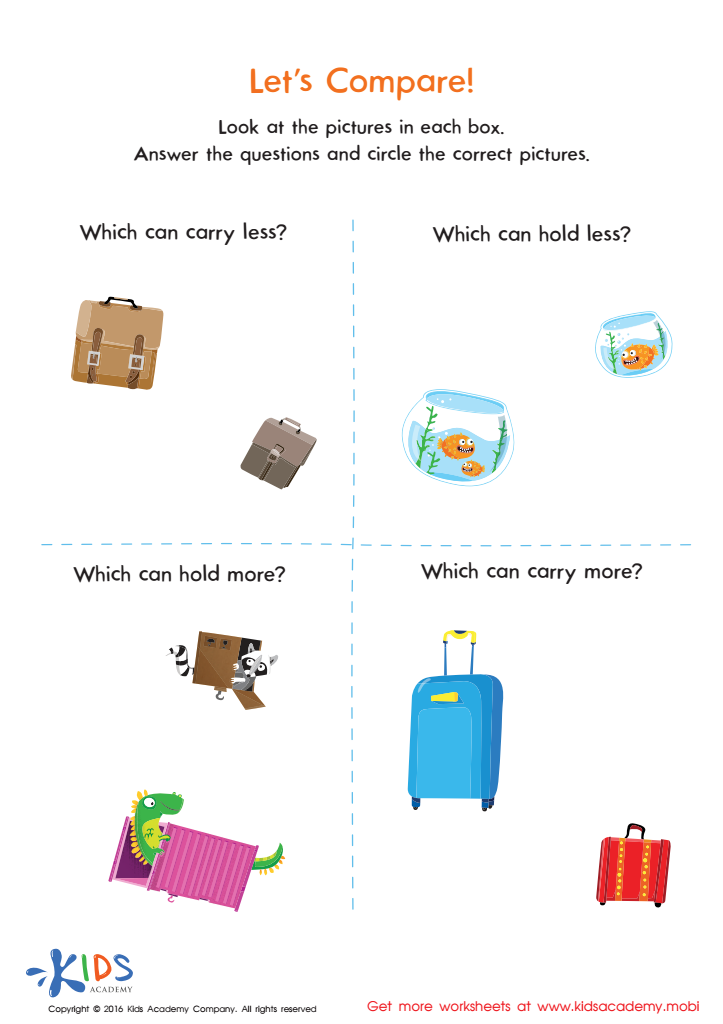
Let's Compare Worksheet: Big or Small
 Assign to My Students
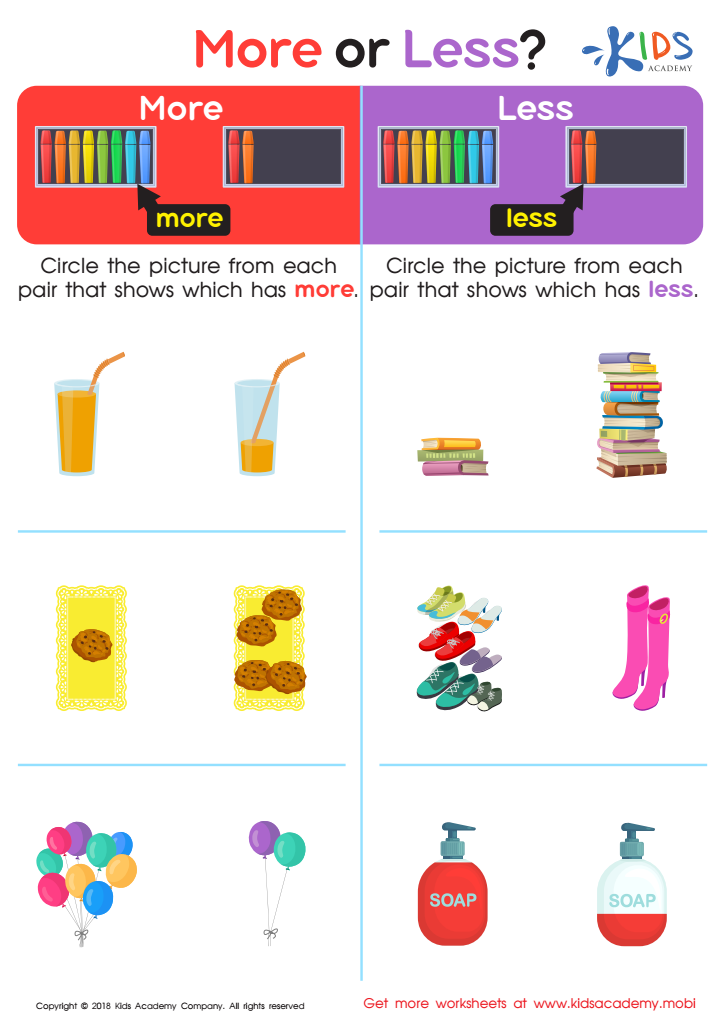
More or Less? Worksheet
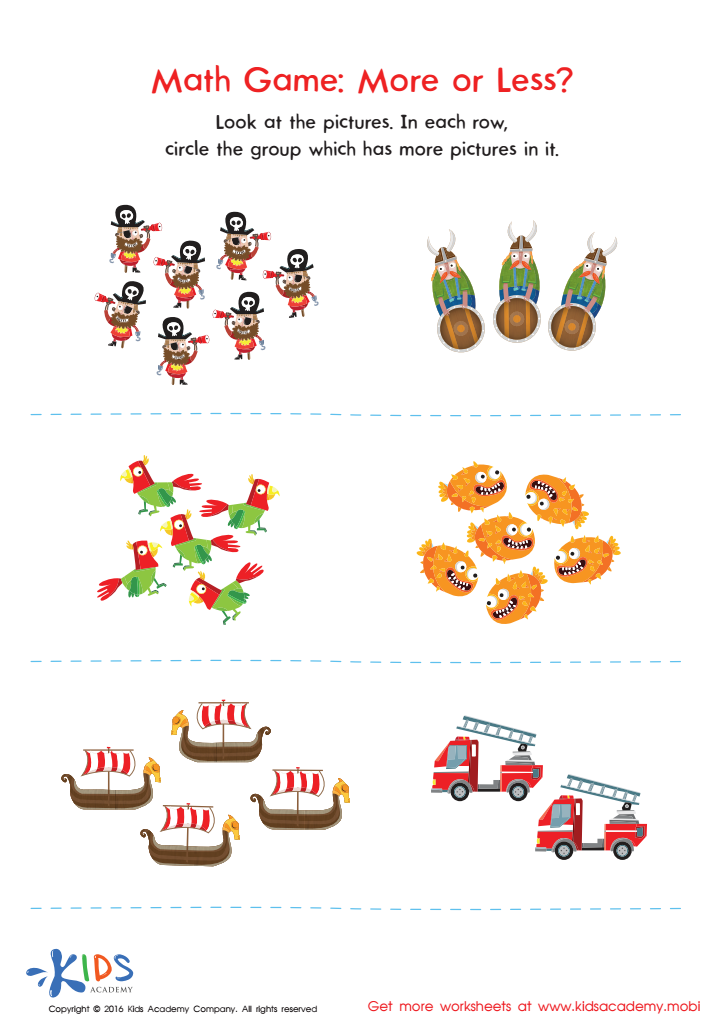
More or Less Worksheet







Number comparison skills are fundamental in early childhood education, playing a pivotal role in developing critical math concepts for children aged 4-6. At this stage, kids are naturally curious about the world around them and begin to understand quantities. Developing these skills aids in grasping more complex math ideas later on.
First, comparing numbers enhances their ability to distinguish between different quantities, which paves the way for understanding addition, subtraction, and eventually multiplication and division. These skills foster logical thinking and problem-solving abilities, as children learn to determine what 'more than', 'less than', or 'equal to' means.
Additionally, number comparison activities nurture a child's confidence in handling numbers, reducing anxiety often associated with math. It encourages a solid mathematical foundation during these formative years, ensuring that kids are not only able to recognize numbers but also understand their relationships to one another.
Parents and teachers supporting number comparison can use practical, enjoyable activities like sorting objects, playing number-based games, and using visual aids. These engaging methods make learning fun and meaningful. In sum, focusing on number comparison skills in early education sets the groundwork for future success in math and everyday life. Investing time and resources in developing these abilities should be a priority for educators and parents alike.








