
Visual interpretation Math Worksheets for Ages 4-6
3 filtered results
Difficulty Level
Grade
Age
-
From - To
Subject
Activity
Standards
Discover our engaging Visual Interpretation Math Worksheets designed for children ages 4-6! These worksheets promote essential math skills through fun and interactive activities that foster critical thinking and visual learning. Through colorful visuals, young learners will enhance their ability to recognize patterns, understand shapes, and solve simple problems. Our carefully crafted exercises encourage exploration and play, making math enjoyable and effective for early childhood education. Perfect for preschoolers and kindergartners, these printable worksheets support foundational math concepts while nurturing curiosity and confidence. Start your child’s math journey today with our reliable resources tailored for every budding mathematician!
Favorites
With answer key
Interactive
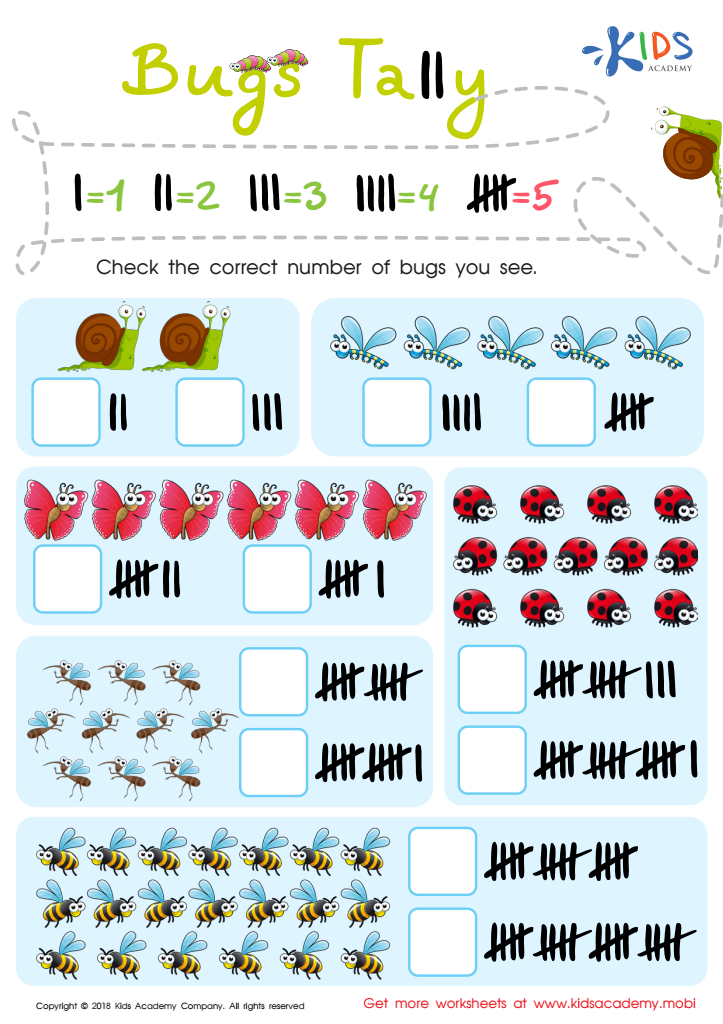
Bugs Tally Worksheet
This fun worksheet uses friendly bugs to help young mathematicians learn numbers and tally marks. They'll gain real-world skills to help with adding, subtracting and counting. Representations will solidify number reasoning, aiding with game playing and more.
 Assign to My Students
Bugs Tally Worksheet
Worksheet
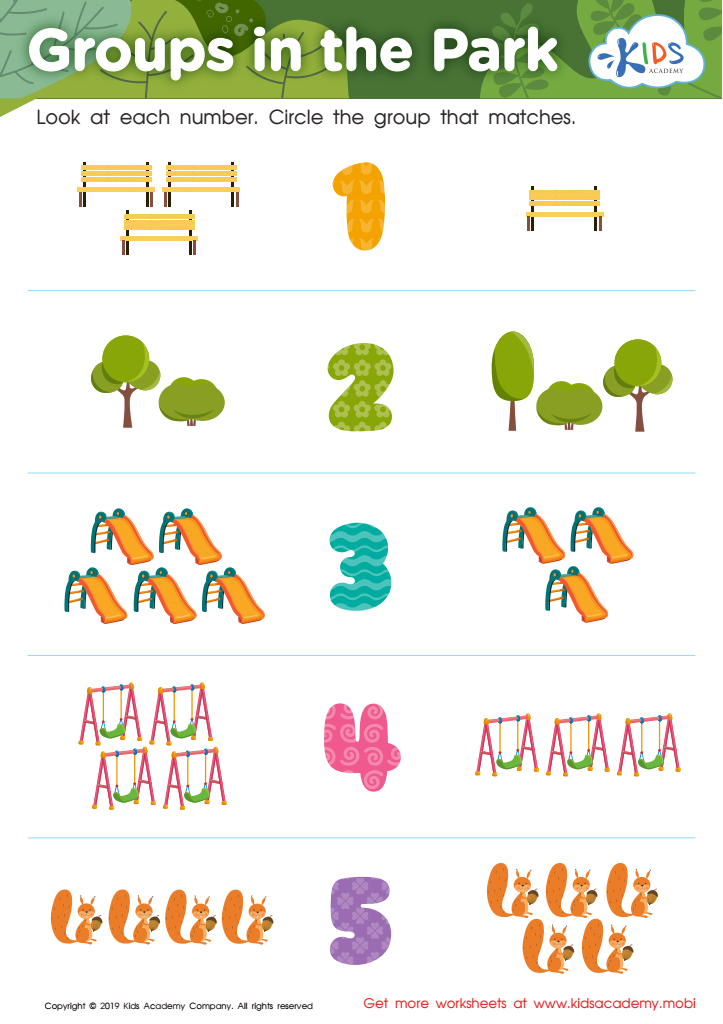
Groups in the Park Worksheet
Take your kids to the park and let them enjoy the freedom to play! Ask them what they love doing most and study a picture together - name items and count objects in the sets, then circle the correct one. It's a fun way for your kids to learn.
Groups in the Park Worksheet
Worksheet
Join Kids Academy for Free
Who is primarily going to use this learning content?








Visual interpretation in math for children aged 4-6 is essential as it lays a strong foundation for future mathematical understanding and problem-solving skills. At this early stage, children are inherently visual learners; they understand concepts better when they can see and manipulate objects rather than just through abstract symbols. Engaging children with visual aids—like blocks, drawings, or charts—help them grasp fundamental math concepts such as counting, addition, subtraction, shapes, and patterns.
Teachers and parents should care about visual interpretation because it fosters critical thinking and helps youngsters develop a mental image of numbers and operations. This approach also enhances their ability to solve problems and improve spatial awareness, which is crucial for advanced math later in life. Furthermore, visual strategies can increase motivation and engagement, making math fun and approachable rather than intimidating.
Incorporating visuals encourages collaboration and communication skills, as children often explain their thinking to peers or adults. As they grow, developing a solid visual foundation will enable them to transition smoothly into more complex math topics and STEM-related subjects. Therefore, prioritizing visual interpretation in early mathematics fundamentally supports long-term academic success and helps cultivate confident, skilled learners.








