Visual perception development Math Worksheets for Ages 4-6
3 filtered results
-
From - To
Enhance your child's visual perception skills with our engaging Math Worksheets designed for ages 4-6! These worksheets are expertly crafted to bolster essential visual processing abilities, such as shape recognition, pattern identification, and spatial awareness, crucial for building a strong mathematical foundation. With colorful illustrations and interactive exercises, young learners will love exploring numbers and concepts while developing their critical thinking skills. Perfect for at-home learning or classroom use, these worksheets offer a fun and effective way to support early math skills through visual perception activities. Get started today and watch your child's confidence soar as they master math concepts!
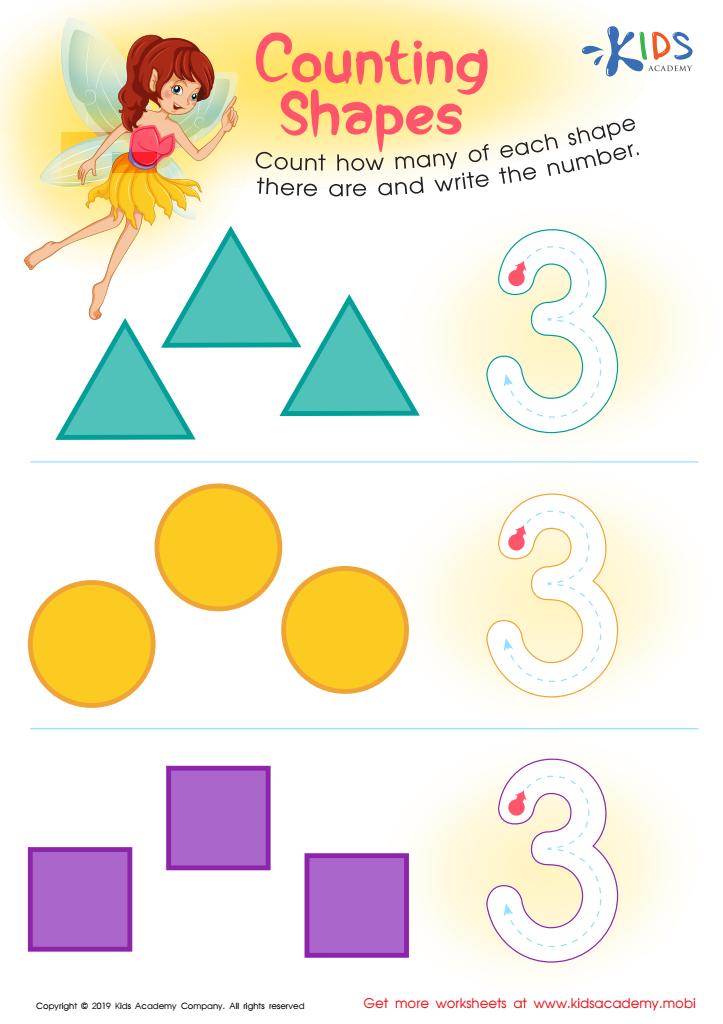
Counting Shapes Worksheet
 Assign to My Students
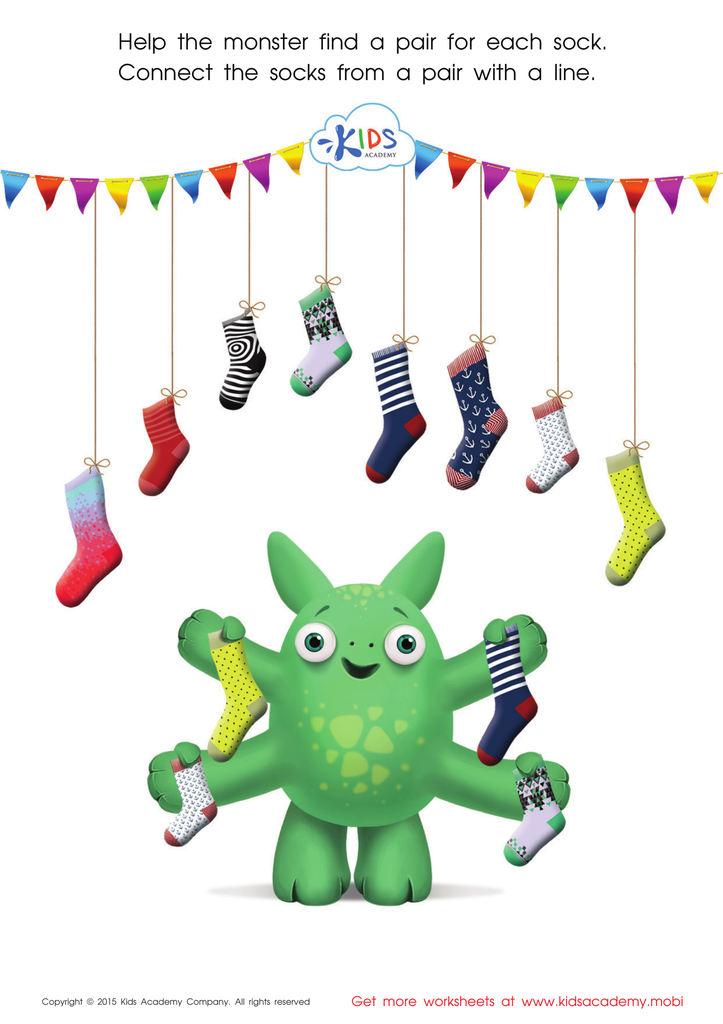
Math Matching Pairs Game: Monsterв's Socks Worksheet
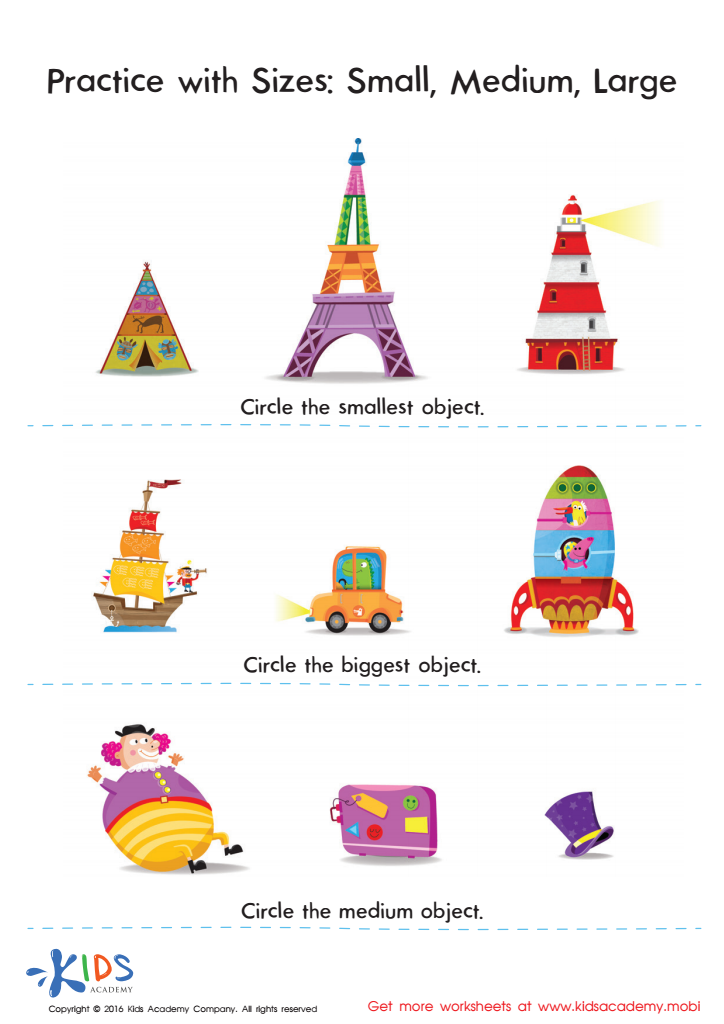






.jpg)

Visual perception development is crucial for children aged 4-6, as it significantly supports early math skills. At this age, visual perception helps children recognize shapes, patterns, and spatial relationships, which are foundational elements of mathematics. When children can accurately perceive and differentiate visual information, they are more adept at tasks like counting, measuring, and categorization.
Understanding visual perception also enhances a child's ability to follow instructions or solve problems presented through visual aids, such as charts, diagrams, or number lines. For parents and teachers, fostering visual perception through engaging activities—such as puzzles, sorting games, or drawing—can significantly elevate a child's mathematical comprehension and enthusiasm.
Moreover, strong visual perception is linked to reading readiness, often intertwined with math as children start identifying numerals and symbols. As these skills develop, children gain the confidence and foundation necessary for more complex mathematical concepts.
Recognizing the importance of visual perception in early childhood education means that parents and teachers can intentionally create rich, interactive learning environments. By actively supporting these skills, we help nurture competent, confident learners who are better prepared for future academic challenges in mathematics and beyond.








