Comparing numbers Measurement Worksheets for Ages 4-6
3 filtered results
-
From - To
Boost your child’s mathematical foundation with our "Comparing Numbers Measurement Worksheets for Ages 4-6". These expertly designed worksheets make learning fun and engaging for young students. Through vibrant illustrations and interactive activities, children can develop essential skills in comparing and measuring quantities. Suitable for preschool to kindergarten, these exercises aim to strengthen number sense and enhance their ability to analyze differences between numbers. Every worksheet caters specifically to aid early learners, ensuring they grasp fundamental concepts with ease while boosting their confidence. Prepare your child for future success in math with our innovative and educational resources!
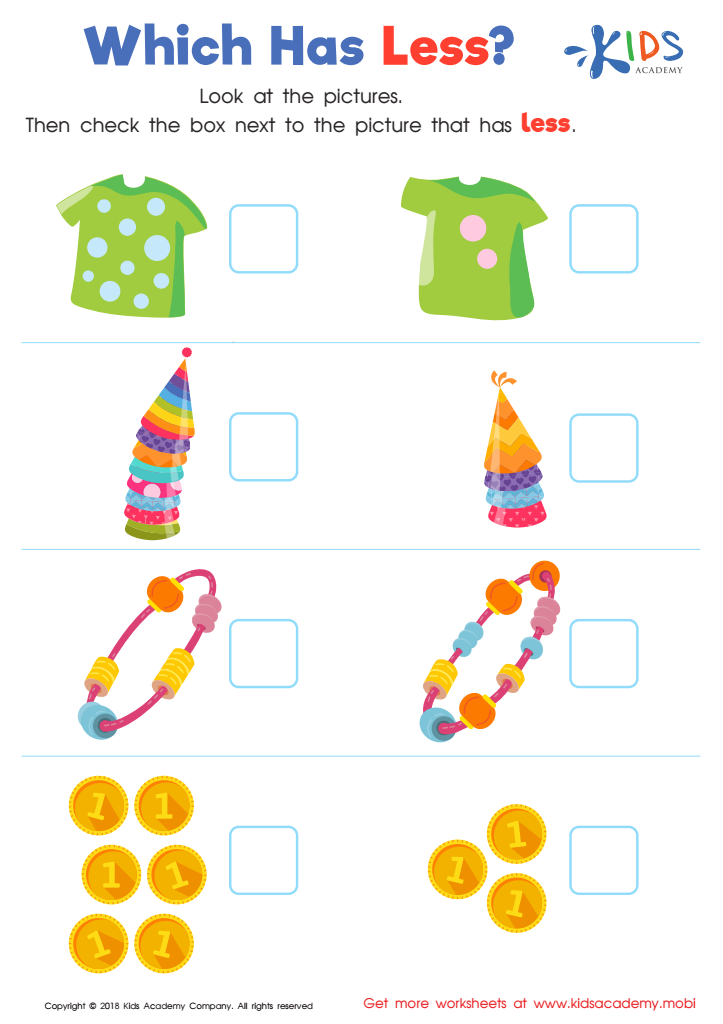
Which Has Less? Worksheet
 Assign to My Students
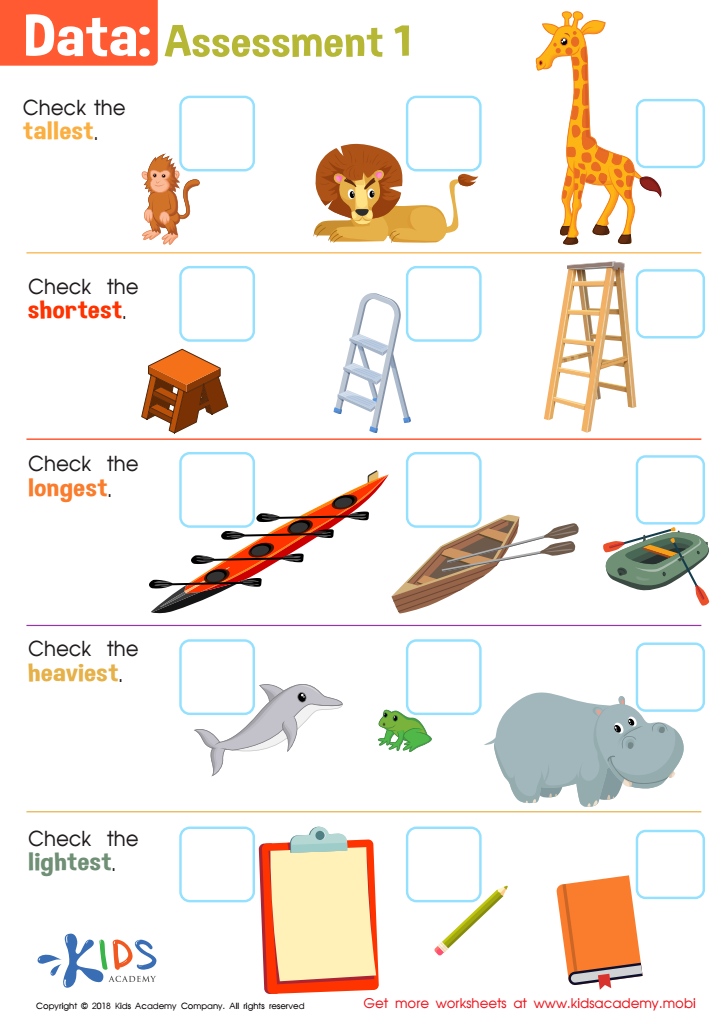
Data: Assessment 1 Worksheet
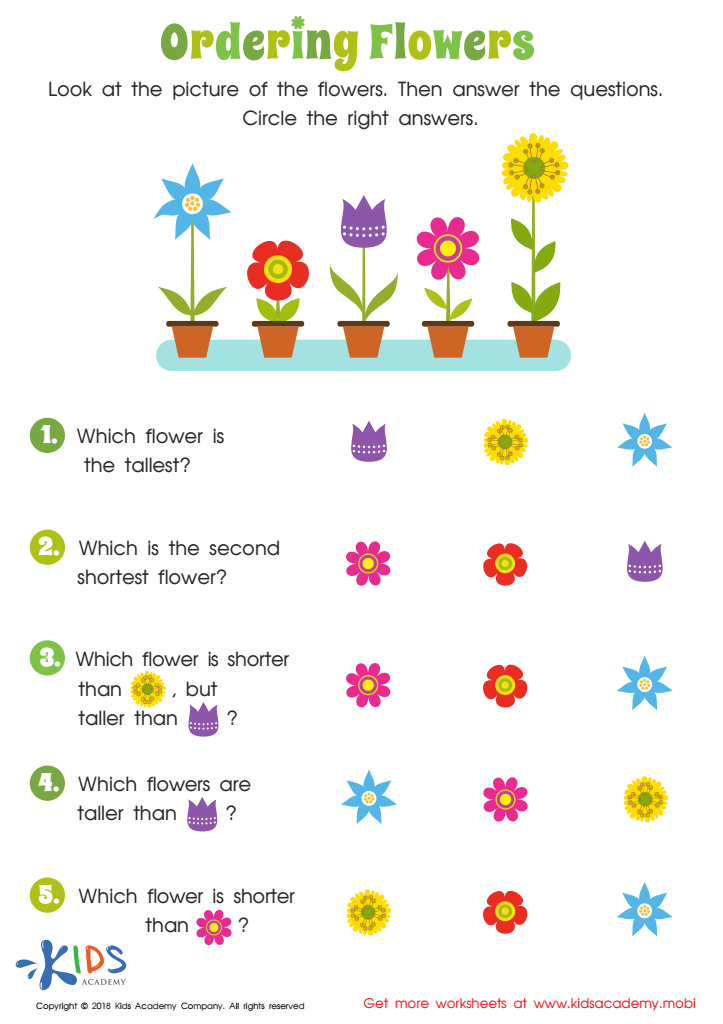
Ordering Flowers Worksheet








Comparing numbers and understanding measurement are foundational skills for children ages 4-6 that play a crucial role in their mathematical development. Parents and teachers should care about these skills because they provide the basis for more complex math concepts that children will encounter later on. By learning to compare numbers, children develop their ability to reason and think critically. They start understanding concepts such as more than, less than, and equal to, which are essential for solving problems and making decisions in everyday life.
Similarly, understanding measurement introduces children to concepts of size, length, weight, and volume, fostering their spatial awareness and scientific reasoning. Measuring objects helps build a sense of precision and can be an engaging, hands-on way for children to apply their mathematical skills in meaningful contexts. Moreover, these activities enhance children's vocabulary as they learn terms like 'taller,' 'shorter,' 'heavier,' and 'lighter.'
By focusing on these skills during the early years, teachers and parents set the stage for academic success and practical problem-solving abilities. It enhances children's confidence and encourages a positive attitude towards learning mathematics. Overall, early mastery of comparing numbers and measurement equips children with vital tools for both their educational journey and daily life encounters.








