Improving counting skills Measurement Worksheets for Ages 4-6
3 filtered results
-
From - To
Boost your child's counting abilities with our "Improving Counting Skills Measurement Worksheets" designed specifically for ages 4-6. These engaging and interactive worksheets provide a fun way for young learners to practice counting, comparison, and measurement concepts through colorful visuals and practical exercises. Each worksheet is tailored to enhance fine motor skills while fostering numerical understanding in an enjoyable manner. Ideal for both home and classroom settings, our resources create an enriching environment that supports early math development. Equip your little ones with essential counting skills that pave the way for future academic success! Start their counting journey today!
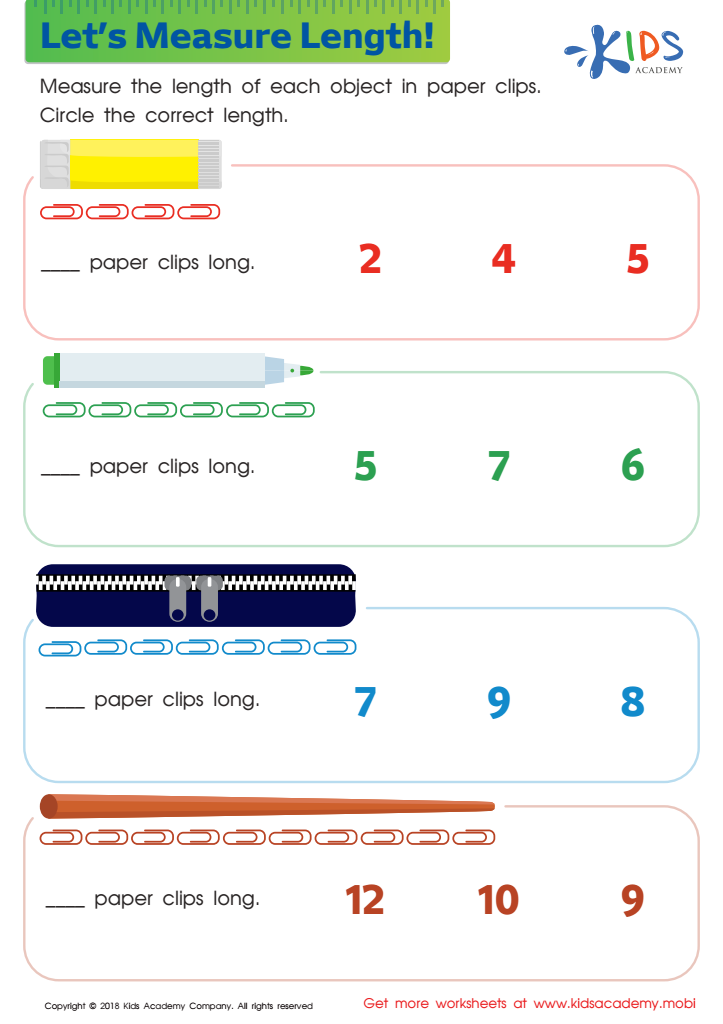
Lets Measure Length Worksheet
 Assign to My Students
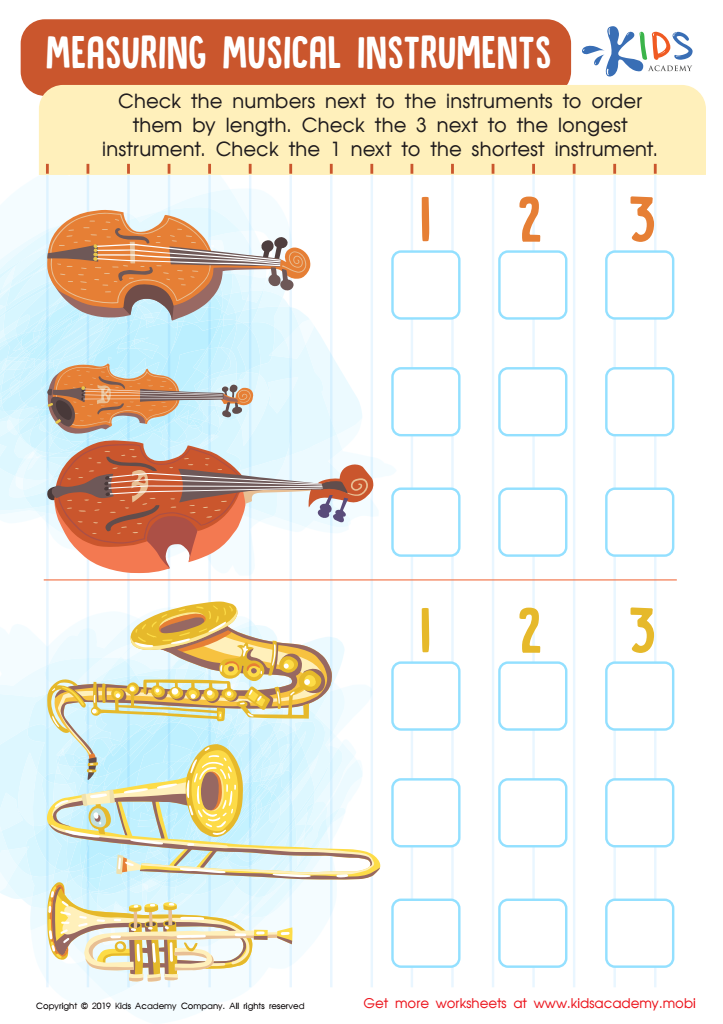
Measuring Musical Instruments Worksheet
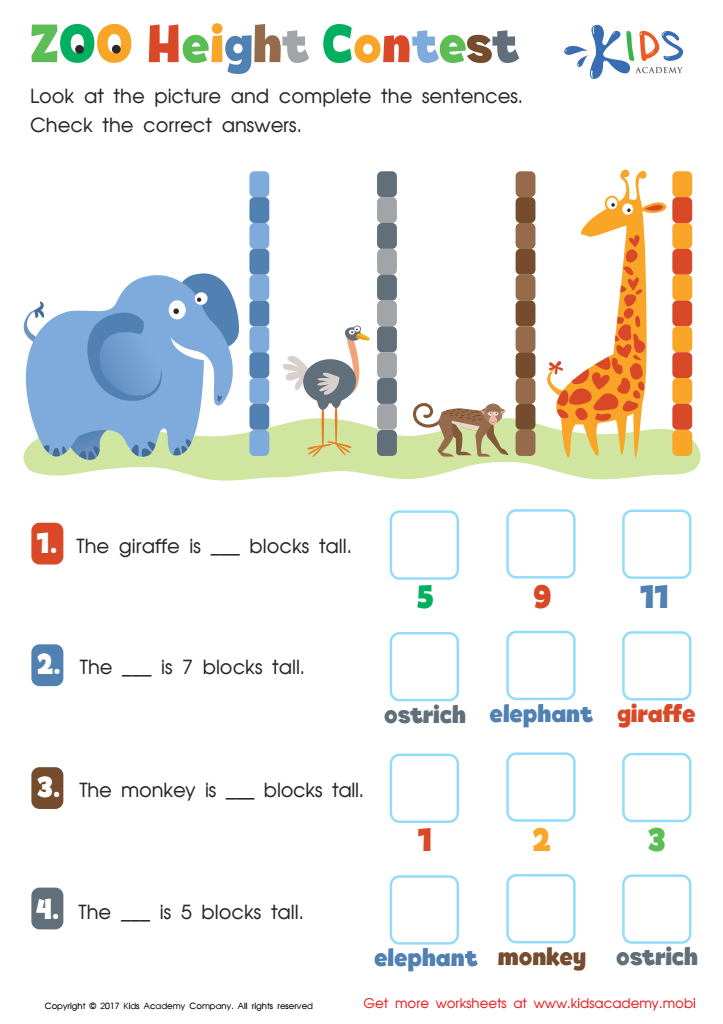
Zoo Height Contest Worksheet








Improving counting skills and measurement abilities in children aged 4-6 lays a crucial foundation for their future learning and cognitive development. During these formative years, children are naturally curious and eager to explore the world around them, and counting and measurement provide them with essential tools to understand their environment.
Firstly, strong counting skills enhance a child's ability to perform basic arithmetic, a cornerstone of mathematics. When children grasp the concept of counting, they can begin to engage with addition and subtraction in a meaningful way. This early numeracy sets the stage for later, more complex mathematical concepts.
Furthermore, measurement introduces children to the concepts of comparison and distinction. By learning to measure length, weight, and volume, children develop problem-solving and critical thinking skills. For instance, when a child measures objects around them, they engage in hands-on learning that reinforces their understanding of size, quantity, and spatial relationships.
Additionally, these skills foster confidence and independence. Children who can count and measure effectively participate in everyday tasks, like baking or shopping, enhancing their self-esteem. Both teachers and parents play a vital role in reinforcing these skills through playful activities, ensuring children are not only prepared for future academic challenges but also for real-world applications of their learning.








