
Number Recognition Measurement Worksheets for Ages 4-6
3 filtered results
Difficulty Level
Grade
Age
-
From - To
Subject
Activity
Standards
Discover our engaging Number Recognition Measurement Worksheets designed specifically for children aged 4-6! These interactive worksheets help young learners develop essential number recognition skills while exploring measurement concepts. With colorful illustrations and fun activities, kids will delight in counting, identifying, and comparing numbers in various contexts. Perfect for classroom or home use, our resources promote early math skills that lay the foundation for future learning. Encourage your child's confidence in numbers through hands-on experiences that make learning enjoyable. Visit us now to access these valuable tools and watch your little ones thrive in their mathematical journey!
Favorites
With answer key
Interactive
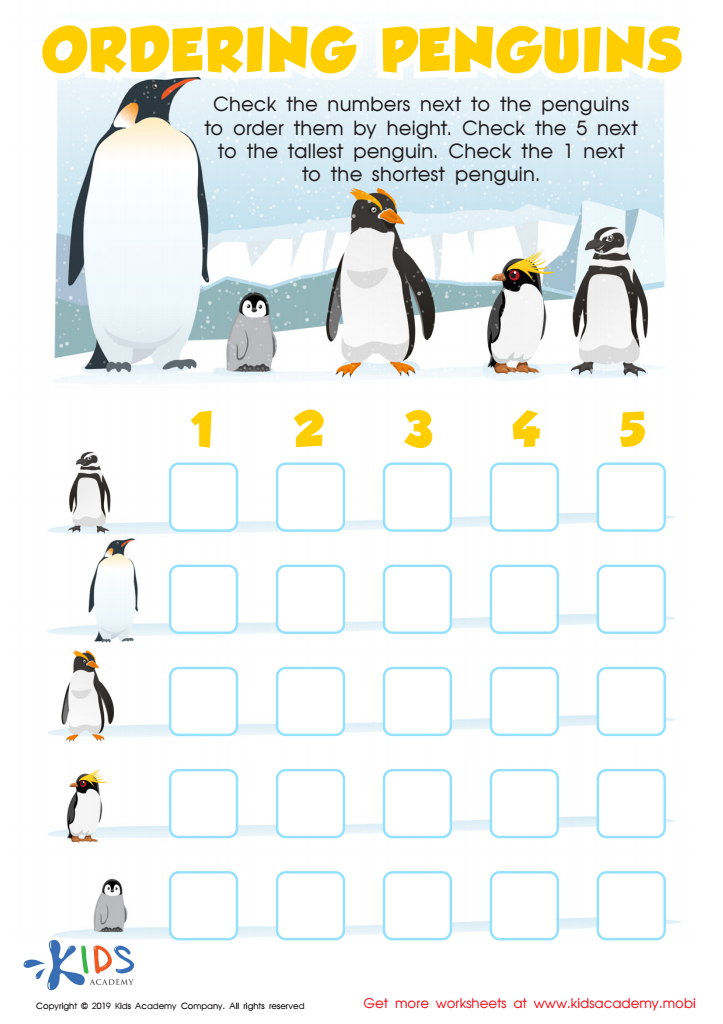
Ordering Penguins Worksheet
Check photos of penguins with your kids, then help them order by height. Tallest gets a 5, shortest gets a 1. Learn cool facts while having fun!
 Assign to My Students
Ordering Penguins Worksheet
Worksheet
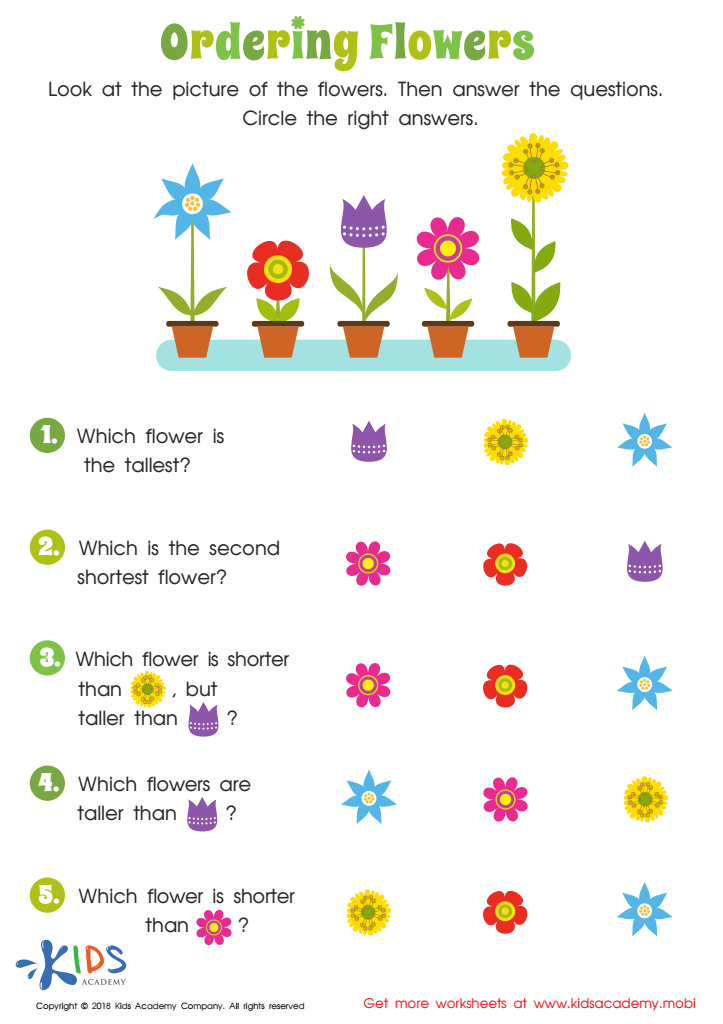
Ordering Flowers Worksheet
Preschoolers can start learning measurement with visuals! This worksheet uses colorful flowers of different heights. Ask your learner to observe the flowers, then help them compare/answer which is taller/shorter. It's an easy way for them to begin learning about measurement.
Ordering Flowers Worksheet
Worksheet
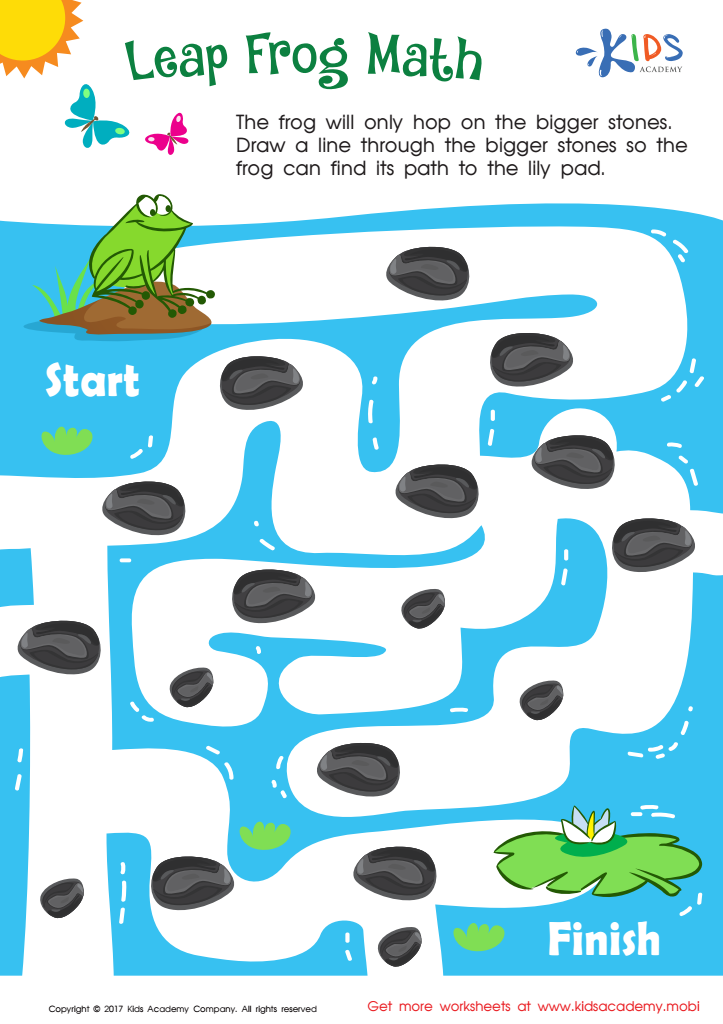
Math Puzzle Worksheet
Kids will use their math skills to help the frog get through the maze by selecting the larger stones. Perfect for kindergarteners, it develops the ability to identify size differences.
Math Puzzle Worksheet
Worksheet
Join Kids Academy for Free
Who is primarily going to use this learning content?








Number recognition is a foundational skill in early childhood education that enables children aged 4-6 to connect quantities with their numerical representations. This skill is crucial as it builds the groundwork for all future mathematical learning. When children learn to recognize numbers, they gain confidence in identifying and working with them in various contexts, such as counting objects, understanding sequences, and performing simple addition and subtraction.
Parents and teachers should care about number recognition measurement for several reasons. First, it is directly linked to cognitive development; recognizing numbers enhances memory, critical thinking, and problem-solving skills. Second, early proficiency in number recognition contributes to a smoother transition into more complex mathematical concepts later in school. Delayed number recognition may result in challenges in mathematics, potentially leading to math anxiety or difficulties in academic performance.
Furthermore, measurement of number recognition can help educators identify individual learning needs and create tailored learning opportunities. Regular assessment allows for timely interventions, ensuring children receive support when they require it. Lastly, fostering a love for numbers at an early age can instill positive attitudes towards math, encouraging a lifelong appreciation for the subject, essential for personal and professional growth in a numerically-driven world.








