Understanding opposites Measurement Worksheets for Ages 4-6
3 filtered results
-
From - To
Welcome to our "Understanding Opposites Measurement Worksheets" page designed specifically for kids ages 4-6! These engaging worksheets introduce young learners to the concept of opposites by exploring measurement through fun and interactive activities. Children will develop essential skills as they compare sizes, lengths, and weights while completing exciting exercises that reinforce their understanding of concepts like big vs. small, heavy vs. light, and full vs. empty. Perfect for home or classroom use, our worksheets combine vibrant illustrations with clear instructions, making learning enjoyable. Start your child's journey into the world of measurement and opposites today with our thoughtfully designed resources!
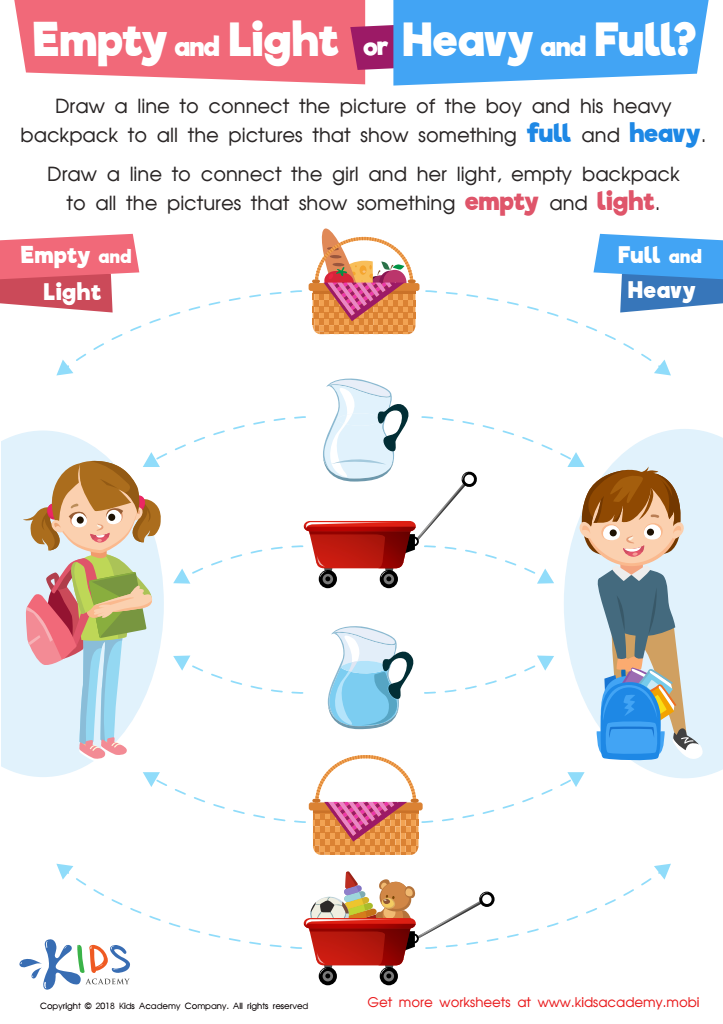
Empty and Light or Heavy and Full? Worksheet
 Assign to My Students
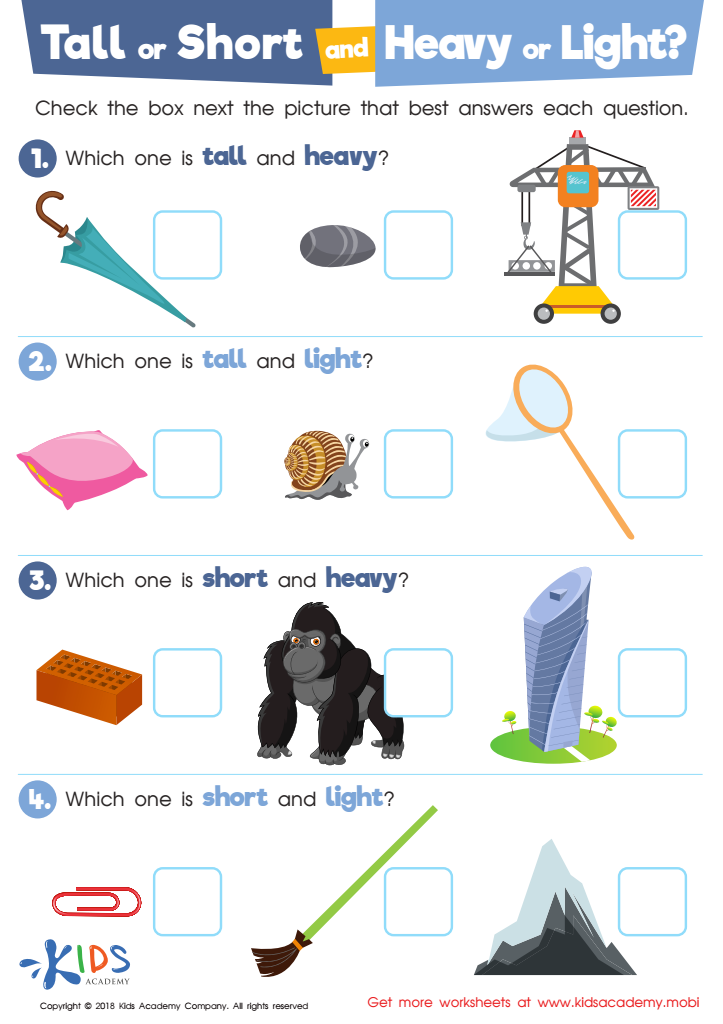
Tall or Short and Heavy or Light? Worksheet
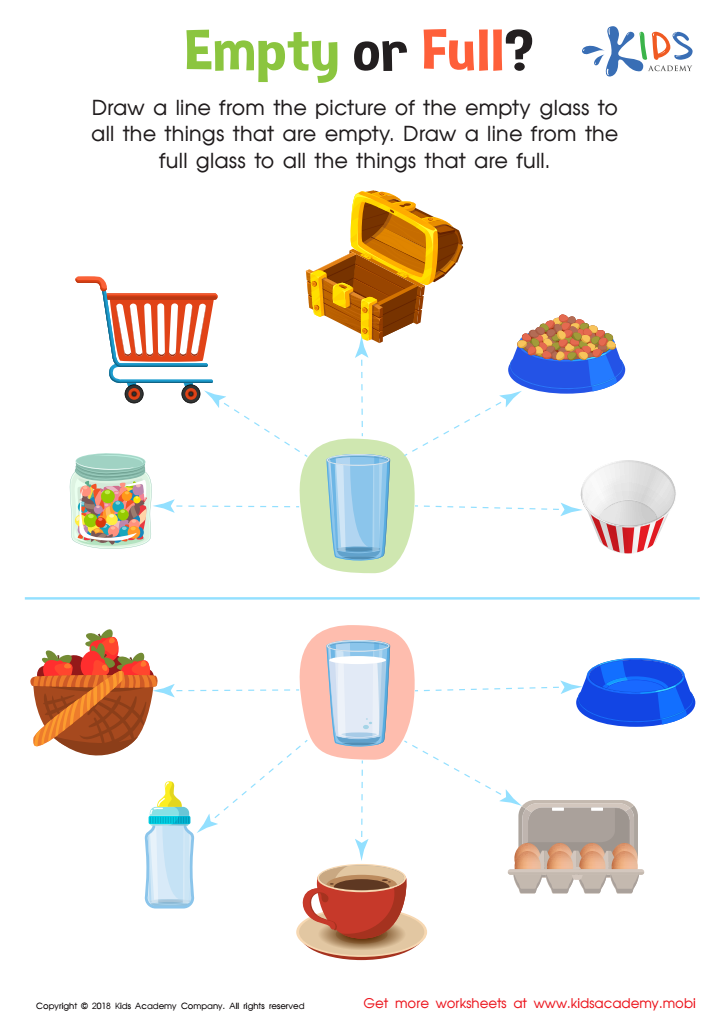
Empty or Full? Worksheet








Understanding opposites and measurement is crucial for children aged 4-6, as these concepts form the foundation for various cognitive, social, and emotional skills. Learning about opposites—like big/small, tall/short, and hot/cold—helps young children categorize their experiences and sharpen their observational skills. This understanding enhances language development as they learn to articulate their thoughts and compare different attributes.
Measurement, on the other hand, introduces children to essential mathematical concepts and critical thinking. By exploring length, weight, and volume, kids learn how to quantify and describe the world around them, fostering early numeracy skills. These foundational experiences in measurement not only prepare them for future mathematical learning but also help them make sense of everyday situations, such as recognizing different quantities when they play or cook.
Teachers and parents play a vital role in integrating these concepts into daily life through playful and interactive learning opportunities. When children engage with opposites and measurement in meaningful contexts, such as playing games or engaging in art projects, they see the joy in learning and develop a solid foundation for future exploration in math and science. Ultimately, nurturing these skills empowers young children as they grow, shaping their ability to navigate the world confidently.








