
Reading comprehension Multiplication Worksheets for Ages 4-6
3 filtered results
Difficulty Level
Grade
Age
-
From - To
Subject
Activity
Standards
Enhance early learning with our Reading Comprehension Multiplication Worksheets tailored for ages 4-6. These engaging worksheets integrate basic multiplication concepts with reading skills, encouraging young learners to practice problem-solving while developing literacy. Each worksheet features age-appropriate scenarios that require comprehension to answer multiplication-based questions, making math fun and interactive. Perfect for classroom use or at-home practice, our activities help children build a solid foundation in both reading and math. Foster critical thinking and boost confidence as kids enjoy learning through stories and visuals. Explore our collection now to support your child’s educational journey in a playful way!
Favorites
With answer key
Interactive
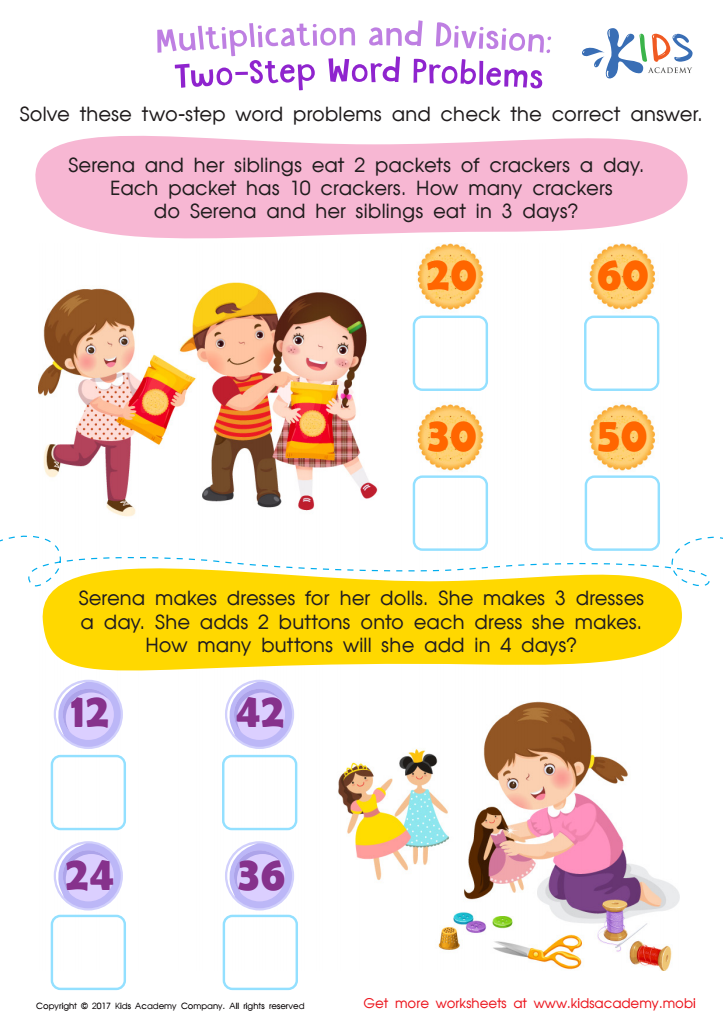
Two Step Word Problems Worksheet
Boost your child's math skills with this fun and realistic two-step word problems worksheet! Kids will learn to break down complex multiplication word problems into easier steps to solve. Download this free PDF worksheet and help them reach the next level.
 Assign to My Students
Two Step Word Problems Worksheet
Worksheet
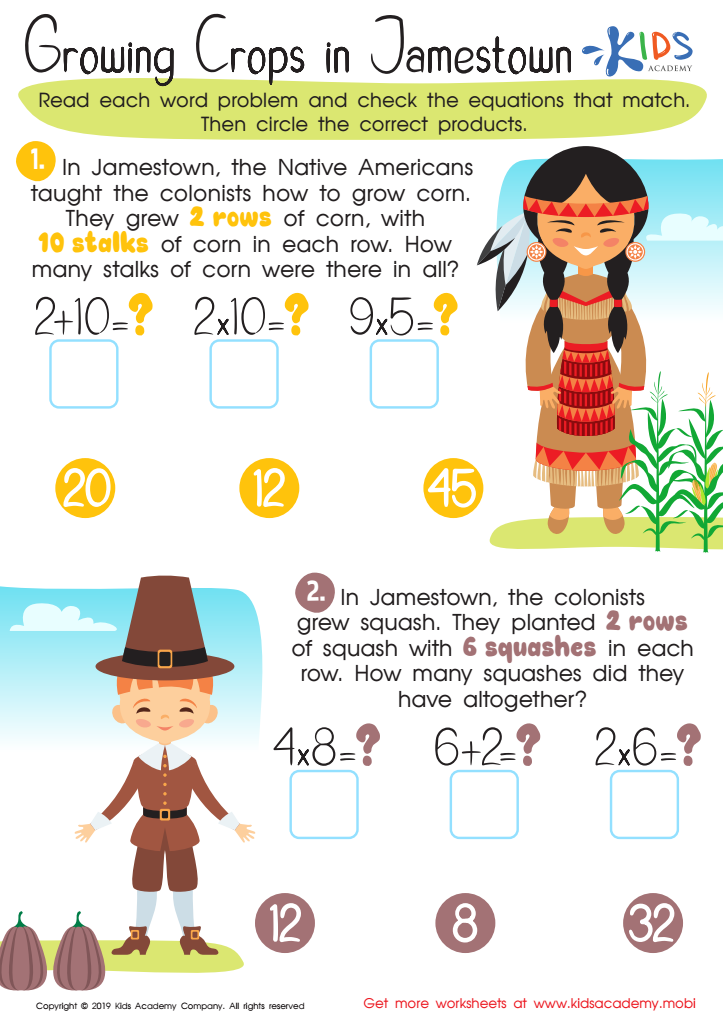
Growing Jamestown Worksheet
This exciting multiplication worksheet from Kids Academy uses American history facts as its theme. Kids learn about Native Americans helping early Americans at Jamestown, then read the word problems, match the equations and solve for the product. Finally, circle the correct answer!
Growing Jamestown Worksheet
Worksheet
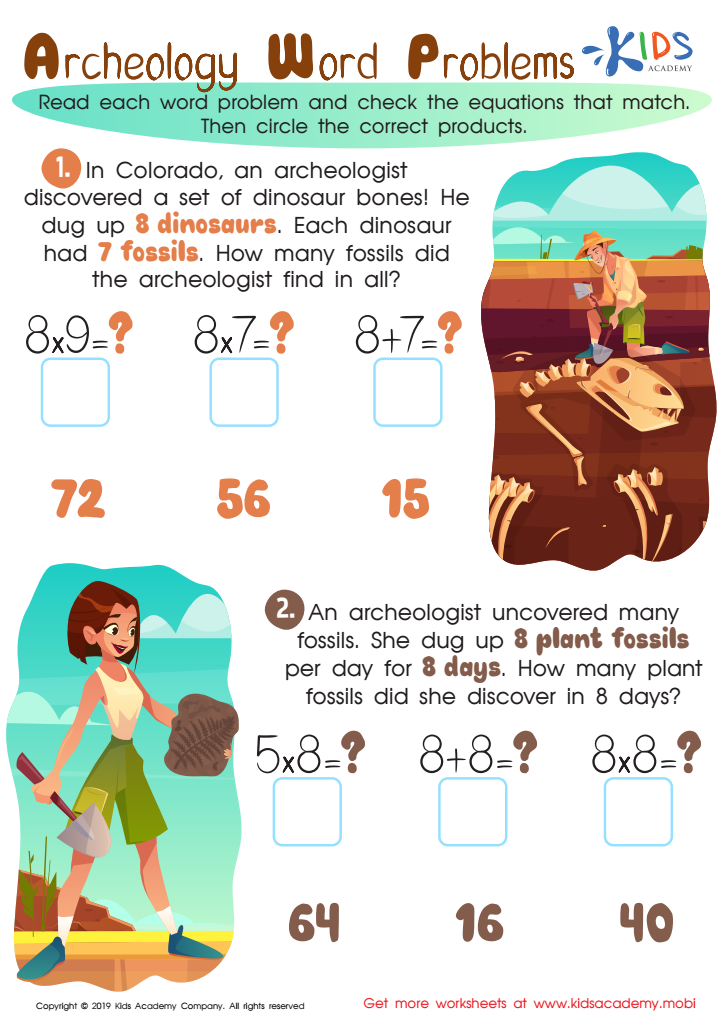
Archeology Word Problems Worksheet
Encourage your child to explore their career options! Show them an archeologist's job with this worksheet - featuring a picture of a dinosaur bone discovery. Read the accompanying text, then solve the word problems. Help your kids circle the correct answers to better understand this profession.
Archeology Word Problems Worksheet
Worksheet
Join Kids Academy for Free
Who is primarily going to use this learning content?








Reading comprehension and multiplication are foundational skills essential for children ages 4-6. Early development in these areas lays the groundwork for future academic success and overall cognitive development. For parents and teachers, fostering reading comprehension in young children cultivates critical thinking and enhances vocabulary. When children understand what they read, they learn to draw inferences, ask questions, and engage with texts, which promotes not just literacy but emotional and social skills as well.
Similarly, introducing basic multiplication concepts, even informally, can strengthen arithmetic skills and number sense. Children at this age thrive on patterns, and understanding multiplication as repeated addition helps them grasp mathematical concepts in a fun and relatable way. This early exposure nurtures confidence in math, making it easier for them to tackle more complex topics later.
Moreover, combining reading and math creates a holistic learning environment. Engaging kids in stories that involve counting, sharing, or grouping fosters a love for both subjects. Parents and teachers should care about these skills because cultivating robust reading comprehension and early multiplication abilities not only supports academic achievement but also prepares children for lifelong learning and problem-solving in everyday situations. Investing time in these areas ultimately enriches a child's educational experience and future potential.








