Number comparison Numbers 0–10 Worksheets for Ages 4-6
4 filtered results
-
From - To
Introduce your child to the exciting world of number comparison with our engaging worksheets designed for ages 4-6. Focused on numbers 0-10, these educational resources combine fun and learning to strengthen your child's mathematical foundation. Each worksheet challenges young minds with simple number matching, identification, and comparative exercises. Perfect for preschoolers and kindergarteners, these activities not only develop counting skills but also enhance critical thinking and problem-solving abilities. Spark a love for numbers and help your little one confidently understand more, less, and equal to through these colorful, interactive number comparison worksheets.
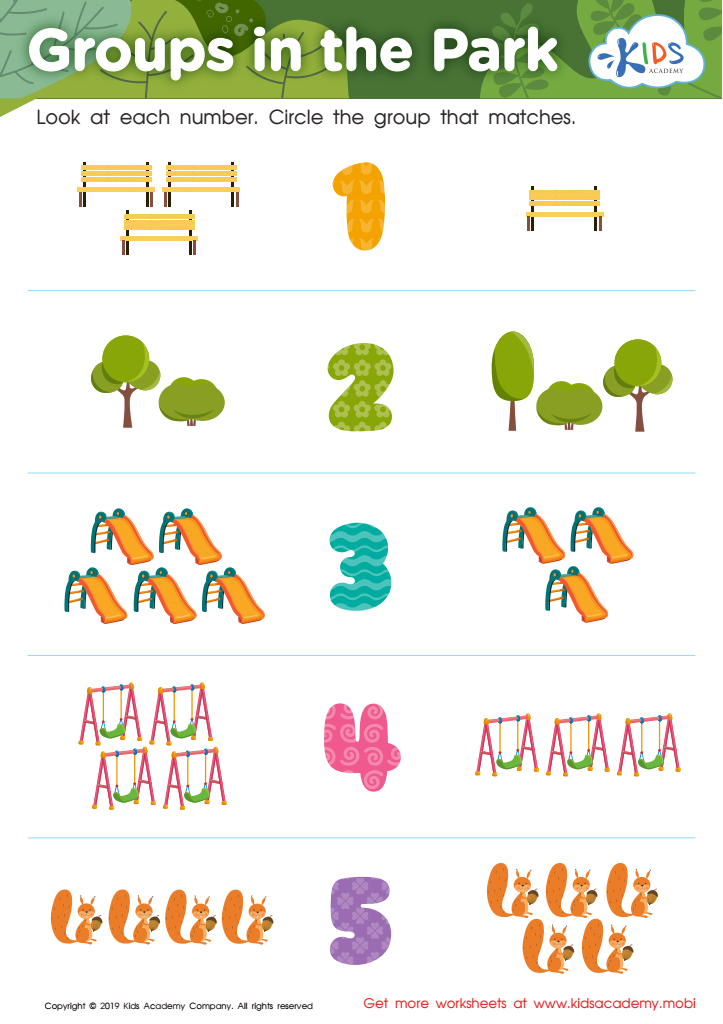
Groups in the Park Worksheet
 Assign to My Students
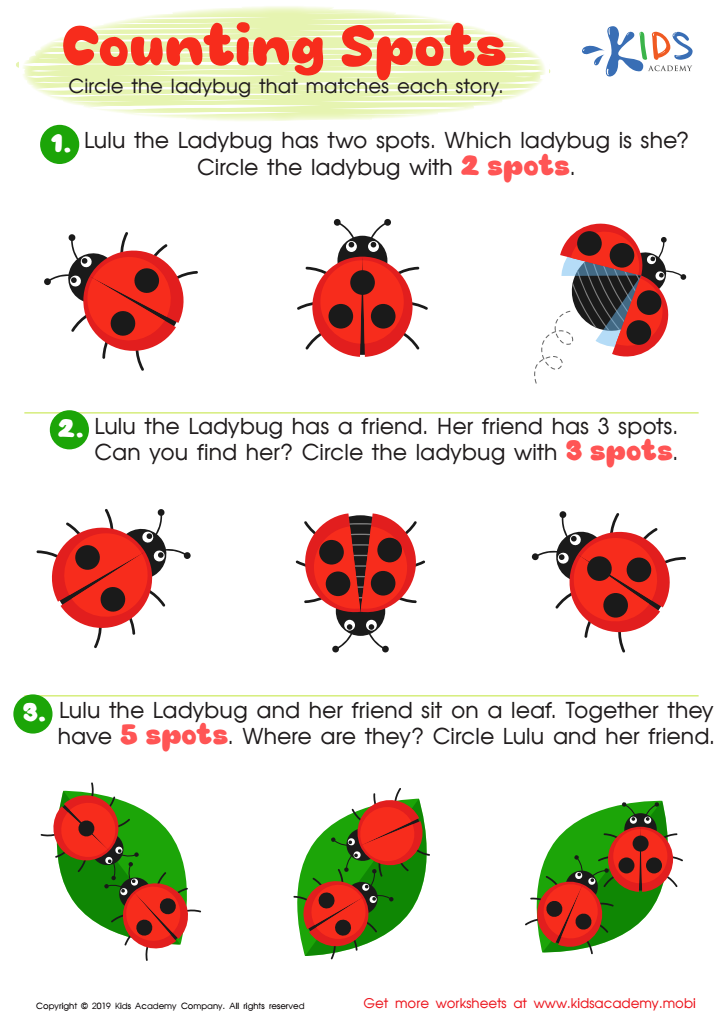
Counting Spots Worksheet
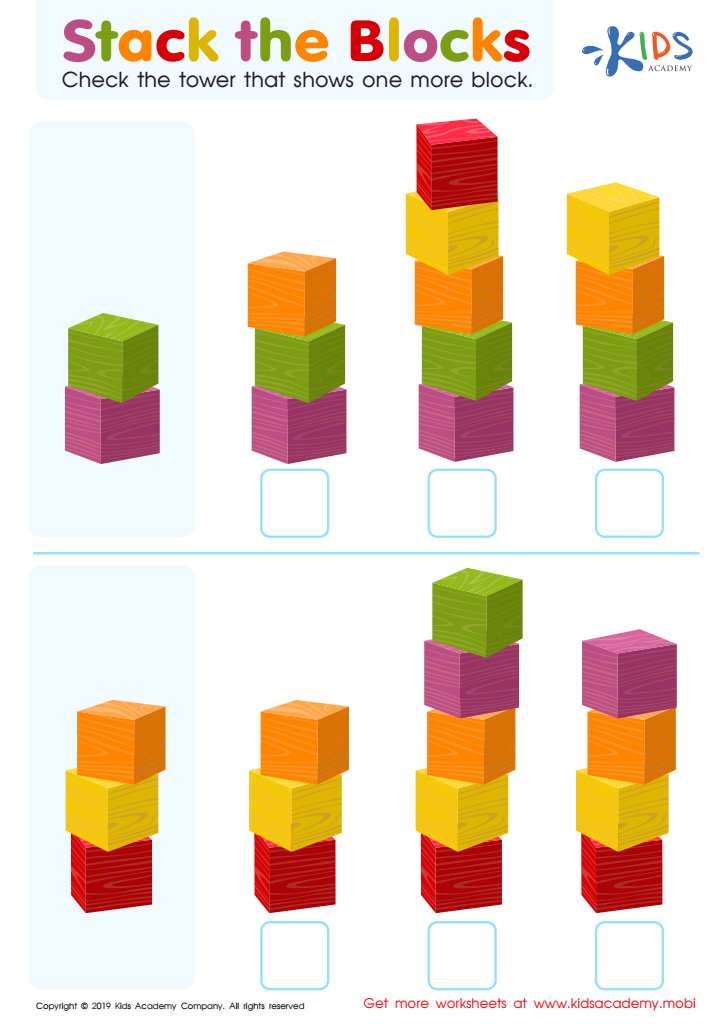
Stack the Blocks Worksheet
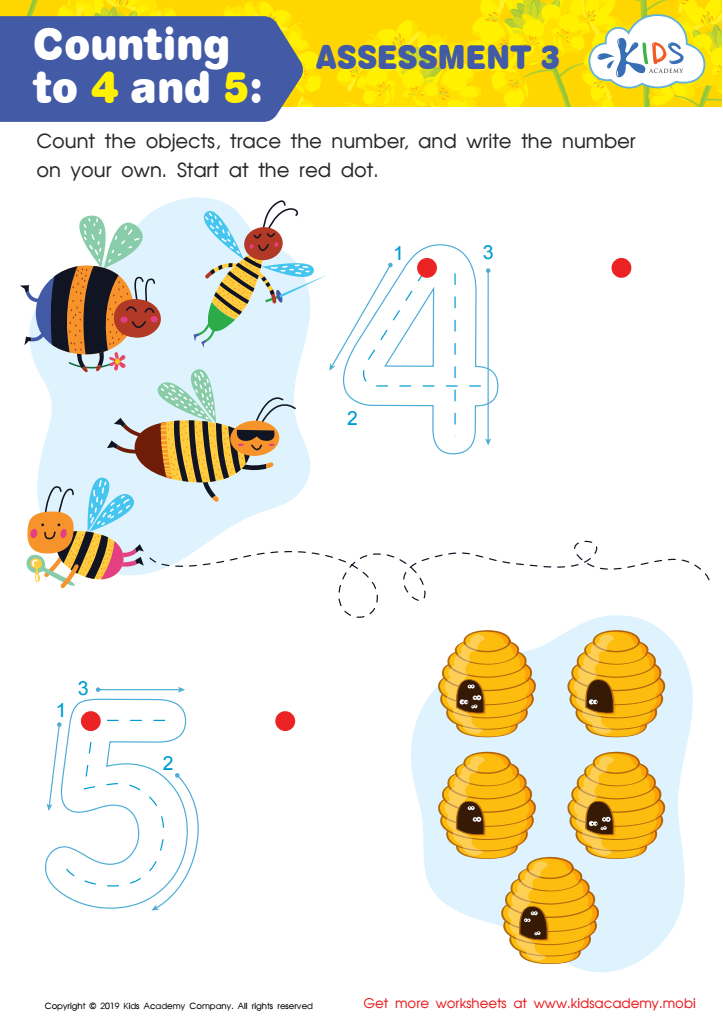
Counting to 4 and 5: Assessment 3 Worksheet








Number comparison for ages 4-6 is foundational for children’s mathematical development. At this young age, understanding numbers 0–10 and being able to compare them builds critical skills that support future learning. Number comparison enhances children's ability to discern differences and similarities between quantities, an essential cognitive skill. Recognizing that 5 is more than 3 but less than 8, for example, helps kids develop a sense of number magnitude, which is crucial for arithmetic and higher-level math concepts.
This skill also strengthens problem-solving abilities. When children learn to compare numbers, they start to grasp the concept of relative quantity, which is used in everyday decision-making – like knowing they have more apples than oranges or fewer toys than their friend. These comparisons can also drive home the practicality of numbers in real life.
Additionally, mastering number comparison supports language development. Phrases like "more than", "less than", and "equal to" deepen their comprehension of mathematical language, enhancing overall communication skills. It encourages logical thinking and reasoning, paramount across all areas of learning.
Parents and teachers should focus on number comparison as it lays a strong groundwork for numerical literacy, promoting confidence in math that extends beyond early childhood into formal schooling and everyday life.