Basic Addition Numbers up to 100 Worksheets for Ages 4-6
3 filtered results
-
From - To
Introduce your child to the world of math with our "Basic Addition Numbers up to 100 Worksheets for Ages 4-6". Designed for young learners, these engaging worksheets help develop foundational addition skills in a fun and interactive way. Each sheet is carefully crafted to build confidence and enhance numerical understanding through colorful exercises and simple problems. Perfect for early grade students, these resources serve as an excellent tool for parents and educators to support a young learner's math journey. Boost your child's arithmetic skills with tasks that are both educational and entertaining, providing an essential stepping stone for future mathematical success.
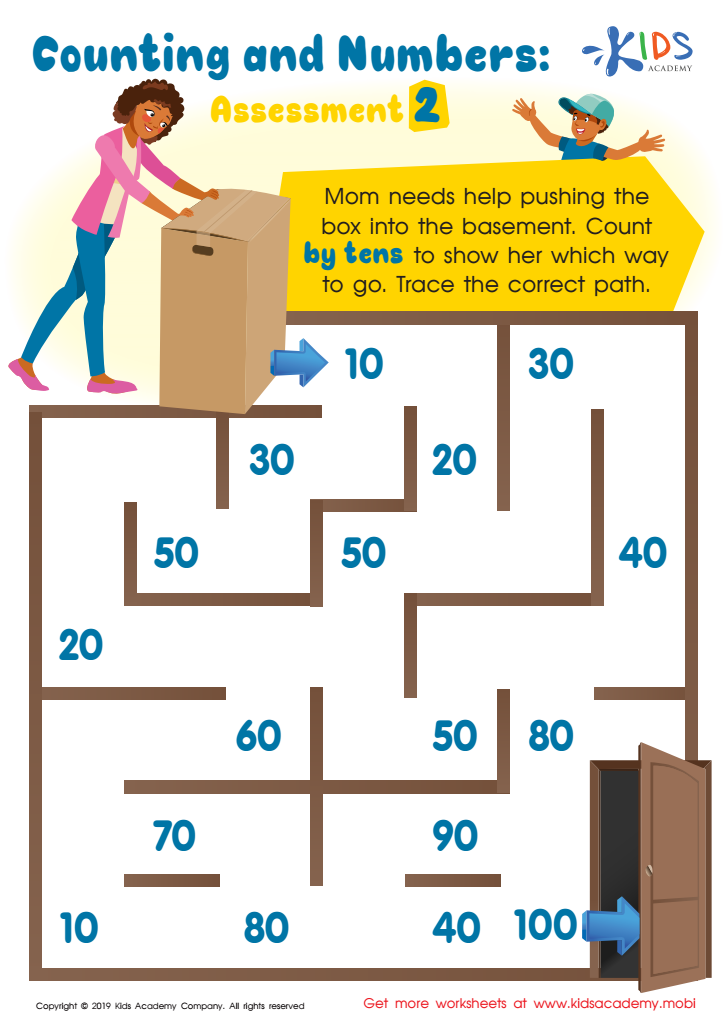
Counting and Numbers: Assessment 2 Worksheet
 Assign to My Students
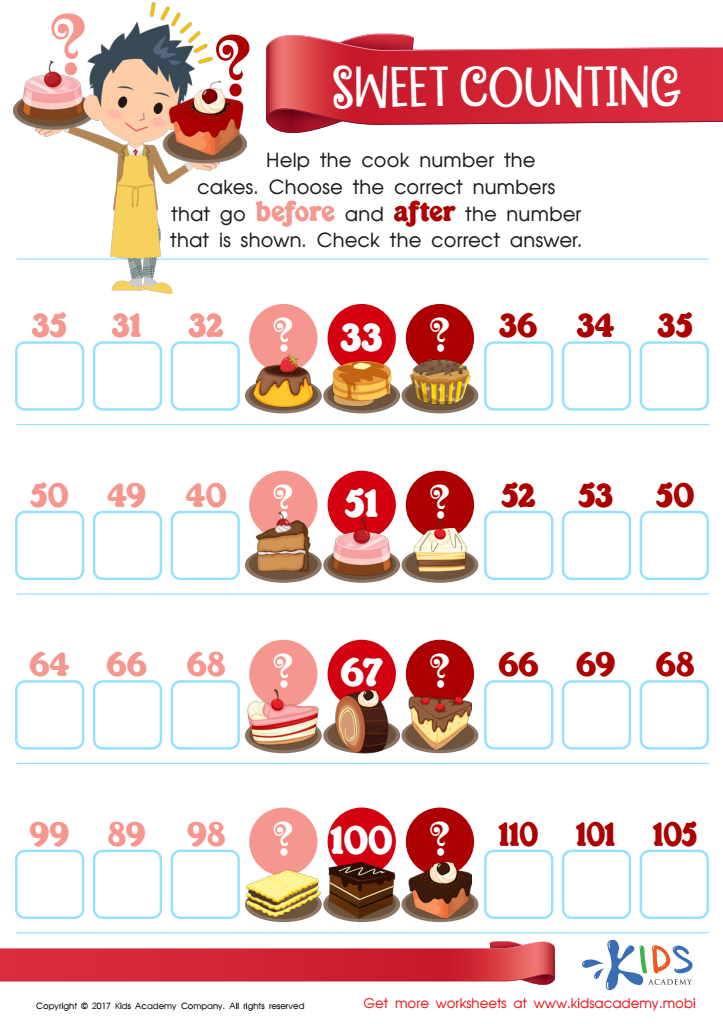
Sweet Counting - Part 1 Worksheet
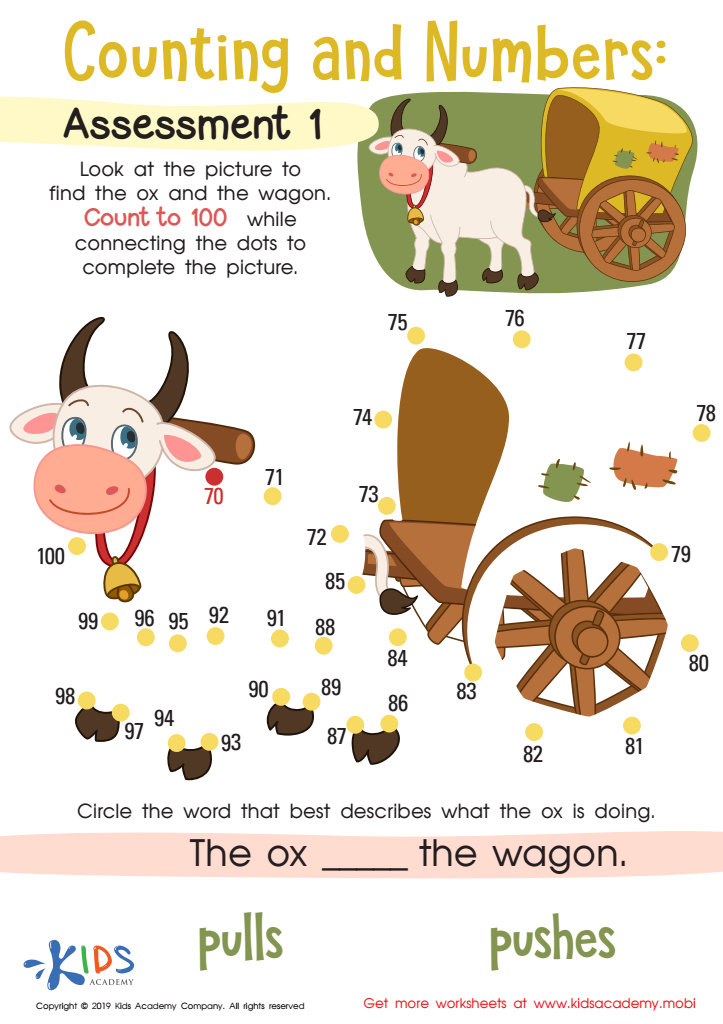
Counting and Numbers: Assessment 1 Worksheet







%20(1).jpg)
Basic addition up to 100 is fundamental to a child's early mathematical development, and emphasizing its importance offers numerous benefits. At ages 4-6, children are highly receptive to learning new concepts, and introducing basic addition during this critical period establishes a strong foundation for future mathematical learning.
Firstly, understanding addition enhances cognitive development. It encourages kids to think logically, recognize patterns, and develop problem-solving skills essential for complex mathematical concepts later in their education. These skills are transferrable across subjects and essential for academic success.
Secondly, proficiency in basic addition supports daily life skills. Young children encounter situations requiring arithmetic, such as counting objects, understanding time, and sharing equally. Solid addition skills make these everyday tasks easier and more intuitive.
Moreover, early competency in math fosters confidence and a positive attitude towards learning. Children who grasp basic arithmetic concepts feel accomplished and less anxious about math as they progress to more advanced topics. This confidence can significantly influence their overall academic performance and love for learning.
For both parents and teachers, promoting basic addition suggests a supportive, proactive role in children's intellectual growth. Fun, engaging methods, such as games or practical activities, make learning math enjoyable, nurturing enthusiasm and a lifelong appreciation for mathematics.








