Number Recognition Numbers up to 100 Worksheets for Ages 4-6 - Page 2
27 filtered results
-
From - To
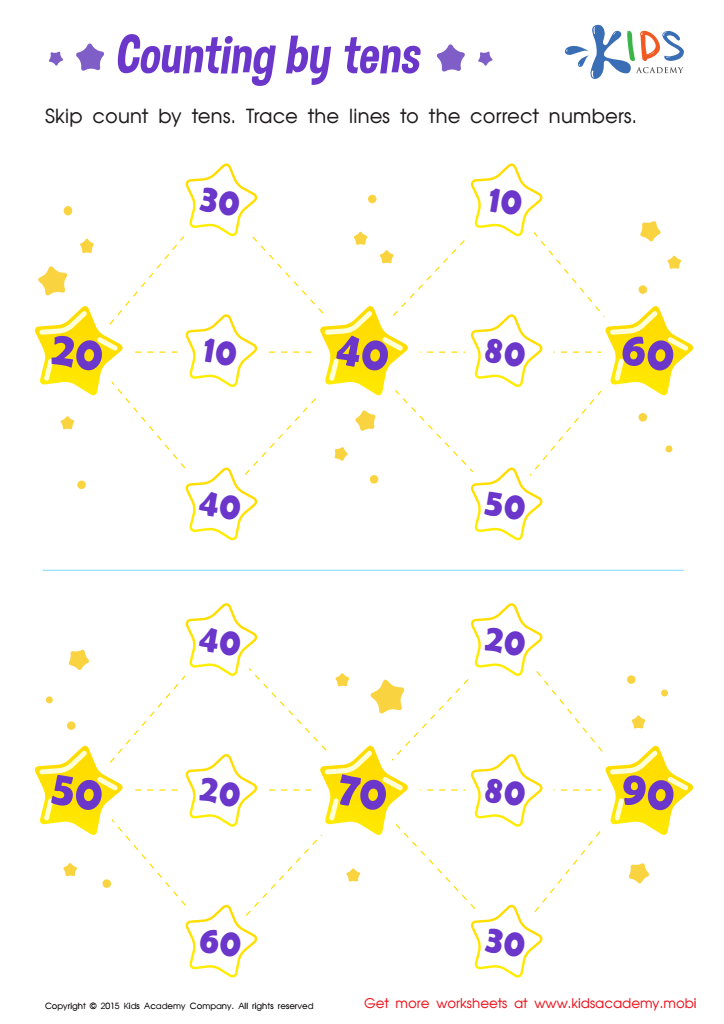
Learn Dozens: Counting by Tens Printable
 Assign to My Students
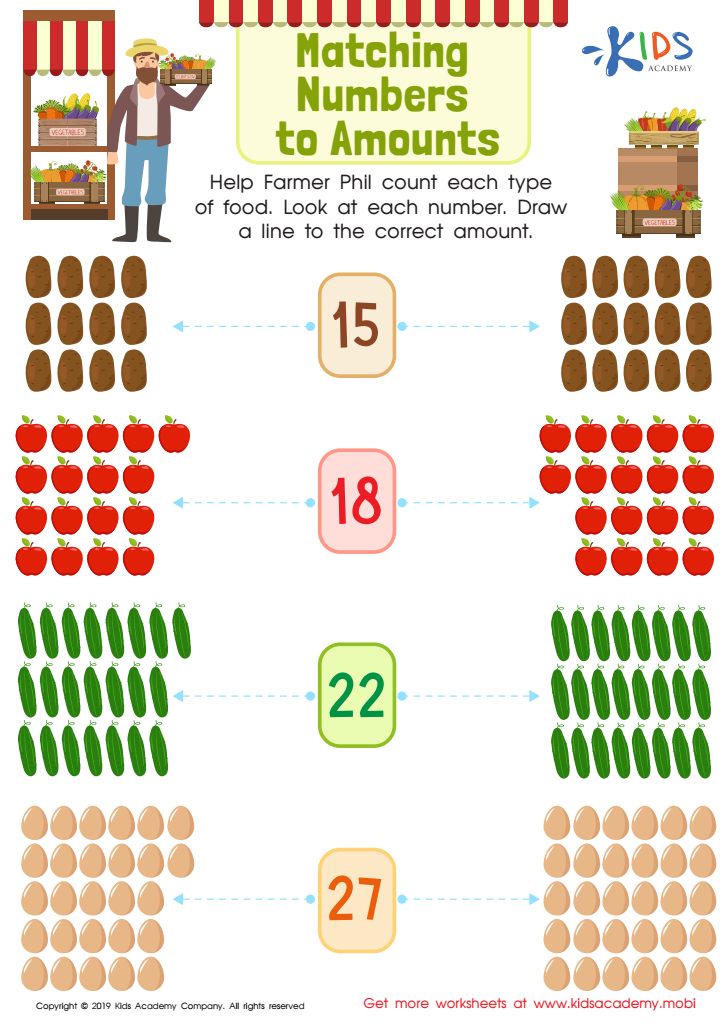
Matching Numbers to Amounts Worksheet

Counting on the City Skyline: Dot-to-Dot Worksheet








Number recognition up to 100 for children ages 4-6 is a foundational skill that lays the groundwork for future math success. At this early stage, children’s brains are highly receptive to learning new concepts, and understanding numbers is crucial. When children learn to recognize numbers up to 100, they not only memorize the symbols but also start developing an understanding of quantitative relationships, patterns, and sequences.
This recognition facilitates a smoother transition into more complex mathematical operations such as addition, subtraction, and eventually multiplication and division. It also enhances their ability to comprehend numerical data in everyday life, cultivating skills such as counting objects, telling time, and understanding money.
For teachers and parents, fostering number recognition early on can identify any learning difficulties a child might have, enabling timely intervention. Moreover, number recognition is often intertwined with literacy skills, as children learn to read and write the number names, enhancing their overall language development.
Incorporating playful and engaging activities around numbers, such as counting games, puzzles, and songs, can make learning enjoyable. Building a solid numerical foundation in early childhood sets the stage for more advanced math topics and helps develop lifelong critical thinking and problem-solving skills.