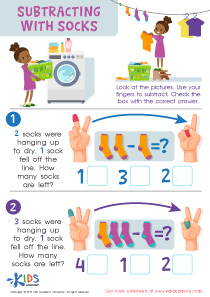
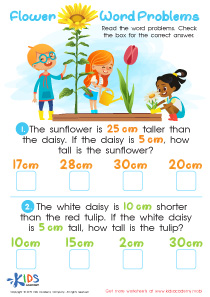
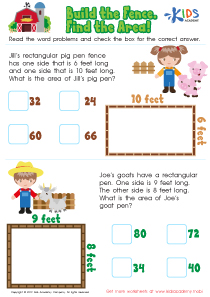
Logical Reasoning Two-step Word Problems Worksheets for Ages 4-6
3 filtered results
-
From - To
Discover our engaging Logical Reasoning Two-step Word Problems Worksheets designed specifically for children aged 4-6! These worksheets help young learners develop essential problem-solving skills through fun and interactive two-step word problems. Each activity encourages critical thinking and logical reasoning as kids work through real-world scenarios involving addition and subtraction. Perfect for home or classroom use, our resources promote early math proficiency while fostering independence and confidence in young mathematicians. Let your little ones explore the exciting world of logical reasoning and watch them thrive! Start their journey to becoming skilled problem solvers today with our expertly crafted worksheets.
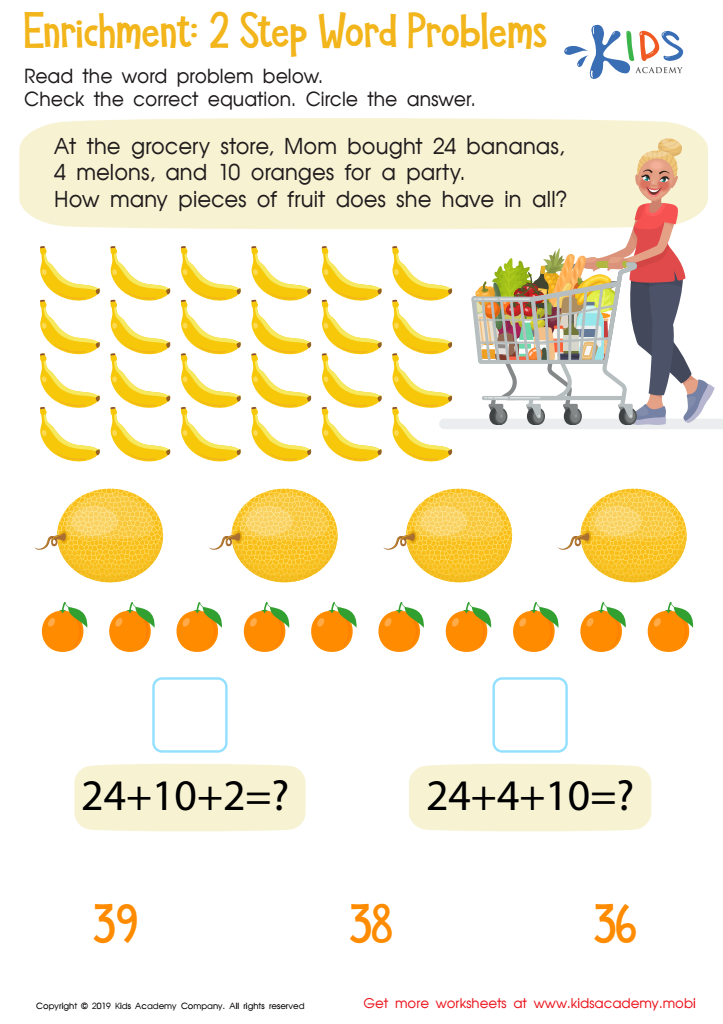
Enrichment -2 Step Word Problems Worksheet
 Assign to My Students
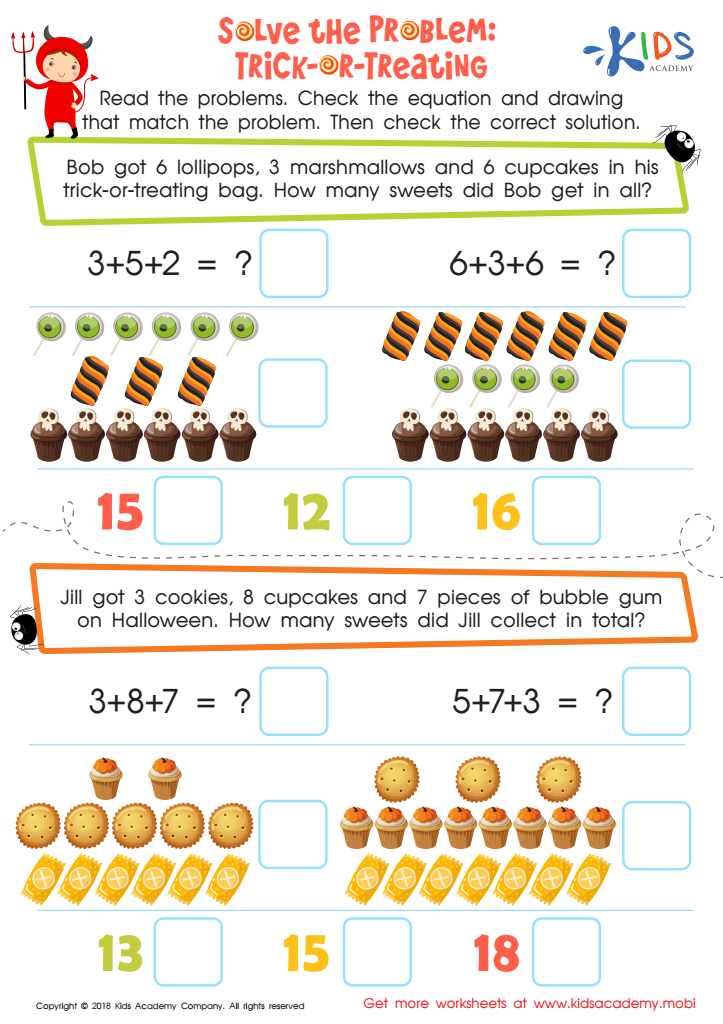
Solve the Problem: Trick–or–treating Worksheet
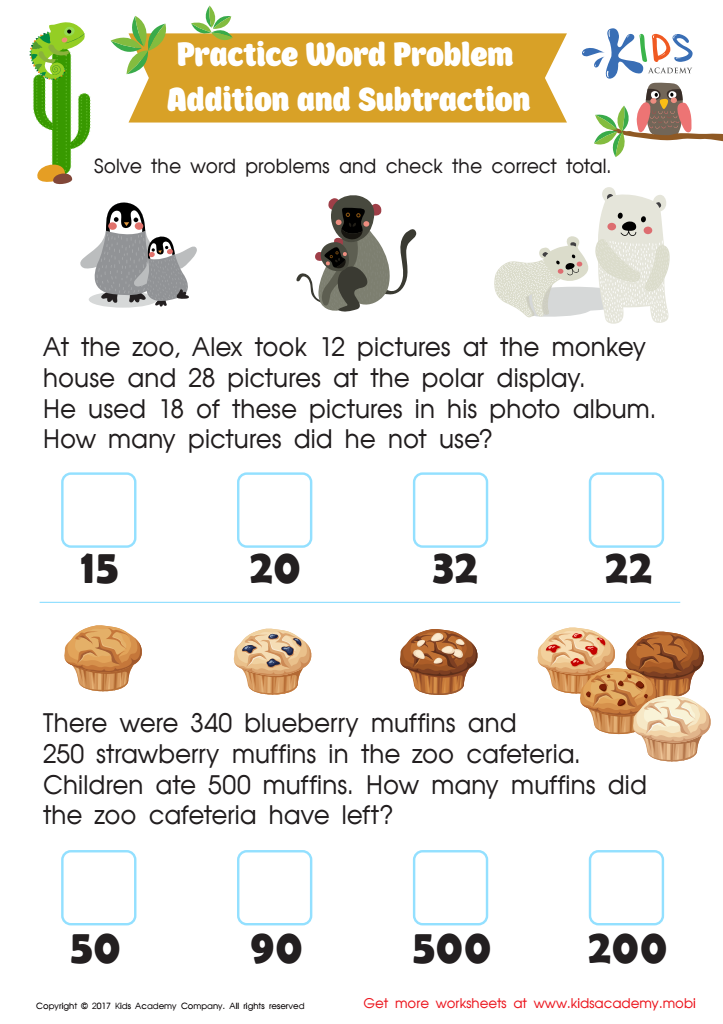
Addition and Subtraction: Word Problems Worksheet



Logical reasoning two-step word problems are essential for children aged 4-6, laying a foundational skill set that benefits academic progress and life skills. At this developmental stage, children are naturally curious and eager to learn how the world operates. Engaging them with two-step word problems enhances their critical thinking and problem-solving skills. These problems involve reasoning through a scenario, devising a plan, and executing it, fostering cognitive development.
Teaching logical reasoning through word problems encourages children to break down complex ideas into manageable steps, promoting meticulous thinking and strategy formulation. For parents and teachers, these skills are not only critical for mathematics but also enhance overall academic performance across subjects, as logical reasoning applies to reading comprehension and science inquiry as well.
Moreover, substantial reasoning abilities enhance emotional intelligence by helping children make decisions that involve consequences and outcomes. This skill is pivotal as it promotes resilience in facing challenges. By caring about logical reasoning in this age group, parents and teachers aid children in building confidence, cultivating curiosity, and developing essential life skills they will use throughout their education and beyond. Investing in this early skill development ensures a brighter, more proficient learning trajectory for children.