
Handwriting practice Building Vocabulary Worksheets for Ages 4-6
4 filtered results
Difficulty Level
Grade
Age
-
From - To
Subject
Activity
Standards
Nurture early literacy skills with our Handwriting Practice Building Vocabulary Worksheets for Ages 4-6. Designed to blend vocabulary development with handwriting practice, these engaging worksheets help young learners form letters correctly while expanding their word knowledge. Each worksheet is thoughtfully crafted to capture the attention of kids, offering a variety of fun activities such as tracing, matching, and drawing. Perfect for preschool and kindergarten students, these resources lay a solid foundation for reading and writing. Help your child boost their confidence and develop essential skills with these exciting, educational worksheets on Kids Academy.
Favorites
With answer key
Interactive
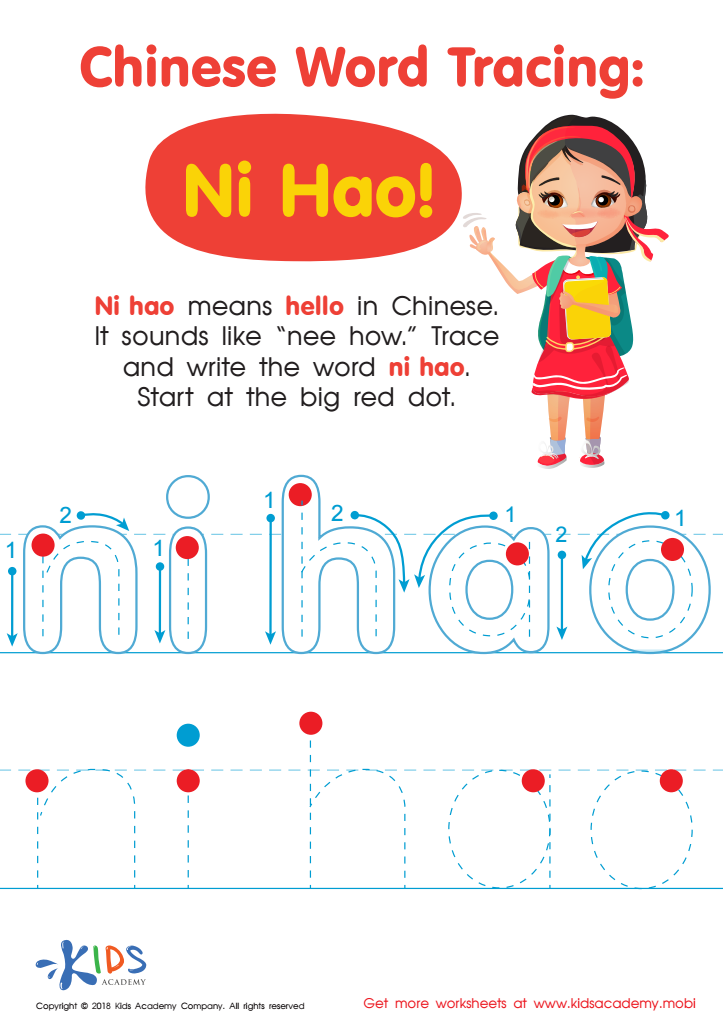
Chinese Word Tracing: Ni Hao Worksheet
Kids can learn to say "Ni hao" with this fun tracing worksheet. The free PDF helps kids write and say the Chinese greeting while also developing fine-motor, handwriting and reading skills. With red guide dots and traceable lines, kids will learn top-to-bottom and left-to-right patterning for fluent reading.
 Assign to My Students
Chinese Word Tracing: Ni Hao Worksheet
Worksheet











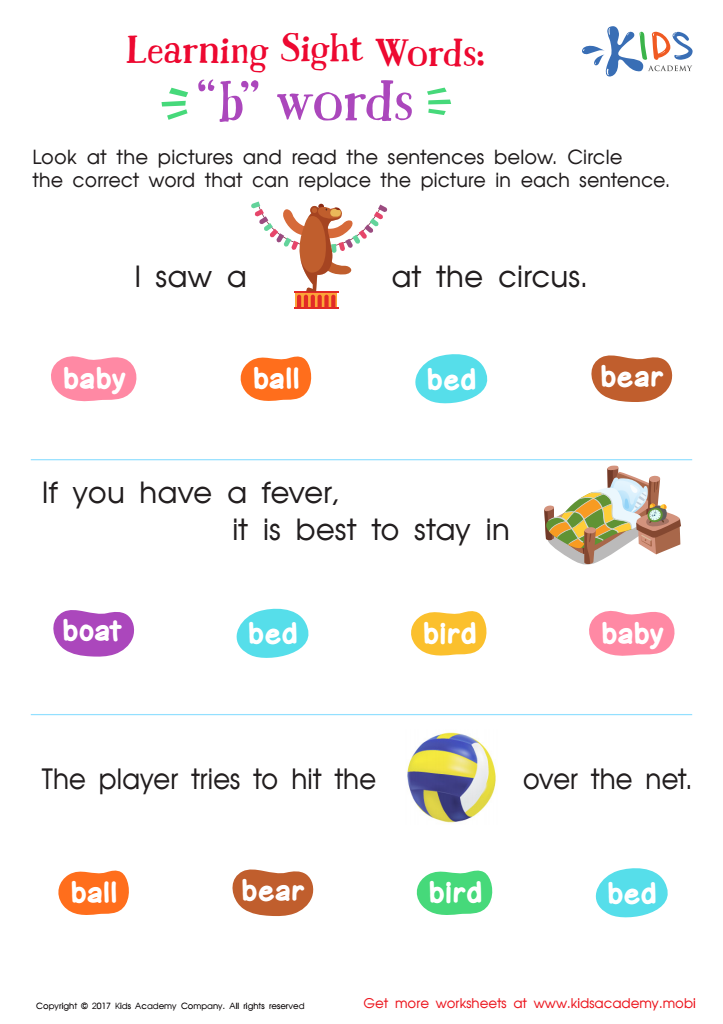
"B" Words Printable Sight Words Worksheet
Kids will learn sight words quickly with this fun worksheet! "B" Words offers guided practice with simple sentences and pictures. Build your child's reading confidence with this helpful worksheet and watch them become a master!
"B" Words Printable Sight Words Worksheet
Worksheet
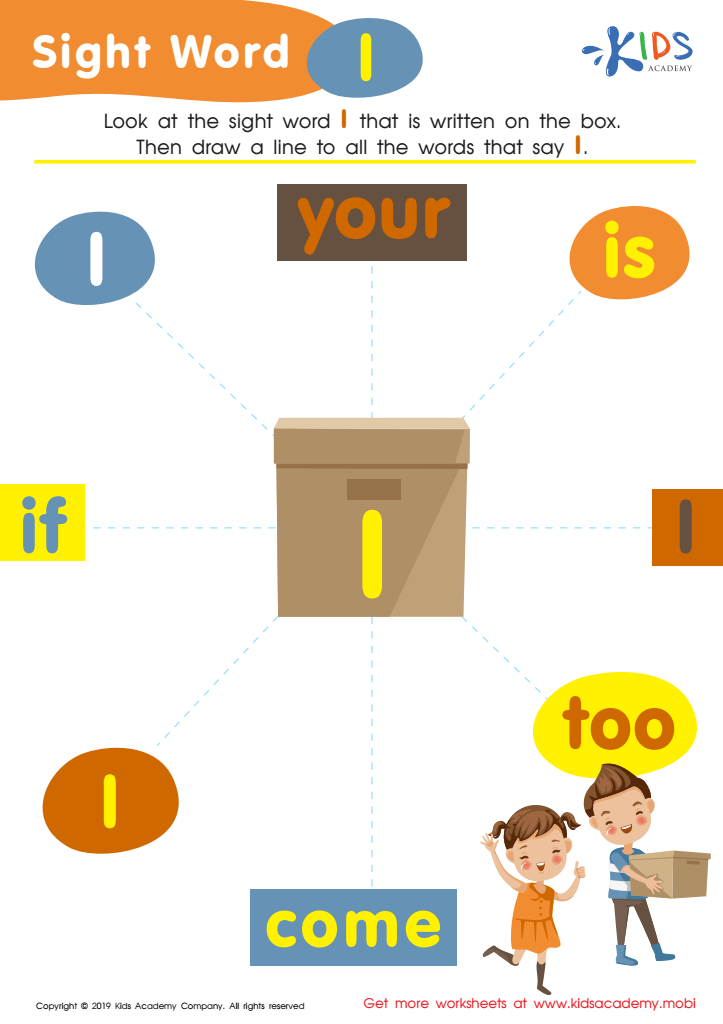
Sight Word I Worksheet
Recognizing the sight word 'I' is harder than it looks! When kids are learning to read, they understand 'I' by its sound, not as a word. This free worksheet gives them practice with 'I', letting them work on their fine motor skills too. They'll join 'I' to shapes containing the same letter. It's a great way to give kids confidence in their reading skills!
Sight Word I Worksheet
Worksheet
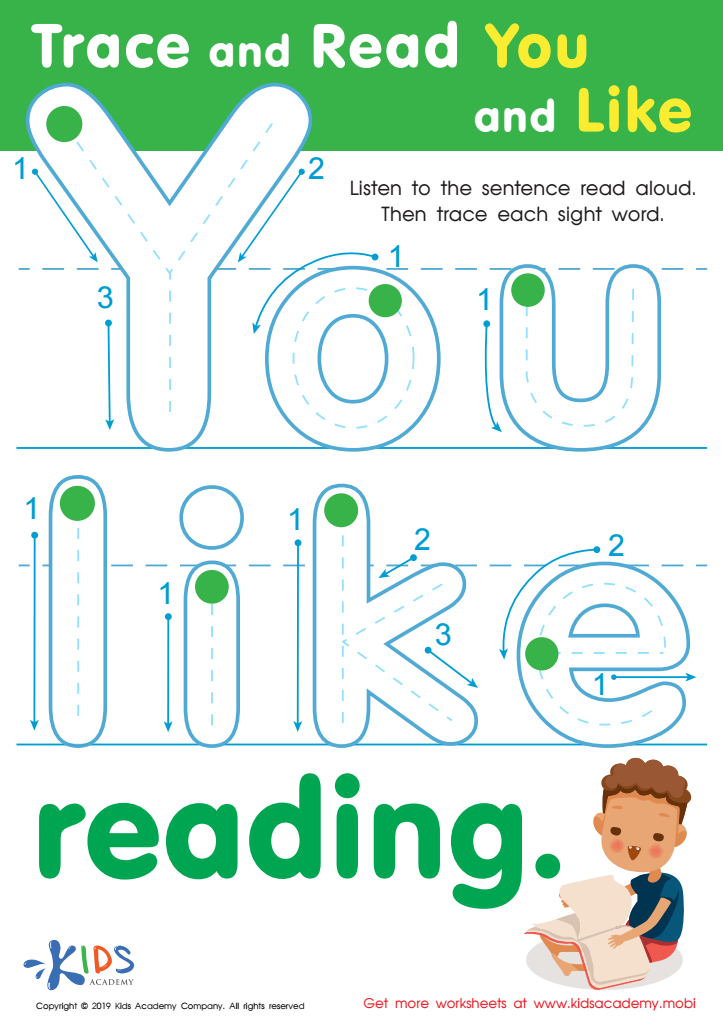
Trace Read You Like Worksheet
Sight words help children become confident and fluent readers. This free worksheet encourages success with basic 'you' and 'like' words. Writing them with traceable lines and green dots shows motion and builds sight word vocabulary. Help your child master the basics and boost their reading progress!
Trace Read You Like Worksheet
Worksheet
Join Kids Academy for Free
Who is primarily going to use this learning content?







Handwriting practice and vocabulary building are vital components of early childhood education, and parents or teachers should place significant emphasis on these areas for children aged 4-6. At this developmental stage, children are particularly receptive to new forms of learning. Handwriting practice helps fine-tune fine motor skills, improves hand-eye coordination, and enhances cognitive development. As children learn to control their hand movements while forming letters, they simultaneously foster patience, concentration, and discipline.
Building vocabulary during these formative years lays a foundation for successful communication skills. A robust vocabulary supports reading comprehension, critical thinking, and expressive speech. Children with a rich bank of words can better articulate their thoughts, emotions, and needs, leading to greater self-confidence and social interactions.
Integrating handwriting practice with vocabulary building can make learning more engaging and effective. For instance, children can write new words they learn, solidifying their understanding through repetition. Moreover, these activities can be tailored to be playful and inclusive, leveraging games, storytelling, and visual aids to captivate young minds.
In essence, focusing on handwriting practice and vocabulary development at this crucial age can foster essential life skills, setting children up for academic success and effective communication in their formative years and beyond.








