Motor skills development Building Vocabulary Worksheets for Ages 4-6
3 filtered results
-
From - To
Enhance your child's learning experience with our Motor Skills Development Building Vocabulary Worksheets, designed specifically for ages 4-6. These engaging worksheets seamlessly combine motor skill exercises with vocabulary-building activities, helping children develop coordination, dexterity, and language proficiency in a fun, interactive way. Each worksheet promotes fine motor skills through tracing, cutting, and coloring tasks that align with thematic vocabulary topics, making learning enjoyable. Ideal for preschool and early elementary settings, our resources encourage creativity while reinforcing word recognition and understanding. Equip your little learners with the foundational skills they need for lifelong success in reading and communication! Explore now for exciting educational adventures!
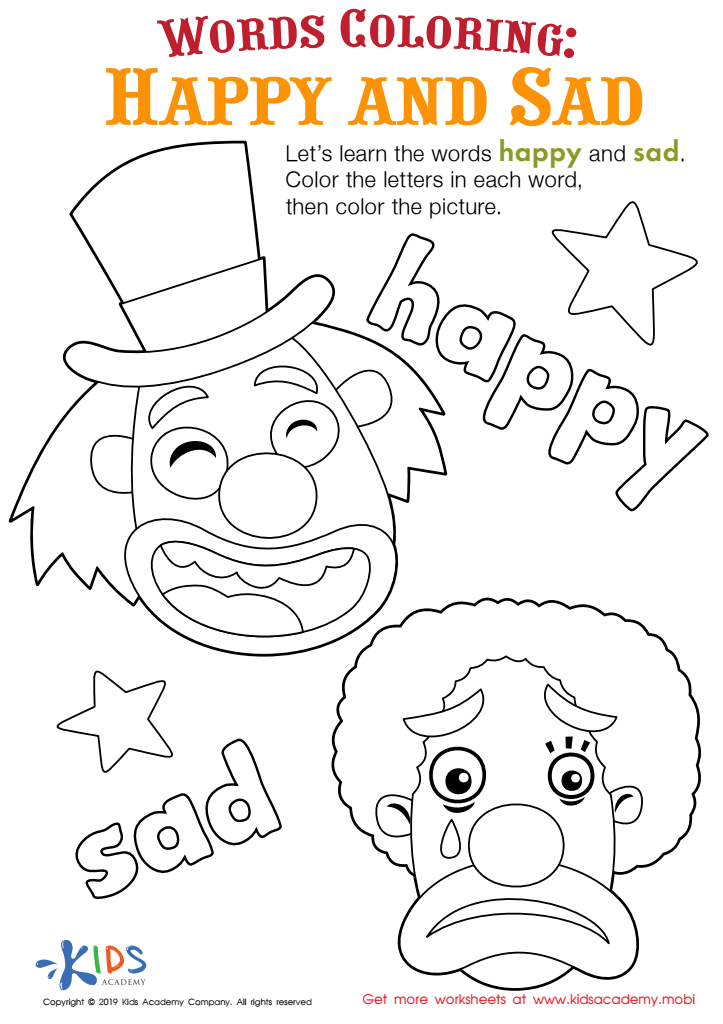
Happy and Sad Words Coloring Worksheet
 Assign to My Students











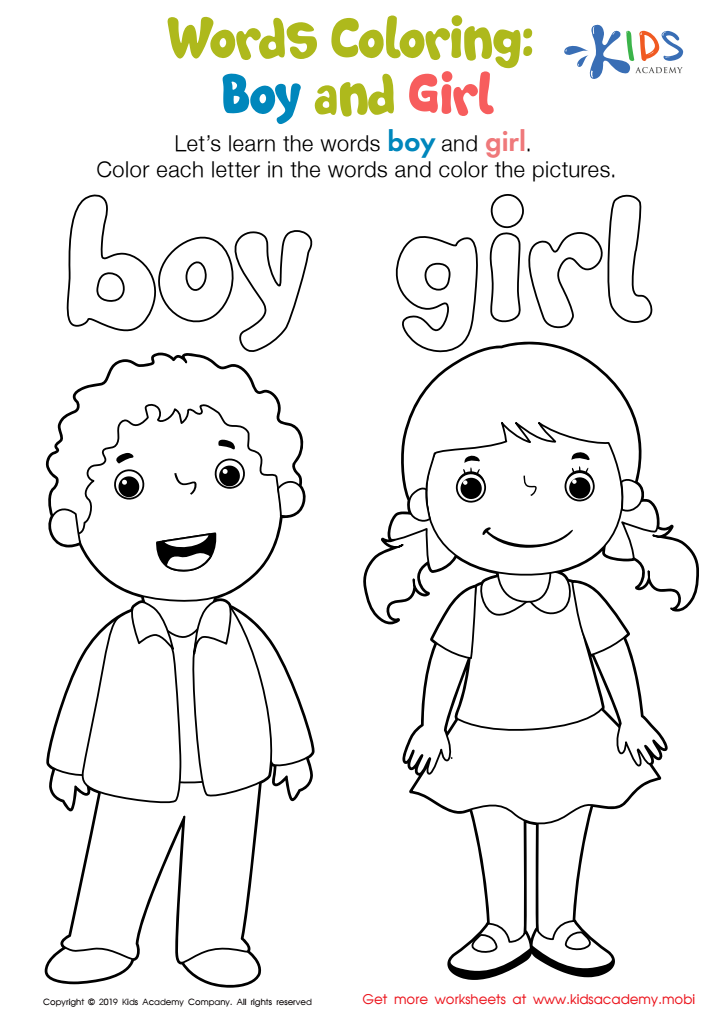
Boy and Girl Words Coloring Worksheet
Assign to My Students








Parents and teachers play a crucial role in the development of motor skills and vocabulary in children aged 4-6, as these skills form the foundation for future learning and everyday activities. Motor skills, such as fine and gross motor abilities, are essential for children to develop coordination and confidence in their physical capabilities, enabling them to perform tasks like writing, drawing, or participating in games. Improved motor skills enhance children's ability to explore their environment, socialize with peers, and express themselves physically.
Simultaneously, vocabulary development is vital during these formative years as children's brains are primed to absorb language quickly. A strong vocabulary enhances their communication skills, promotes literacy, and fosters cognitive development. Engaging in conversations, reading books, and providing rich verbal interactions can significantly boost a child's language acquisition.
When motor skills and vocabulary grow together, children can articulate their thoughts and feelings more effectively, which promotes self-expression and emotional intelligence. Furthermore, these skills lay the groundwork for success in school and in life. Parents and teachers should prioritize these areas to create well-rounded, capable, and confident learners equipped to navigate the world around them. Active involvement nurtures children's potential and empowers their lifelong educational journey.








