Vocabulary expansion Building Vocabulary Worksheets for Ages 4-6 - Page 2
27 filtered results
-
From - To
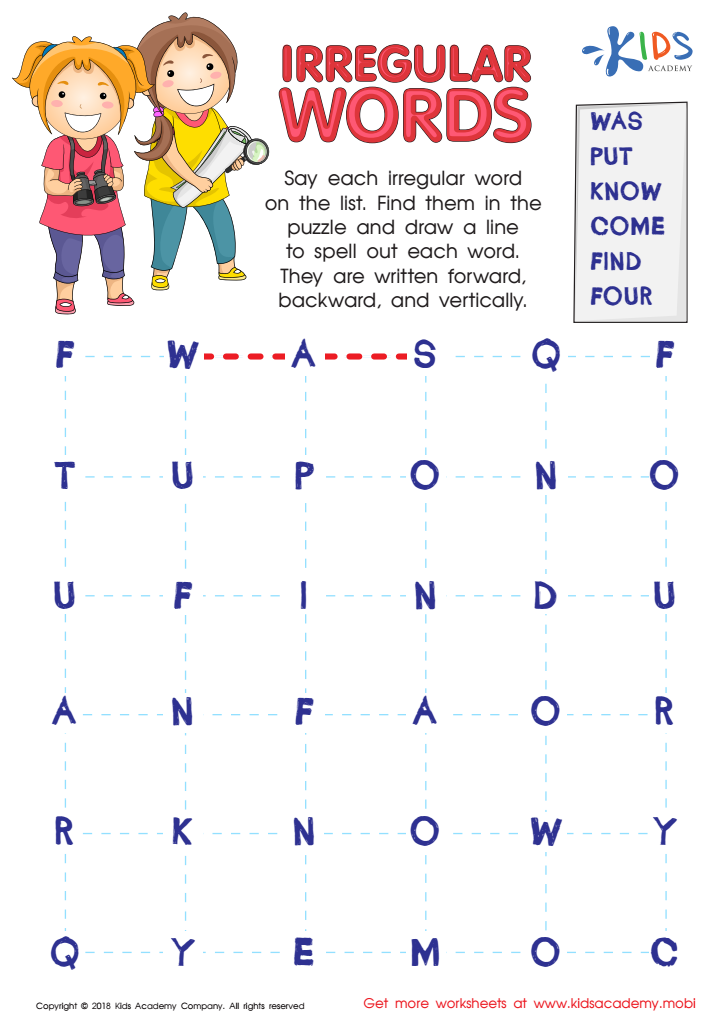
Irregular Words Worksheet
 Assign to My Students











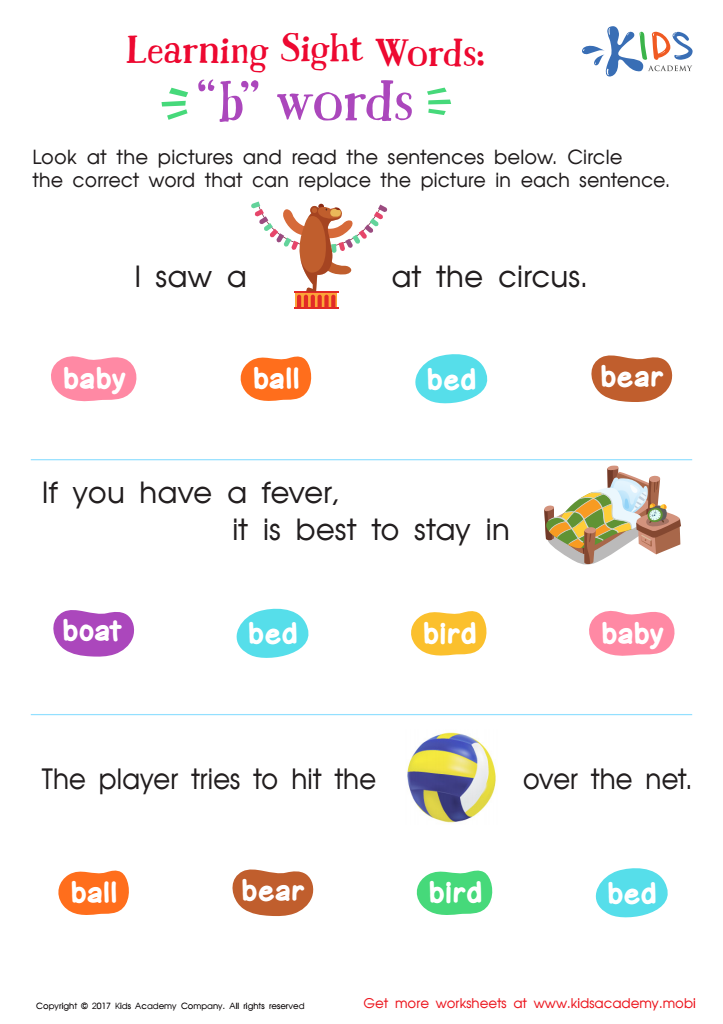
"B" Words Printable Sight Words Worksheet
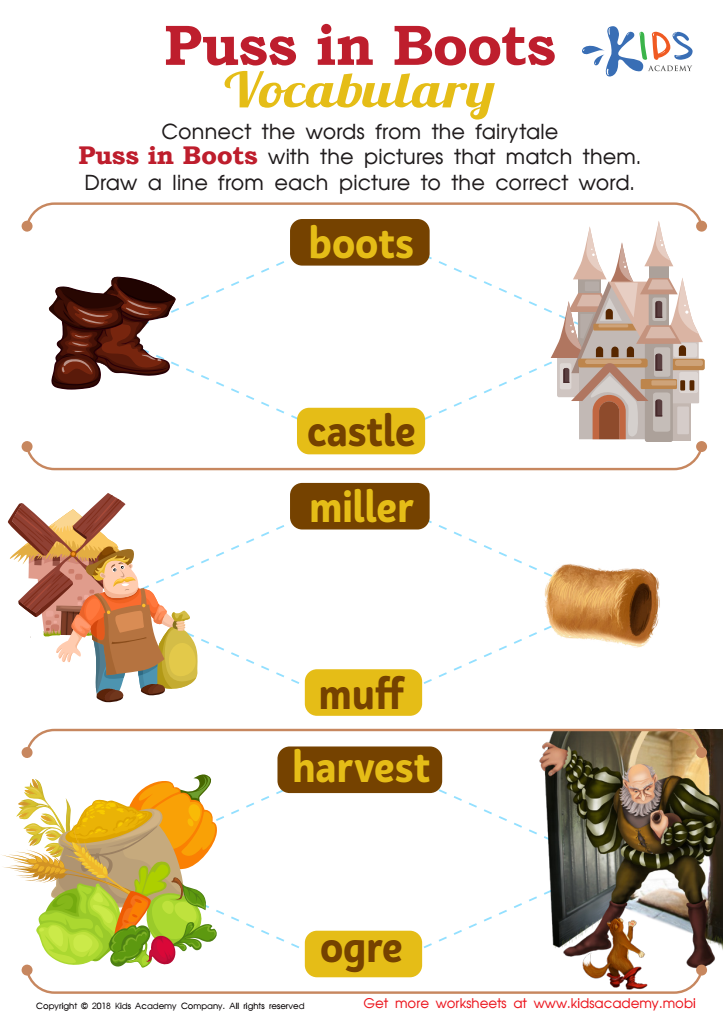
Puss in Boots Vocabulary Worksheet








Building vocabulary in children aged 4-6 is crucial for several key reasons. First, during these formative years, children’s brains are highly receptive to new information, making it an optimal time for language development. A rich vocabulary at an early age sets a strong foundation for effective communication, which is essential for social interactions and forming relationships.
Second, a robust vocabulary enhances reading skills. As children start to recognize and understand more words, they can read more fluently and comprehend what they read better. This early familiarity with words can foster a lifelong love for reading and learning, a critical component for academic success.
Third, vocabulary expansion contributes to cognitive development. Knowing and using a variety of words helps children to express their thoughts, feelings, and ideas more clearly and precisely. It also improves their critical thinking abilities as they learn to understand and articulate complex concepts.
Lastly, a strong vocabulary boosts self-esteem and confidence. When children can communicate effectively, they are more likely to participate in discussions, ask questions, and engage with peers and adults, thereby actively contributing to their learning environment.
Parents and teachers who prioritize vocabulary building are setting children on a path to success in numerous aspects of their lives—academic, social, and emotional.








