Reading Skills Reading Fiction Worksheets for Ages 4-6
5 filtered results
-
From - To
Unlock your child's imagination with our "Reading Skills Reading Fiction Worksheets for Ages 4-6." These expertly crafted worksheets are designed to bolster early reading abilities by engaging young minds through captivating stories and vibrant illustrations. Perfect for preschoolers and kindergarteners, our activities enhance vocabulary, comprehension, and storytelling skills. Each worksheet encourages children to identify key elements such as characters, settings, and narratives, fostering a deep love for reading from an early age. With fun exercises and interactive content, watch your child develop the foundational reading skills essential for academic success and a lifelong passion for literature.
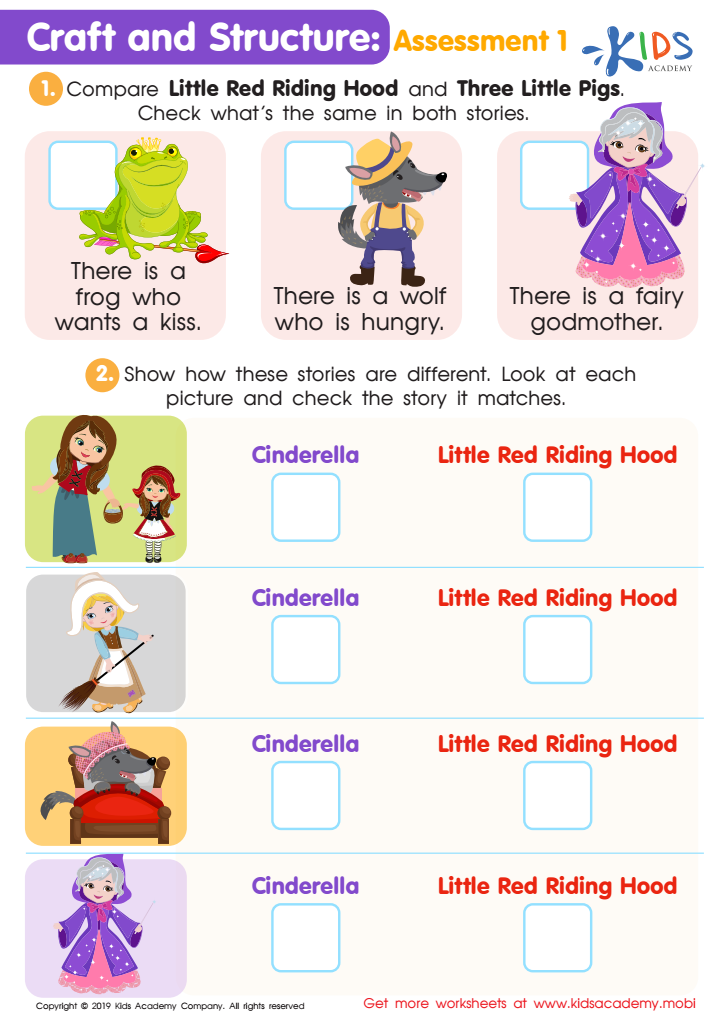
Craft and Structure: Assessment 1 Worksheet
 Assign to My Students
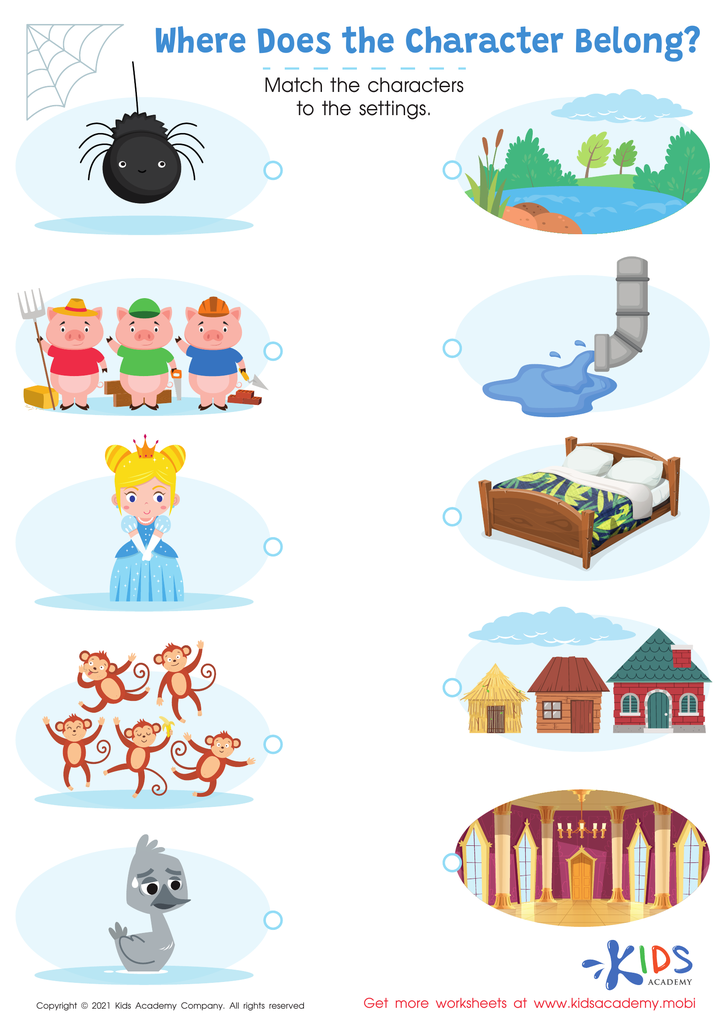
Where Does the Character Belong? Worksheet
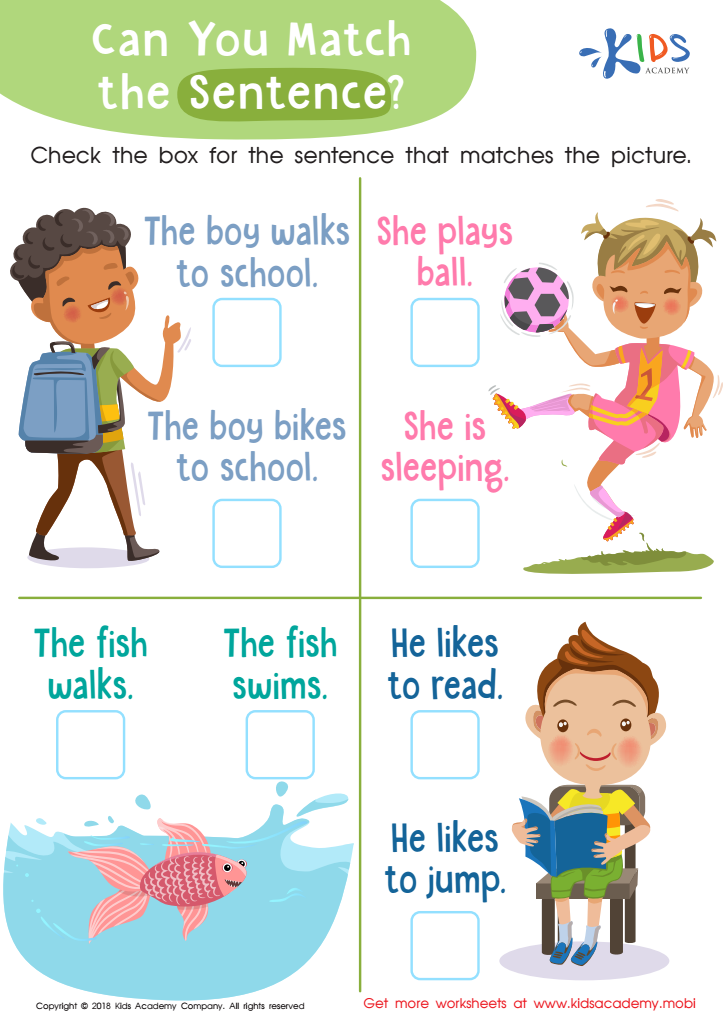
Can You Match the Sentence? Worksheet
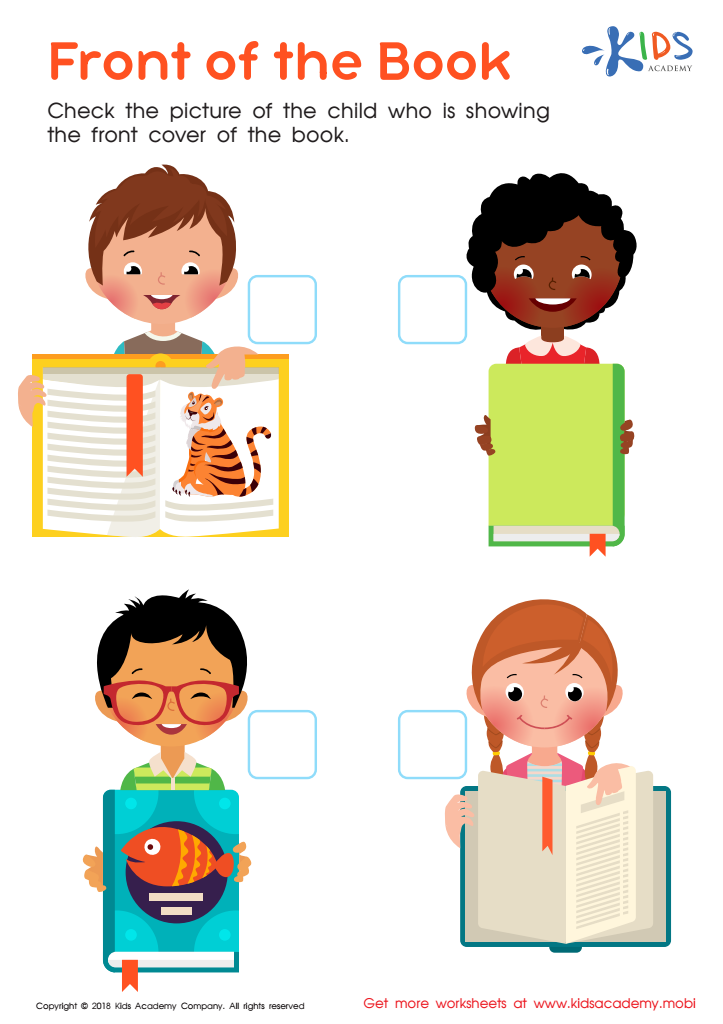
Front of the Book Worksheet
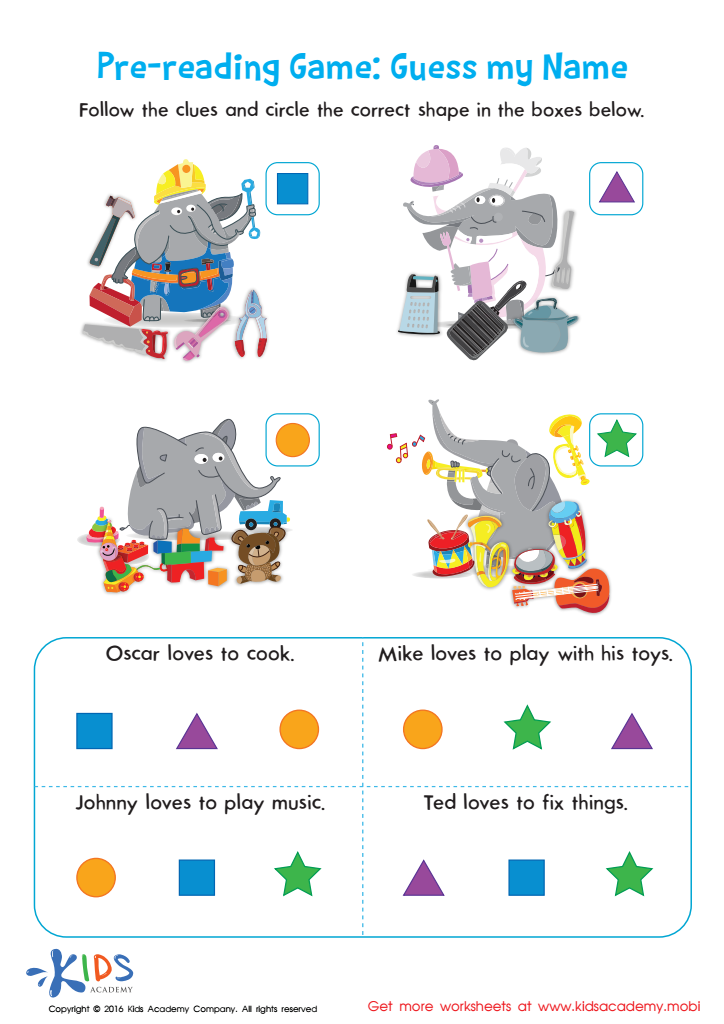
Pre Reading Worksheet Guess My Name








Reading fiction to children aged 4-6 plays a crucial role in their development, weaving cognitive and emotional benefits into their growth tapestry. At this formative stage, fiction stimulates imagination and creativity by transporting young readers to diverse, whimsical worlds. It enhances language acquisition, enriches vocabulary, and introduces sentence structure subtly through engaging narratives.
Moreover, fiction books often present moral stories that impart valuable life lessons. As children empathize with characters, they learn about friendship, kindness, and resilience. Emotional development is fostered through this empathy, teaching children to understand and manage their own emotions by recognizing them in story characters.
Additionally, reading fiction fosters concentration and improves listening skills, as young minds learn to follow and engage with stories. It builds foundational pre-reading skills such as print awareness and phonemic awareness, each a stepping stone towards successful independent reading later on.
Parents and teachers who invest in reading fiction with children create bonding opportunities and instill a lifelong love of reading. Establishing this interactive, joyful habit early sets the stage for continued academic success and a curious, open-minded engagement with the world. Therefore, paying attention to reading fiction at these crucial early stages is a commitment to nurturing well-rounded, intellectually and emotionally competent individuals.








