Color recognition Reading Non-Fiction Worksheets for Ages 4-6
3 filtered results
-
From - To
Explore our engaging Color Recognition Reading Non-Fiction Worksheets designed for children ages 4-6! These fun, interactive resources help young learners develop essential reading skills while discovering the vibrant world of colors. Each worksheet includes captivating non-fiction texts accompanied by colorful illustrations, making learning both enjoyable and informative. Kids will enhance their vocabulary, comprehension, and critical thinking as they identify and discuss colors in real-world contexts. Ideal for preschool and kindergarten settings, these worksheets foster a love for reading and support early literacy development. Download and inspire your child's curiosity today with our delightful color-themed activities! Perfect for home or classroom use.
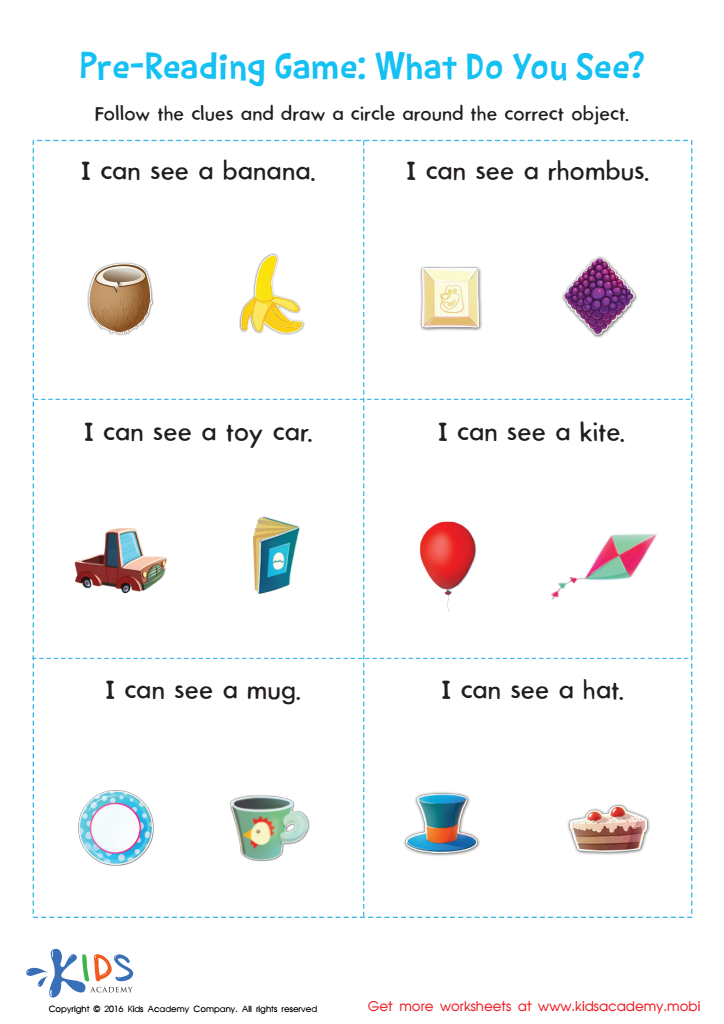
Pre–reading Worksheet: What Do You See?
 Assign to My Students
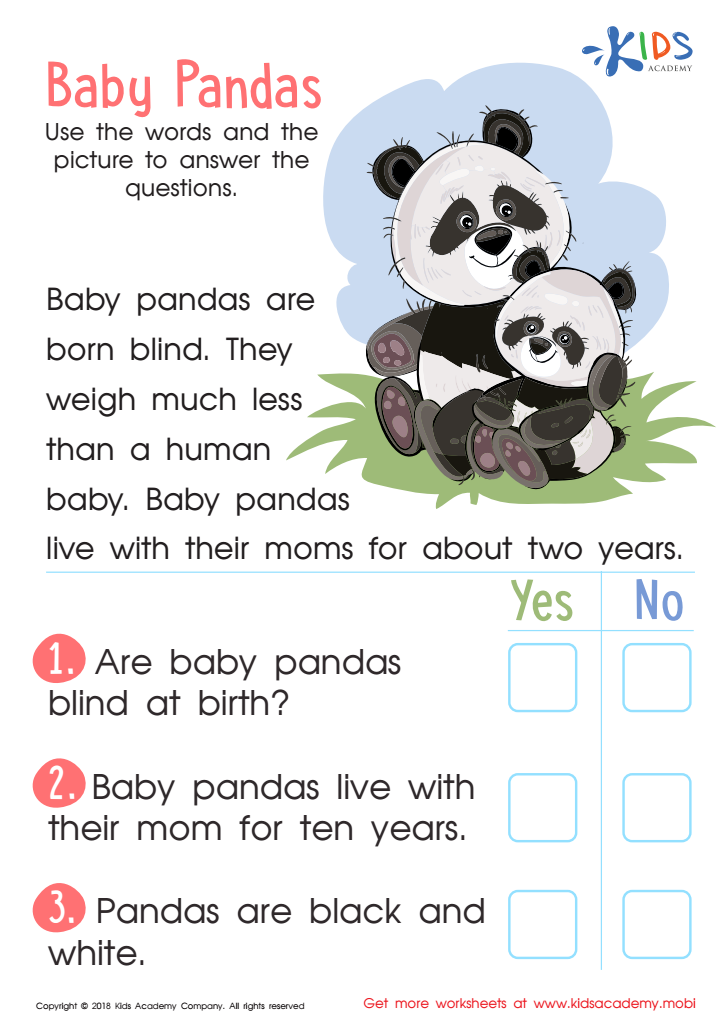
Baby Pandas Worksheet
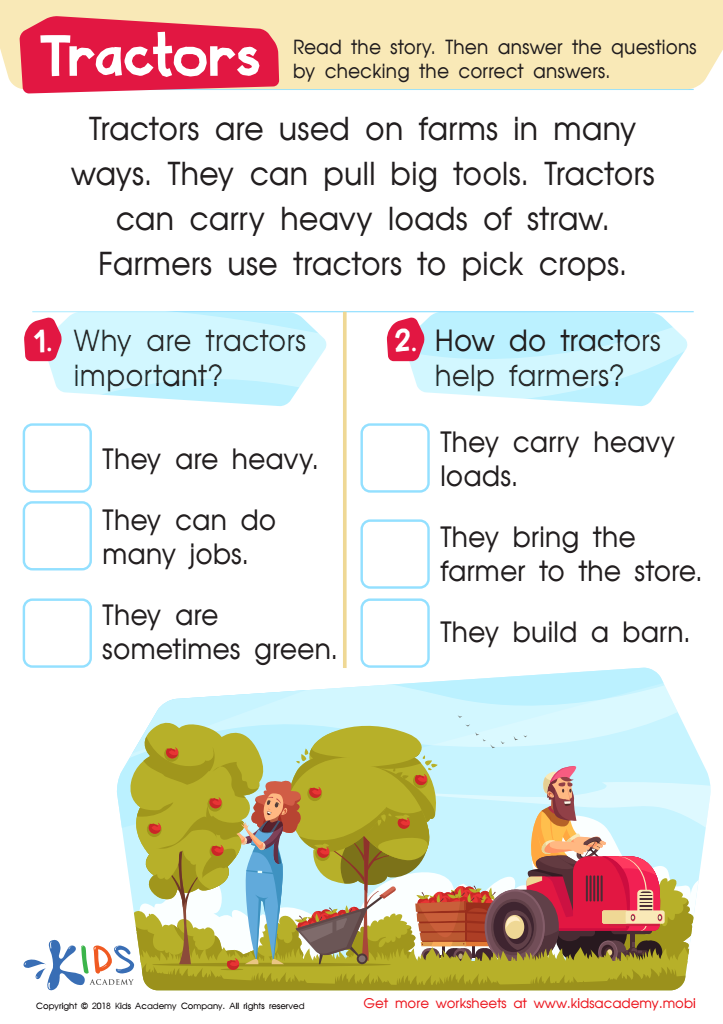
Tractors Worksheet








Color recognition is an essential foundational skill for young children, particularly in the 4-6 age range, and it plays a significant role in their overall learning and development. For parents and teachers, understanding its importance in reading nonfiction is crucial.
Firstly, recognizing colors helps children categorize and describe objects in their environment, enhancing their observational skills. In nonfiction texts, vivid colors often highlight key concepts, making it easier for young readers to grasp and retain new information. For example, a nonfiction book about animals may use different colors to classify habitats or species, sparking curiosity and making learning more engaging.
Additionally, color recognition supports language development. When children learn to identify and articulate colors, they expand their vocabulary and improve their communication skills. This is vital when discussing nonfiction topics, as it allows for more nuanced conversations around the material.
Moreover, incorporating color themes into nonfiction reading can enhance emotional connections to the content, making it memorable. By fostering color recognition alongside reading activities, parents and teachers create a richer, more interactive learning experience, which builds a strong foundation for future academic success. Ultimately, cultivating this skill not only enriches reading comprehension but also encourages a lifelong love of learning.








