Fine Motor Skills Sight Words Worksheets for Ages 4-6
7 filtered results
-
From - To
Welcome to our "Fine Motor Skills Sight Words Worksheets for Ages 4-6"! These thoughtfully designed worksheets blend the excitement of learning sight words with the development of essential fine motor skills. Our engaging activities encourage children to trace, cut, and craft, promoting hand-eye coordination and dexterity while building literacy foundations. Perfect for early learners, these worksheets ensure that kids have fun as they explore simple words through creative exercises. Perfect for home or classroom use, our materials support a well-rounded approach to learning, setting the stage for early reading success. Start your child's journey to literacy today!
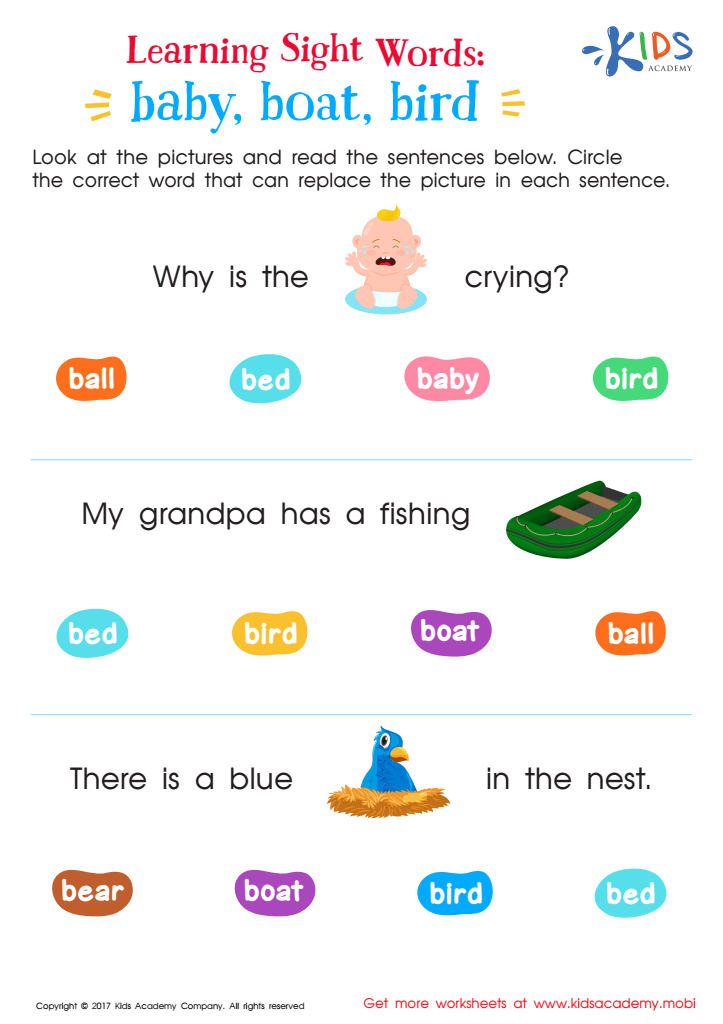
Baby, Boat, Bird Worksheet Sight Words Worksheet
 Assign to My Students







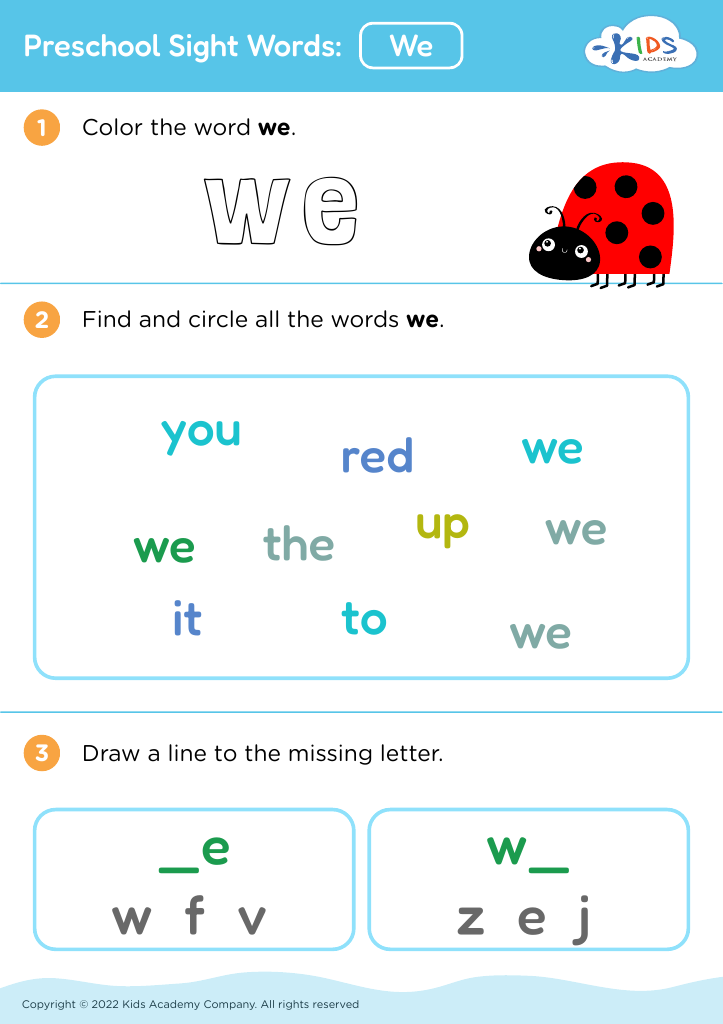
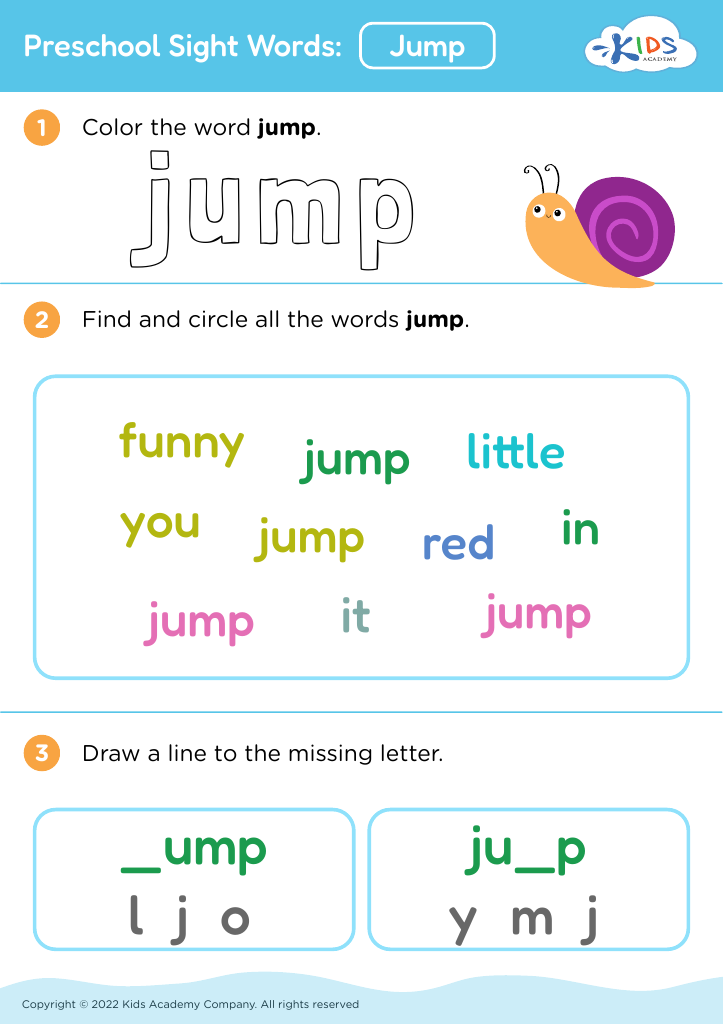
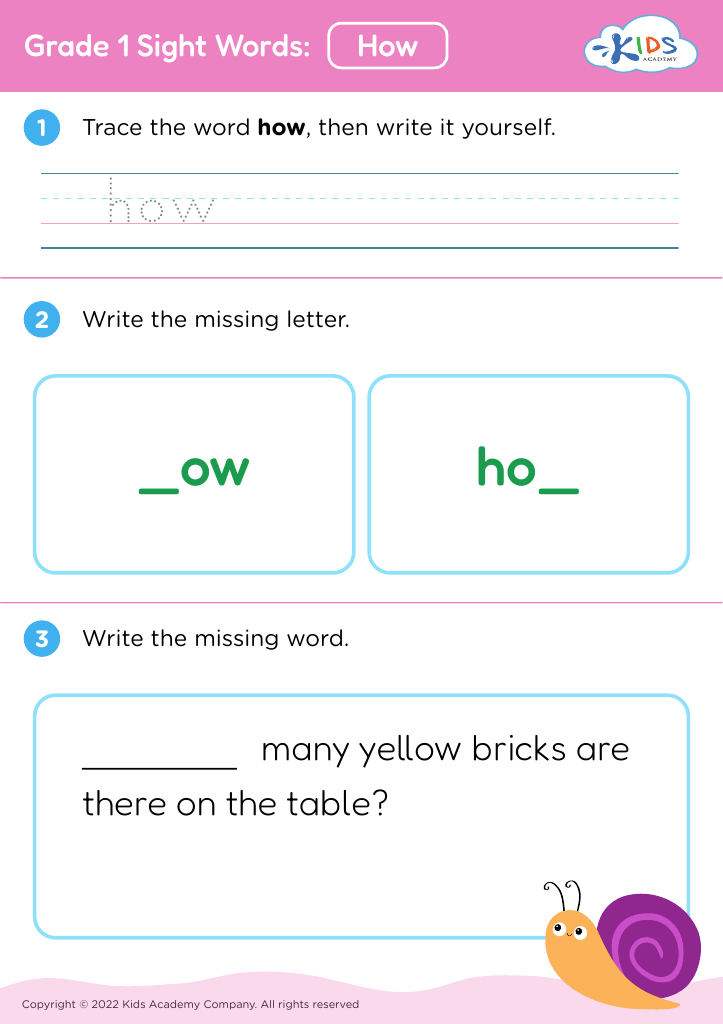
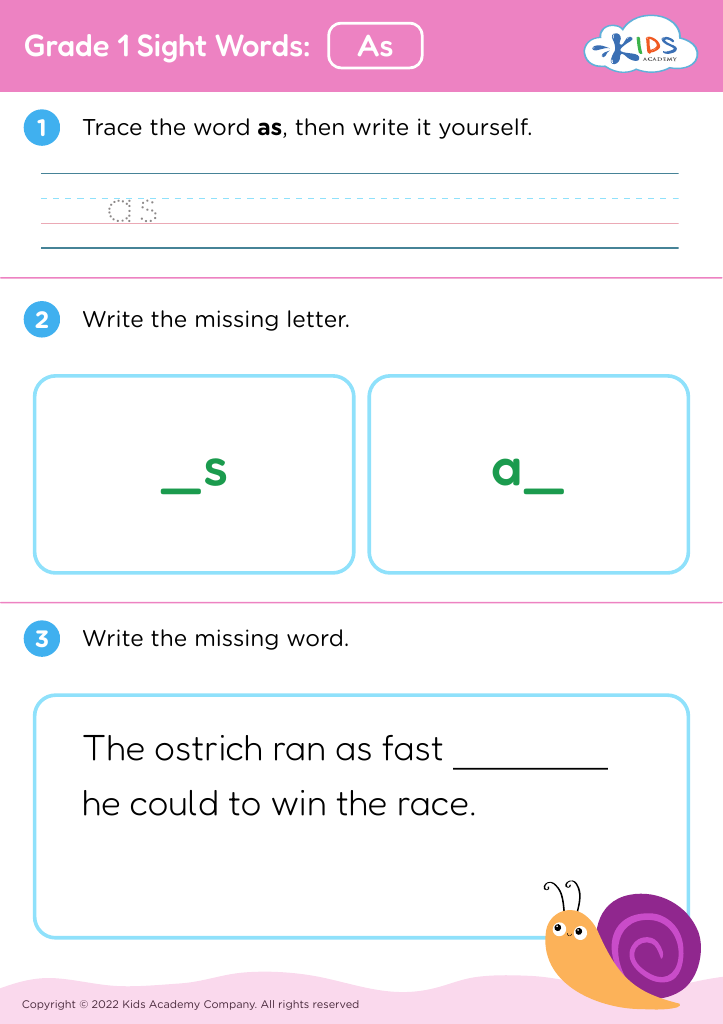
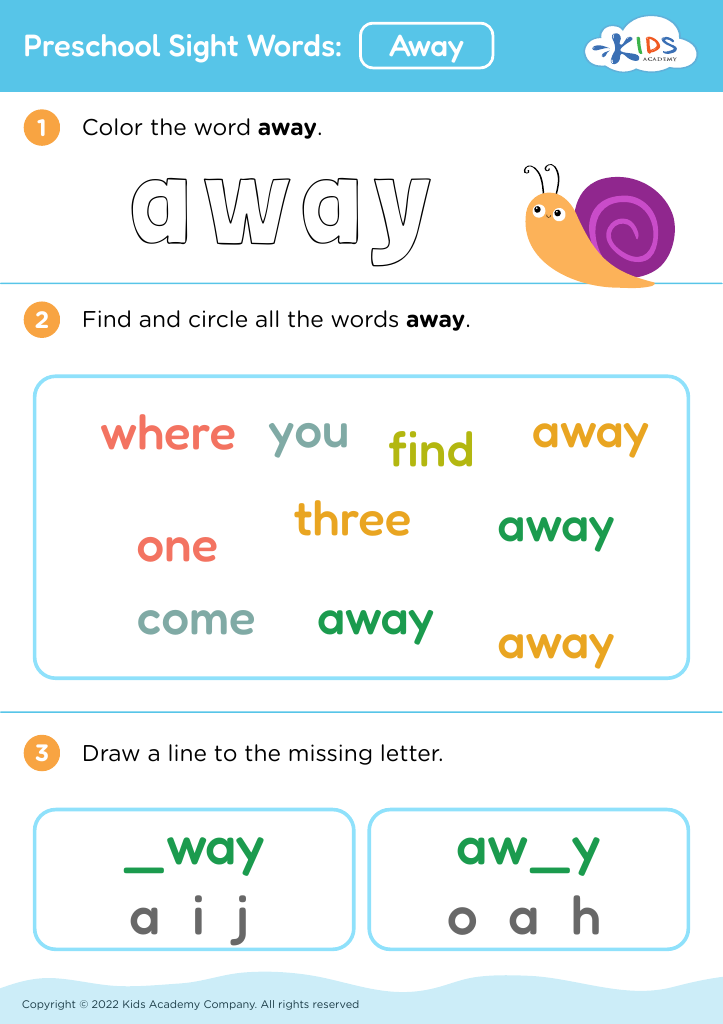
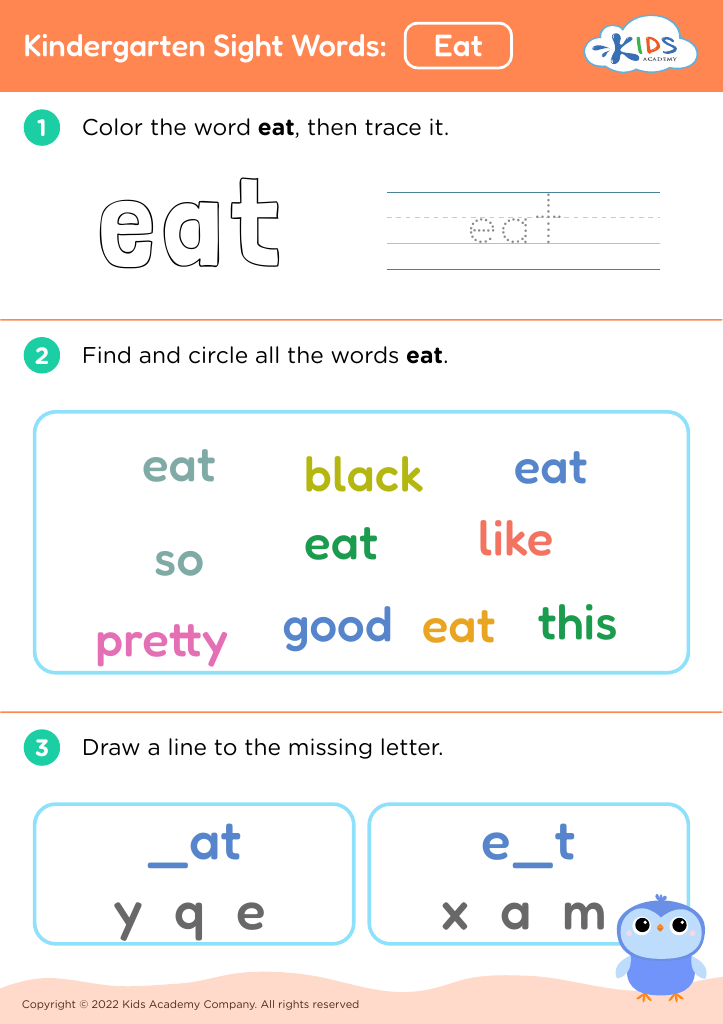








Fine motor skills and sight words are critical elements of early childhood education for children aged 4-6, and both parents and teachers should prioritize them. Fine motor skills refer to the small movements of the hands and fingers, which are essential for daily tasks like writing, buttoning clothing, and using utensils. Developing these skills at an early age enhances a child's hand-eye coordination and ultimately contributes to their overall academic success.
Sight words, or frequently occurring words that children are encouraged to recognize by sight rather than decoding, play a crucial role in reading fluency. Mastering sight words allows young learners to comprehend text more easily, fostering a love for reading and enhancing their language development.
When children master both fine motor skills and sight words, they gain confidence in their abilities, paving the way for greater independence and problem-solving skills. Engaging in activities that support these areas, like cutting, drawing, and reading together, enhances the parent-teacher partnership in nurturing a child's growth. By caring about these foundational skills, parents and teachers help set a strong groundwork for academic achievement and lifelong learning. Investment in these areas early on can lead to lasting benefits in a child's education journey.