Recognizing shapes Sight Words Worksheets for Ages 4-6
7 filtered results
-
From - To
Introducing "Recognizing Shapes Sight Words Worksheets for Ages 4-6"! These engaging, educational worksheets are designed to blend sight word recognition with shape identification, fostering early reading skills and geometric awareness in young learners. Perfect for children aged 4-6, each worksheet features vibrant illustrations and interactive activities to make learning fun and effective. With a focus on essential sight words and fundamental shapes, our printable worksheets support literacy and cognitive development, ensuring your child builds a strong foundation in both reading and math skills. Ideal for home or classroom use, these resources make learning a delightful adventure!
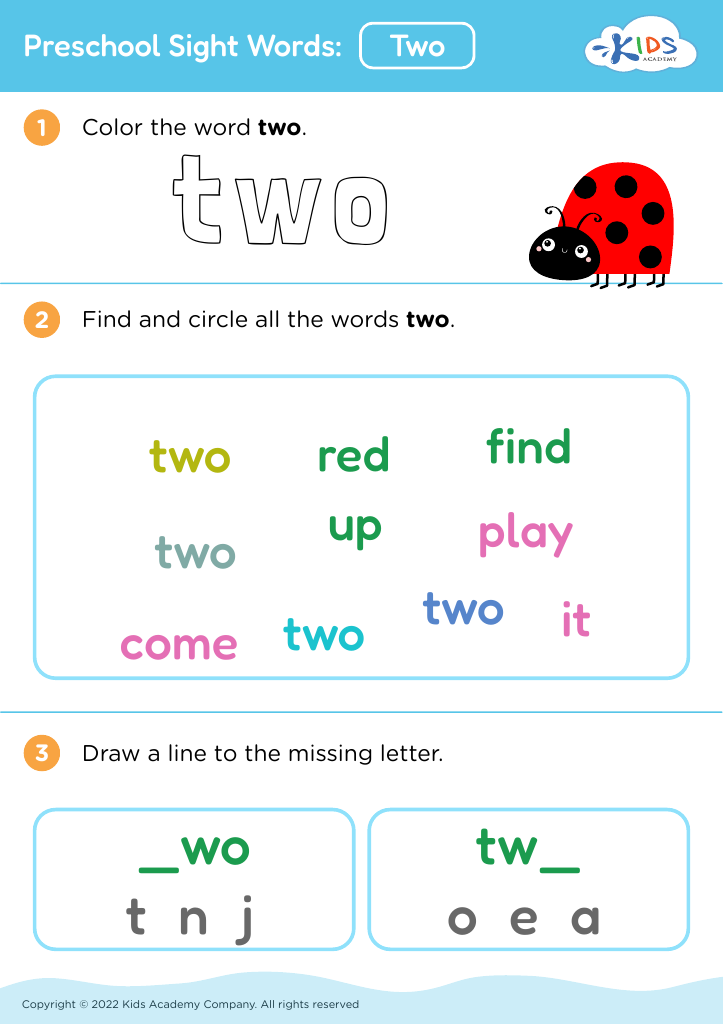




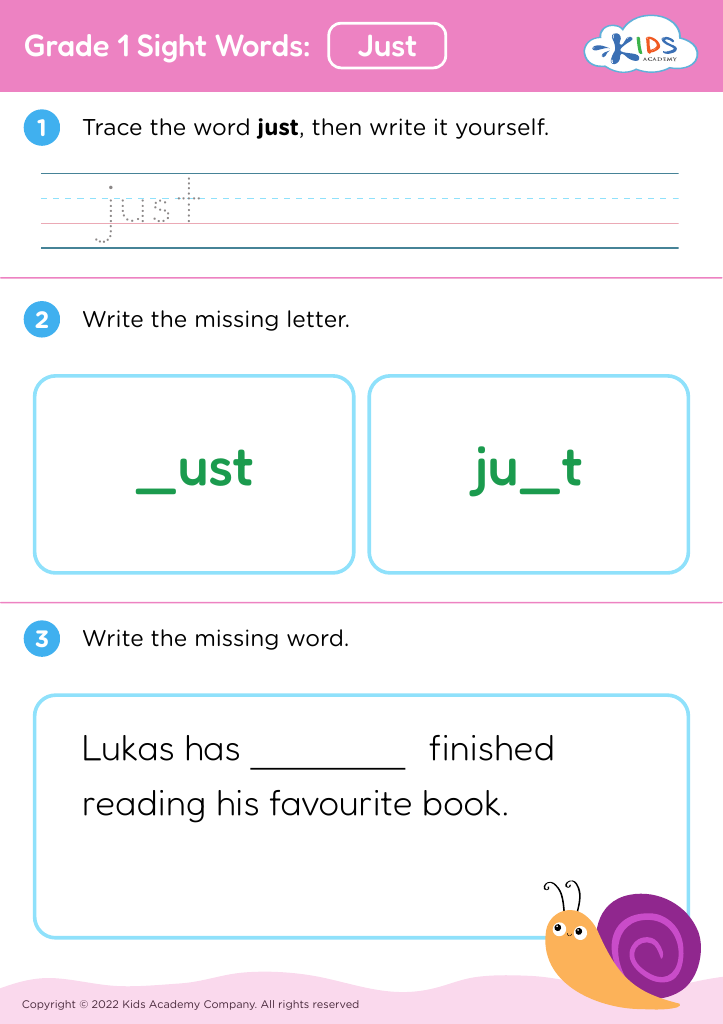
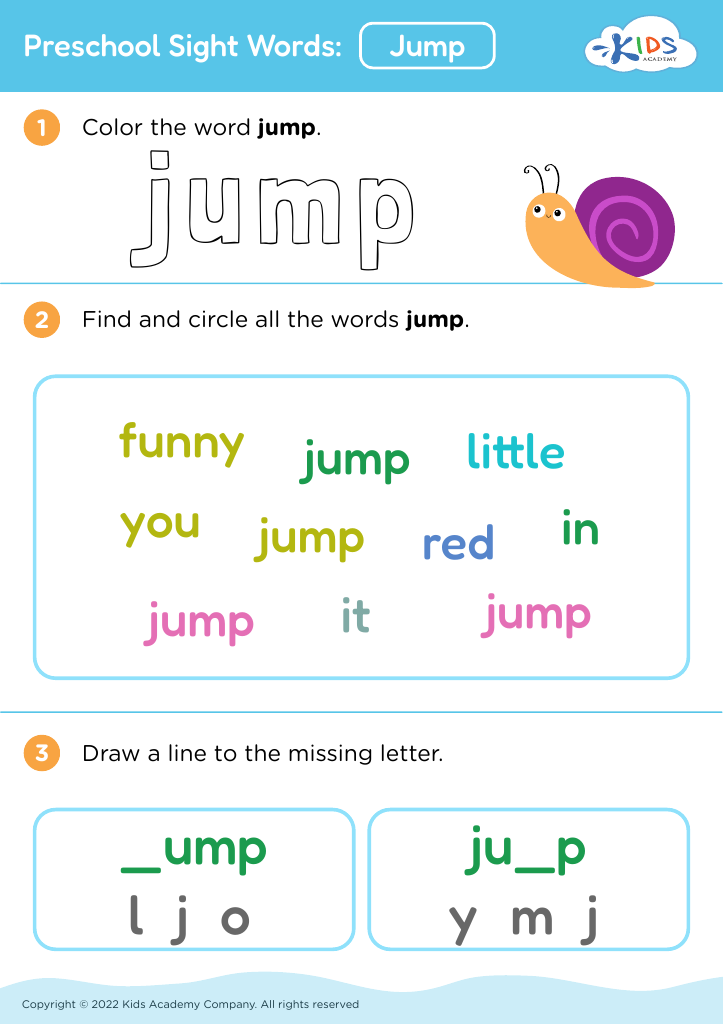
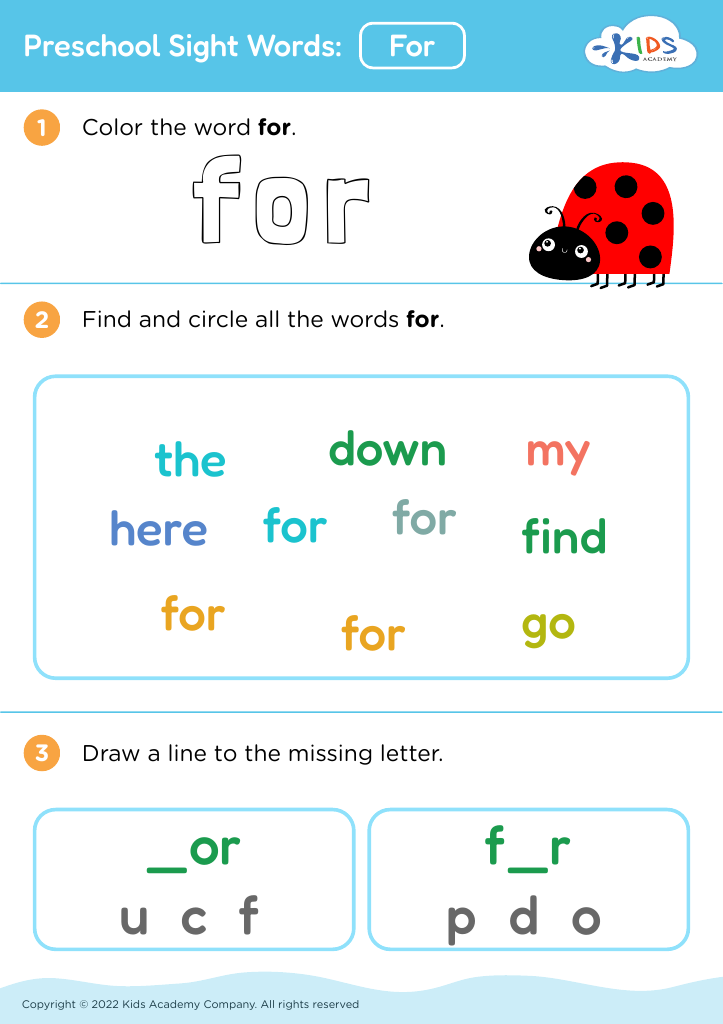
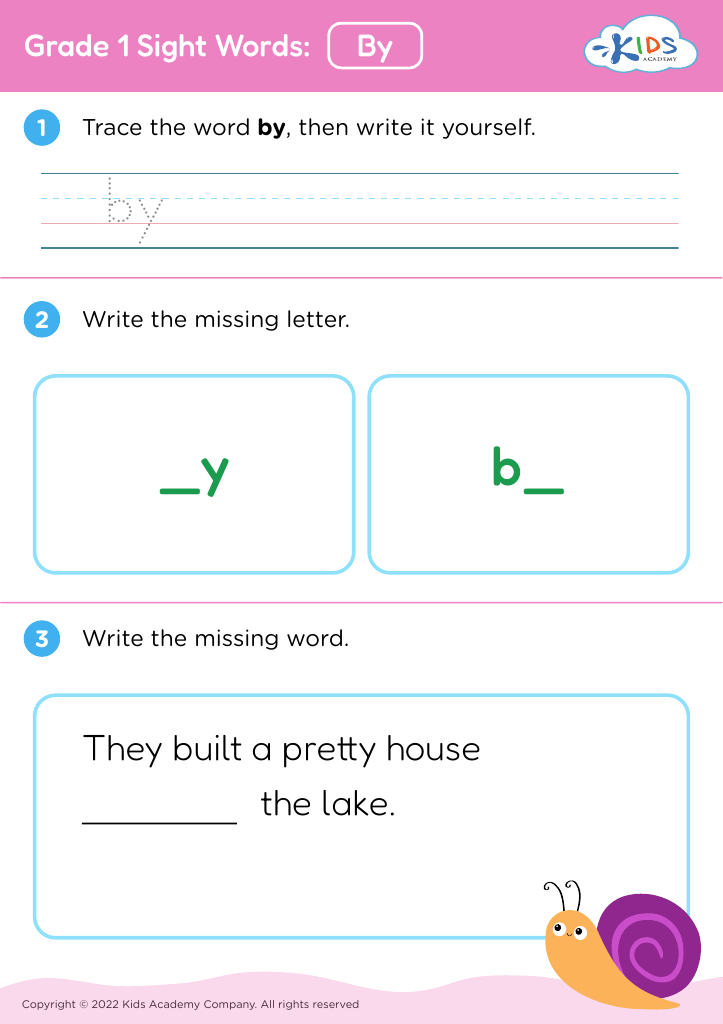
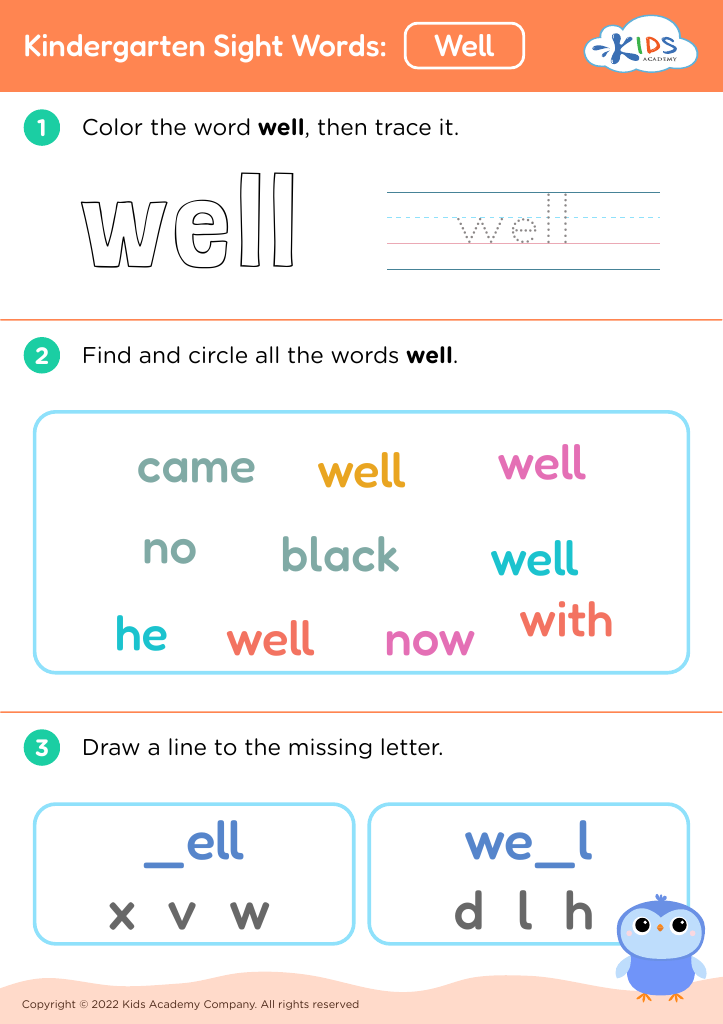
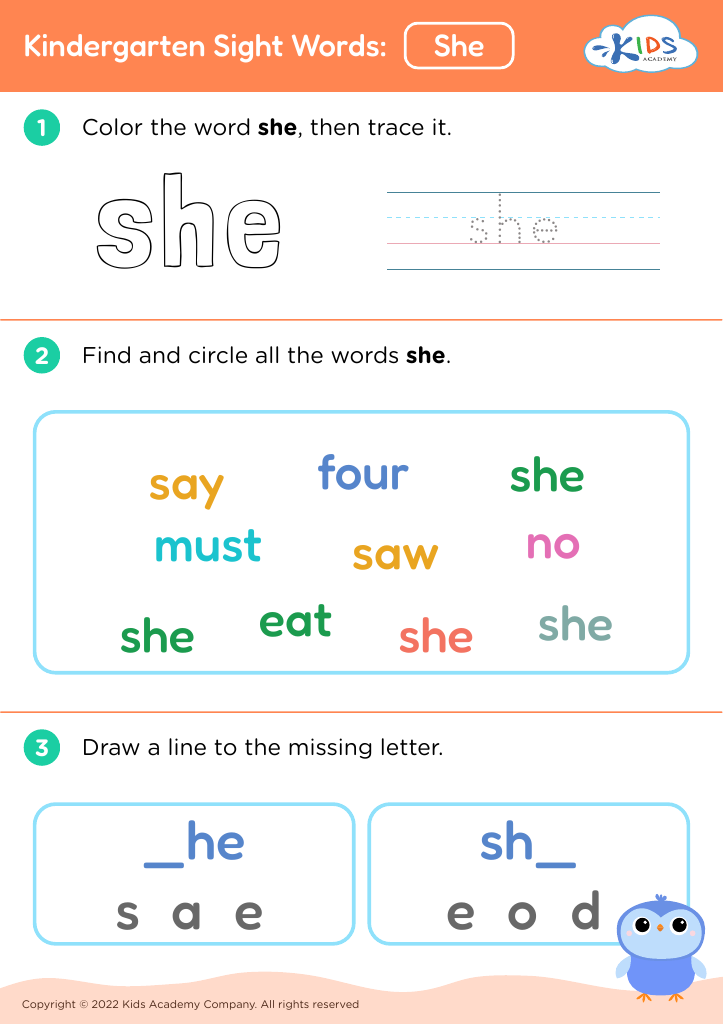








Recognizing shapes and sight words at ages 4-6 is crucial for early childhood development and lays the foundation for future learning. For children at this stage, identifying basic shapes—such as circles, squares, and triangles—enhances their visual-spatial skills. This ability is essential not only for math and geometry but also for understanding and interpreting the physical world. Recognizing shapes helps kids categorize and reorganize objects, fostering critical thinking and problem-solving skills.
Similarly, recognizing sight words—like "the," "an," "and," "is," and "to"—is vital for early literacy. Sight words often do not follow regular phonetic patterns; hence, memorizing them allows children to read more fluently and with greater comprehension. The automatic recognition of these words helps young readers focus on decoding more complex, less frequent words and understanding the context of what they’re reading instead of getting stuck on each individual word.
Together, proficiency in shapes and sight words builds a solid groundwork for academic success, aiding memory, focus, and cognitive development. Parents and teachers should thus dedicate time and resources to nurturing these skills in a supportive, engaging environment, ensuring children are well-prepared for future learning milestones.