Understanding symmetry Sight Words Worksheets for Ages 4-6
3 filtered results
-
From - To
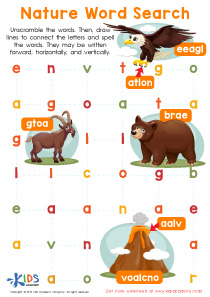
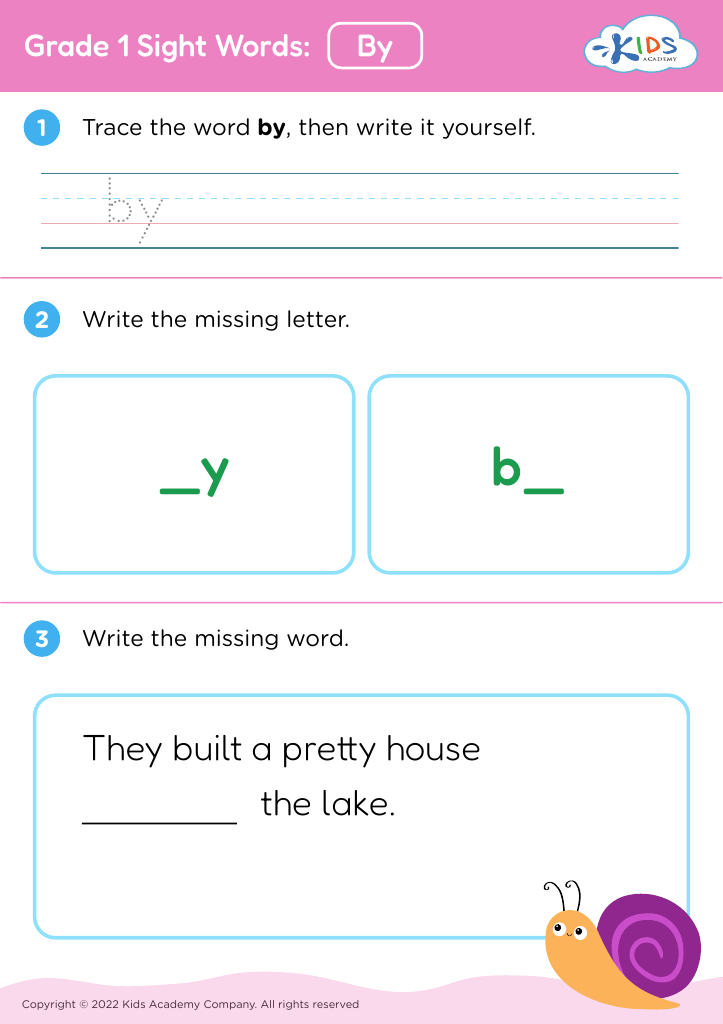
Unlock your child's potential with our "Understanding Symmetry Sight Words Worksheets" designed specifically for ages 4-6. These engaging worksheets seamlessly combine literacy and math skills, helping young learners identify and read essential sight words while exploring the concept of symmetry. Each worksheet features vibrant illustrations and interactive activities that make learning fun and effective. As children practice recognizing sight words, they also develop critical observational skills by analyzing symmetric shapes. Perfect for at-home learning or in the classroom, our worksheets promote early reading skills and mathematical understanding, setting a strong foundation for future academic success. Start your child’s learning adventure today!







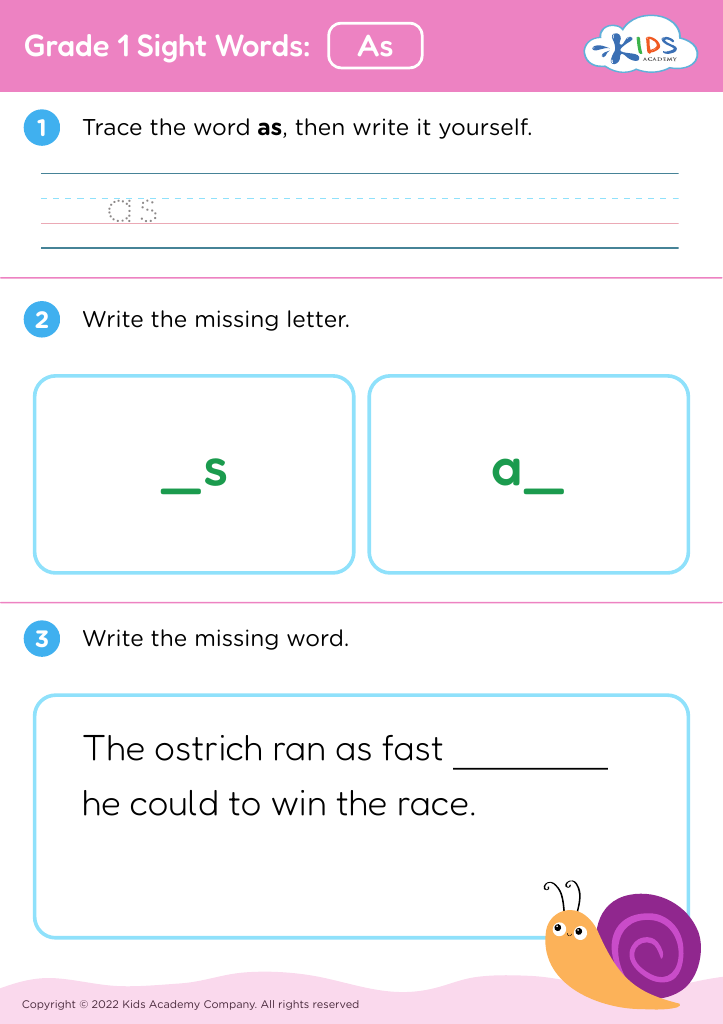
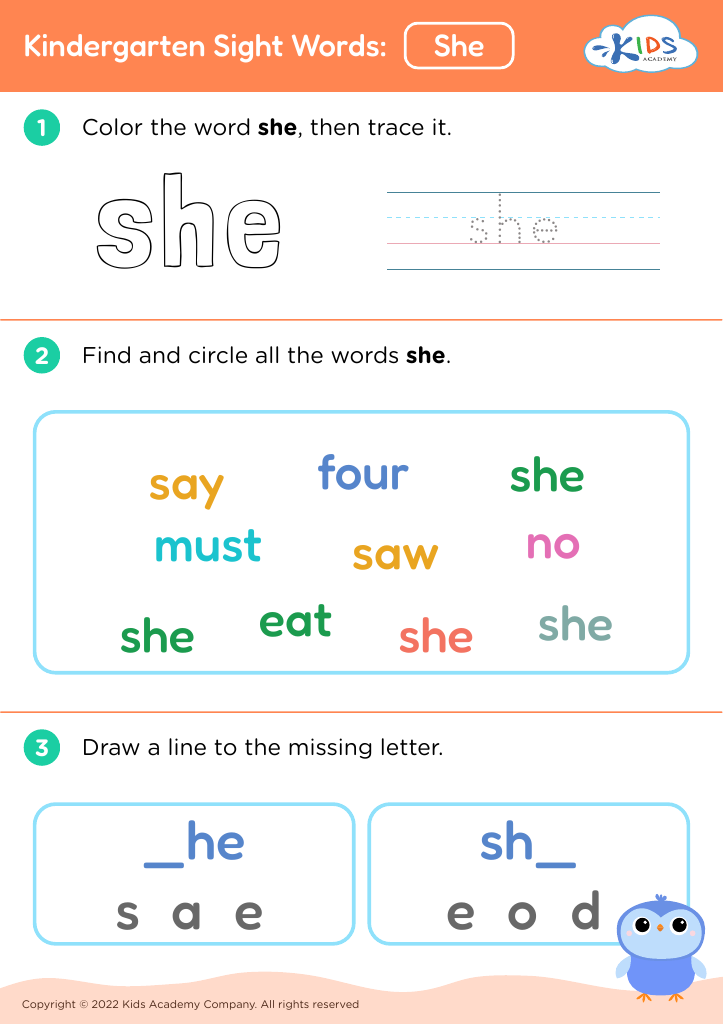








Understanding symmetry and sight words are crucial developmental building blocks for children aged 4-6, making them vital for parents and teachers alike. Symmetry helps children grasp fundamental mathematical concepts, enhancing spatial awareness, critical thinking, and problem-solving skills. Recognizing patterns and the notion of balance paves the way for more complex math later on, fostering a love for learning.
On the other hand, sight words are essential for early literacy. These words frequently appear in texts, and a strong sight word vocabulary helps children read fluently and with confidence. Mastering sight words enables young learners to make connections between sounds and letters, accelerating their reading development. The ability to read without having to sound out every word allows children to focus on comprehension and enjoy storytelling.
When parents and teachers work together to emphasize symmetry and sight words, they create a well-rounded educational experience. Engaging activities can naturally incorporate these concepts, making learning enjoyable. By fostering mathematical and reading skills, parents and teachers equip children with the tools they need for future academic success, laying the groundwork for lifelong learning and curiosity. Thus, understanding these elements is essential for cultivating well-rounded, enthusiastic learners.