Filters

7 filtered results

Clear all filters
Favorites
With answer key
Interactive

7 filtered results

Difficulty Level

Grade


Discover our engaging Vocabulary Enhancement Animals Worksheets for ages 4-6, designed to boost early literacy skills through the fascinating world of animals. These child-friendly worksheets introduce young learners to essential vocabulary while sparking their curiosity about different species. Each activity encourages exploration and creativity, facilitating an interactive learning experience. With vivid illustrations and fun prompts, children can connect words with animal images, helping to reinforce their understanding. Ideal for home or classroom use, these resources not only enhance language skills but also foster a love for nature. Download and transform learning into an enjoyable adventure today!

Check out this FREE Trial Lesson on Animals for age 4-6!

Animal Habitats

Favorites
With answer key
Interactive
  • 4-6
  • Vocabulary enhancement
  • Animals
Animals and Their Young Worksheet

Animals and Their Young Worksheet

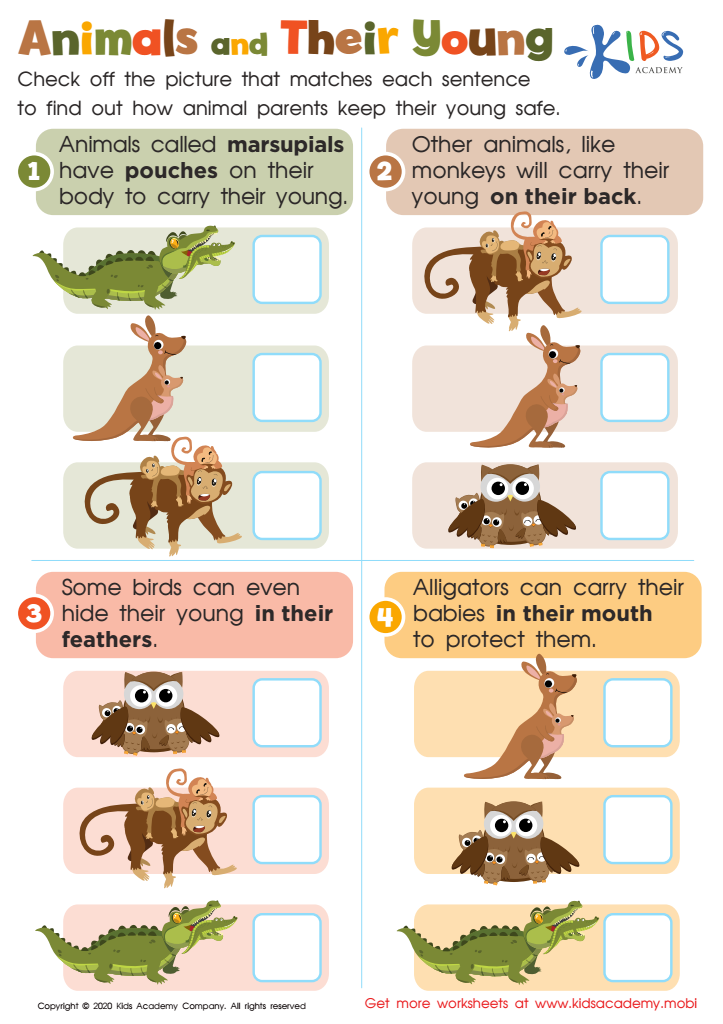
Help your child learn more about the animal kingdom with this cute science worksheet! They'll find out how animals protect and keep their babies close. From pouches to hitching a ride on mama’s back, they'll read the sentence above each illustration and select the description that fits. Check off the correct description as they go - a fun and educational activity!
Animals and Their Young Worksheet
Worksheet
Animal Homes Worksheet
Animal Homes Worksheet
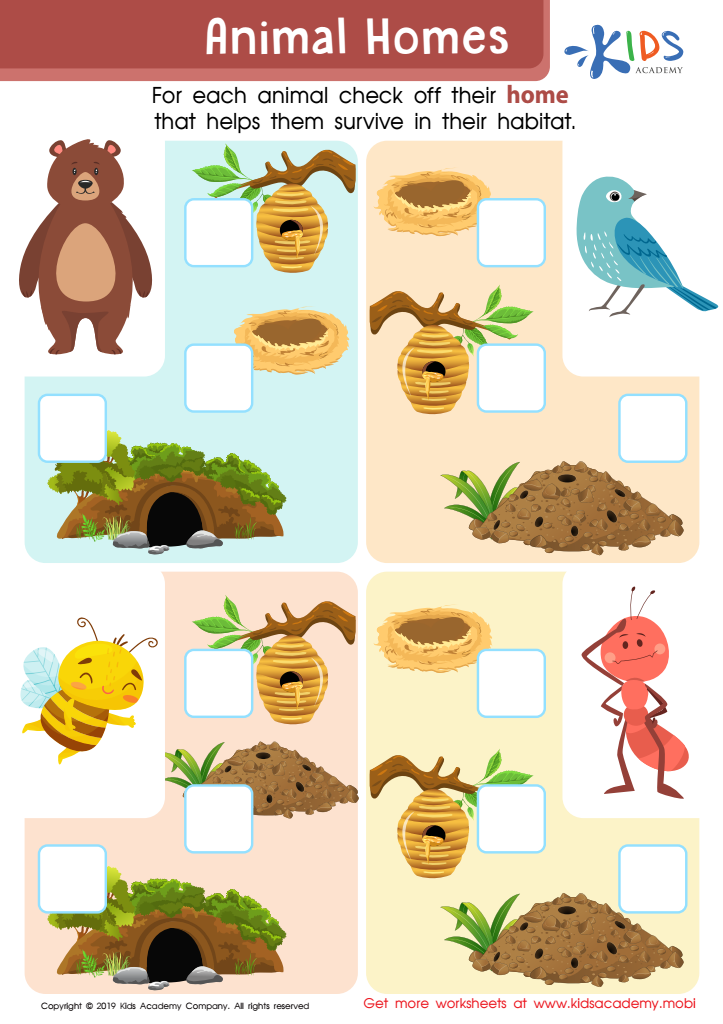
It's your duty as a teacher to protect, direct and guide your students while they're at school. Ask your kindergartners what a home means and why it's special. Use this worksheet to teach them that both people and animals have homes. Show them the pictures, and have them check off which is the home of each animal.
Animal Homes Worksheet
Worksheet
Animal Homes Worksheet

Animal Homes Worksheet

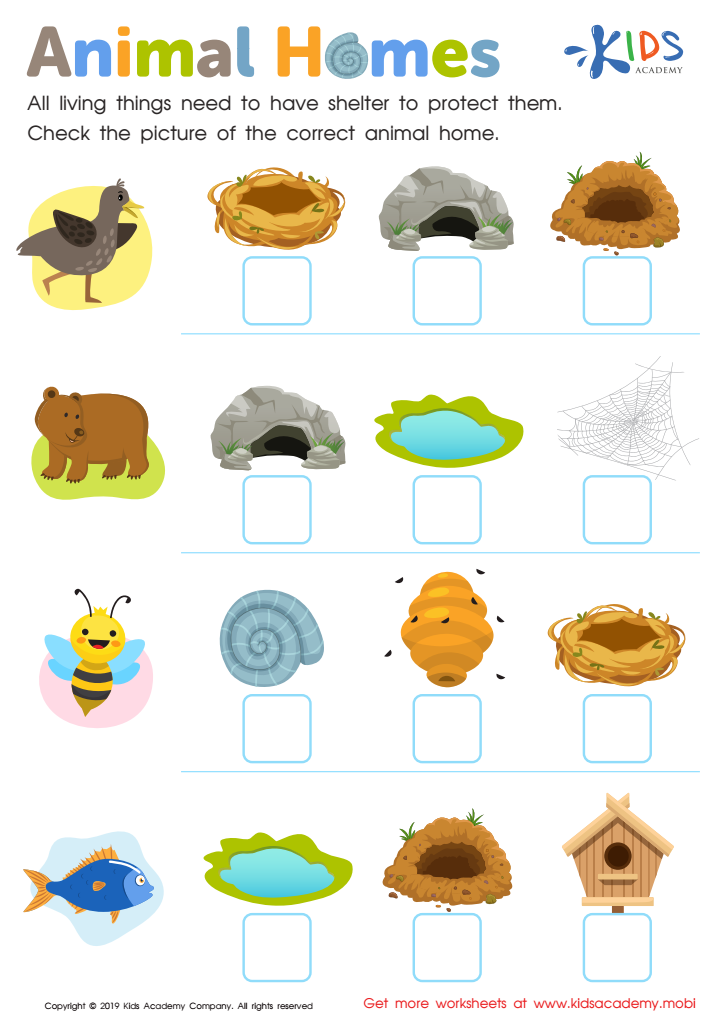
Students have homes where they can do things they love, sleep and stay safe from bad weather. Check the worksheet for animals and their shelters. Ask your kids to identify each and match the animal home to the picture. (80 words)
Animal Homes Worksheet
Worksheet
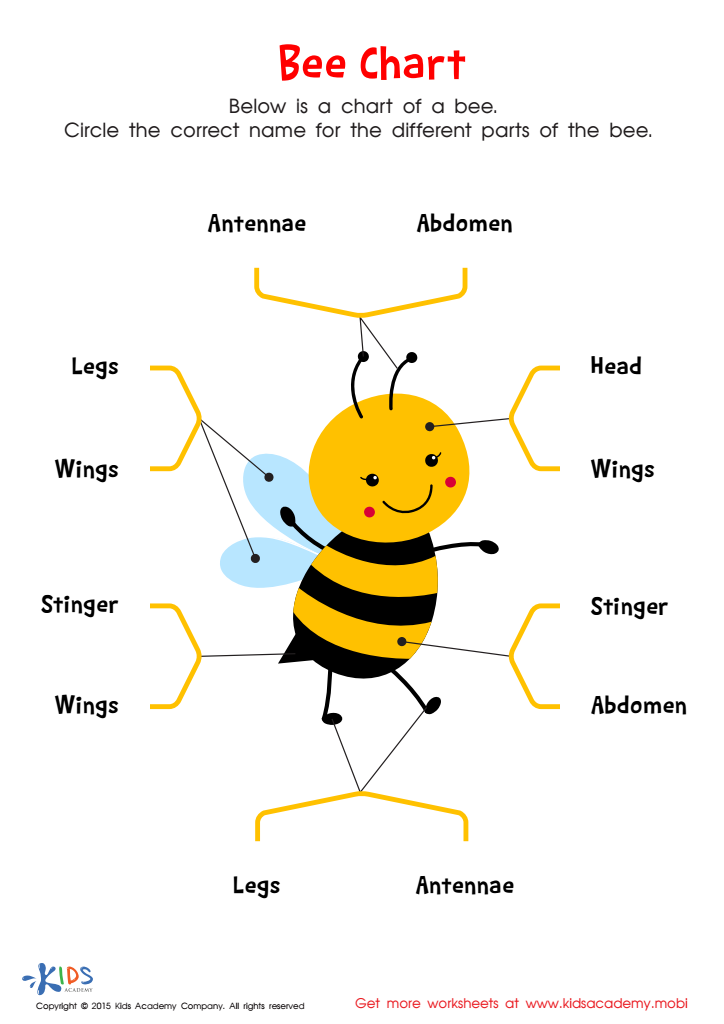
Delightful Bee Anatomy Worksheet

Bee Chart Worksheet

Bee Chart Worksheet
Worksheet
Life Cycle Frog Printable

Life Cycle Frog Printable

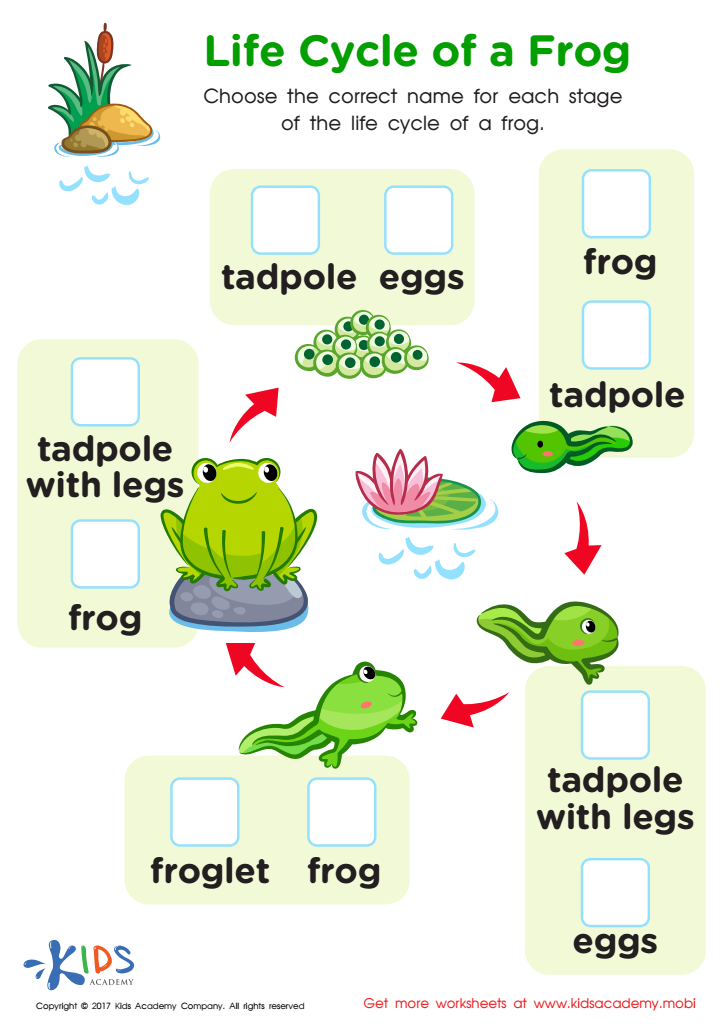
Kids can explore the life cycle of frog with this fun worksheet! Draw lines from one stage to the next to follow the transformation from tadpole to frog and learn about the cycle of life.
Life Cycle Frog Printable
Worksheet
Animals That Burrow Worksheet

Animals That Burrow Worksheet

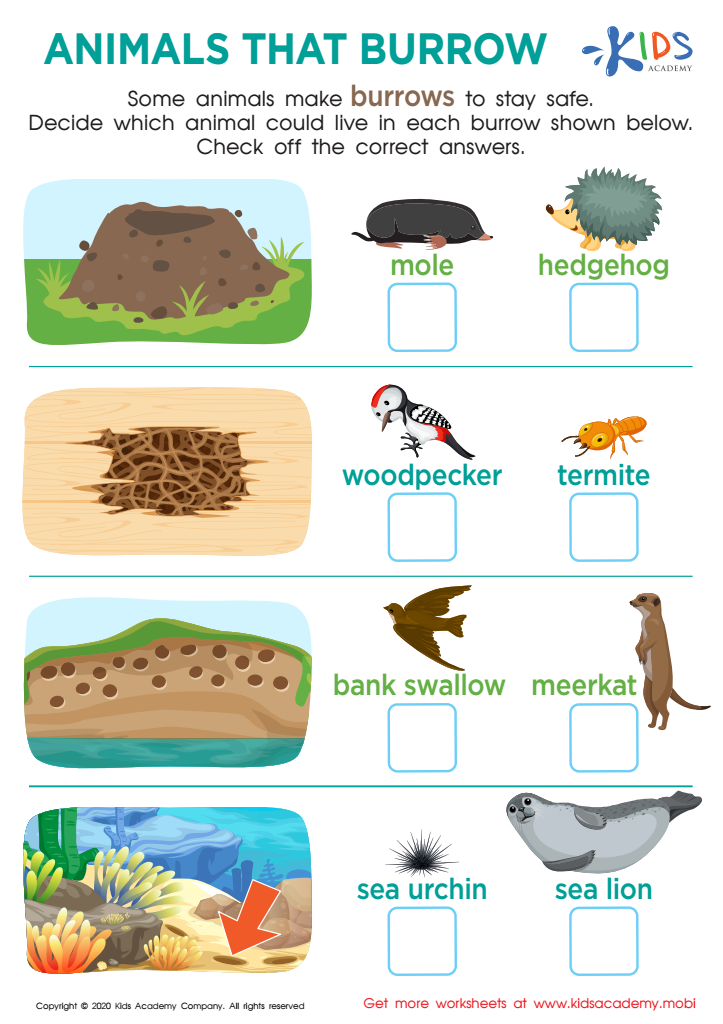
Teach your little one about animal protection with this Kids Academy PDF worksheet! Help them read the description of burrowing animals, then check off the pictures to discover which ones hide in holes. It's an exciting way to learn about the fascinating ways animals keep themselves safe from predators.
Animals That Burrow Worksheet
Worksheet
Animal Nests Worksheet


Animal Nests Worksheet

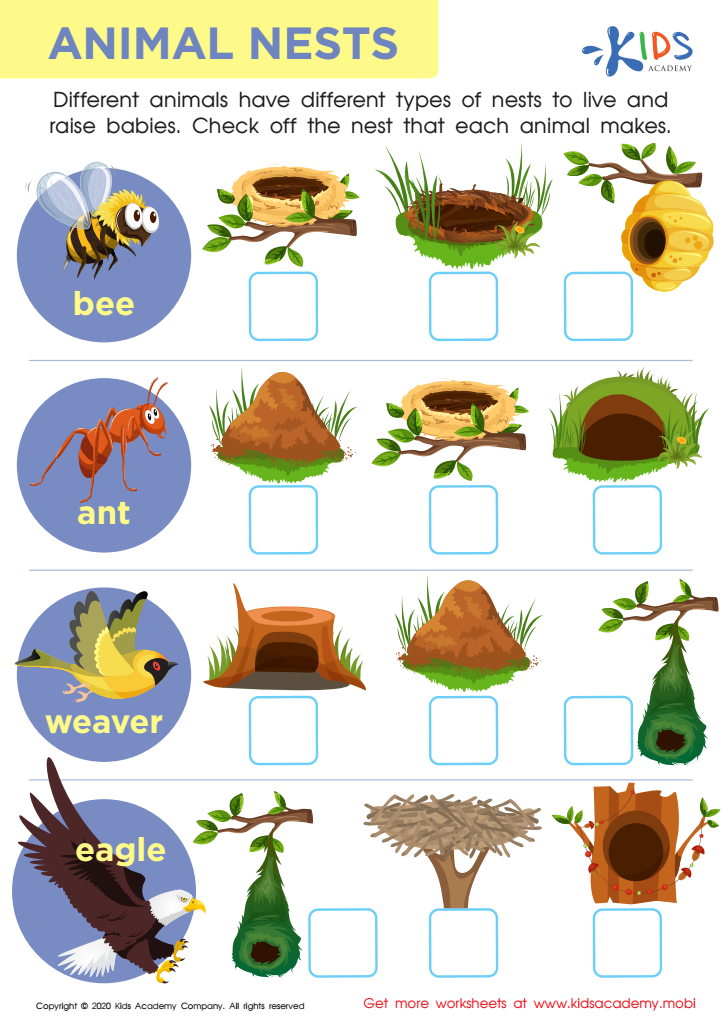
Animals need homes to sleep and stay safe. Look at the animal on the left and examine the nests and hives to the right. Check off the correct one for each animal to complete the worksheet! From birds to bees, it's a great way to show different types of homes animals make!
Animal Nests Worksheet
Worksheet


Vocabulary enhancement in young children, particularly through the lens of animals, plays a crucial role in their cognitive and social development. For ages 4-6, this period is pivotal as children are rapidly expanding their language skills and comprehension. Introducing animal vocabulary not only makes learning fun but also encourages curiosity about the natural world.

Parents and teachers should prioritize this aspect of language development because rich vocabulary contributes to better communication skills, improved reading comprehension, and enhanced overall academic success. By incorporating animals into learning activities—such as reading stories, singing songs, or engaging in hands-on projects—children can connect words to meaningful contexts, making retention easier.

Furthermore, discussing animals can lead to important conversations about biology, ecology, and empathy towards living beings, fostering a holistic understanding of life around them. Vocabulary in context enhances engagement, encouraging children to ask questions and express their ideas.

Lastly, a strong vocabulary empowers young children, boosting their confidence as they express themselves and interact with peers. Therefore, focusing on animal vocabulary nurtures well-rounded individuals equipped for future educational challenges and social interactions.