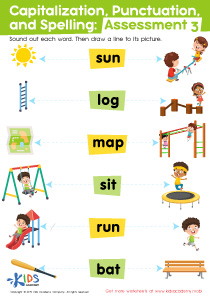
Verb identification Grammar Worksheets for Ages 4-6
3 filtered results
-
From - To
Discover our engaging Verb Identification Grammar Worksheets, designed especially for children aged 4-6. These beautifully crafted resources help young learners grasp the essential concept of verbs through fun and interactive activities. Perfect for early grade teachers and parents, each worksheet encourages kids to identify actions, enhancing their grammar skills in an exciting, approachable way. Watch your child's language abilities blossom as they connect words with actions, building a strong foundation for future learning. Dive into our Verb Identification Grammar Worksheets today and make mastering verbs an enjoyable adventure for your little learners!
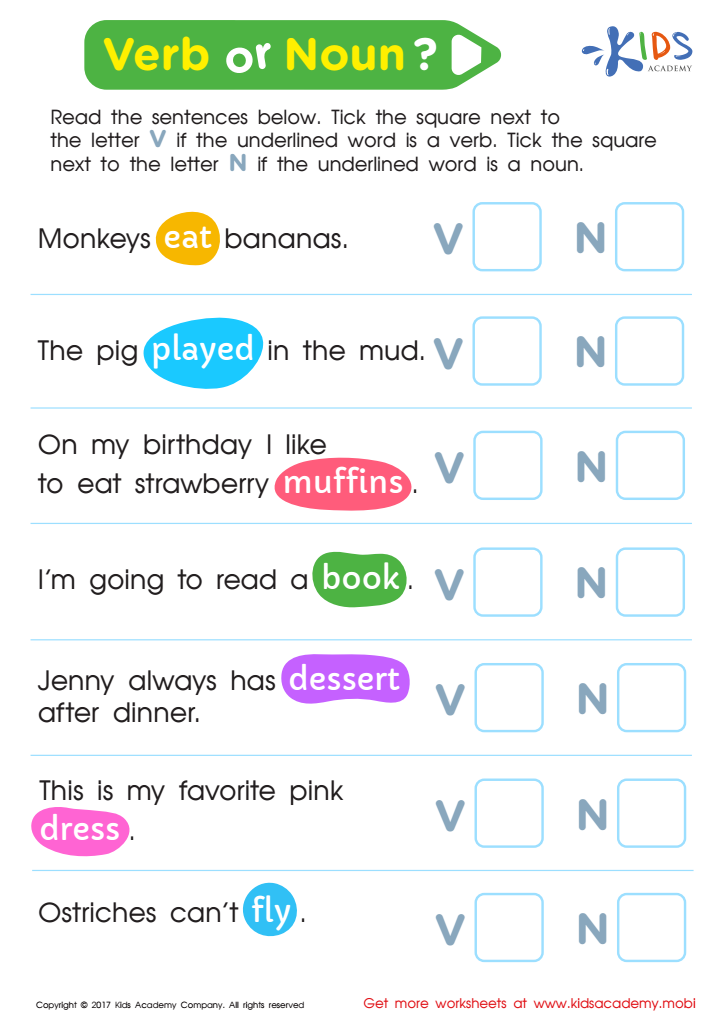
Verb or Noun Worksheet
 Assign to My Students
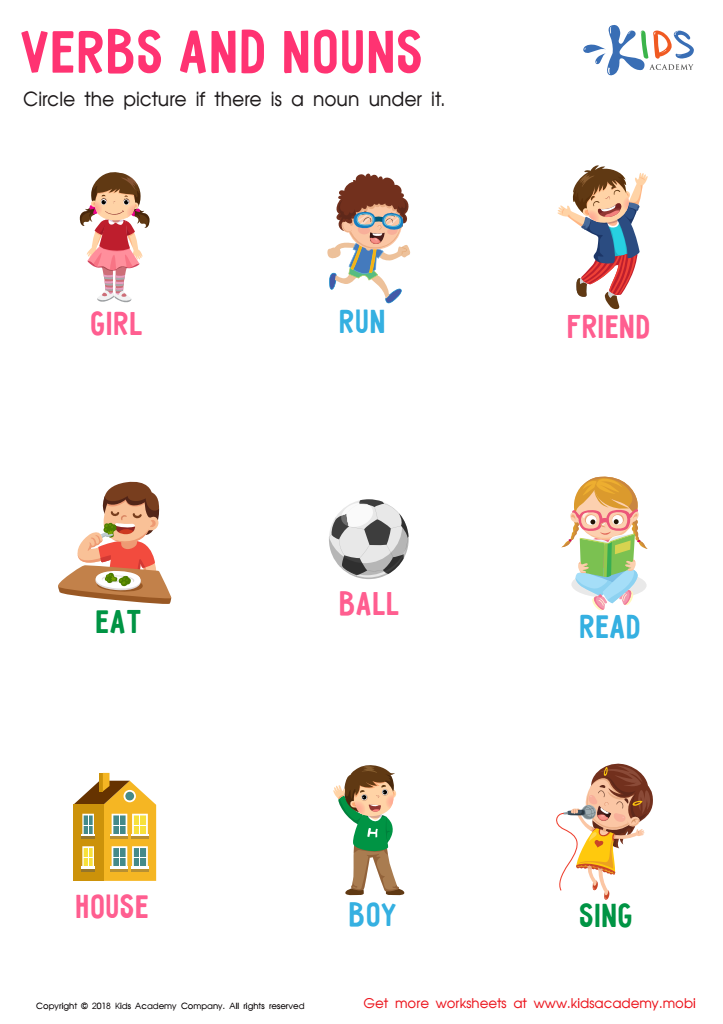
Verbs and Nouns Worksheet
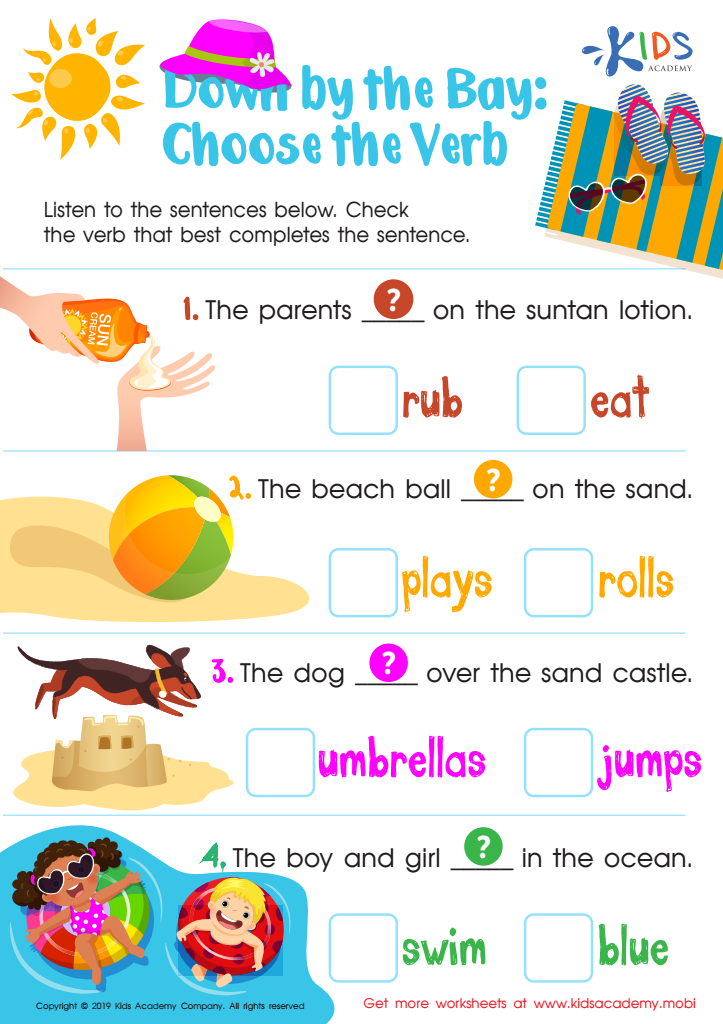
Down by the Bay: Choose the Verb Worksheet



.jpg)



Understanding and identifying verbs at an early age, specifically between 4-6 years old, is crucial for a child’s language development. Verbs, or action words, form the backbone of a sentence, providing essential clarity about the action taking place. Grasping this concept enables children to construct meaningful sentences and convey their thoughts more effectively.
When children learn to identify verbs early on, they gain a foundational understanding of how language works. This understanding promotes better reading skills since verbs are integral to action and description in stories. Additionally, early verb identification aids in developing more sophisticated writing abilities as they grow older, allowing them to create more dynamic and engaging narratives.
Moreover, verb identification directly impacts cognitive development. It encourages children to observe and describe their environment verbally, enhancing their observational skills and expanding their vocabulary. It also plays a vital role in social interactions, helping children to communicate their needs, wants, and experiences more clearly, thus fostering better relationships with peers and adults.
Teachers and parents need to introduce these concepts through playful, engaging activities like reading picture books together, playing action-based games, or storytelling. This not only reinforces their learning but also makes it pleasurable and memorable, laying a strong foundation for future academic success.