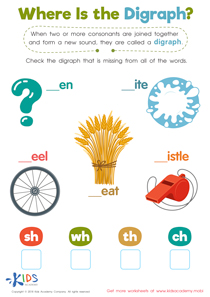
Phonics recognition Beginning Consonants Worksheets for Ages 4-7
3 filtered results
-
From - To
Unlock your child's reading potential with our Phonics Recognition Beginning Consonants Worksheets designed specifically for ages 4-7. These engaging and interactive resources help young learners identify and master beginning consonant sounds, essential for developing their reading skills. Each worksheet features fun illustrations and activities that reinforce sound recognition, ensuring practice is both educational and enjoyable. Suitable for parents and educators alike, our worksheets make learning phonics easy and accessible at home or in the classroom. Foster early literacy and boost your child’s confidence with our thoughtfully designed phonics worksheets that lay a strong foundation for lifelong reading success!
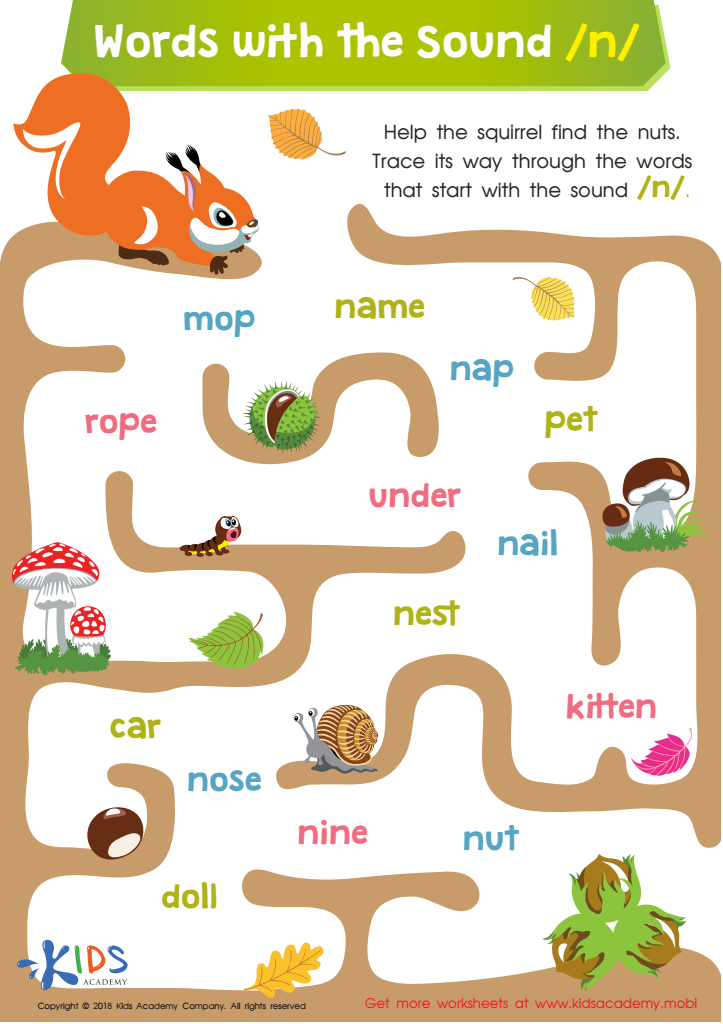
Words with Sound N Reading Worksheet
 Assign to My Students
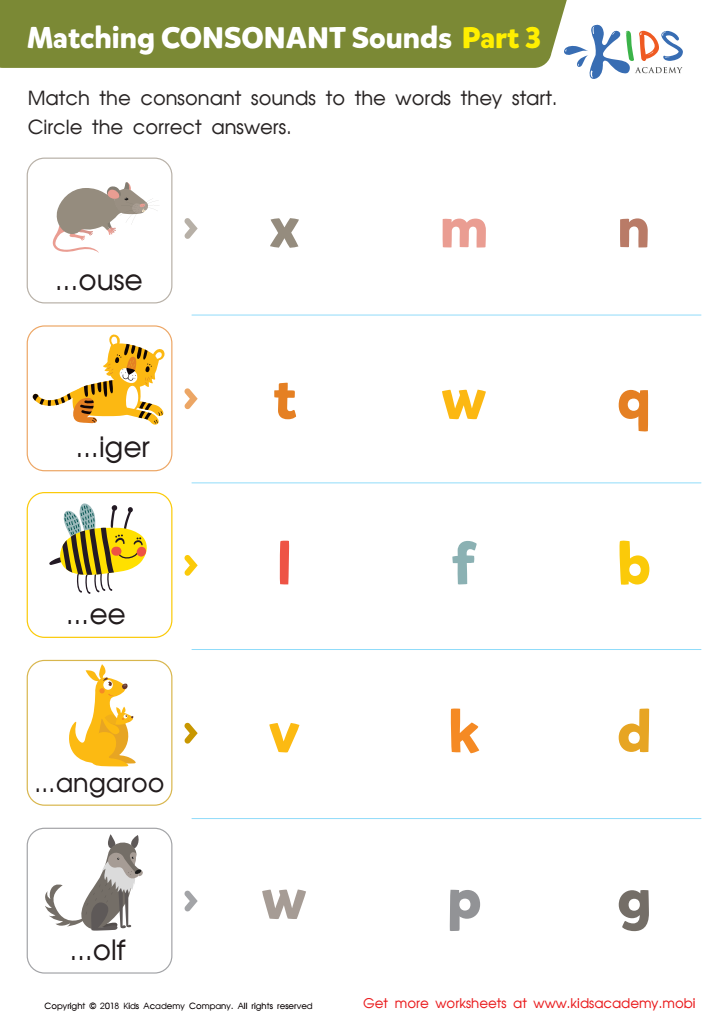
Matching Consonant Sounds: Part 3 Worksheet
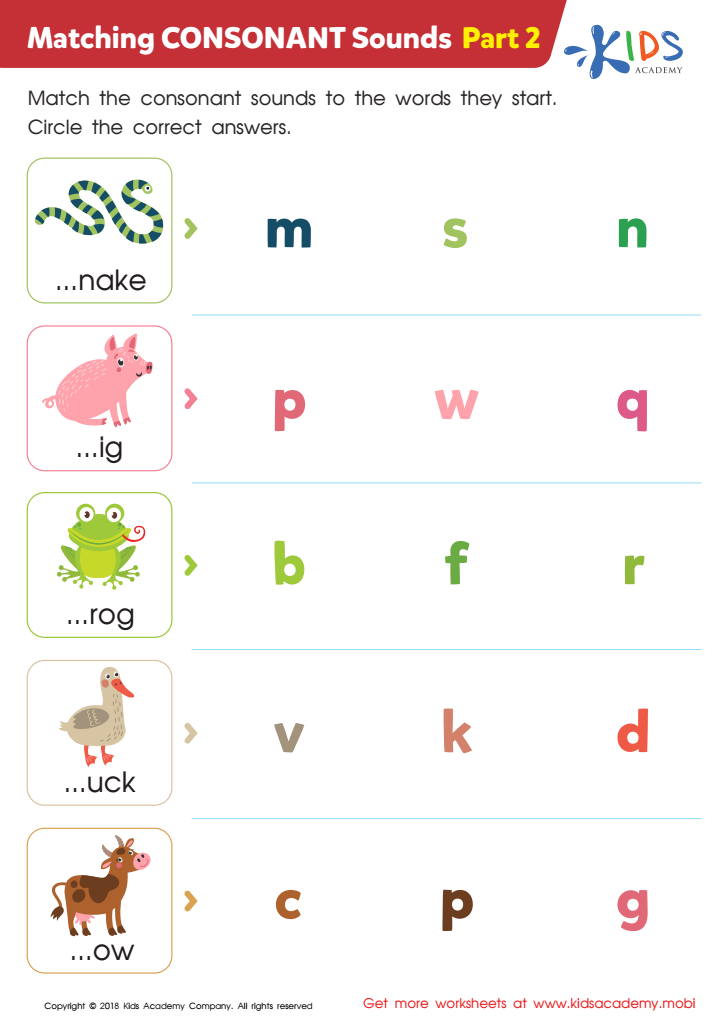
Matching Consonant Sounds: Part 2 Worksheet


Phonics recognition, particularly of beginning consonants, is crucial for children aged 4-7 as it lays the foundation for their reading and writing skills. At this developmental stage, children are rapidly acquiring language, and understanding the relationship between sounds and letters is essential. Recognizing beginning consonants allows children to decode words more effectively, enabling them to read independently. This skill reduces frustration and builds confidence as they tackle more complex texts.
Additionally, beginning consonant recognition enhances vocabulary development. As children can recognize and sound out words, they become more engaged in reading activities, leading to increased comprehension and a richer understanding of language. This engagement fosters a love for reading, which is vital for lifelong learning.
For parents and teachers, emphasizing phonics recognition helps pinpoint areas where children may struggle, providing early intervention opportunities. Ensuring children master these foundational phonetic skills can also boost their overall academic success. Furthermore, it prepares children for more advanced literacy skills, including blending sounds to create words and developing spelling abilities. Ultimately, investing time in phonics recognition contributes to a child’s overall educational journey and future proficiency in language arts, setting a positive tone for their lifelong learning experiences.