Sound Association Beginning Sounds Worksheets for Ages 4-7
3 filtered results
-
From - To
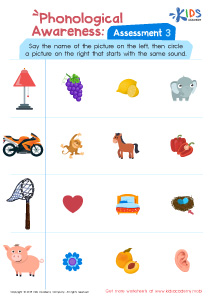
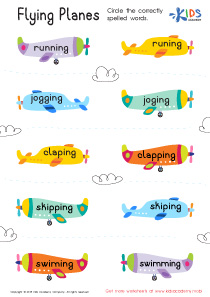
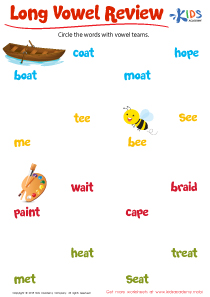
Discover fun and engaging Sound Association Beginning Sounds Worksheets designed for children ages 4-7 at Kids Academy! Perfect for early learners, these printable worksheets help kids master the basics of phonics by associating sounds with letters at the start of words. Each activity is tailored to strengthen reading readiness, improve sound recognition, and boost confidence in young readers. With vibrant illustrations and interactive exercises, kids will enjoy learning while developing essential literacy skills. Ideal for homeschooling, classroom use, or extra practice at home. Set your child on the path to reading success with Kids Academy’s expertly crafted phonics worksheets!
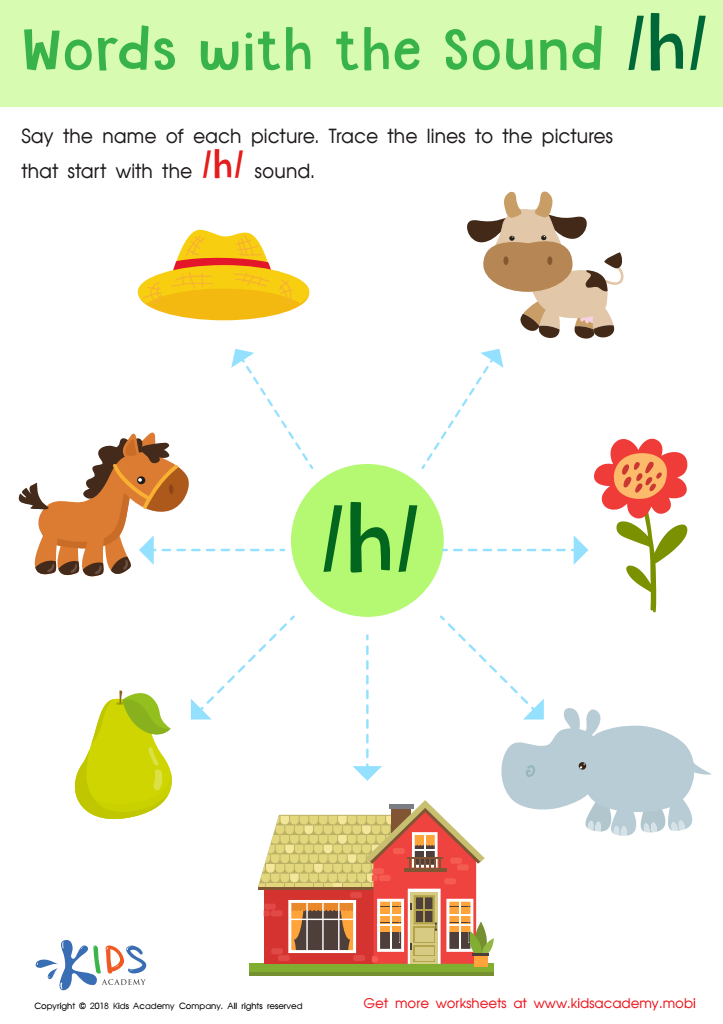
Words with sound h Reading Worksheet
 Assign to My Students
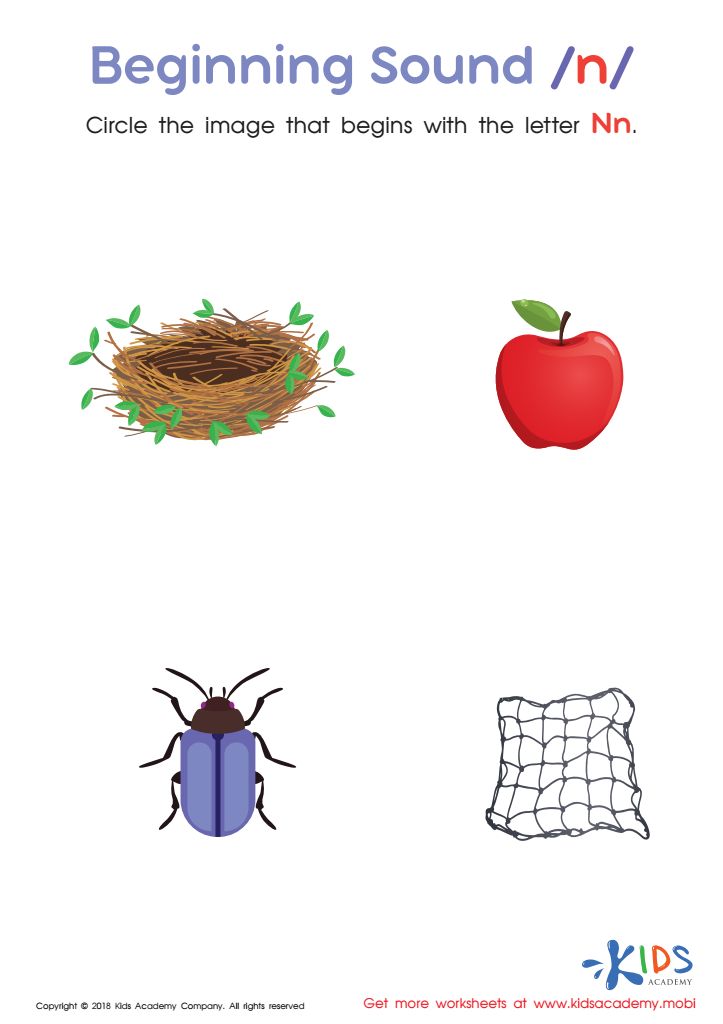
Beginning Sound «n» Worksheet
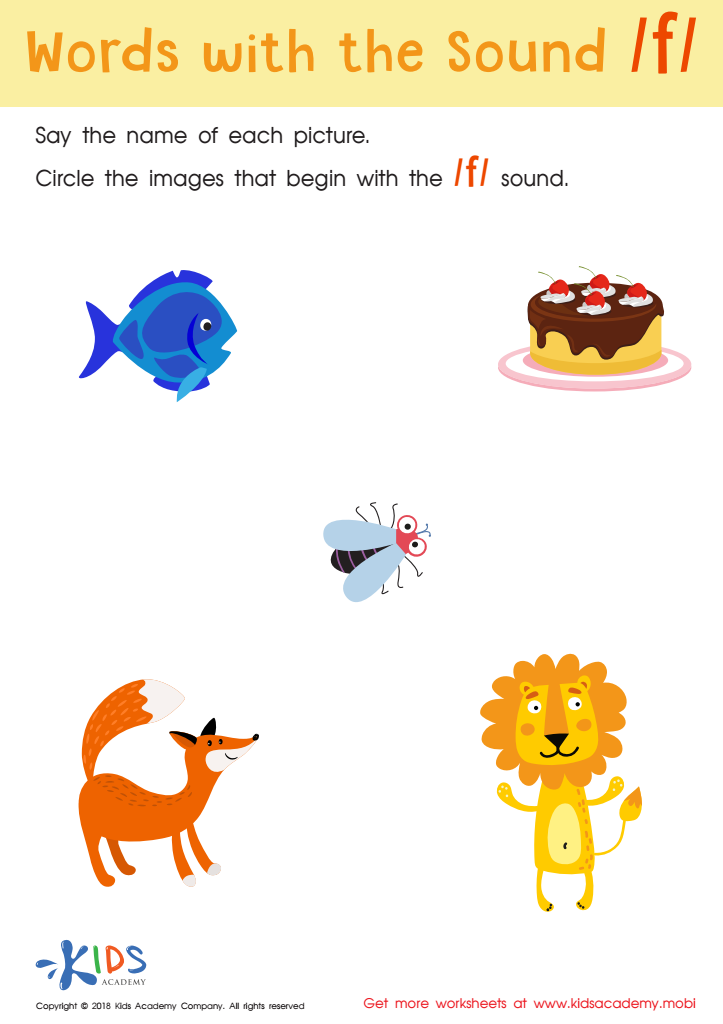
Words with sound f Reading Worksheet








Sound association and beginning sounds form the cornerstone of early literacy and phonemic awareness for children aged 4-7. These critical skills help children identify and differentiate between the sounds that make up words, a fundamental step in learning to read and write. When parents and teachers focus on developing these abilities, they set the groundwork for improved reading fluency, comprehension, and overall academic success.
Recognizing beginning sounds helps children link letters with their corresponding phonemes, fostering advanced decoding skills essential for reading. For instance, when children understand that the word "bat" starts with the "b" sound, they start to make connections between spoken language and printed text, enhancing their word recognition capabilities. Early mastery of these skills can lead to a smoother transition from phonetic decoding to full verbal reading.
Moreover, these formative years are crucial for brain development and language acquisition. Engaging students in activities that encourage sound association, like rhyming games and alphabet songs, not only boosts their cognitive skills but also makes learning enjoyable. Such engagement increases children's confidence and curiosity, leading to a lifelong love of reading.
Investing time and effort into teaching beginning sounds empowers children, laying a productive educational foundation. Ultimately, parents and teachers who prioritize these early skills help cultivate literate, enthusiastic learners.