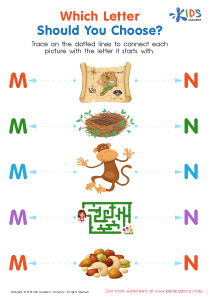
Letter-sound association Lowercase/Small Letters Worksheets for Ages 4-7
3 filtered results
-
From - To
Dive into the world of literacy with our Letter-Sound Association Lowercase/Small Letters Worksheets, designed specifically for ages 4-7. These engaging resources help young learners connect letters to their corresponding sounds in a fun and interactive way. Through a variety of activities, children will develop essential reading skills, reinforce phonics knowledge, and build a strong foundation for future literacy success. Perfect for both classroom and at-home learning, our worksheets cater to various learning styles, making reading an enjoyable adventure. Equip your little ones with the tools they need to confidently decode words and kickstart their reading journey today!
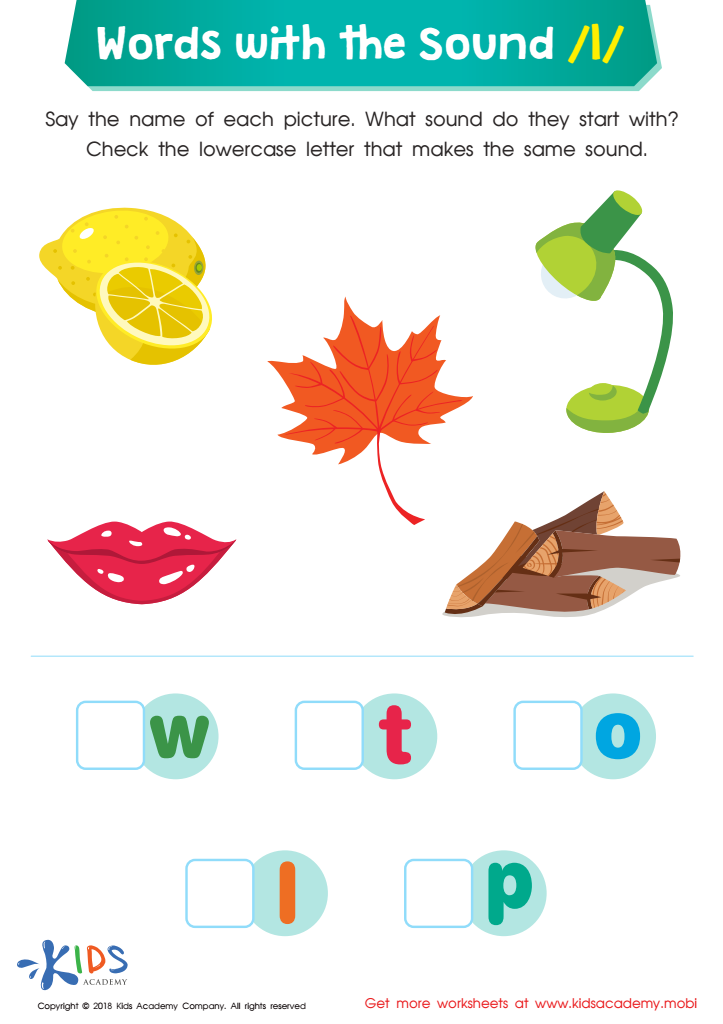
Words with Sound L Reading Worksheet
 Assign to My Students
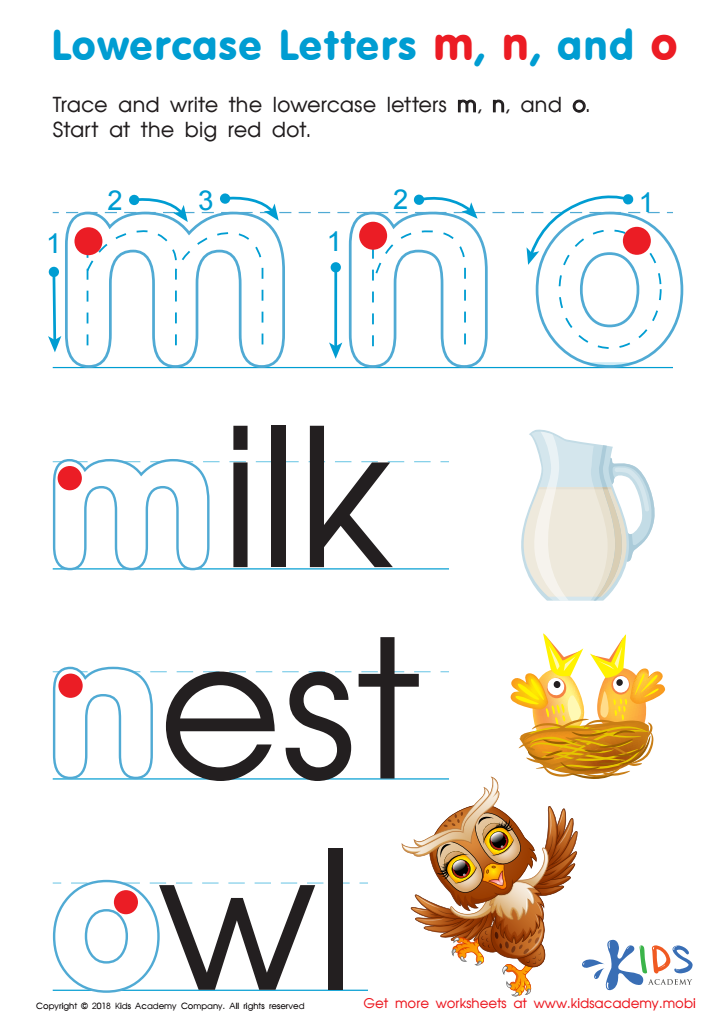
Lowercase Letters m n o Worksheet
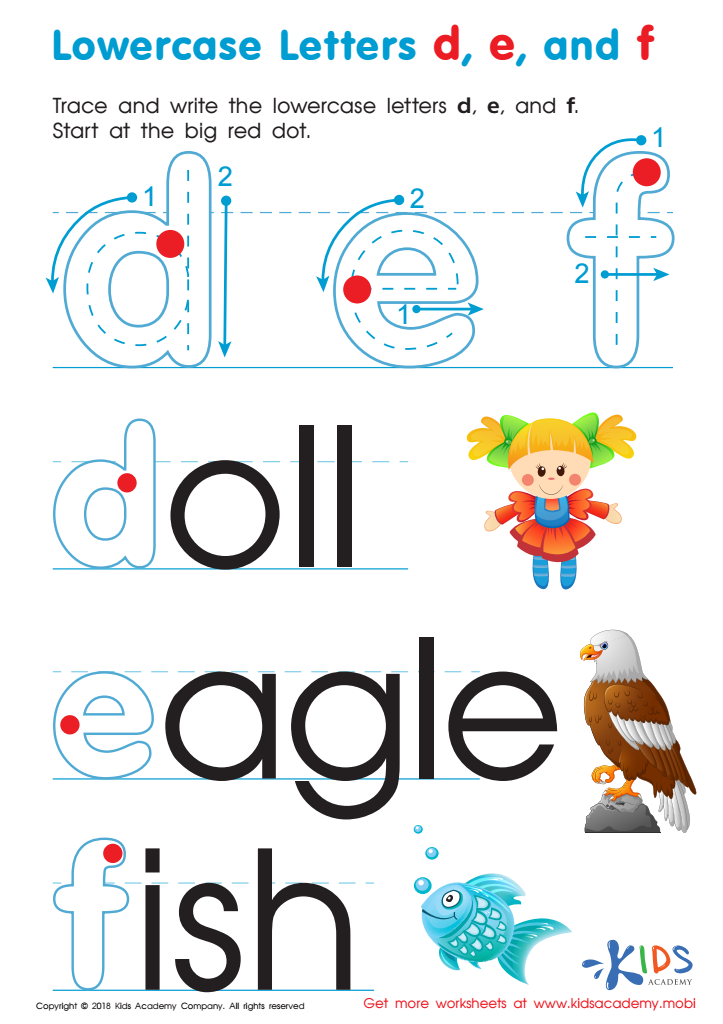
Lowercase Letters d e f Worksheet


Understanding letter-sound associations, especially with lowercase or small letters, is a foundational skill in early literacy for children ages 4-7. During this critical developmental window, students are establishing the basis for reading and writing, which are essential skills for academic success and daily communication.
Letter-sound association helps children decode words when reading. By recognizing that specific letters correspond to particular sounds, children can start to sound out words rather than relying solely on memorization. This familiarity with phonics directly supports reading fluency, which is the ability to read with speed, accuracy, and proper expression, all of which contribute to better comprehension.
Additionally, lowercase letters are more prevalent in written text than uppercase letters. Familiarity with these letters ensures children can more readily navigate and understand the books and materials they're engaging with both in the classroom and at home.
Encouraging strong letter-sound associations also bolsters spelling skills. When children can associate letters with their sounds, they can attempt to spell words by sounding them out, resulting in improved written communication skills.
For teachers and parents, facilitating early mastery of these skills can prevent literacy struggles later on, fostering a more confident and enthusiastic reader. Building this foundation supports lifelong learning and empowers children to succeed not just academically, but in all facets of life where communication is key.